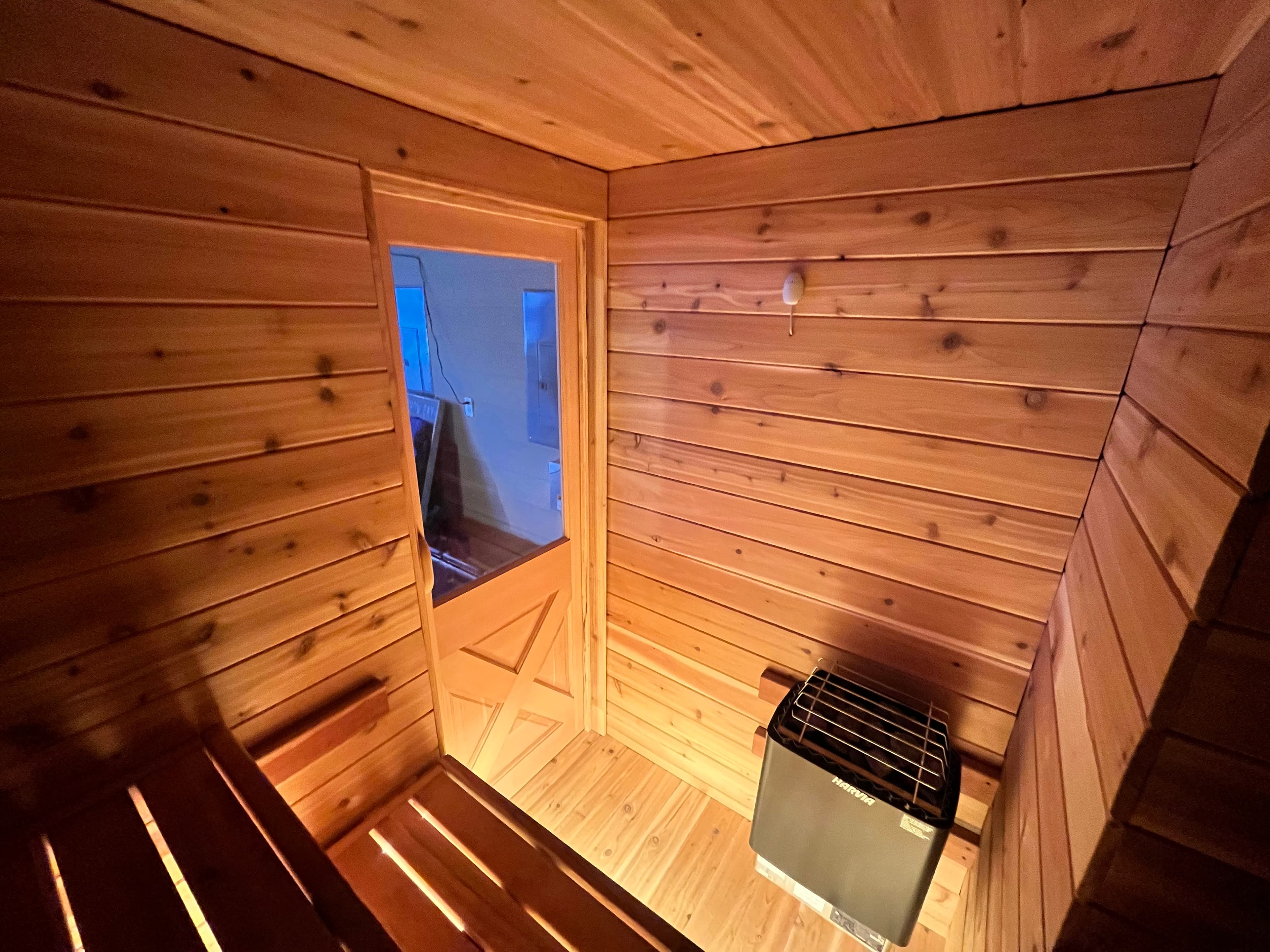
How Much Does It Cost to Build a Sauna? (2026 Pricing by Build Type)
The cost to build a sauna ranges from about $2,500 for a basic room conversion to $25,000 or more for a fully custom outdoor build. The reason for that wide range isn't vague — it's driven by specific choices about build type, size, heater, materials, location, and whether you hire a contractor or do the work yourself.
This guide breaks down the actual costs by build type, walks through each line item, and identifies the decisions that have the biggest impact on your total budget.
Cost Summary by Build Type
Before diving into the details, here's the overview. These ranges assume a sauna sized for 2–4 people (roughly 4×6 to 6×8 interior) with a quality electric heater and standard materials.
| Build Type | Total Cost Range | Best For |
|---|---|---|
| Room conversion (indoor) | $2,500–$8,000 | Converting an existing closet, basement room, or bathroom |
| Prefab kit (indoor or outdoor) | $3,000–$12,000 | Homeowners who want a complete package with less decision-making |
| Custom-built indoor | $5,000–$18,000 | Purpose-built rooms with specific layouts, materials, and features |
| Custom-built outdoor | $8,000–$25,000+ | Standalone structures with foundation, roofing, and weatherproofing |
These ranges include materials and labor. DIY builds can reduce total cost by 30–50% by eliminating labor, but that only works if you have the skills (framing, electrical, insulation) to execute correctly.
Sauna Renovation Cost
If you're converting an existing space — a bathroom, basement room, spare closet, or section of a garage — into a sauna, your costs are lower than a new build because the structure already exists. This is what most people mean when they search "sauna renovation cost."
| Renovation Type | Cost Range | What's Involved |
|---|---|---|
| Closet/small room conversion (4×4 to 4×6) | $2,500–$5,000 | Insulation, vapor barrier, interior wood, heater, electrical, door |
| Bathroom conversion (5×6 to 6×8) | $4,000–$8,000 | Demo existing fixtures, waterproofing, insulation, wood, heater, electrical |
| Basement room conversion (6×8) | $3,500–$7,000 | Frame walls if needed, insulation, moisture management, wood, heater, electrical |
| Garage partition (6×8) | $5,000–$10,000 | Frame new walls, insulation, vapor barrier, wood, heater, electrical, ventilation |
The advantage of a renovation is that you skip the most expensive parts of a new build: foundation, roofing, exterior siding, and structural framing. The trade-off is that existing spaces come with constraints — low ceilings, inconvenient drain locations, limited electrical panel capacity, or walls that need reinforcing.
Bathroom conversions are common but require extra attention to moisture management. The existing tile and waterproofing needs to be removed or properly isolated from the sauna's vapor barrier. Plumbing may need to be capped or relocated. Budget an extra $500–$1,000 for demo and moisture remediation compared to converting a dry room.
Basement conversions are often the most cost-effective because basements have concrete walls that provide good thermal mass, existing electrical access nearby, and headroom isn't usually an issue. The main concern is moisture — ensure you have a proper vapor barrier on the warm side (inside the sauna, not on the concrete) and adequate ventilation to prevent condensation problems.
Trusted by homeowners across Tahoe and beyond
Materials Cost Breakdown
Materials typically account for 40–60% of total cost in a contractor-built sauna, or 100% in a DIY build. Here's where the money goes:
Framing and Structure ($500–$3,000)
For an indoor conversion, framing costs are minimal — you're working within an existing room and may only need to add furring strips for insulation depth or frame out a new wall.
For a new indoor room (building within a garage, basement, or addition), standard 2×4 framing with a 2×6 ceiling runs $500–$1,500 in materials.
For an outdoor standalone structure, framing costs jump to $1,500–$3,000 because you need a complete structure: floor framing, wall framing, roof framing, and exterior sheathing.
Insulation and Vapor Barrier ($300–$800)
Proper insulation is non-negotiable. A sauna that leaks heat is miserable to use and expensive to operate.
- Mineral wool batts (R-13 to R-15 for walls, R-23+ for ceiling): $200–$500 for a typical 4×6 to 6×8 room
- Aluminum foil vapor barrier: $50–$150
- Reflective foil-faced insulation (alternative): $150–$300
The ceiling is the most critical surface to insulate because heat rises. Under-insulating the ceiling is the most common cost-cutting mistake — it forces the heater to work harder and extends preheat time significantly.
For outdoor saunas in cold climates like Tahoe, upgrading to R-19 walls and R-30+ ceiling adds $100–$200 in material cost but reduces ongoing energy consumption and dramatically improves performance in winter.
Interior Wood ($800–$3,500)
The interior wood is the most visible material choice and one of the biggest cost variables.
| Wood Species | Cost per Board Foot | 6×8 Room Estimate | Notes |
|---|---|---|---|
| Western red cedar | $5–$8 | $1,800–$3,000 | Most popular. Naturally rot-resistant, aromatic, beautiful grain. Premium choice. |
| Hemlock | $3–$5 | $1,100–$1,800 | Clean, light appearance. Less aromatic than cedar. Good budget option. |
| Aspen | $3–$5 | $1,000–$1,600 | Hypoallergenic, no resin. Softer wood — more prone to dents and wear. |
| Nordic spruce | $4–$6 | $1,400–$2,200 | Traditional Finnish choice. Tight grain, minimal knots in select grades. |
| Alder | $4–$6 | $1,400–$2,000 | Warm reddish tone. Common in Pacific Northwest builds. |
| Thermally modified wood | $6–$10 | $2,200–$3,500 | Heat-treated for enhanced durability and moisture resistance. Premium. |
A full interior includes tongue-and-groove wall paneling, ceiling boards, bench boards (typically thicker — 2× stock), backrest boards, and trim. Benches alone account for 30–40% of total wood cost because they use thicker stock and take more material than wall paneling.
Heater ($800–$3,500)
The heater is the mechanical heart of the sauna. Electric heaters dominate the residential market because they're easier to install, don't require a chimney, and offer precise temperature control.
| Heater Type | Cost Range | Notes |
|---|---|---|
| Wall-mounted electric (4–8 kW) | $800–$1,800 | Standard for small to medium rooms. Harvia, Helo, Sawo common brands. |
| Floor-standing electric (8–12 kW) | $1,200–$2,500 | For larger rooms. More stone capacity = better löyly. |
| Wood-burning | $1,500–$3,500 | Requires chimney/flue ($500–$1,500 additional). Traditional experience. |
| Electric with Xenio WiFi control | $1,500–$2,500 | Harvia's connected system. Preheat remotely, schedule sessions. |
The right heater size depends on room volume — approximately 1 kW per 45 cubic feet of space, adjusted upward for glass doors, exterior walls, and cold climates. Oversizing by one step is safer than undersizing. An undersized heater never reaches temperature; an oversized one just cycles off sooner.
Sauna stones are typically $30–$80 for a full load (40–60 lbs for a residential heater). Olivine diabase or peridotite are the standard choices — they hold heat well and don't crack when water hits them.
Electrical ($500–$2,500)
Most residential electric sauna heaters require a dedicated 240V circuit. This is not optional and not something to DIY unless you're a licensed electrician.
| Electrical Component | Cost |
|---|---|
| New 240V circuit (30–60 amp, panel to sauna) | $500–$1,500 |
| Subpanel (if main panel is full or distant) | $300–$800 |
| GFCI breaker | $50–$100 |
| Conduit and wiring (depends on run length) | $100–$500 |
| Electrician labor | Included in circuit cost above |
The biggest variable is the distance from the electrical panel to the sauna. An indoor sauna 20 feet from the panel is straightforward. An outdoor sauna 80 feet from the panel requires longer wire runs (heavier gauge to account for voltage drop) and potentially conduit trenching, which can push electrical costs to $2,000+.
Door ($200–$1,200)
| Door Type | Cost | Notes |
|---|---|---|
| Full glass door (tempered) | $500–$1,200 | Most popular for modern builds. Lets light in, feels more open. |
| Wood door with small window | $200–$600 | Better heat retention. Traditional look. |
| All-wood door | $150–$400 | Best thermal performance but makes the room feel enclosed. |
Glass doors are the single biggest source of heat loss in most saunas. A full glass door adds roughly 1 kW to your heater sizing requirement. If budget is tight and you're choosing between a better heater and a glass door, prioritize the heater.
Lighting ($100–$500)
Sauna lighting should be warm, dimmable, and rated for high heat and humidity.
- LED strip lighting (behind benches or crown): $100–$250
- Recessed LED ceiling fixtures (sauna-rated): $150–$350
- Fiber optic starlight ceiling: $300–$500
Standard residential light fixtures are not rated for sauna conditions. The temperature at ceiling level reaches 200°F+, which will destroy conventional LED drivers and fixtures. Use only fixtures explicitly rated for sauna use.
Foundation (Outdoor Only) ($500–$3,000)
| Foundation Type | Cost | Notes |
|---|---|---|
| Gravel pad (4–6" compacted) | $500–$1,000 | Simplest. Works for smaller saunas on stable ground. |
| Concrete slab (4" reinforced) | $1,500–$3,000 | Most durable. Required for heavy builds or soft soil. |
| Helical piers | $1,000–$2,500 | Best for sloped sites, frost-heave areas, minimal ground disturbance. |
| Deck or platform (wood frame) | $800–$2,000 | Elevated. Good for drainage and ventilation underneath. |
In the Tahoe area, frost line depth is approximately 30 inches. Any foundation that doesn't account for frost heave will shift and crack over time. Helical piers or a slab with proper footings are the safest choices for mountain builds.
Roofing (Outdoor Only) ($500–$2,000)
A standalone outdoor sauna needs a proper roof — not just a lid. Metal roofing is the most common choice for small sauna structures because it's lightweight, sheds snow well, and lasts 40+ years.
- Metal roofing (standing seam or corrugated): $500–$1,500
- Asphalt shingles: $300–$800
- Cedar shakes: $800–$2,000
Snow load matters. In Tahoe, the design snow load is 100–200+ pounds per square foot depending on elevation and specific location. The roof structure needs to handle this — typical residential framing may not be sufficient without engineering.
Exterior Siding (Outdoor Only) ($500–$2,000)
- Cedar board-and-batten: $800–$1,500
- LP SmartSide or similar engineered siding: $500–$1,000
- Charred wood (shou sugi ban): $1,000–$2,000
- Metal panels: $600–$1,200
Labor Costs
For a contractor-built sauna, labor typically accounts for 40–60% of the total project cost.
| Build Type | Labor Estimate | Timeline |
|---|---|---|
| Room conversion | $1,000–$3,000 | 1–2 weeks |
| Kit assembly | $1,500–$3,000 | 1–2 weeks |
| Custom indoor build | $3,000–$8,000 | 2–4 weeks |
| Custom outdoor build | $5,000–$15,000 | 3–8 weeks |
Labor costs vary significantly by region. In the Tahoe/Truckee area, skilled carpenter rates run $50–$85 per hour, and demand for construction labor is high, which can affect scheduling and pricing.
An experienced sauna builder will typically be more efficient than a general contractor who hasn't built a sauna before. The learning curve on details like vapor barrier placement, bench ergonomics, ventilation design, and heater clearances means a first-time builder takes longer and is more likely to make costly mistakes.
Permit Costs ($0–$1,500)
Permit requirements vary by jurisdiction. In the Tahoe area:
- Indoor conversion (no structural changes): Usually no permit required, but the electrical work needs a permit and inspection
- Indoor new room (structural changes): Building permit required, typically $200–$500
- Outdoor standalone structure: Building permit required. In the TRPA (Tahoe Regional Planning Agency) jurisdiction, you may also need TRPA review if the structure adds to lot coverage. Permit costs $300–$1,500 depending on scope and jurisdiction.
The electrical permit is separate from the building permit and is almost always required for a new 240V circuit. Cost is typically $75–$200.
Hidden Costs People Miss
Several costs catch first-time sauna builders off guard:
Ventilation. Every sauna needs fresh air intake and exhaust. A passive vent system (intake near the floor, exhaust near the ceiling) is inexpensive ($50–$150 for the vent covers and ductwork). A mechanical system with a fan is $150–$400. The cost isn't high, but many DIY builders forget to include it entirely, then face a stuffy, uncomfortable sauna.
Drainage. If your sauna has a drain (recommended for traditional saunas where water is poured on stones), plumbing costs add $200–$600. Outdoor saunas on gravel pads may not need a formal drain — water passes through the floor.
Accessories. Bucket, ladle, thermometer/hygrometer, headrest, seat cushions, timer — these add up to $100–$400. Not essential on day one, but you'll want them.
Operating cost. An electric sauna heater drawing 6–9 kW for a 30-minute preheat plus a 30-minute session uses roughly 6–9 kWh of electricity. At Tahoe-area electricity rates ($0.15–$0.25/kWh), that's $1–$2 per session. Used daily, expect $30–$60 per month in electricity.
Maintenance. Saunas are low-maintenance, but benches need sanding every few years, stones need replacing every 3–5 years ($30–$80), and wood-burning stoves need chimney cleaning annually ($150–$300).
Total Cost Examples
Here are four realistic scenarios with itemized costs:
Scenario 1: Basement Room Conversion (4×6)
| Item | Cost |
|---|---|
| Framing (furring strips only) | $150 |
| Insulation + vapor barrier | $350 |
| Hemlock interior (walls, ceiling, benches) | $1,200 |
| Electric heater (6 kW wall-mount) | $900 |
| Electrical (new 240V circuit, short run) | $600 |
| Wood door with window | $350 |
| LED lighting | $150 |
| Ventilation | $100 |
| Labor (1 week) | $1,500 |
| Total | $5,300 |
Scenario 2: Garage Build-Out (6×8)
| Item | Cost |
|---|---|
| Framing (new walls within garage) | $800 |
| Insulation + vapor barrier | $500 |
| Cedar interior (walls, ceiling, benches) | $2,400 |
| Electric heater (8 kW with Xenio WiFi) | $1,800 |
| Electrical (new 240V circuit, medium run) | $900 |
| Glass door | $700 |
| LED lighting | $200 |
| Ventilation | $150 |
| Drain | $300 |
| Labor (2 weeks) | $3,500 |
| Permit (electrical) | $150 |
| Total | $11,400 |
Scenario 3: Custom Outdoor Build (6×8)
| Item | Cost |
|---|---|
| Foundation (concrete slab) | $2,000 |
| Framing (complete structure) | $2,500 |
| Insulation + vapor barrier (cold climate spec) | $600 |
| Cedar interior | $2,600 |
| Cedar exterior siding | $1,200 |
| Metal roofing | $800 |
| Electric heater (9 kW floor-standing) | $1,500 |
| Electrical (240V, long run with trenching) | $1,800 |
| Glass door | $800 |
| LED lighting | $250 |
| Ventilation | $200 |
| Labor (4 weeks) | $6,000 |
| Permits (building + electrical) | $600 |
| Total | $20,850 |
Scenario 4: DIY Kit Sauna (Indoor, 5×7)
| Item | Cost |
|---|---|
| Prefab sauna kit (walls, ceiling, benches, door) | $4,500 |
| Electric heater (included in some kits, otherwise add $900) | $0–$900 |
| Electrical (hired electrician for 240V circuit) | $700 |
| Insulation (if not included in kit) | $300 |
| Your labor | $0 |
| Total | $5,500–$6,400 |
What Drives Cost Up (and How to Control It)
The five biggest cost drivers, in order of impact:
Indoor vs outdoor. An outdoor build adds foundation, roofing, siding, weatherproofing, and longer electrical runs. Going indoor saves $3,000–$8,000.
Wood species. Cedar costs roughly 2x hemlock. For a 6×8 room, switching from cedar to hemlock saves $800–$1,200. Hemlock performs well in a sauna — the difference is aesthetic and aromatic, not functional.
DIY vs contractor. Doing the work yourself (except electrical) saves 30–50% of total cost. But be realistic about your skills. A poorly built sauna is worse than an expensive one.
Heater choice. A basic wall-mount electric heater is $800. A premium model with WiFi control is $2,000+. Both heat the room. The premium model adds convenience, not performance.
Size. Every additional square foot of floor space multiplies cost across framing, insulation, wood, and labor. A 4×6 sauna for two people costs 40–50% less than a 6×8 sauna for four.
Regional Cost Differences
Sauna costs vary meaningfully by region. Labor rates, material availability, permit complexity, and climate requirements all factor in.
| Region | Cost Modifier | Why |
|---|---|---|
| Mountain West (Tahoe, Colorado, Montana) | +15–25% | Heavy insulation requirements, snow load engineering, higher labor rates, TRPA/mountain permitting |
| Northeast (New England, NY) | +10–20% | Cold climate insulation, higher labor costs, complex permitting in some areas |
| Pacific Northwest | +5–10% | Moderate climate but higher lumber costs, moisture management emphasis |
| Southeast / Sun Belt | Baseline | Mild climate reduces insulation needs, lower labor rates, simpler permitting |
| California coastal | +10–20% | High labor costs, strict Title 24 energy code compliance, salt air considerations |
In cold climates, budget for R-19 walls and R-30+ ceiling insulation, which adds $100–$300 in material cost but is non-negotiable for performance. In the Tahoe area specifically, snow load engineering and TRPA compliance can add $500–$1,500 in permit and engineering costs.
Planning Your Budget
Our resources page covers sizing, materials, heater selection, and layout planning in depth. For a custom design with professional guidance, schedule a design consultation to get a project-specific cost estimate based on your space, goals, and climate. We design saunas for clients nationwide through our remote design process — you don't need a local sauna designer to get build-ready plans.
Frequently Asked Questions
What's the cheapest way to build a sauna? Converting an existing small room (closet, bathroom, or basement corner) with hemlock interior and a basic electric heater. Budget $2,500–$5,000 depending on whether you do the non-electrical work yourself.
Is a sauna kit worth it? Kits simplify decision-making and reduce build time, but you pay a premium for the convenience — typically 10–20% more than sourcing materials yourself. They're a good option if you want a straightforward project without spending weeks researching wood suppliers and heater specs.
How much does it cost to run a sauna monthly? At typical electricity rates, expect $30–$60 per month for daily use of a 6–9 kW electric heater. Wood-burning saunas cost less in electricity but more in firewood ($10–$20 per cord-month depending on usage and wood prices).
Do I need a permit to build a sauna? For electrical work, almost always yes. For the structure itself, it depends on your jurisdiction and whether you're making structural changes. Outdoor standalone structures almost always require a building permit. Check with your local building department before starting.
Does a sauna add value to a home? A well-built sauna is generally viewed as a premium amenity, similar to a hot tub or finished basement. It won't appraise dollar-for-dollar with construction cost, but in mountain and cold-climate markets where sauna culture is established, it can be a meaningful selling point.