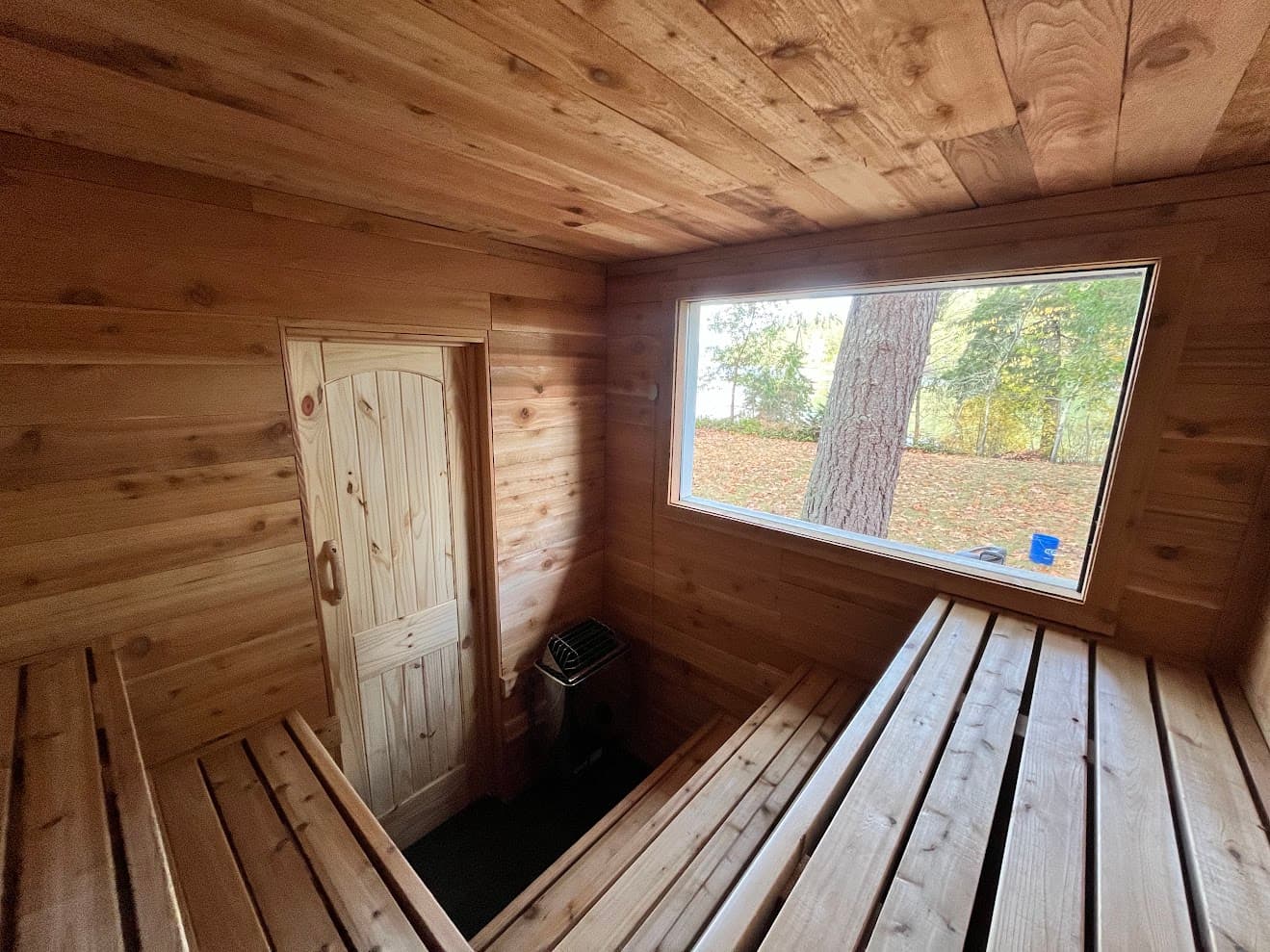
Sauna & Cold Plunge Setup: Cost, Layout, and What Works
The combination of sauna heat and cold water immersion is one of the oldest wellness practices in the world. Finnish culture has paired the sauna with lake or snow plunges for centuries. Nordic and Russian bathing traditions follow the same principle. What's changed recently is that the practice now has a name — contrast therapy — and a growing body of research supporting its physiological benefits.
This guide covers how to design and build a combined sauna and cold plunge setup at home, what the layouts look like, what it costs, and how to approach the project if you're in a mountain climate like Tahoe where natural cold water is part of the landscape.
What Is Contrast Therapy?
Contrast therapy is the deliberate alternation between heat exposure and cold exposure. In the context of a home sauna setup, the typical cycle looks like this:
- Heat phase: 15–20 minutes in the sauna at 176–212°F (80–100°C)
- Cold phase: 1–3 minutes in cold water at 38–60°F (3–15°C)
- Rest phase: 5–10 minutes of relaxation at ambient temperature
- Repeat: 2–3 cycles total
The temperature contrast is what drives the physiological response. During the heat phase, blood vessels dilate, heart rate increases, and blood flows toward the skin's surface. During the cold phase, blood vessels constrict rapidly, heart rate drops, and blood is redirected toward the core organs. This "vascular gymnastics" — repeated dilation and constriction — appears to improve vascular elasticity, reduce inflammation, and accelerate recovery from physical exertion.
What the research shows
A 2022 systematic review in the International Journal of Environmental Research and Public Health examined 13 studies on contrast water therapy and found consistent evidence for reduced muscle soreness (DOMS) and improved perceived recovery after exercise. The effect was most pronounced when the temperature differential between hot and cold was greatest — which is exactly what a sauna + cold plunge combination provides, versus simply alternating warm and cool showers.
Separate research on cold water immersion specifically has documented reduced inflammatory markers (IL-6, CRP), increased norepinephrine production (up to 200–300% above baseline after cold exposure), and improved mood and alertness. When combined with prior heat exposure from a sauna, the norepinephrine response appears to be enhanced — though the research on the combined protocol specifically is still emerging.
For men, there's particular interest in the hormonal effects. Cold exposure has been shown to increase norepinephrine and dopamine, which affect mood, focus, and motivation. The combination of sauna heat (which increases growth hormone release during sleep) and cold exposure (which enhances catecholamine production) creates a complementary hormonal stimulus that some researchers describe as a "natural performance stack." The evidence here is promising but preliminary — these are small studies on healthy young men, not large population trials.
Layout Options
The key design question for a sauna + cold plunge setup is spatial: where does each element go relative to the other, and how does the user move between them?
Option 1: Outdoor Sauna + Adjacent Plunge Tub
This is the most common and most practical layout for home installations. The sauna sits as a standalone outdoor structure, and the cold plunge is positioned within a few steps — typically 5–15 feet away.
Advantages: Clean separation between heat and cold. Easy to maintain each independently. The outdoor walk between sauna and plunge — even if it's just a few steps — adds to the contrast experience, especially in winter when the ambient air provides an intermediate cooling step.
Plunge options for this layout:
- Stock tank (Rubbermaid, galvanized steel): $100–$500. The budget DIY option. Fill with hose water, add ice in summer. In Tahoe winters, the water stays naturally cold (35–45°F from November through April).
- Purpose-built cold plunge tub (insulated, with chiller): $3,000–$8,000. Products like the Plunge, Ice Barrel, or Cold Stoic provide temperature control, filtration, and insulation. These maintain consistent cold temperatures year-round without ice.
- Concrete or wood soaking tub (custom built): $2,000–$6,000. A permanent installation, often built as a matching structure to the sauna. Can be plumbed with a recirculating chiller or simply filled and drained.
- Natural water source: $0. If your property has creek access, lake access, or natural spring-fed water, you already have the cold plunge. This is the traditional Finnish approach — and in Tahoe, Lake Tahoe's surface temperature ranges from 39°F in winter to 65–68°F in late summer at the surface, making it a natural cold plunge for most of the year.
Site considerations: The path between sauna and plunge should be level, non-slip, and well-lit. A concrete pad, flagstone path, or composite decking works well. Avoid gravel or bare dirt — you'll be walking this path barefoot with wet feet.
Option 2: Indoor Sauna + Indoor Plunge
For homes where an outdoor setup isn't feasible (or for year-round comfort), both elements can be built indoors — typically in a basement or large bathroom.
Advantages: No weather exposure. Year-round consistent temperatures. No outdoor space required.
Challenges: Drainage and moisture management become more critical. The cold plunge tub needs a drain and overflow, and the surrounding floor needs to handle regular water splashing. A dedicated wet room with a floor drain is ideal.
Plunge options for this layout:
- Built-in soaking tub with chiller: $4,000–$10,000 installed. This is essentially a small soaking tub (4×3 feet, 3–4 feet deep) plumbed with cold water supply, drain, and a standalone chiller unit.
- Freestanding cold plunge tub: $3,000–$7,000. Drop-in units that sit on the floor. Easier to install than built-in but take up more floor space.
- Cold shower (budget alternative): $200–$500 for a shower conversion. Not as effective as full immersion, but a dedicated cold shower station provides the contrast stimulus at a fraction of the cost.
Space requirement: A minimal indoor contrast therapy setup (small sauna + plunge tub + transition space) needs approximately 100–120 square feet total. A comfortable setup with a rest area needs 150–200 square feet.
Option 3: Sauna + Natural Cold Plunge (Mountain/Lakeside Properties)
This is the setup that makes Tahoe and mountain properties uniquely suited for contrast therapy. If you have access to a natural body of water — lake, river, creek, or even reliable snowpack — the cold plunge element is already built.
Advantages: Zero cost for the cold plunge. The experience is dramatically better than a tub — full-body immersion in natural cold water with open sky and mountain scenery is an entirely different experience than sitting in a tub in your garage.
Considerations:
- Safety. Natural water bodies can have currents, drop-offs, and underwater hazards. A designated entry and exit point with secure footing (a dock, ladder, or cleared shoreline) is essential.
- Access. The path from sauna to water needs to be navigable in all conditions, including snow and ice. A cleared, lit path with non-slip surface is worth the investment.
- Legality. Some shoreline areas have access restrictions, especially in TRPA-regulated areas around Lake Tahoe. Verify your access rights and any applicable regulations.
- Temperature. Lake Tahoe stays cold enough for contrast therapy virtually year-round. The deeper water stays below 50°F even in August. In summer, wade to knee or waist depth and you'll hit cold water quickly.
Option 4: Barrel Sauna + Stock Tank Plunge (Budget Outdoor)
For the budget-conscious, a barrel sauna kit ($3,000–$6,000) paired with a galvanized stock tank ($100–$300) creates a functional contrast therapy setup for under $7,000 total — or under $4,000 if you assemble the barrel sauna yourself.
Advantages: Lowest cost entry point. Can be set up on a gravel pad without a concrete foundation. Visually cohesive — the barrel sauna and round stock tank share a similar rustic aesthetic.
Limitations: Barrel saunas have less interior space than a rectangular build. Stock tanks lack filtration and temperature control — you'll be draining and refilling periodically (or relying on cold ambient temperatures to maintain water temp).
Trusted by homeowners across Tahoe and beyond
Cold Plunge Cost Breakdown
| Plunge Type | Equipment Cost | Installation Cost | Annual Operating Cost | Total First-Year Cost |
|---|---|---|---|---|
| Stock tank (no chiller) | $100–$500 | $0 | $50–$200 (water/ice) | $150–$700 |
| Stock tank + portable chiller | $100–$500 + $1,500–$3,000 | $200–$500 (electrical) | $300–$600 (electricity) | $2,100–$4,600 |
| Purpose-built cold plunge tub | $3,000–$8,000 | $500–$1,500 | $300–$800 (electricity, filters) | $3,800–$10,300 |
| Custom-built concrete/wood tub | $2,000–$4,000 (materials) | $1,500–$3,000 (labor + plumbing) | $300–$600 | $3,800–$7,600 |
| Indoor built-in with chiller | $4,000–$10,000 | $2,000–$4,000 | $400–$1,000 | $6,400–$15,000 |
| Natural water source | $0 | $0–$500 (path/access) | $0 | $0–$500 |
Chiller sizing
If you're adding a chiller, sizing matters. A chiller that's too small for the tub volume will run constantly without reaching target temperature.
- 100–150 gallon tub (1 person): 1/3 HP chiller ($1,500–$2,500)
- 150–300 gallon tub (2 people): 1/2 HP chiller ($2,000–$3,500)
- 300+ gallon tub (large/shared): 3/4–1 HP chiller ($3,000–$5,000+)
In Tahoe's climate, you may only need a chiller for the warmest summer months (July–September). From October through June, ambient temperatures keep water naturally cold enough for contrast therapy. This means a smaller, less expensive chiller can work — you're supplementing rather than creating cold.
Combined Setup Cost Estimates
Here are four realistic scenarios for a complete sauna + cold plunge installation:
Budget Setup: Barrel Sauna + Stock Tank
| Item | Cost |
|---|---|
| Barrel sauna kit (6' diameter, seats 4) | $4,500 |
| Barrel sauna assembly (DIY) | $0 |
| Gravel pad (sauna + plunge area) | $600 |
| Electrical (240V circuit to sauna) | $800 |
| Galvanized stock tank (150 gallon) | $200 |
| Pathway materials (flagstone/pavers) | $300 |
| Total | $6,400 |
Mid-Range Outdoor: Custom Sauna + Plunge Tub with Chiller
| Item | Cost |
|---|---|
| Custom outdoor sauna (6×8, cedar) | $18,000 |
| Purpose-built cold plunge tub (with chiller) | $5,000 |
| Electrical (sauna circuit + plunge circuit) | $1,500 |
| Concrete pad (combined for both) | $2,500 |
| Landscaping/pathway | $800 |
| Total | $27,800 |
Lakeside/Mountain: Custom Sauna + Natural Plunge
| Item | Cost |
|---|---|
| Custom outdoor sauna (6×8, cedar) | $18,000 |
| Path to water (cleared, lit, non-slip) | $500 |
| Lake/creek access improvements (dock, ladder) | $500–$2,000 |
| Total | $19,000–$20,500 |
Indoor: Basement Sauna + Built-in Plunge
| Item | Cost |
|---|---|
| Custom indoor sauna (5×7, hemlock) | $8,000 |
| Built-in cold plunge tub with chiller | $7,000 |
| Plumbing (drain, cold water supply, overflow) | $1,500 |
| Electrical (sauna + chiller circuits) | $1,200 |
| Wet room flooring and drainage | $2,000 |
| Total | $19,700 |
Design Considerations
Proximity
The sauna and cold plunge should be close enough that you don't lose the heat-to-cold contrast during the transition. Ideally, the plunge is within 10–20 steps of the sauna door. More than 30 seconds of walking in ambient air starts to reduce the contrast stimulus.
Privacy
If your setup is outdoors, consider sightlines from neighbors and public areas. A simple privacy screen, fence section, or strategic landscaping solves this without enclosing the area completely.
Drainage
Both the sauna and cold plunge generate water — the sauna from löyly steam and sweat, the plunge from splashing and overflow. Plan drainage for both:
- Sauna: A floor drain connected to a dry well or perimeter drain is ideal for outdoor saunas. Indoor saunas need a floor drain connected to the plumbing system.
- Cold plunge tub: Needs an overflow drain and a way to empty for cleaning. If using a chiller with filtration, you'll also need electrical and a supply line.
Lighting
Evening use is common, especially in winter when it gets dark early. Warm, low-level lighting along the pathway between sauna and plunge improves safety and ambiance. Solar-powered path lights ($50–$100) work well for outdoor setups. The sauna itself should have its own interior lighting.
Rest Area
The third phase of contrast therapy — rest — is often overlooked in layout planning. A bench, chair, or covered area where you can sit for 5–10 minutes between cycles completes the experience. In summer, a simple wooden bench between the sauna and plunge works. In winter, a covered or semi-enclosed rest area with a blanket is more practical.
Tahoe-Specific Considerations
Building a sauna and cold plunge setup in the Tahoe/Truckee area comes with a few unique factors:
Natural Cold Water Advantage
Tahoe's climate is arguably the best in the country for contrast therapy. Lake Tahoe maintains plunge-appropriate temperatures (39–50°F) for 8–10 months of the year. Mountain creeks and rivers run even colder. If your property has water access, you have a world-class cold plunge at no additional cost.
Snow Load
Any outdoor structure in the Tahoe area must be designed for significant snow loads — 100–200+ PSF depending on your specific location and elevation. This affects the sauna roof structure and any covered areas or platforms. Don't use lightweight residential framing for outdoor sauna builds without confirming the snow load rating.
Frost Line
The frost line in the Tahoe area is approximately 30 inches deep. Any plumbing (for a plunge tub drain line or water supply) needs to be below this depth to prevent freezing. Above-ground plumbing should be insulated and, ideally, drainable for winter.
Permits
Outdoor structures in the TRPA jurisdiction may require both local building permits and TRPA review, particularly if they add to the lot's impervious coverage or are within the shoreline setback zone. An outdoor sauna is typically classified as an accessory structure. Check with your local building department and TRPA (if applicable) before starting construction.
Winter Use
The sauna-to-cold-plunge experience is most dramatic in winter when you step from a 180°F sauna into sub-freezing air and then into cold water. Design your setup with winter access in mind:
- Clear, non-slip paths (heated pavers or regular snow clearing)
- A hook or shelf near the sauna door for a robe and slippers
- A rest area that's sheltered from wind
- Good exterior lighting for early-dark winter evenings
Building Your Contrast Therapy Setup
If you're considering a combined sauna and cold plunge, the sauna is the larger, more complex build. Start there. The Sauna Building Guide covers sauna sizing, materials, heater selection, and ventilation. For a custom design that integrates both elements into a cohesive layout for your property, schedule a design consultation — we'll help you plan the full setup including placement, drainage, electrical, and cold plunge integration.
Frequently Asked Questions
How cold should a cold plunge be? Most research uses water temperatures between 38–60°F (3–15°C). Colder isn't necessarily better — the key variable is the contrast with the sauna heat, not the absolute cold temperature. For beginners, 55–60°F is cold enough to trigger the vascular response. Experienced users typically prefer 38–45°F.
How long should I stay in the cold plunge? One to three minutes is the standard range in research protocols. Longer isn't better — the vascular constriction response occurs within the first 30–60 seconds, and staying beyond 3–4 minutes increases the risk of hypothermia without proportionally increasing benefits.
Can I use a cold shower instead of a plunge? A cold shower provides some contrast stimulus but is less effective than full-body immersion. The surface area of cold water contact is smaller in a shower, and the temperature is harder to control (municipal cold water varies from 40–70°F depending on season and location). A shower is a reasonable starting point if you're new to contrast therapy or don't have space for a plunge.
Is contrast therapy safe? For healthy adults, yes. The sudden temperature change causes a brief spike in blood pressure and heart rate. People with uncontrolled hypertension, heart arrhythmias, Raynaud's disease, or who are pregnant should consult a physician before starting. Never use alcohol before or during contrast therapy — it impairs thermoregulation and increases the risk of accidents.
Do I need a chiller for the cold plunge? In the Tahoe area, probably not for most of the year. Ambient temperatures keep water naturally cold from October through June. A chiller is useful for July–September or if you want precise temperature control year-round. In warmer climates, a chiller is essentially required for consistent cold temperatures.
How often should I do contrast therapy? The sauna research shows the best health outcomes at 4–7 sessions per week. There's less specific research on cold plunge frequency, but most practitioners and coaches recommend 3–5 sessions per week. Starting with 2–3 sessions per week and increasing as your cold tolerance builds is a reasonable approach.