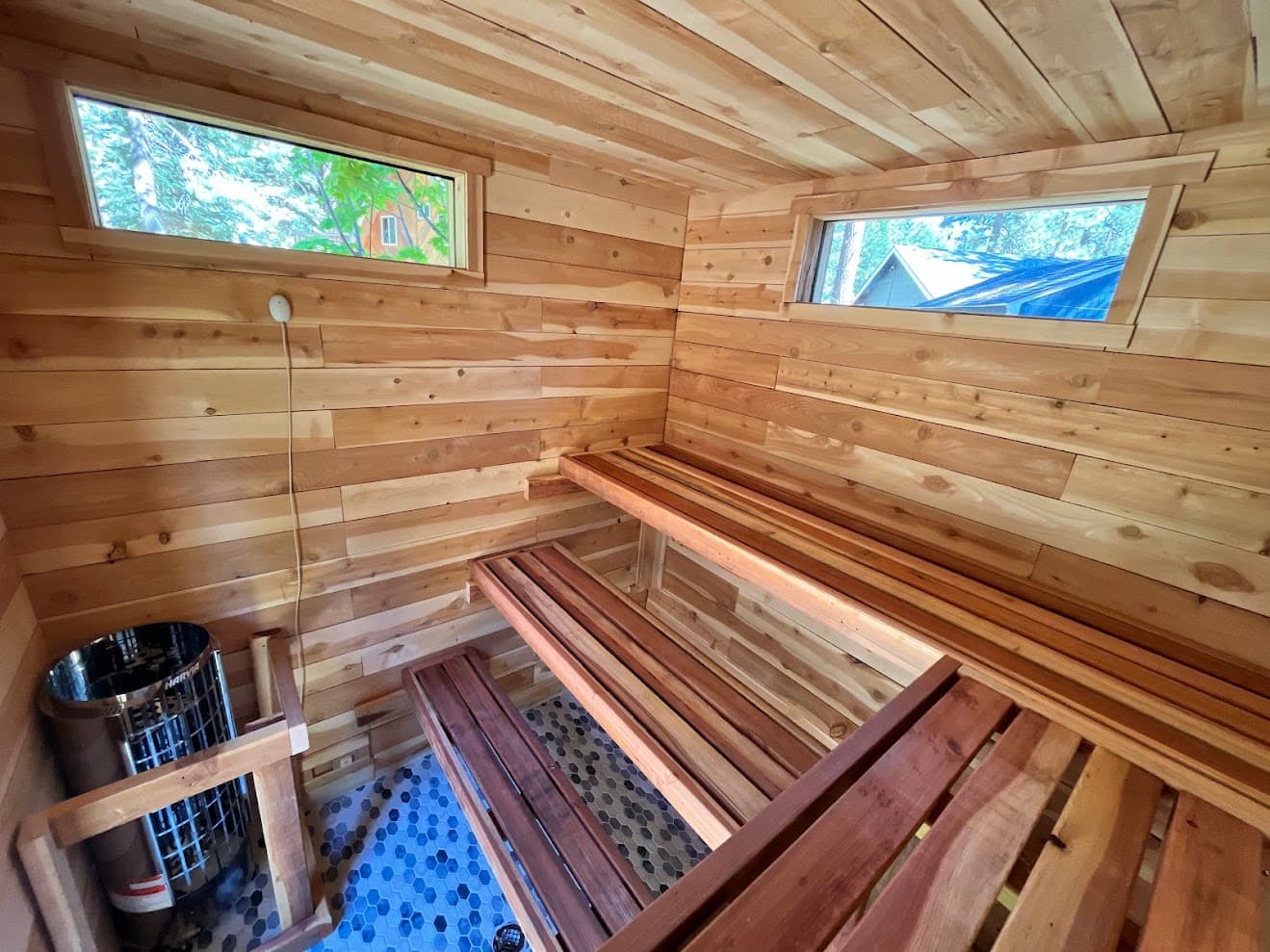
Bathroom Sauna: How to Add a Sauna to Your Bathroom Renovation
A bathroom sauna is one of the most practical ways to add a sauna to your home — and it's becoming one of the most common requests we hear from contractors doing bathroom renovations. The idea is simple: convert part of your bathroom into a dedicated sauna, with your existing shower right there for rinsing off afterward.
It's efficient. It uses space you already have. And if you're already tearing out tile and reworking plumbing for a bathroom remodel, the incremental cost of adding a sauna is significantly lower than building a standalone structure.
Here's what actually goes into making it work.
Why Adding a Sauna in a Bathroom Works So Well During a Renovation
The biggest barrier to building a bathroom sauna is usually the construction disruption — framing walls, running electrical, waterproofing. But if you're already renovating the bathroom, most of that work is happening anyway. Your walls are already open. Your electrician is already on site. Your contractor is already managing the project.
That's why we're seeing so many contractors reach out about this. When a homeowner is already spending $30K–$60K on a master bath renovation, adding a compact sauna for an additional $8K–$15K is a relatively small upgrade that dramatically increases the value and appeal of the space.
The key is planning for the sauna from the start of the renovation — not trying to retrofit it after the new bathroom is finished.
Space Requirements for a Bathroom Sauna
A functional sauna needs a minimum of 4x4 feet (16 square feet) of floor space. That's tight — one person, sitting upright. A 4x6 layout is much better: it seats two comfortably or lets one person stretch out.
Where does this space come from in a typical bathroom?
- Replace an oversized tub. The garden tub or soaking tub that nobody uses is often the perfect footprint — a 5x3 or 5x4 tub alcove converts nicely into a compact sauna.
- Repurpose part of a large shower. If the existing shower is 5x5 or larger, you can partition the area — keep a 3x5 shower and build a 4x5 sauna adjacent to it, sharing a wall.
- Carve space from the room. In larger master baths, you may have a corner or section that's underutilized. Framing a 4x6 sauna into a corner is straightforward during a renovation.
- Expand into a closet or dressing area. Master bath closets that share a wall with the bathroom are prime candidates — borrow 4–6 feet of depth and you've got a sauna footprint.
The critical constraint is ceiling height. A sauna needs at least 7 feet of interior ceiling to get proper heat stratification — the temperature difference between your head and feet needs to stay under 20°C for a comfortable experience. Standard 8-foot bathroom ceilings work perfectly. If you're working with lower ceilings (some older homes, basement baths), 6.5 feet is the absolute minimum but the thermal experience will be noticeably compromised.
Trusted by homeowners across Tahoe and beyond
Heater Sizing for a Sauna in a Bathroom
Bathroom saunas are typically small — 4x4 to 4x6 with 7–8 foot ceilings. That's 112 to 192 cubic feet. For this volume range, you're looking at a 4.5–6 kW electric heater.
The most common setup we specify for bathroom saunas is a Harvia KIP series — the KIP 45 (4.5 kW) for 4x4 spaces or the KIP 60 (6 kW) for 4x6. These are compact wall-mount heaters that don't eat into your limited floor space. Paired with a Harvia Xenio control panel mounted outside the sauna (usually right on the bathroom wall), you get digital temperature control without any controls exposed to the heat.
A 4.5 kW heater on a 4x4 room will reach 185°F in about 25–30 minutes. A 6 kW heater on a 4x6 room does the same in about 20–25 minutes.
One thing to watch: if you have a glass door (which most bathroom saunas do for aesthetics and to avoid the "closet" feel), factor in 10–15% heat loss through the glass. This usually means stepping up one heater size or accepting slightly longer heat-up times.
The Electrical Reality
This is where bathroom sauna builds get real. A sauna heater requires a dedicated 240V circuit — typically 30 amps for a 4.5–6 kW unit. That's not something you can tap off an existing bathroom circuit.
During a renovation, your electrician can run this line while the walls are open. The circuit goes from the main panel to a disconnect switch (required by code, mounted within sight of the sauna) and then to the heater junction box inside the sauna. The junction box sits 4 inches from the floor (top of box) and 6 inches from the door (outer edge) — positioning matters for the heater connection.
If you're planning under-bench LED lighting (popular for ambiance and practical for the compact space), that's a separate 14/2 line with a dimmer switch mounted outside the sauna.
The total electrical cost for a bathroom sauna during a renovation is typically $800–$1,500 — significantly less than a standalone outdoor build where the electrician has to trench a line across your yard.
Ventilation in a Bathroom Sauna
Ventilation is the most overlooked element in bathroom sauna builds. A sauna needs a fresh air intake on the heater wall and an exhaust on the opposite wall — where exactly they go depends on whether you're running a fan (more on that below). Without proper airflow, the air goes stale, the heat stratifies badly, and the experience suffers.
In a bathroom conversion, ventilation is actually easier than in a standalone structure because you typically have an exterior wall or existing bathroom exhaust infrastructure nearby. The fresh air intake can pull from the bathroom itself (which has its own ventilation), and the exhaust can vent into the bathroom's existing exhaust fan duct or directly through an exterior wall.
For a passive system, a 4-inch intake vent low on the wall behind the heater and a 4-inch exhaust vent high on the opposite wall is standard. If the layout doesn't allow good passive airflow, a small mechanical ventilation fan on the exhaust side solves the problem for $150–$300 in materials — and once you add the fan, the vent positions change: put the intake about 12 inches above the top of the heater and 12 inches to the side of it so the heater's plume warms the incoming air, and put the fan-driven exhaust below the foot bench on the opposite wall so it pulls that air down through the bench zone and out at the lowest point.
Waterproofing and Moisture Management
Here's the critical difference between a bathroom sauna and a steam room: a traditional Finnish sauna operates at low humidity (10–20% relative humidity at operating temperature). You're not generating clouds of steam — you're generating dry heat with occasional water poured on the rocks.
That said, moisture management still matters:
- Vapor barrier: A continuous aluminum foil vapor barrier behind the interior paneling prevents moisture from reaching the wall framing. This goes on the warm side of the insulation.
- No tile inside the sauna. The interior should be untreated softwood (cedar, spruce, or aspen) — not the tile or marble from the rest of your bathroom.
- Drainage: If you're pouring water on the rocks (loyly), some water will hit the floor. A slight floor slope toward a drain or toward the shower area handles this.
- Dens Shield is optional. For a dry sauna (not a steam room), standard insulation with a proper vapor barrier is sufficient. You don't need the waterproof sheathing you'd use in a shower.
What Contractors Need to Know
If you're a contractor working with a homeowner who wants to add a sauna to a bathroom renovation, here are the key coordination points:
Plan the sauna early. It affects framing, electrical rough-in, ventilation routing, and floor plan. Adding it after drywall is exponentially more expensive.
The sauna is a room within a room. It gets its own framing, insulation (R-13 minimum for walls, R-19 for ceiling), vapor barrier, and interior finish. It doesn't share the bathroom's wall finish.
Coordinate with the electrician. The dedicated 240V circuit and the heater junction box location need to be planned during rough-in. The control panel goes outside, typically on the bathroom wall next to the sauna door.
Door swing matters. Sauna doors must open outward (safety code requirement). In a tight bathroom, plan the door swing so it doesn't hit the vanity, toilet, or shower door.
We work with contractors on the sauna design, heater specification, and material list — you handle the construction. Learn more about our design process or browse our sauna building resources for detailed planning.
Frequently Asked Questions
How much does it cost to add a sauna to a bathroom?
During a renovation, expect $8,000–$15,000 for the sauna portion, depending on size and heater choice. That covers framing, insulation, vapor barrier, cedar paneling, heater, control panel, electrical, and ventilation. The cost drops significantly when the bathroom is already being renovated because the framing, electrical, and general contractor are already on site.
Can I convert my existing shower into a sauna?
If your shower is at least 4x4 feet, yes. You'll need to strip the tile, reframe with insulated walls, add a vapor barrier, install wood paneling, and run a dedicated 240V circuit for the heater. The existing shower drain can stay — it's actually useful for the occasional water runoff from pouring water on the rocks.
Is a bathroom sauna the same as a steam shower?
No. A traditional sauna operates at 170–200°F with low humidity (10–20%). A steam shower operates at 110–120°F with near 100% humidity. They require completely different construction — steam rooms need full waterproofing on every surface, while saunas need a vapor barrier and wood paneling. A sauna is a much simpler build in most bathroom settings.
Do I need a permit for a bathroom sauna?
In most jurisdictions, adding a sauna during a bathroom renovation falls under the existing renovation permit, especially if you're already pulling permits for electrical and plumbing work. The sauna's dedicated 240V circuit will need inspection. Check with your local building department — in the Tahoe area, permit requirements vary by county.