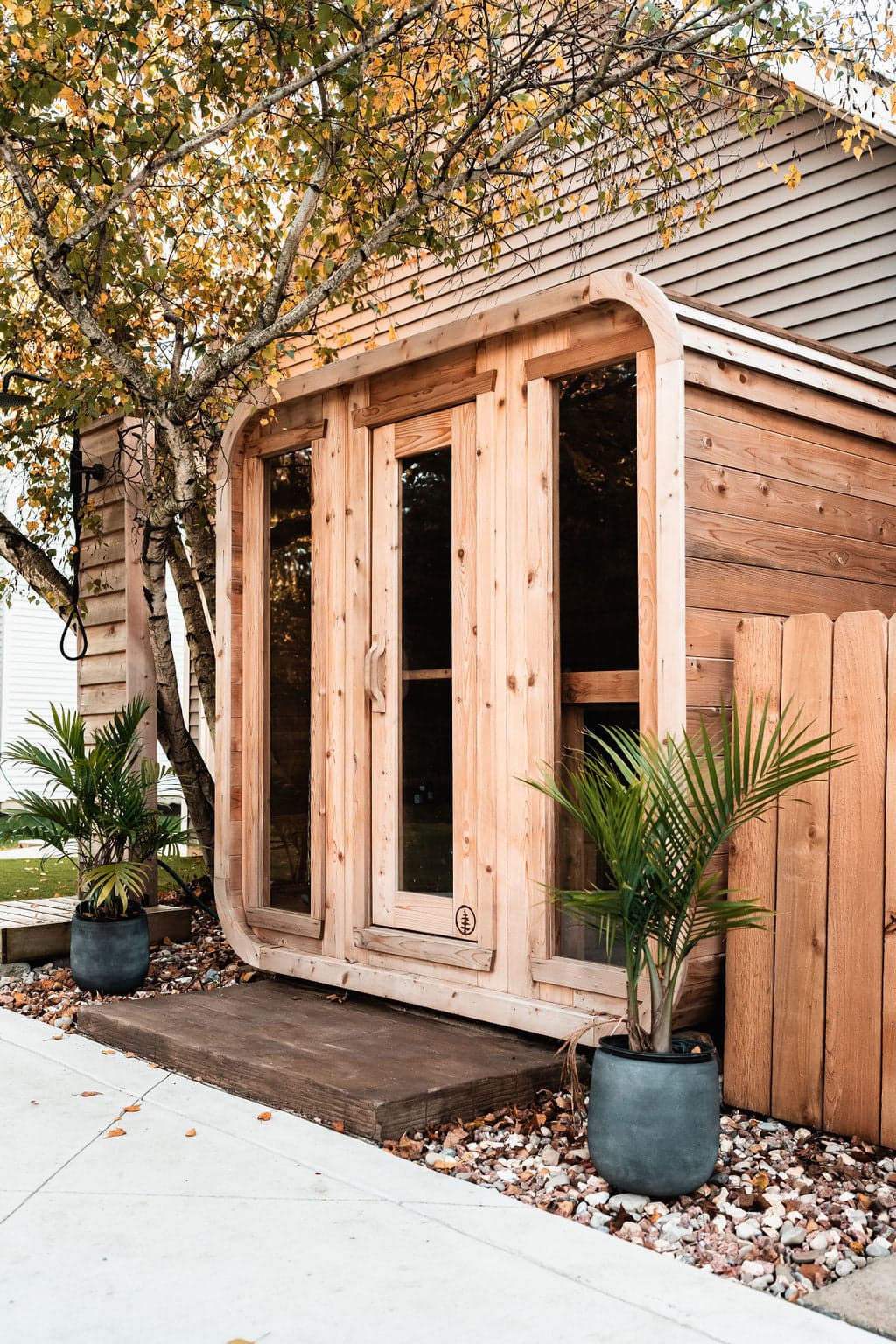
SISU Crew Cabin Sauna Review: Graded Against Real Sauna Standards
The SISU Crew Cabin is a $13,995 cedar cabin sauna, handcrafted in Ohio and built around a 9 kW floor-standing heater loaded with up to 200 pounds of stone. That heater-and-stone package is the reason to look at this sauna — it's one of the best we've seen in a kit, and it does the single most important thing a sauna can do: produce good, soft steam. But at nearly $14,000 the rest of the build matters just as much, and this is where the Crew gets harder to judge. SISU publishes very little about wall construction, insulation, and ventilation — the things that decide how a sauna actually performs once it's outside in the cold. We grade every product against the same engineering standards we use on our own custom builds, and we cross-referenced specs across five sources to keep the numbers here honest.
Overview
The SISU Crew is a cabin-style sauna made from Western Red Cedar, built by Amish and Finnish-American craftsmen in Ohio. It ships with a Homecraft Revive 9 kW floor-standing electric heater, two tiers of cedar benches, and a tempered glass front door. It's rated for indoor and outdoor use, assembles in three to five hours, and runs on a dedicated 240-volt, 50-amp circuit, so you'll need a licensed electrician.
The price is $13,995.
What the SISU Crew Does Well
The Heater and Stone Mass
This is the standout. The Homecraft Revive is a 9 kW floor-standing heater carrying a lot of stone — SISU lists 200 pounds, and independent sources report 165. Either number is a huge amount compared to a typical wall-mounted heater, which holds around 20 pounds of stone with only about half of it doing any real work.
The target for good steam is roughly 6 to 12 kilograms of stone per cubic meter of room volume. At 165 pounds in about 7.3 cubic meters, the Crew lands around 10 kg/m³; at 200 pounds it's closer to 12.5. Either way it's right in the range. More stone means softer, more even löyly when you throw water, smoother temperature swings because the heater isn't cycling on and off as hard, and a more forgiving heat overall. Paired with 9 kW of power, it also means the room gets hot fast in mild conditions. On steam quality alone, this puts the Crew ahead of most kit saunas.
Bench Depth and Positioning
The top bench is about 22 inches deep. We typically recommend at least 24 inches so you can sit comfortably or lie down without feeling like you'll roll off, so 22 is a touch shy but close — most people won't have a problem with it.
The bench height is the better story. The top bench sits about 35 inches below the ceiling, which means you're up in the hot zone without a big pocket of dead air wasted above your head. Heat rises and collects at the ceiling, and a top bench that sits too far below it leaves the best heat stranded where nobody's sitting. The Crew keeps you close to it. Get your body — ideally your feet — up onto that top bench and you'll feel a much more even heat than you would sitting low.
Cedar Construction and Ohio Craftsmanship
Western Red Cedar is one of the best woods for a sauna interior. It resists moisture and decay, it doesn't get too hot to touch, and it smells great. SISU builds the whole cabin from it, not just the interior paneling, and having it handcrafted in Ohio rather than mass-produced overseas is a real quality signal at this price.
WiFi Controls
The UKU remote lets you preheat from your phone. That sounds like a gimmick, but the health benefits from a sauna come from using it consistently — the research points to four to seven sessions a week. Anything that removes friction from actually walking out and using it earns its keep.
Trusted by homeowners across Tahoe and beyond
Where It Falls Short
The Flat Roof
The Crew has a flat roof, and for an outdoor sauna that's a concern — especially anywhere it snows. A flat roof gives snow nowhere to shed and gives rain and meltwater nowhere to drain, so water can pool and load can build up. In a place like Tahoe, that's exactly the kind of thing that shortens the life of an outdoor structure. If you're putting this outside in a wet or snowy climate, plan on a way to shed snow off it and keep an eye on how water drains, or build a small roof or overhang above it.
Thin Walls and Low Efficiency
The walls aren't thick and there's no insulation we can find published anywhere — no wall thickness, no R-value, no vapor barrier spec. For a $14,000 sauna, that's a real gap, and it shows up in the way the sauna runs. Our standard is R-13 to R-21 in the walls, R-30 or higher in the ceiling, and a foil vapor barrier on the warm side. Without that, heat pours straight through the walls.
The practical cost is efficiency. Independent reviewers report heat-up times stretching from 15 to 20 minutes on a warm day to as long as 80 to 90 minutes when it's cold out. A well-insulated sauna this size with a 9 kW heater would hit temperature in 30 to 45 minutes regardless of weather. That wide swing tells you the heater is fighting the walls in cold weather — which means it runs longer, runs more often, and costs you more on the electric bill every session. The big heater masks the problem; it doesn't fix it.
Ventilation Is a Single Passive Vent
From what we can see, the Crew has one passive exhaust vent on the side and nothing else. SISU's own guidance is "basic ventilation with a window or bath fan." That's not a ventilation system.
A sauna needs fresh air entering up near the heater, where it gets pulled into the rising heat and spread through the room, and stale air pulled out low on the opposite wall near the foot bench. That loop is what keeps the air breathable. Without it, CO2 climbs fast once you've got a few people inside — past 1,200 ppm in testing, well above the 700 ppm you want. That heavy, close, need-to-step-out feeling people blame on the heat is almost always the air. A single passive vent won't move enough air to prevent it.
The fix is doable. A proper mechanical downdraft setup is about $100 to $200 in parts — an inline duct fan, some flex duct, and two wall caps — and any handy homeowner can add it. Our Sauna Ventilation Kit bundles the parts if you'd rather not source them yourself. On a sauna this otherwise capable, it's the upgrade that matters most.
Overstated Capacity and No Drain
SISU rates the Crew for six people. It isn't a six-person sauna. The interior runs about 259 cubic feet, and healthy air quality calls for roughly 105 cubic feet per person. Six people puts you at 43 cubic feet each, less than half of that. Realistically this is about a four-person sauna, and even four is tight — you'll be close, and the ventilation gap above matters more the more bodies you add. Two or three is where it's genuinely comfortable.
There's also no floor drain that we can find mentioned. It's not a dealbreaker, but water, sweat, and splashed löyly water need somewhere to go, and a drain makes cleaning a lot easier over the years.
Thin Spec Sheet
Beyond the specific gaps above, there's just not much detail on SISU's site — no insulation numbers, no clear warranty terms (retailers reference a one-year warranty, but SISU doesn't publish it), no confirmation on the drain. At $14,000 you should be able to see exactly what you're buying. Ask SISU directly about wall construction, insulation, and warranty before you put money down.
Specs vs. Design Standards
| Spec | SISU Crew | Design Standard | Assessment |
|---|---|---|---|
| Stone Mass | 165–200 lbs | 6–12 kg/m³ target | Excellent (~10–12.5 kg/m³) |
| Heater | Homecraft Revive 9 kW | Quality floor-standing | Good choice |
| Top Bench Depth | ~22" | 24" recommended | Close — slightly shy |
| Top Bench Position | ~35" below ceiling | Up in the heat zone | Good — little wasted space |
| Wood Species | Western Red Cedar | Cedar or thermowood | Passes |
| Roof | Flat | Sheds snow / drains water | Concern in snowy climates |
| Wall Insulation | None published | R-13 to R-21 | Thin — low efficiency |
| Vapor Barrier | Not specified | Foil barrier required | Unknown |
| Ventilation | Single passive vent | Mechanical downdraft | Not adequate |
| Heat-Up | 50–90 min (weather-dependent) | 30–45 min well-insulated | Slow in cold — thin insulation |
| Capacity | ~4 realistic (rated 6) | 105 cu ft/person | Overstated |
| Drain | Not mentioned | Recommended | Not included |
| Electrical | 240V / 50A | Standard for 9 kW | Correct |
| Temperature | Reaches 170–200°F | 170–200°F operating | Reaches target |
| Warranty | ~1 year (per retailers) | 5+ years typical | Short |
| Price | $13,995 | — | Premium kit pricing |
The Bottom Line
The Crew's heater and stone mass are genuinely excellent — among the best in any kit sauna — and that's not a small thing, because it's the part most kits get wrong. The cedar build is solid, the Ohio craftsmanship is real, and the bench positioning is good. If steam quality is what you care about most, this delivers.
The concerns are the parts SISU doesn't talk about. The flat roof is a liability in snow country. The thin, uninsulated walls mean the heater runs hard and costs more every time you use it in the cold. The ventilation is one passive vent when it should be a real airflow loop. And it's a four-person sauna at most, not the six it's sold as. None of those are dealbreakers on their own, and the ventilation is a cheap fix, but together they're what you're weighing against that great heater at a nearly-$14,000 price.
Who it's for: someone in a milder climate who wants top-tier steam, plans to use it with one to three people, and is willing to add proper ventilation. If you're in a cold, snowy spot, go in with your eyes open on the roof and the running costs, and ask SISU the questions they don't answer on the site. And whatever you land on — any sauna is better than no sauna. The important thing is that you're using one.
Also read: SISU Crew Cabin vs. Custom Sauna Build: What Each Really Costs — the same room priced three ways: this kit, owner-built, and contractor-built.
Also read: Plunge Sauna XL Review: Graded Against Real Sauna Standards
Frequently Asked Questions
How many people can actually fit in the SISU Crew?
SISU rates it for six, but based on the interior volume (about 259 cubic feet) and the roughly 105 cubic feet per person needed for healthy air quality, the realistic number is about four — and even four is tight. Two or three people is where it's genuinely comfortable. Six is a marketing figure.
Is the SISU Crew good for cold or snowy climates?
With caveats. The flat roof doesn't shed snow well and can let water pool, and the thin, uninsulated walls mean the heater runs much longer and costs more to reach temperature when it's cold out — reviewers report up to 80 to 90 minutes on a cold day. If you're putting it outside somewhere snowy, plan for how snow and water will clear off the roof, and expect higher running costs.
Does the SISU Crew come with ventilation?
Not a real system. It has a single passive exhaust vent, and SISU recommends "a window or bath fan." Proper mechanical downdraft ventilation costs about $100 to $200 in parts to add and makes a big difference in air quality once you have more than one or two people inside.
What heater does the SISU Crew use?
A Homecraft Revive 9 kW floor-standing electric heater with WiFi through the UKU remote. It carries up to 200 pounds of stone, which is what gives it such good steam. One independent reviewer instead listed a HUUM Drop 9 kW, so SISU may offer heater options — confirm with them before buying. (That's an affiliate link — if you buy through it I may earn a small commission at no extra cost to you.)
Does the SISU Crew need special wiring?
Yes. It requires a dedicated 240-volt, 50-amp circuit, hardwired, so you'll need a licensed electrician for the hookup.
Does the SISU Crew have a floor drain?
Not that SISU publishes. A drain isn't essential, but it makes cleaning easier over the years, so it's worth asking about before you buy.
Looking for guidance on what makes a great sauna? Our Sauna Building Guide ($19) walks you through the engineering principles that matter most — bench heights, heater sizing, ventilation design, and insulation — so you can evaluate any sauna, kit or custom, with confidence. You can also see how the SISU Crew stacks up against other kits in our honest sauna reviews, or find vetted brands in The Sauna Directory. Or if you'd prefer a professional assessment for your specific space, our design consultations start at $1,250.