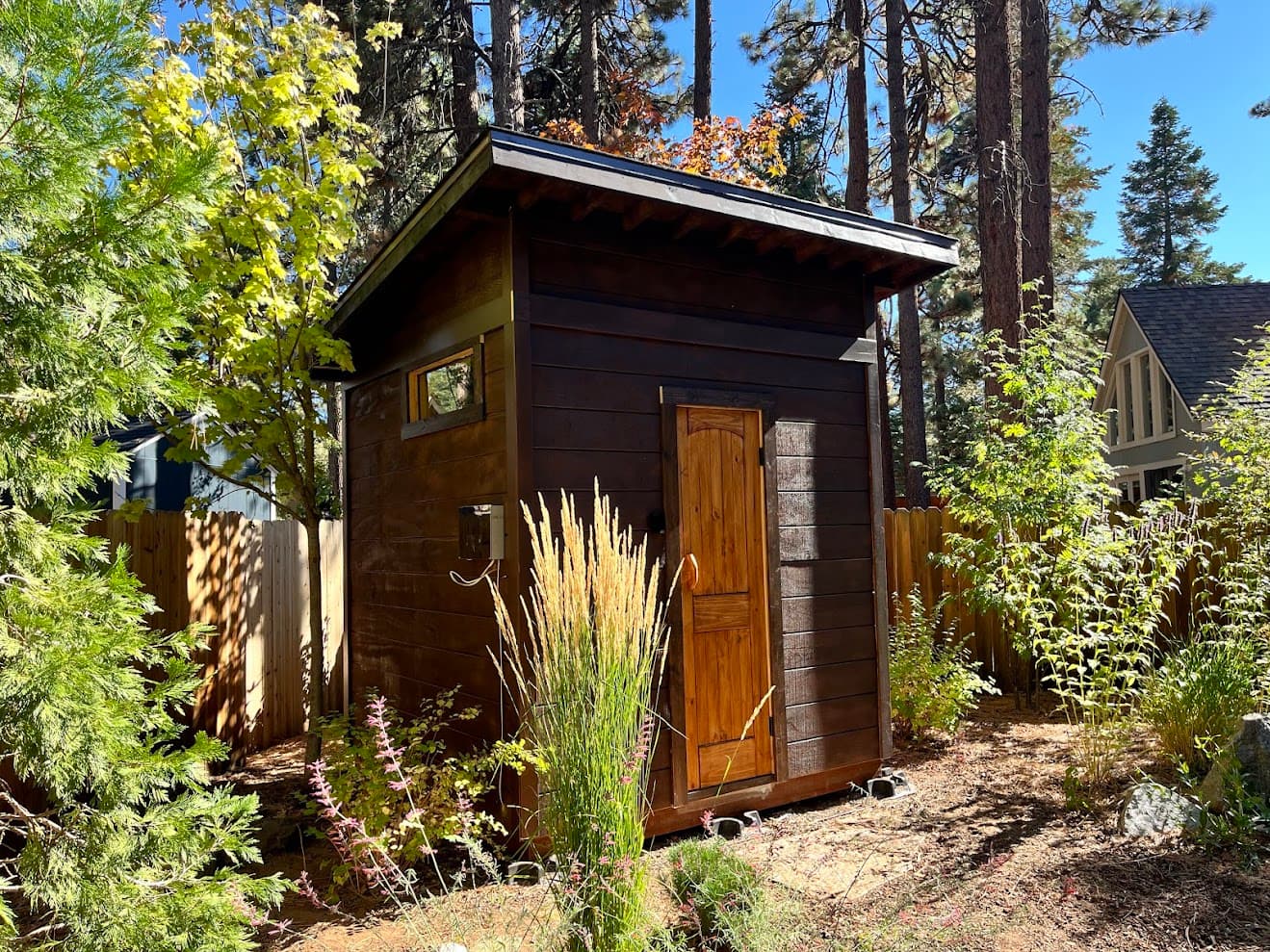
What Should a Quality Sauna Cost? The Honest $5K to $50K Breakdown
We get this question more than almost any other: how much does a quality sauna cost? And we always give the same honest answer — it depends. Not in a vague, contractor-dodging way. In a specific, useful way that actually helps you plan.
The real range is $5,000 to $50,000. Both ends of that range can produce a genuinely excellent sauna. What sits between them is a series of intentional design decisions, each with a real dollar amount attached — and our job is to help you make those decisions wisely.
What Every Quality Sauna Costs, Regardless of Budget
Before we talk about the tradeoffs, let's talk about the non-negotiables — the elements that make a sauna actually work. These aren't line items you can cut. These are the floor.
Proper bench height. In a standard 7.5 to 8-foot ceiling sauna, the upper bench should sit 40–48 inches below the ceiling, putting your head squarely in the hottest zone where temperatures reach 170–200°F. A middle bench, if included, sits 23–31 inches below the ceiling. Get this wrong and you've built an expensive steam closet. Bench seating depth should be 18–24 inches — enough to sit comfortably or lie down.
Quality insulation. Especially here in the Sierra Nevada, where winter temperatures can drop well below freezing, proper insulation isn't optional — it's what separates a sauna that performs from one that bleeds BTUs through the walls all season. We spec walls at R-13 to R-21 and ceilings at R-30 to R-38, paired with an aluminum foil-based vapor barrier installed on the warm interior side with seams overlapped a minimum of 6 inches. Skip this and you'll be running your heater harder, longer, and spending more on electricity for years.
Basic ventilation. Fresh air intake should be located on the heater wall, about 12 inches above the top of the heater and 12 inches to the right of it, so the heater's rising plume grabs the fresh air and mixes it into the hot air instead of letting it sink cold across the floor. The exhaust — a small fan-driven vent — goes below the foot bench on the opposite wall, diagonally across from the intake. It pulls that mixed air down through the bench zone where you sit and breathe and out at the lowest point, which keeps the air comfortable without flushing all your heat out at the ceiling.
Correct heater sizing. We use a simple rule: 1 kW per 45 cubic feet in a well-insulated room with a wood interior. A 6×8 sauna with a 7-foot ceiling (~336 cu ft) needs a 6–8 kW heater. An 8×10 with the same ceiling height (~560 cu ft) calls for 9–12 kW. Oversize it and you overshoot temperature fast. Undersize it and you're waiting forever and never quite getting there. For electric heaters, properly sized units preheat in 30–45 minutes — that's the benchmark to aim for.
Get these four elements right and you have a quality sauna. Everything else is preference — and preference is where the budget conversation gets genuinely interesting.
The Design Decisions That Drive Sauna Cost
This is where clients often have an "aha" moment. Every upgrade below is legitimate and worth considering. None of them are wrong choices. But each one adds cost, and understanding why helps you spend where it actually matters to you.
Sauna rocks. This one surprises people. The right rocks — olivine diabase or peridotite — are essential for safe, consistent steam. Never use river rocks or granite; they crack and shatter under repeated heat cycling, which is both dangerous and expensive to fix. Quality rocks are a modest line item, but it's one you can't cheap out on safely.
Wood finishes. Clear, kiln-dried tongue-and-groove cedar is the gold standard — smooth, aromatic, and visually clean. It's also more expensive than using cedar fence planks, which can give you a genuinely beautiful rustic look at a meaningful fraction of the cost. For a Tahoe cabin sauna, the fence plank aesthetic often fits better than a polished finish. Explore how wood species and wall assembly affect both performance and price →
Glass. A full glass door and large windows let in natural light and create a dramatic visual connection to the outdoors — something clients with mountain views understandably want. But glass loses heat faster than an insulated wood door, and large window openings require careful framing and thermal management. A small picture window and a solid wood door are meaningfully less expensive and actually hold heat more efficiently.
Controls and connectivity. A high-quality electric kiuas from a brand like Harvia or Helo can be paired with a smart controller that lets you preheat your sauna from your phone on the drive home from skiing. That's genuinely useful in a Tahoe winter. It's also an upgrade that adds cost. A manual dial on a well-made heater works just as well — it just requires you to walk out and turn it on 30–45 minutes before you want to use it.
Contractor labor and sweat equity. Here's one people don't always think about: your own participation in the build can meaningfully lower the total cost without affecting quality. Prep work, painting, hauling materials, basic framing assistance — if you're comfortable contributing labor, we can structure a project that captures those savings for you. A skilled contractor's time is the most expensive element in any build. Using it strategically is smart budgeting.
Trusted by homeowners across Tahoe and beyond
So What Does a Quality Sauna Actually Cost?
A thoughtful, well-insulated sauna with quality structure, proper benchwork, and simple but honest finishes can realistically be built for $10,000–$15,000 — especially if you're contributing sweat equity and making practical choices on glass and wood finishes. That sauna will outperform a flashy, under-planned $40,000 build every single time.
If you want the full experience — custom millwork, smart controls, large glass, premium cedar, and a design that integrates seamlessly with a high-end Tahoe home — $35,000–$50,000 is a real and reasonable number for that scope of work.
Most of our clients land somewhere in between, once they've had a real conversation about which features they'll actually notice every single time they use the sauna — and which ones they can comfortably let go.
That conversation is the most valuable part of what we do. If you're working through the planning stage, our design features module walks through exactly these decisions →
Frequently Asked Questions
Is a $5,000 sauna actually good quality, or is it cutting corners? A $5,000 sauna can absolutely be high quality — if the structural fundamentals are done right. That means proper insulation (R-13 to R-21 walls, R-30 to R-38 ceiling), correct bench heights, adequate ventilation, and an appropriately sized heater. What you're letting go of at that price point is typically premium finishes, glass upgrades, and smart controls — not performance or safety.
What's the biggest hidden cost in a sauna build? Insulation and vapor barrier work is often underestimated. In a cold-climate build like Tahoe, cutting corners here costs you money every month in wasted energy and shortens the life of your structure. Doing it right — aluminum foil-based vapor barrier, overlapped seams, proper R-values — adds modest upfront cost but pays back consistently over the life of the sauna.
How much does a smart heater controller actually add to the cost? A smart-enabled electric kiuas with app connectivity typically adds $300–$700 over a comparable manual unit, depending on the brand and output. For Tahoe users who want to preheat remotely after a ski day, it's often worth it. For clients who use their sauna on a consistent daily schedule, the manual option is completely functional and a sensible place to save.
Does sweat equity really make a meaningful difference in final cost? Yes — especially on larger builds. Contractor labor is typically the single largest line item in a custom sauna project. If you're capable of handling prep work, cleanup, basic material handling, or even finish work like painting outbuilding exteriors, that time has real dollar value. We're always happy to structure a project that makes the most of a client's willingness to contribute.
Next Steps
Ready to figure out what your sauna should actually cost? Start a custom design conversation with us → We'll walk through your space, your priorities, and your budget — and give you a straight answer.