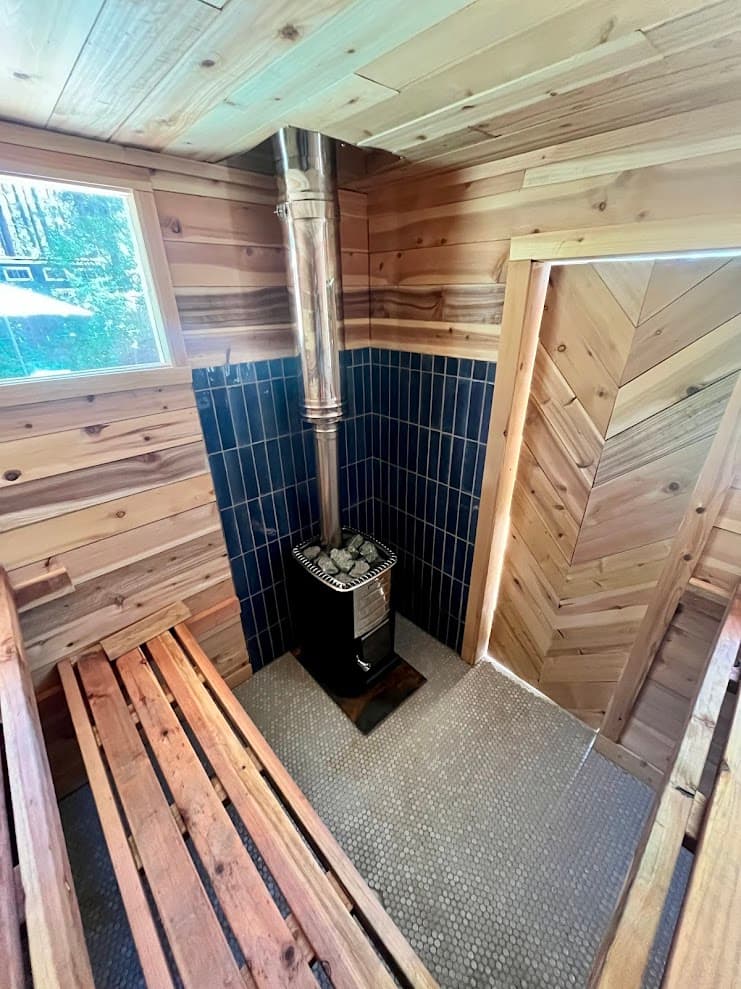
The Mountain West — Colorado, Montana, Utah, Idaho, Wyoming, and surrounding areas — is defined by outdoor recreation, wellness culture, and mountain communities. Residents are active, health-conscious, and live in some of the most beautiful (and cold) places in North America.
Saunas thrive in the Mountain West. They pair perfectly with skiing, hiking, and outdoor fitness. Cold winters make sauna warmth genuinely valuable. Growing wellness culture (especially in Denver, Boulder, Aspen, and Jackson Hole) has accelerated sauna adoption.
However, mountain climate presents unique design challenges: extreme cold, high altitude, freeze-thaw cycles, snow load, and thin air. Understanding these factors is critical for a durable, functional sauna.
Extreme Cold: Winter temperatures regularly drop to 0°F or below in many Mountain West communities. Denver averages 30°F; Aspen and Jackson Hole drop to -10°F or colder. A poorly insulated sauna will be expensive to heat and inefficient.
Freeze-Thaw Cycles: Water freezes, thaws, and refreezes during winter. This causes cracks in concrete, damages materials, and stresses structures. Proper drainage and materials are essential.
Snow Load: Many Mountain West locations receive 100+ inches of snow annually (some mountain areas over 300 inches). Roofs and structures must be engineered to support heavy snow. Local snow load requirements vary by elevation and location.
Altitude Effects: High elevation (Denver 5,280 ft, Aspen 8,000 ft, Jackson Hole 6,311 ft) affects people and equipment. Lower oxygen means some people experience altitude effects. HVAC and heater performance can be affected.
Dry Air: Mountain air is dry compared to coastal regions. This is actually advantageous for sauna moisture management — condensation is less of a concern than in humid climates.
Strong Outdoor Culture: Mountain communities embrace outdoor saunas, cold plunges, and year-round activity. An outdoor sauna is both a practical tool and a lifestyle statement.
Insulation is Non-Negotiable: Minimum R-19 walls and R-30 ceiling for Mountain West saunas. Better is R-30 walls and R-40 ceiling, especially in high-elevation or extra-cold areas. Thick insulation reduces heat loss and operating costs.
Vapor Barrier: Essential to prevent interior moisture from condensing in walls (which causes rot). Use a continuous vapor barrier on the warm side of insulation.
Doors & Seals: Double-pane doors or heavily sealed single-pane doors prevent cold air infiltration. Weatherstripping and threshold seals are critical.
Foundation & Drainage: In freeze-thaw climates, a proper foundation is essential. Footings must be below the frost line (varies by location: 3-4 feet in Colorado, deeper in far north). Gravel base and perimeter drainage prevent ice heave and foundation damage.
Heater Sizing: A larger electric heater (6-8 kW for a 4x6 sauna in cold climates) ensures quick heat-up even in extreme cold. Standard 4 kW heaters may struggle in -20°F weather.
Ventilation: Cold, dry mountain air exhausts heat quickly, so proper insulation and door seals are especially important. Exhaust ducts should be insulated to prevent condensation.
Trusted by homeowners across Tahoe and beyond
Know Your Local Snow Load: Building codes specify design snow loads based on location. Aspen requires roof engineering for 200+ psf snow load. Jackson Hole and high-elevation areas require 150-250 psf. Lower-elevation areas (Denver area) require 25-50 psf.
Roof Structure: A sauna roof must be engineered to support the local snow load. This means:
A sauna that collapses under snow is a safety hazard and a total loss. Don't skimp on structural engineering.
Oxygen & Performance: High altitude (above 6,000 ft) affects human physiology. Some people experience altitude sickness or shortness of breath. This affects sauna use — some people may find it harder to tolerate heat at altitude.
Heater Deration: Combustion heaters (wood or gas) perform less efficiently at high altitude due to thinner air. Electric heaters are unaffected. If using a wood stove, size for the altitude.
Water Boiling Point: Water boils at lower temperatures at high altitude (190°F at 8,000 ft vs. 212°F at sea level). This affects sauna rocks and steam generation — saunas at altitude produce steam at lower rock temperatures.
Ventilation: Exhaust venting is easier at altitude (lower air pressure), so proper exhaust design is straightforward.
Colorado has a booming sauna and wellness market. Denver, Boulder, Aspen, and Vail have strong sauna cultures, driven by skiing, fitness, and recovery. Residential sauna adoption is growing, especially in high-end mountain homes.
Common configurations:
Aspen and Vail have the strongest sauna markets; Denver is catching up.
Montana: Missoula and the mountain towns have growing wellness cultures. Outdoor saunas and cold plunges are becoming more common. The state's outdoor lifestyle and rugged aesthetic align well with sauna culture.
Idaho: Sun Valley and Boise are emerging markets. Outdoor saunas and sauna + hot spring combinations are popular in mountain communities.
Utah: Salt Lake City and ski communities (Park City, Alta) have growing sauna interest. The indoor sauna market is strong (many public gyms have saunas). Residential adoption is increasing.
Wyoming: Jackson Hole is the epicenter. Ski resorts, vacation homes, and wellness retreats commonly feature saunas. The outdoor lifestyle and wellness culture are strong.
Many Mountain West residents prefer outdoor saunas. Advantages:
Dramatic Experience: An outdoor sauna in a mountain setting — surrounded by forest, peaks, and crisp mountain air — is phenomenal.
Contrast Therapy: Exiting a 180°F sauna into 0°F mountain air is intense and exhilarating. The contrast is therapeutic. Add a cold plunge for maximum effect.
Simplicity: Outdoor saunas don't require extensive home modifications. Permitting is often simpler.
Moisture Management: No interior moisture concerns. Direct venting to outside air.
Challenges: Winter maintenance (clearing snow), heating efficiency in extreme cold, and year-round use requires more planning. But for mountain enthusiasts, the experience justifies the trade-offs.
Snow Load Certification: Mountain jurisdictions require roof engineering for local snow loads. You'll need a structural engineer or experienced builder to design the roof. Permitting can take longer than lowland areas.
Frost Line & Foundation: Foundation footings must be below the local frost line. This varies: Colorado 3-4 feet; Montana 4+ feet; northern locations 5+ feet. Permits will specify.
Electrical & Heating: Mountain towns have experienced permitting officials who understand cold-climate heating. If using a wood stove, chimney inspection is required. Electric heaters require licensed electrical work.
Timeline: Expect 4-8 weeks for permitting in mountain communities due to engineering review and seasonal considerations.
Wood: Western Red Cedar, hemlock, or aspen all perform well in mountain climates. Freeze-thaw is less damaging to wood than moisture cycles. Ensure kiln-dried wood (8-12% MC).
Hardware: Stainless steel only. Regular steel rusts in freeze-thaw cycles. Galvanized is acceptable but not ideal. Stainless is worth the extra cost.
Roofing: Metal roofing (standing seam) sheds snow better than asphalt shingles. Gutters may ice up — some builders skip gutters to avoid ice dam issues.
Flooring: Non-slip tile or textured concrete handles freeze-thaw better than wood. If using wood, ensure very good drainage.
Budget Build (4x6, cold-climate specs): $10,000–$18,000. Heavy insulation, snow-load roof, cold-climate heater, basic finishes.
Mid-Range (5x8 or Barrel with Outdoor Setup):$18,000–$35,000. Quality materials, integrated changing room/vestibule, snow load engineering, cold plunge option.
Premium (6x8+ Custom Mountain Retreat): $35,000–$70,000+. Premium materials, cathedral ceilings, advanced ventilation, integrated deck, hot tub, cold plunge, fire pit.
Mountain West labor costs are moderate to high (especially Aspen/Vail). Snow load engineering adds $2,000–$5,000 to budget. Cold climate specs add 15-25% to baseline costs.
Timeline: 4–5 months from design to completion (slower than lowland due to engineering and seasonal permitting delays).
Tahoe Sauna Company works with mountain communities across the West. We understand:
We provide remote sauna design for clients throughout the Mountain West — build-ready plans engineered for your climate and elevation, delivered to you or your contractor.
Undersized Insulation: Not accounting for extreme cold leads to high operating costs and poor heat retention.
Neglecting Snow Load: A roof not engineered for local snow load can collapse. Non-negotiable.
Poor Foundation: Footings not below frost line will shift and heave. Proper foundation is critical.
Inadequate Heater Sizing: A 4 kW heater won't heat a sauna efficiently in -20°F weather. Size for your climate.
Wrong Materials: Regular steel hardware rusts in freeze-thaw. Stainless only.
When vetting builders, ask:
12 decisions that determine how well your sauna performs — insulation, bench height, heater sizing, ventilation, and more.
Have questions about your project? Send us a message or schedule a free 15-minute intro call.
Schedule a free 15-minute intro call or send us a message about your project.
We'll learn about your space, goals, and timeline — and recommend the right next step for your project.