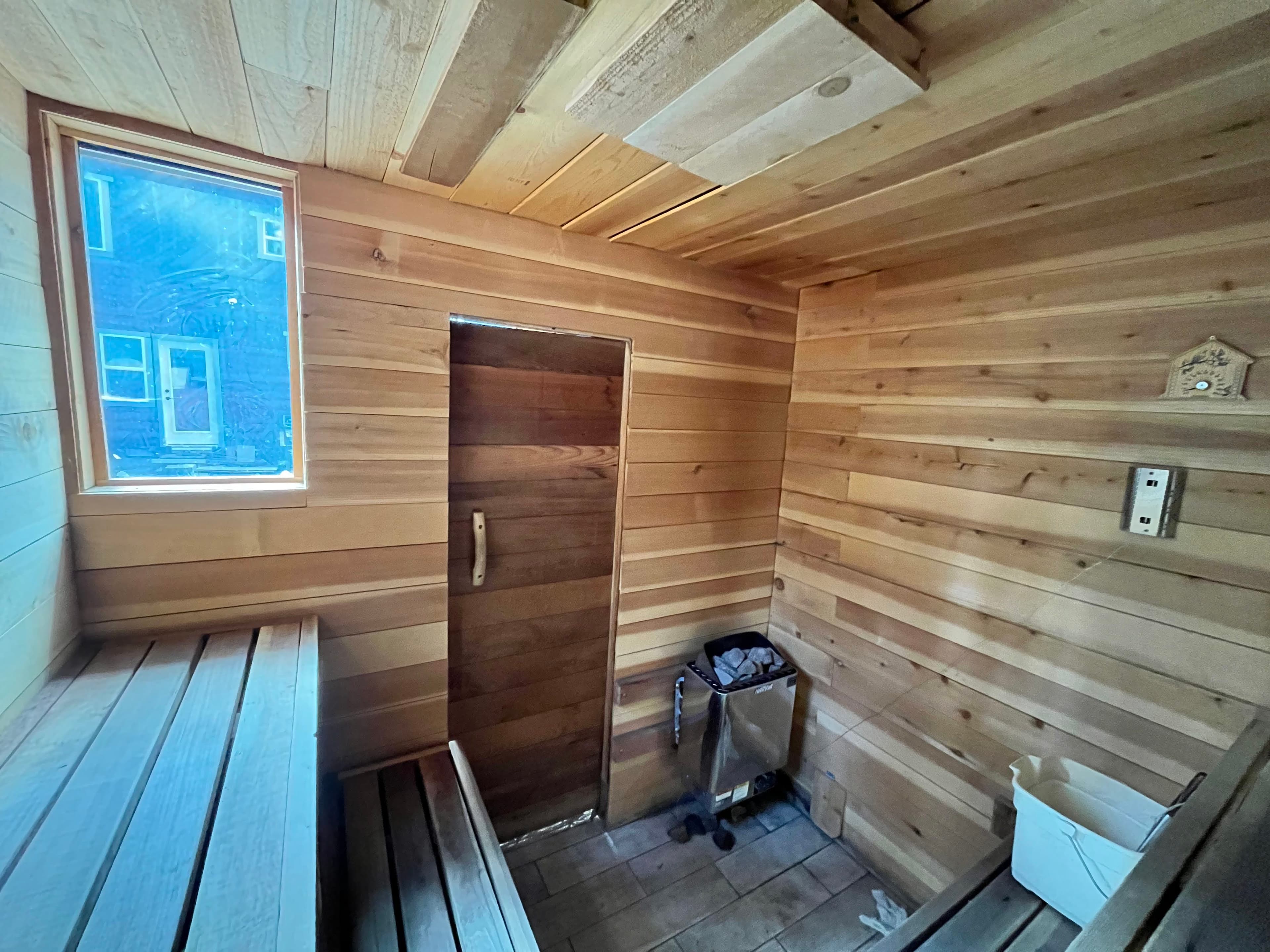
A home sauna is a significant investment, typically ranging from $4,000 for a DIY build to $35,000+ for a professionally installed cabin sauna. For many homeowners, the upfront cost is the biggest barrier to getting a sauna. This guide walks through realistic financing options, cost-reduction strategies, and how to think about the long-term financial value of a sauna.
Before exploring financing, let's establish the cost range:
The wide range reflects variables like location, foundation type, finish level, electrical distance, and whether you handle construction yourself.
For homeowners with equity, a home equity loan or HELOC is often the most practical financing option.
How it works: You borrow against your home's equity at favorable rates (typically 2–3% lower than personal loans). You can borrow a lump sum (home equity loan) or access funds as needed (HELOC).
Pros:
Cons:
Best for: Homeowners with significant equity and stable income. Great for a $15,000–$35,000 professional build.
Trusted by homeowners across Tahoe and beyond
An unsecured personal loan doesn't require collateral and has a fixed interest rate and term.
How it works: You borrow a lump sum from a bank, credit union, or online lender. You repay on a fixed schedule (typically 3–7 years).
Pros:
Cons:
Best for: Homeowners without significant equity or those who prefer not to use their home as collateral. Good for a $5,000–$15,000 sauna build.
Some contractors offer in-house financing, or you can find home improvement loans specifically designed for construction projects.
Pros:
Cons:
Best for: Quick approval with a specific contractor you trust. Beware of predatory terms — shop around.
For smaller saunas ($5,000–$8,000), a credit card with 0% APR promotional offer can work if you pay it off within the promotional period.
Pros:
Cons:
Best for: Only if you're confident you can pay the balance before the promotional period ends. Otherwise, avoid.
The most conservative approach: set a target amount, commit a monthly savings goal, and build when funds are available.
Pros:
Cons:
Best for: Homeowners who want to avoid debt and have time to save. Consider a phased build (year 1: foundation, year 2: structure, year 3: interior).
The biggest leverage point for cost is doing some (or all) of the labor yourself. A professionally built sauna might cost $20,000, but the materials alone are $8,000. The difference is labor.
DIY-friendly tasks: Framing, interior paneling, bench construction, basic electrical prep (under a licensed electrician's supervision), painting/staining.
Professional-required tasks: Electrical hookup (licensed electrician), roof/structural engineering (building code compliance), foundation work (in some cases).
A hybrid approach — DIY framing and interior, hire a contractor for roof and electrical — can reduce total cost by 40–50%.
You don't need to complete everything at once. Build in phases to spread cost over time:
This approach lets you spread payments over time and even build equity between phases. It also gives you flexibility if your needs or budget shift.
Material selection can swing a project by $2,000–$5,000. Smart choices:
Does a sauna pay for itself? The answer depends on how you measure value. Here's how to think about it:
Compared to gym membership and massage: A gym membership costs ~$50–150/month ($600–1,800/year). A sauna session + massage at a spa costs $100–200. If you use a home sauna twice monthly instead, you save $1,200–2,400/year. A $15,000 sauna pays for itself in 6–12 years in health and wellness savings alone.
Compared to hot tub ownership: A hot tub costs $8,000–15,000 upfront and $1,500–3,000/year to maintain and operate. A sauna costs similar upfront but only $300–500/year to operate (electricity). Over 10 years, total cost: hot tub $23,000–45,000; sauna $8,000–20,000.
Resale value: A well-built sauna typically adds 5–15% to perceived property value (though this varies by market). A $20,000 sauna might add $15,000–20,000 in resale appeal.
12 decisions that determine how well your sauna performs — insulation, bench height, heater sizing, ventilation, and more.
Have questions about your project? Send us a message or schedule a free 15-minute intro call.
Schedule a free 15-minute intro call or send us a message about your project.
We'll learn about your space, goals, and timeline — and recommend the right next step for your project.