Both sauna and hot tub use heat for health benefits. But they're fundamentally different, and the research evidence differs too. This guide covers the key differences and helps you decide which is better for your needs.
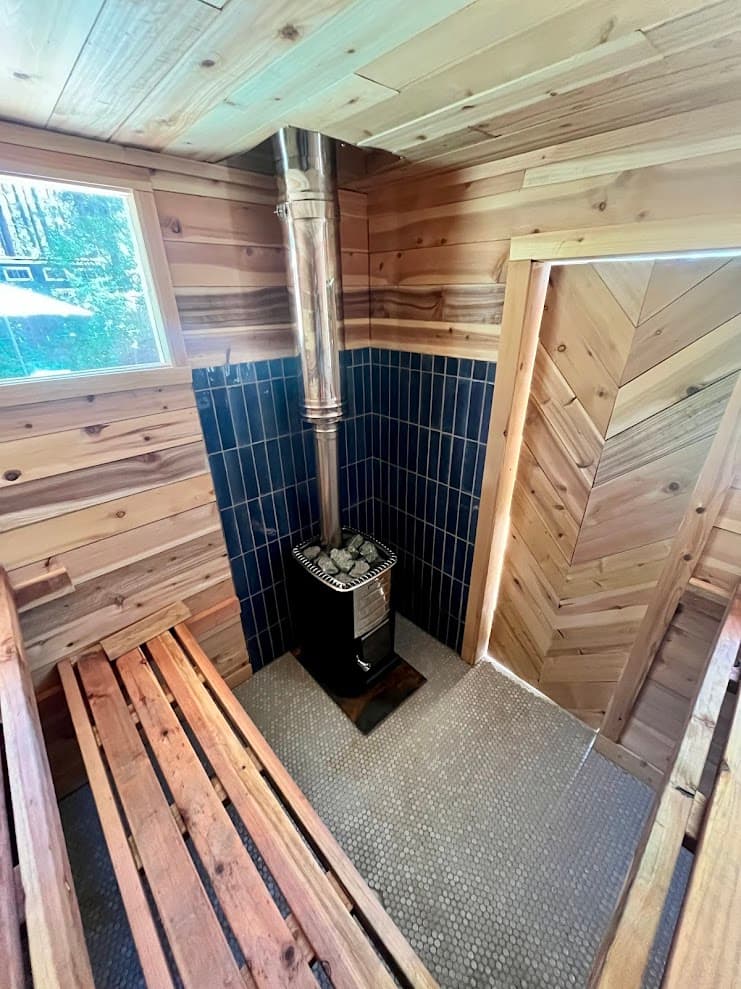
Sauna: Heats air to 170–200°F with low to moderate humidity (10–20% in dry sauna). Your body loses heat through evaporation of sweat. The environment is dry, enclosed, and the temperature is very hot.
Hot tub: Water heated to 100–104°F with 100% humidity. Your body loses heat through conduction to the water. You're immersed, buoyant, and the temperature is warm but not extreme.
This fundamental difference affects both the experience and the physiological response.
Sauna research: Decades of high-quality research, particularly from Finland. Large cohort studies, RCTs, and mechanistic research. The cardiovascular mortality reduction (50% at 4–7x per week) is well-established.
Hot tub research: Less extensive. Some studies show cardiovascular benefits similar to sauna, but the evidence base is smaller. Hot tub also carries specific risks (infection risk, chlorine/bromine exposure) that sauna doesn't have.
Bottom line: Sauna has stronger research evidence for health benefits. But hot tub can provide similar benefits in some areas.
Trusted by homeowners across Tahoe and beyond
Heat shock proteins (HSPs) are key to sauna's benefits. They're activated by higher temperatures — sauna's 80–100°C is hot enough. Hot tub's 37–40°C is not.
HSPs provide muscle protection, improve cellular stress resistance, and support recovery. Sauna activates them; hot tub doesn't.
This is a major difference. If HSP activation is your goal (muscle recovery, cellular protection), sauna is superior to hot tub.
Sauna: Increases blood flow 50–150%, activates HSPs, reduces DOMS. Strong research support.
Hot tub: Increases blood flow somewhat less than sauna, doesn't activate HSPs, reduces DOMS through relaxation and mild heat. Weaker research support, but still helpful.
For post-workout recovery, sauna is more effective. But hot tub is better than nothing.
Sauna: Heart rate climbs to 100–150 BPM. Cardiovascular conditioning similar to moderate aerobic exercise. Proven mortality reduction.
Hot tub: Heart rate increases somewhat, maybe 80–100 BPM. Less intense cardiovascular stimulus, but still provides some benefit.
For cardiovascular health, sauna is superior due to stronger stimulus. But hot tub can help people who can't exercise due to disability.
Sauna: Endorphins, parasympathetic activation, stress reduction. Excellent for mental health.
Hot tub: Buoyancy reduces weight stress on joints, warmth relaxes muscles, immersion in water is inherently soothing. Also excellent for relaxation.
Both are equally good for stress reduction and relaxation. Hot tub may feel more comfortable for people who dislike intense heat, as it's more relaxing and less challenging.
Sauna: Increased blood flow and heat reduce pain. Good for muscle soreness and general stiffness.
Hot tub: Buoyancy + heat. The water supports your body weight, reducing stress on joints. Excellent for arthritis, knee pain, lower back pain. Many people find hot tub more comfortable for joint issues than sauna.
If your primary goal is joint pain relief, hot tub might be better than sauna. The weightlessness is therapeutic.
Sauna risks: Overheating, dehydration (easily prevented). Rare serious issues. No contamination risk.
Hot tub risks: Legionella infection (rare but serious), bacterial infection, chlorine/bromine exposure (respiratory irritation), skin infections (from shared water). Requires regular maintenance. Higher infection risk than sauna.
Sauna is inherently safer due to the hot, dry environment that doesn't support bacterial growth. Hot tub is warm, wet, and potentially contaminated.
Sauna: One-time build cost ($4,000–$30,000 depending on quality and size). Minimal ongoing maintenance. No chemicals, no filtration.
Hot tub: One-time cost similar ($4,000–$20,000), but ongoing costs are significant: chlorine/bromine ($500–$1,000/year), electricity ($1,000–$2,000/year for heating), maintenance and repairs ($500–$2,000/year). Total lifetime cost is higher.
Sauna is cheaper to own and operate long-term.
If you can only choose one: sauna is superior for health benefits, safer, cheaper to maintain, and has stronger research evidence.
If you have joint pain or severe arthritis: hot tub might be more comfortable due to buoyancy relief.
If you want both: sauna for health benefits, hot tub for joint relief and relaxation on days you don't sauna.
If you can't build sauna: hot tub is a valid substitute for relaxation and some recovery benefits, though inferior to sauna for cardiovascular and muscle recovery outcomes.
12 decisions that determine how well your sauna performs — insulation, bench height, heater sizing, ventilation, and more.
Have questions about your project? Send us a message or schedule a free 15-minute intro call.
Schedule a free 15-minute intro call or send us a message about your project.
We'll learn about your space, goals, and timeline — and recommend the right next step for your project.