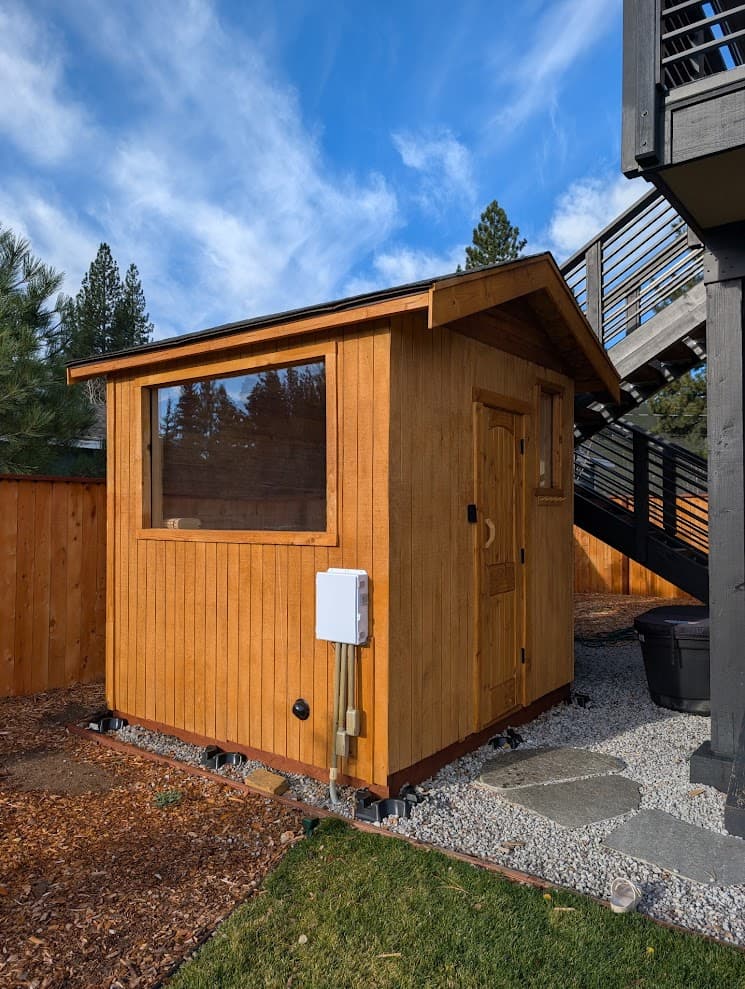
Shipping container saunas have gained popularity in the last decade. A 20-foot or 40-foot steel container is repurposed as a sauna structure. The advantages are obvious: strong structure, unique aesthetic, and lower initial container cost than traditional framing.
However, container saunas come with trade-offs: extensive insulation requirements, condensation management challenges, limited ceiling height, and specialized construction knowledge. This guide covers everything you need to know.
Structural Strength: Steel containers are built to stack and withstand extreme weather. As a sauna, the metal frame provides strength without additional framing.
Aesthetic Appeal: The industrial aesthetic appeals to modern, design-forward homeowners. A polished or decorated container is a statement piece.
Relocatable: A container sauna can be moved with a truck and crane. If you move, the sauna can come with you (though not easily).
Contained Space: The fixed dimensions (20' or 40') mean less custom building. You're working with defined space.
Cost of Container: Used shipping containers cost $1,500– $3,500, cheaper than framing a sauna from scratch.
Insulation Complexity: Metal conducts heat, so you must build an insulation layer inside the entire container (floor, walls, ceiling). This is labor-intensive and reduces interior space.
Condensation: Metal sweats (condensates) when humid interior air hits cold exterior walls. A vapor barrier and ventilation are essential to prevent water damage and mold.
Ceiling Height: A standard 20-foot container is 7'10" exterior, 7'6" interior (8'6" high cube option available). After insulation (2-4 inches), interior ceiling is 7'2–7'4". This is functional but snug.
Rust Prevention: The container's exterior will rust if exposed to weather. Interior rust is prevented by vapor barrier. Exterior requires painting or protective coating.
Permitting: Containers are less common in building codes. Permitting may be slower or require engineering approval.
Trusted by homeowners across Tahoe and beyond
20-Foot Container (Standard):
40-Foot Container (Double Length):
A 20-foot container makes a good single-sauna space. A 40-footer can accommodate sauna + changing room + relaxation area.
1. Source a Container: Buy a used shipping container. New costs more; used ($1,500–$3,500 for 20-foot) is common. Ensure good condition: minimal rust, no dents affecting structural integrity. Inspect for damage and chemical residues.
2. Foundation & Placement: Place the container on a solid, level foundation (concrete pad or adjustable blocks). Ensure proper drainage around the perimeter. The foundation must support the container's weight (20-footer ~4,500 lbs, 40-footer ~9,000 lbs).
3. Vapor Barrier (Interior): Install a continuous 6-mil polyethylene vapor barrier on all interior surfaces (walls, floor, ceiling). Tape all seams with professional-grade tape. This prevents interior moisture from condensing on metal. Sauna Vapor Barrier | Radiant Barrier Roll
4. Insulation: Spray foam (closed-cell) or fiberglass batts. Most builders use 3-4 inches of spray foam for excellent R-value (R-18–R-24) and air sealing. Spray foam adheres to metal and seals gaps better than batts.
5. Interior Finish Layer (Airspace): After insulation, install 1-2 inches of furring strips (horizontal wood strips). This creates an air gap and allows cedar paneling to attach. Cedar is the final interior finish.
6. Cedar Interior: Tongue-and-groove cedar boards (1x4 or 1x6) cover the furring strips horizontally. Cedar looks beautiful, smells great, and is traditional for saunas. Install with stainless steel or brad nails through the tongue (blind fastening).
7. Floor: After cedar walls, install the floor. Options: sealed concrete, non-slip tile, or wooden slats. Slope gently toward a drain. Install a drain in the floor to direct water outside.
8. Heater & Ventilation: Install an electric heater (typically 6-8 kW for a container sauna) on one wall with a cage guard. Install exhaust duct (4-6 inch) vented to outside. Install makeup air duct. Run exhaust for 20-30 minutes after use to clear humidity.
9. Electrical: Run heavy-gauge electrical line from the house or breaker panel to the container. Install a dedicated 60A+ breaker for the heater. Use licensed electrician.
10. Door & Entrance: Cut an opening in the container for the door. Install a solid-core or cedar door with threshold. The opening requires steel reinforcement where the container is cut.
11. Exterior Finish: Paint or coat the exterior to prevent rust. Many choose to leave the natural industrial look (requires protective coating). Others paint creatively. Add siding or cladding for weather protection if desired.
12. Testing & Adjustments: Heat-test the sauna, check for condensation, verify ventilation effectiveness, and adjust as needed.
Spray Foam (Recommended): Closed-cell spray foam is ideal for container saunas. It adheres to metal, seals gaps, and provides high R-value. Cost: $1,500–$3,000 for a 20-footer. Downside: requires professional application and off-gassing time before use.
Fiberglass Batts: Cheaper ($500–$1,000) but requires framing (furring strips on walls before installing batts). More labor, lower R-value per inch.
Thickness: Minimum 3 inches for R-18. 4 inches gives R-24. In cold climates, consider 4-5 inches for better efficiency.
Air Sealing: All gaps, joints, and openings must be sealed before insulation. Metal containers have seams and welds — these must be sealed with foam or caulk.
Condensation is the enemy of container saunas. Humid interior air hitting cold metal exterior walls leads to sweating, dripping, and eventually mold and rot.
Vapor Barrier: A continuous, well-sealed vapor barrier on the interior is your first defense. Even small gaps allow moisture to penetrate.
Active Ventilation: Don't rely on passive ventilation. An exhaust fan (sized for the sauna volume) running during and 30 minutes after use is essential. This removes moisture from the interior.
Makeup Air: As you exhaust air, replacement air must enter. Install a makeup air duct. Without it, the exhaust fan can't function properly.
Drying Time: Allow 30-60 minutes for the interior to dry between uses. Run the exhaust fan the entire time.
Used shipping container: $1,500–$3,500
Vapor barrier & sealing: $200–$400
Spray foam insulation: $1,500–$3,000
Cedar interior (1x4 T&G, labor): $1,500–$3,000
Flooring (tile or slats): $500–$1,200
Door, frame, hardware: $400–$1,000
Heater (6-8 kW electric) + controls: $1,500–$3,000
Ventilation ducts, fans, makeup air: $800–$1,500
Electrical work (licensed): $1,000–$2,000
Exterior paint/coating: $300–$800
Permitting & engineering: $500–$2,000
Total: $9,500–$22,400 for a complete 20-foot container sauna. Most range $12,000–$18,000.
A traditional framed 4x6 sauna costs $4,000–$10,000. A container sauna costs $12,000–$18,000. Container costs more but offers larger interior space and unique aesthetic.
Container: Larger (usable 4x16+ interior for 20-footer), industrial look, relocatable.
Traditional: Smaller, lower cost, easier to customize, blends with architecture better.
Inadequate Vapor Barrier: Not installing a continuous, well-sealed vapor barrier leads to condensation damage.
Insufficient Insulation: Skimping on insulation means high operating costs and poor performance.
No Active Ventilation: Passive vents won't remove moisture in a humid climate. Active exhaust is essential.
Cutting Container Improperly: Cutting the container weakens its structure. All cuts must be reinforced with steel or framing.
Neglecting Exterior Rust Protection: The exterior will rust without protective coating. Paint or coat immediately after installation.
12 decisions that determine how well your sauna performs — insulation, bench height, heater sizing, ventilation, and more.
Have questions about your project? Send us a message or schedule a free 15-minute intro call.
Schedule a free 15-minute intro call or send us a message about your project.
We'll learn about your space, goals, and timeline — and recommend the right next step for your project.