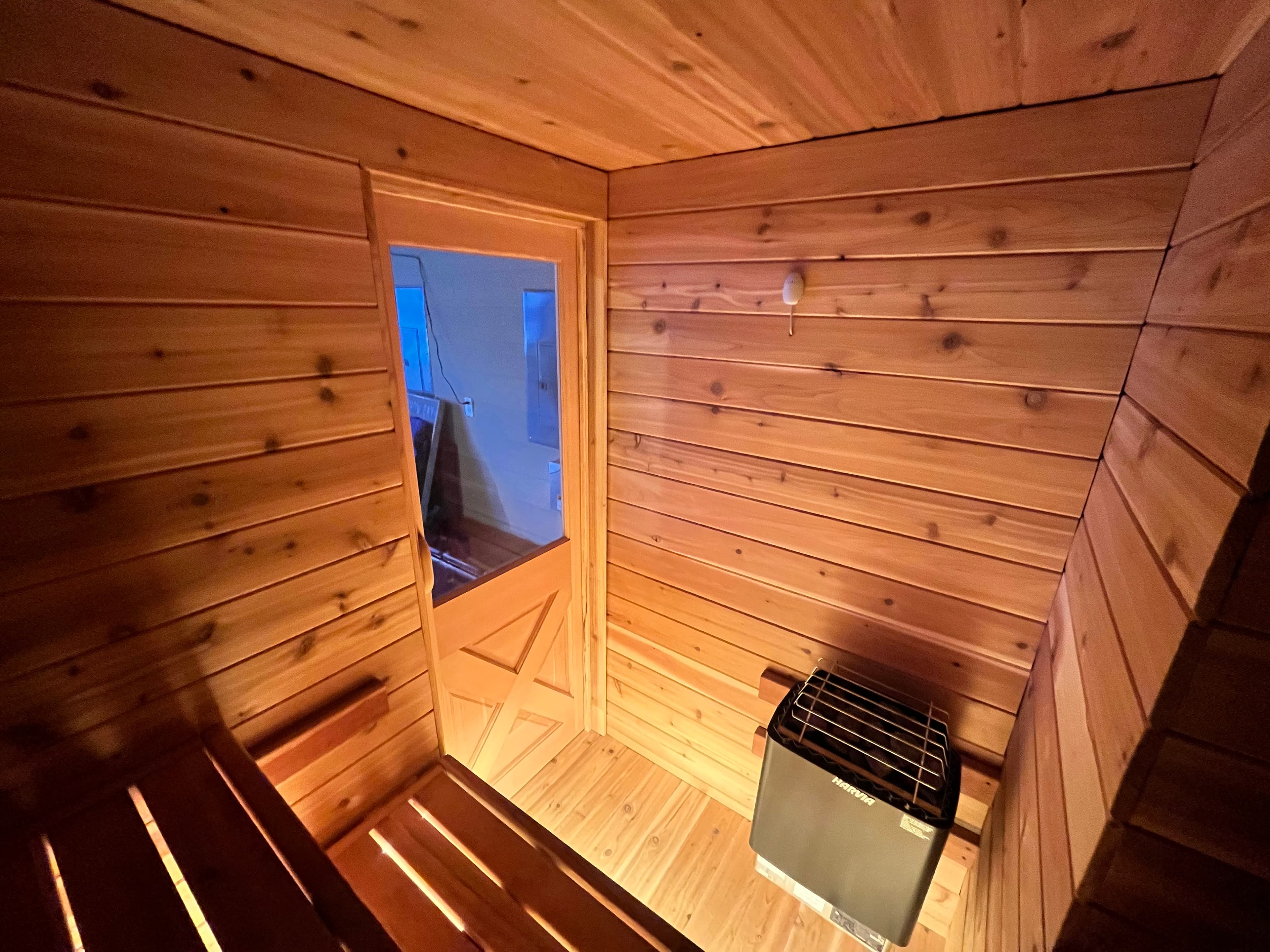
Thermally modified wood (TMW) is an increasingly popular choice for sauna construction. Heat-treated through a specialized process, it offers distinct advantages over untreated cedar: superior dimensional stability, better moisture resistance, and a deeper, richer color. For builders prioritizing longevity and minimal maintenance, it's worth the additional cost.
Thermally modified wood is lumber that has been subjected to controlled heat treatment at temperatures between 400–500°F (200–260°C) in an oxygen-depleted or inert atmosphere. The process chemically alters the wood's cellular structure without adding chemicals or preservatives.
The wood is heated, cooled, then conditioned to achieve a stable moisture content (typically 8–12%) before it's finished and shipped. The result is a darker wood with dramatically improved dimensional stability and rot resistance.
The thermal modification process follows these basic steps:
Trusted by homeowners across Tahoe and beyond
1. Superior Dimensional Stability
Untreated cedar expands and contracts with humidity changes. In a sauna — where humidity fluctuates from dry (after ventilation) to saturated (during löyly) — this movement stresses joints, particularly at board edges and bench connections.
Thermally modified wood has 40–50% less dimensional movement than untreated cedar. Gaps are smaller, joints remain tighter, and the structure lasts longer without seasonal settling or cracking.
2. Moisture and Rot Resistance
The thermal modification process reduces the wood's affinity for water absorption. Even in consistently wet environments, TMW resists rot and decay better than untreated cedar. This is critical for saunas where wood is regularly exposed to near-saturated conditions.
3. Natural Durability Without Chemicals
Unlike pressure-treated lumber (which uses toxic preservatives), thermally modified wood uses only heat — no chemicals are involved. It's safe for interior use with skin contact. For saunas, this is important because you're exposed to warm surfaces directly.
4. Aesthetic Appeal
The heat treatment darkens the wood to a rich, chocolate or caramel brown. Many find this color more visually appealing than the pale tan of untreated cedar. Over time, it may gray slightly, but the base color remains darker and warmer than untreated wood.
5. Reduced Maintenance
Because TMW is more stable and resistant to weathering, it requires less frequent re-staining or re-sealing. Untreated cedar typically needs re-staining every 3–5 years to maintain appearance and water resistance. TMW extends that interval to 7–10 years.
Thermally modified wood costs significantly more than standard cedar, but the lifecycle economics are compelling:
For a 6×8 sauna (480 sq ft of wall paneling):
The upfront difference is $1,920. But TMW provides better durability, fewer maintenance headaches, and a superior finish appearance. For a sauna you plan to use for 20+ years, it's a worthwhile investment.
Sauna environments are harsh: repeated heating to 180–200°F, high humidity, and rapid temperature cycling. Thermally modified wood is specifically designed to withstand these conditions.
Because it's already been heat-treated to 400°F+, the additional heat from sauna operation doesn't alter its structure further. It's already "burnt in." The wood remains stable across the full range of sauna temperatures.
Untreated cedar, exposed to these conditions repeatedly, gradually loses structural integrity. The repeated expansion and contraction eventually leads to cracking, splitting, and joint failure.
Thermally modified wood is generally considered environmentally responsible because it uses only heat — no chemicals. However, there are two considerations:
Energy use: The thermal modification process requires significant energy to heat the wood to 400+°F. This is a carbon cost compared to untreated lumber.
Sourcing: Make sure your TMW comes from sustainably managed forests. Look for FSC or other certifications.
Overall, the longer lifespan of TMW (less replacement wood needed over time) offsets the energy cost of the modification process.
Thermally modified wood can be finished with standard wood stains and sealers. Some builders prefer to leave it unfinished initially to appreciate the natural color, then apply a water-resistant stain after a season or two.
The higher initial cost of TMW means you want to protect it properly:
Choose thermally modified wood if:
Regular cedar is sufficient if:
TMW is increasingly available but not from every supplier. Check with:
Ask suppliers for documentation of the modification process and certification. Reputable sellers provide specifications on color, moisture content, and expected performance.
For professional builds and long-term owners, we recommend thermally modified wood. The extra cost (roughly $2,000–$3,000 for a typical sauna) is offset by reduced maintenance and superior durability over 20+ years. The darker color is visually striking and adds perceived value.
For DIY builders or those on a strict budget, untreated cedar is a time-tested choice. Plan for re-staining every 3–5 years, and you'll get a solid 20–25 year lifespan.
12 decisions that determine how well your sauna performs — insulation, bench height, heater sizing, ventilation, and more.
Have questions about your project? Send us a message or schedule a free 15-minute intro call.
Schedule a free 15-minute intro call or send us a message about your project.
We'll learn about your space, goals, and timeline — and recommend the right next step for your project.