Gym Sauna Renovation: Why Most Gym Saunas Underperform and How to Fix Them
If you manage a gym with a sauna, you've probably heard the complaints. It doesn't get hot enough. It smells weird. The wood looks rough. Members use it for five minutes and leave. A gym sauna renovation can fix most of these problems — and it's usually not as expensive or disruptive as you'd think.
The thing is, most gym saunas were installed as an afterthought. A kit gets dropped into a room during construction, the manufacturer's default settings stay in place, and nobody with actual sauna design experience ever looks at it. The result is a room that technically has a heater in it but doesn't deliver the experience people expect from a sauna.
We work with gym owners to fix this. Not by ripping everything out and starting over — usually by redesigning the interior layout, addressing a few specific problems, and getting the sauna to actually perform the way it should.
The Same Problems, Every Time
We've looked at a lot of commercial and gym saunas. The issues are remarkably consistent, and most of them come back to shortcuts taken during the original install.
Single-Tier Benches
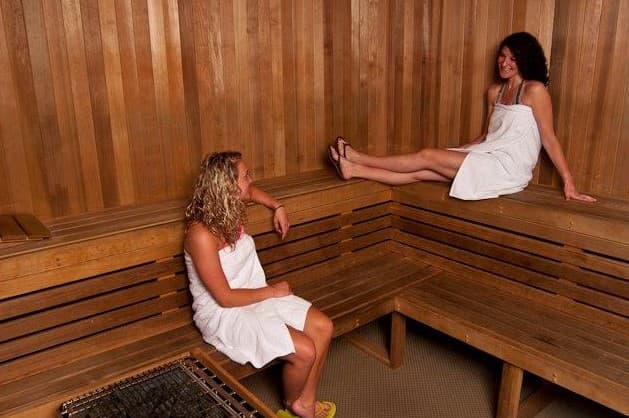
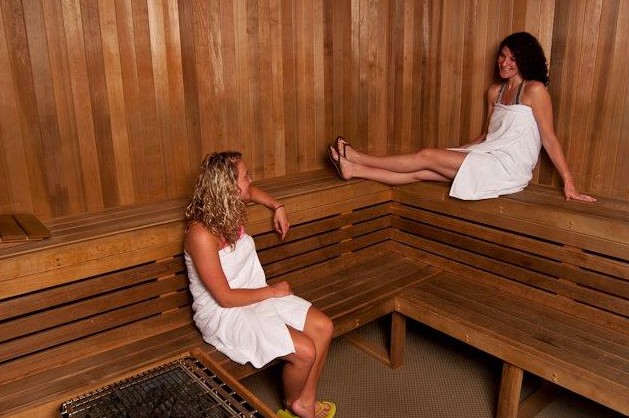
This is the most common problem and the easiest to understand. Heat rises. In a sauna, the temperature difference between floor level and ceiling level can be 40–60°F. If your sauna only has one row of benches at floor level, your members are sitting in the coolest part of the room.
A gym owner in Truckee reached out to us recently with exactly this issue. Her members kept complaining the sauna wasn't hot enough. The stove was actually working fine — the problem was that everyone was sitting three feet below where the heat was. Adding a second tier of benches so people can sit with their feet at or above stove height makes a massive difference. It also gives members options: sit up high for more heat, sit lower for a mellower session. That flexibility alone makes the sauna more useful to more people.
The goal with bench design is to get sauna bathers with their feet at the level of the stove or above. That's where you get a uniform, quality thermal experience instead of sitting in a pocket of cooler air while all the heat hangs out above your head. We cover the specifics of bench placement in our sauna bench height guide.
The Stove Isn't the Problem (Usually)
A lot of gym owners assume their heater is undersized or broken because the sauna doesn't feel hot enough. Sometimes that's true. But more often, the heater is adequate — the issue is that the room isn't set up to let the heater do its job.
Single-tier benches, poor insulation, missing vapor barriers, oversized rooms for the heater's capacity — these all make a functioning stove feel weak. Before you spend $3,000–$5,000 replacing a heater, it's worth figuring out if the stove is actually the problem or if the room around it is working against it. Our heater sizing guide covers how to match a heater to your room volume.
That said, some gym saunas do have real stove issues. Kit saunas from manufacturers like Sonocore or similar companies sometimes ship with temperature limiters that cap the heater well below what most sauna users want. The heater hits a set temperature and trips a switch. The manufacturer's position is usually that this is a safety feature and they won't help you override it. That's a reasonable liability stance on their part, but it means the sauna never gets above 150–160°F — which, for anyone who knows what a sauna should feel like, isn't enough.
In those cases, we can evaluate the stove setup and recommend either adjustments or a replacement heater that's properly sized for the room and doesn't have artificial temperature caps.
Poor Ventilation
Ventilation is treated as an afterthought in most gym sauna installs. The thinking is: it's a hot room, why would you put holes in the walls? But proper airflow is what makes a sauna feel clean and breathable instead of stuffy and stale.
Without intake and exhaust vents in the right positions, the air in the room gets heavy and stagnant. CO2 builds up. Moisture doesn't cycle out. The sauna starts to smell. Members notice — they just might not be able to articulate what's wrong. They'll say it "feels gross" or "doesn't feel right."
While cutting holes for ventilation might make your sauna slightly less energy efficient, the upside is better indoor air quality and an overall better experience. A well-ventilated sauna actually feels hotter at the same temperature because the air quality is better and your body can tolerate the heat longer. For the specifics on vent placement, see our sauna ventilation guide.
Deteriorating Wood
Gym saunas take a beating. High traffic, sweat, moisture, cleaning chemicals — all of it breaks down wood faster than a residential sauna would ever see. Cedar and other softwoods used in saunas are naturally rot-resistant, but they're not invincible. Without proper ventilation and drainage, moisture sits on surfaces and accelerates decay.
Signs you need to address the wood: visible darkening or blackening (beyond normal patina), soft spots when you press on bench surfaces, splintering, and persistent odor that doesn't go away after cleaning. At a certain point, sanding and treating isn't enough — the benches and wall paneling need to be replaced with properly selected, kiln-dried wood rated for sauna use.
No Drainage
Water ends up on the floor of every sauna. Sweat drips off benches, people pour water on the rocks, and condensation forms during heat-up and cool-down cycles. In a gym environment with heavy daily use, that's a lot of water with nowhere to go.
A sauna floor without a drain or proper slope means standing water, which leads to mold, odor, and faster deterioration of the floor and lower wall panels. Most kit saunas don't include drainage because they're designed for residential use with a few sessions per week — not 8–12 hours of daily use in a commercial gym.
Adding a floor drain with proper slope is a relatively straightforward renovation item that makes a big difference in maintenance and longevity.
Bad Lighting
This one's less about function and more about experience. A lot of gym saunas have a single harsh overhead light — the same fluorescent or LED fixture you'd find in a hallway. It's technically adequate but it makes the sauna feel clinical rather than relaxing.
Warm, dimmable lighting positioned behind or beneath the benches transforms the atmosphere. It's not expensive and it's one of the changes members notice immediately.
How We Work With Gym Owners
Our process for gym sauna renovations is the same approach we use for any sauna project: design first, then build.
Step One: Assessment
We start by understanding what you're working with. That means photos of the space, rough dimensions (height is especially important for bench planning), information about your current heater, and whatever you know about how the sauna was originally installed.
If it's a kit sauna from a manufacturer, that's useful to know — it tells us what we're dealing with in terms of construction quality, insulation, and how much flexibility we have to modify the interior without structural changes.
We also want to hear from you about what your members are saying. The complaints tell us a lot about where to focus.
Step Two: Design
Based on the assessment, we put together a design that addresses the specific problems in your sauna. For most gym renovations, that includes a new bench layout with proper tiering and spacing, ventilation recommendations, and any changes to the heater setup.
The design phase is a separate contract with a small fee. This is where we figure out exactly what needs to happen before anyone picks up a hammer. You'll see the proposed layout, understand the costs, and be able to make decisions about scope and budget before committing to construction.
Step Three: Build
Once the design is approved, we coordinate with a licensed contractor to execute the renovation. Locally in the Tahoe-Truckee area, we have contractors we work with regularly who understand sauna construction. For gyms outside our area, we can provide the design package for your local contractor to build from.
Most gym sauna interior renovations — new benches, ventilation, lighting, and minor stove work — can be completed in one to two weeks. The sauna may need to be out of service during that time, so we work with you to schedule around your least busy periods.
Trusted by homeowners across Tahoe and beyond
What This Actually Costs
Gym sauna renovation costs vary a lot depending on what needs to happen. Some rough ranges to give you a frame of reference:
A bench redesign and rebuild — adding a second tier, widening bench surfaces, improving the layout — typically runs $2,000–$5,000 depending on the size of the sauna and the wood species.
Ventilation work (adding intake and exhaust vents with proper positioning) is usually $500–$1,500.
Heater replacement, if needed, runs $1,500–$4,000 for the unit plus installation and electrical work.
A full interior renovation — new benches, new wall paneling, ventilation, lighting, drainage, and stove assessment — can range from $5,000–$15,000 for a typical gym-sized sauna.
These are general ranges. The actual cost depends on your specific situation, and we'll give you a clear estimate before any work starts.
A Quick Note on Budget
We understand that gym owners are usually juggling a lot of priorities. A sauna renovation might be important but it's competing with new equipment, facility upgrades, and a dozen other things members want.
The good news is that gym sauna renovations don't have to be all-or-nothing. We can help you identify the highest-impact changes — the things that will make the biggest difference in member experience for the least cost — and phase the work so you're not committing to a $15,000 project all at once.
Adding a second tier of benches and fixing the ventilation might solve 80% of the complaints for a fraction of the cost of a full gut renovation. We can start there and plan additional improvements for down the road.
Frequently Asked Questions
How much does a gym sauna renovation cost?
It depends on scope. A bench redesign and rebuild runs $2,000–$5,000. Ventilation work is $500–$1,500. Heater replacement is $1,500–$4,000. A full interior renovation — benches, wall paneling, ventilation, lighting, drainage, and stove assessment — ranges from $5,000–$15,000 for a typical gym-sized sauna.
Why doesn't my gym sauna get hot enough?
The most common reason is single-tier benches. Heat rises, and the temperature difference between floor level and ceiling level can be 40–60°F. If your members are sitting on benches at floor level, they're in the coolest part of the room. Adding upper-tier benches often solves the problem without touching the heater. Other causes include poor insulation, missing vapor barriers, and heaters with factory temperature limiters.
Can I renovate my gym sauna without replacing the heater?
In most cases, yes. The heater is rarely the actual problem. Poor bench design, bad ventilation, and inadequate insulation are more common causes of an underperforming sauna. We always assess the full room before recommending a heater replacement — there's no point spending $3,000–$5,000 on a new stove if the room layout is the real issue.
How long does a gym sauna renovation take?
Most interior renovations — new benches, ventilation, lighting, and minor stove work — can be completed in one to two weeks. The sauna will likely need to be out of service during construction, so we schedule around your least busy periods.
Do you work with gyms outside the Tahoe area?
Yes. We can design sauna renovations for gyms anywhere — the design process works remotely with photos, dimensions, and information about your current setup. For construction, we coordinate with local contractors in the Tahoe-Truckee area. For gyms outside our area, we provide a design package your local contractor can build from.
Is Your Gym Sauna Worth Fixing?
If your gym has a sauna and members are using it — even if they're complaining about it — it's almost certainly worth improving. A good sauna is a real differentiator for a gym. Members who use the sauna regularly are more engaged, and a well-functioning sauna is the kind of amenity that keeps people from switching to the gym down the street.
The bar for "good" isn't that high. It just needs to get hot enough, have proper bench heights so people can actually experience the heat, cycle air so it doesn't get stale, and look reasonably well-maintained. Most gym saunas fail on two or three of those points, and all of them are fixable.
If you're dealing with any of the issues described above — or if you're just not sure what's wrong but know your sauna isn't right — reach out to us. We'll take a look at what you're working with and let you know what makes sense.