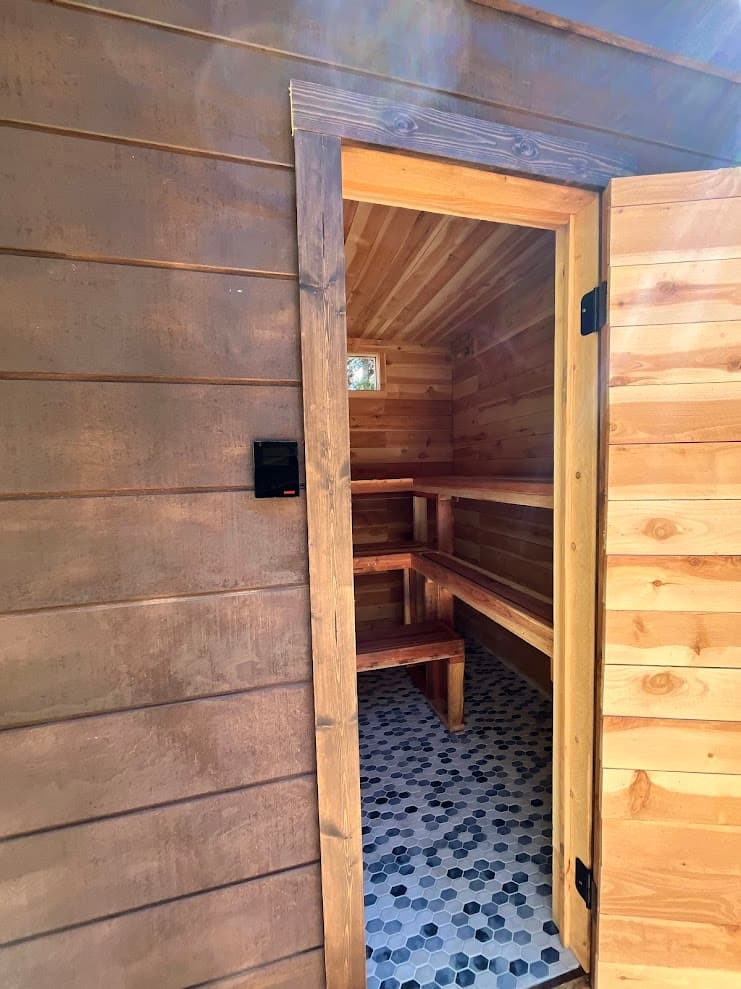
Cold climates like the Tahoe region, Pacific Northwest, Colorado, and northern states are ideal for saunas. The contrast between intense heat and cold air — or even snow — creates the authentic Finnish sauna experience. Many sauna enthusiasts say the best saunas are in places with extreme winters.
However, cold climates demand extra attention to insulation, foundation, and moisture management. A sauna built with standard insulation and a typical foundation will fail in extreme cold. This guide covers the upgrades needed for reliable performance in winter environments.
In mild climates, R-13 wall insulation and R-20 ceiling insulation are acceptable. Energy bills are modest because the outdoor-indoor temperature difference is small.
In cold climates, upgrade to:
Cold climates experience freeze-thaw cycles. Moisture trapped in the wall assembly will freeze, expand, and damage wood and insulation. The vapor barrier becomes absolutely critical—this is where Trumpkin's research is most important for cold climate performance.
In cold climates, a well-sealed vapor barrier is the difference between a sauna that lasts 30+ years and one that rots in 5 years. Do not skip or shortcut this step.
Frost depth is how deep the ground freezes in winter. In Lake Tahoe, frost depth reaches 4–5 feet. In Colorado and northern states, it can exceed 5 feet. If a foundation is above the frost line, freezing water in the soil will expand and heave, cracking the foundation and shifting the structure.
Place deck blocks on a gravel pad that extends below frost line. Typically:
This is cost-effective for outdoor saunas and works well if your property allows deep excavation.
Modern frost-proof screw anchors twist into the ground below frost line. They eliminate the need for gravel pads and extensive excavation. Cost is similar to gravel pads but easier to install.
For a permanent foundation, pour a concrete pad that extends below frost line. This is more expensive ($1,500–$3,000) but provides maximum stability and is ideal if you plan a large or premium sauna.
If building inside an existing structure (garage, basement), you don't need to worry about frost depth. The building's foundation already handles it. Interior saunas are simpler in this respect.
Trusted by homeowners across Tahoe and beyond
Snow load is the weight snow exerts on a roof, measured in pounds per square foot (psf). A standard roof is designed for 30 psf. Mountain regions with heavy snow require 50–150 psf.
A steeper pitch sheds snow faster, reducing accumulation weight. Design for at least 8:12 pitch (8 inches of rise per 12 inches of run). Pitches of 10:12 or steeper are even better in heavy snow country.
Use heavier rafters or trusses designed for your region's snow load. Local building codes specify requirements. A structural engineer can design the roof if you provide your snow load zone.
Ice dams form when warm air under the roof melts snow at the edge, which then refreezes at the gutter. To prevent:
In cold climates, temperatures swing between +60°F during the day and -20°F at night. Water in the sauna's materials expands when frozen and contracts when thawed. Repeated cycles damage wood, concrete, and connections.
After each sauna session, the sauna is hot and humid inside. Open ventilation holes to allow this moisture to escape. Then close the vents during non-use periods to minimize condensation. This "bake and breathe" cycle prevents moisture from accumulating and freezing inside the structure.
An outdoor sauna's exterior must resist snow, ice, wind, and UV damage. Choose durable, weather-resistant siding:
Protect the door from snow drift accumulation. Position the door on the side that faces away from prevailing winter winds. Clear snow from the entry during and after storms.
Electric heaters are reliable in cold climates. They have no water to freeze and are simple to operate. Sizing is important: a 6 kW heater works in a small 4x4 sauna, but for an 8x8 sauna in a cold climate, 8–9 kW is better for quicker heat-up.
Wood-burning stoves work well in cold climates and create a traditional experience. The chimney must be insulated to prevent creosote buildup and condensation. Annual chimney inspection is required. The sauna must be well-ventilated to prevent back-drafting.
Combi heaters have water tanks for hot water heating. In cold climates, the tank must be drained after every sauna session to prevent freezing. This adds a maintenance step but is manageable if you're dedicated.
Despite the extra design considerations, cold climates are some of the best places to enjoy saunas. Here's why:
12 decisions that determine how well your sauna performs — insulation, bench height, heater sizing, ventilation, and more.
Have questions about your project? Send us a message or schedule a free 15-minute intro call.
Schedule a free 15-minute intro call or send us a message about your project.
We'll learn about your space, goals, and timeline — and recommend the right next step for your project.