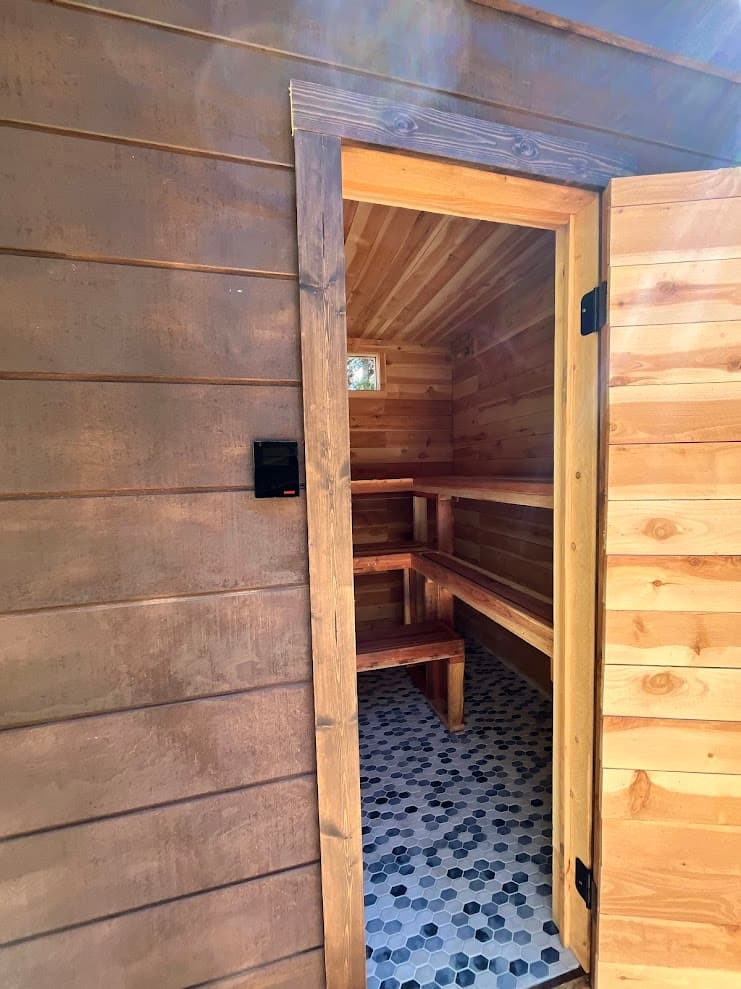
The first question everyone asks: why would you build a sauna in a place that's already 115°F? Fair question. But a sauna isn't about ambient heat. It's about controlled, intense heat in an enclosed space — 170-190°F with the option for steam. Standing outside in Phoenix in July isn't a sauna experience. It's just hot.
A proper sauna gives you something the desert heat doesn't: concentrated warmth that penetrates deep tissue, the ritual of löyly (throwing water on hot stones), and the contrast of stepping from extreme heat into cooler air. That contrast works both directions — exiting a 185°F sauna into 75°F desert evening air feels incredible.
The Southwest also has real advantages for sauna building that cold- climate builders would envy. Dry air eliminates most moisture problems. High ambient temperatures mean faster heat-up and lower energy costs. And mold — the enemy of every sauna in humid climates — is basically not a concern here.
Moisture Is a Non-Issue: Average humidity in Phoenix is 20-30%. Tucson, Albuquerque, Las Vegas, and El Paso are similar. In humid climates, builders obsess over vapor barriers, post-session drying, and mold prevention. In the Southwest, these problems largely solve themselves. Your sauna dries out fast after use, condensation is minimal, and mold growth conditions rarely exist.
Faster Heat-Up: When ambient temperature is 90°F instead of 20°F, your heater starts 70 degrees closer to target. A sauna that takes 40 minutes to heat in Minnesota might take 20-25 minutes in Arizona. That's real energy savings over time.
Year-Round Use: No frozen pipes, no shoveling snow to reach the sauna, no waiting for spring to pour a foundation. Southwest saunas are accessible 365 days a year without winter maintenance hassles.
Simpler Ventilation: Dry air means post-session drying is almost automatic. Leave the door open for 15-20 minutes after use and the sauna dries itself. You still need mechanical ventilation for air quality during use, but the drying problem that dominates humid-climate design is simple here.
UV and Sun Exposure: This is the biggest challenge for Southwest sauna builds. The desert sun is relentless — 300+ days of direct sunlight per year in most areas. UV degrades wood, fades finishes, and cracks materials. An outdoor sauna in full Arizona sun will deteriorate faster than one in a shaded Pacific Northwest backyard.
Extreme Surface Temperatures: Metal roofing and dark exterior surfaces can reach 160-180°F in direct sun. This affects material choice, touch safety, and interior temperature management. An unshaded metal roof turns your sauna into an oven before you even turn on the heater.
Cooling Between Sessions: In cold climates, saunas cool down quickly between sessions. In the Southwest, a sauna that retains heat too well can be hard to cool between rounds. Ventilation design should account for active cooling — you want to be able to flush hot air out quickly when needed.
Monsoon Season: The Southwest isn't always dry. Arizona and New Mexico get intense monsoon storms from July through September with high humidity and heavy rain. Outdoor saunas need to handle these periodic wet conditions even if the rest of the year is bone dry.
Trusted by homeowners across Tahoe and beyond
Insulation in the Southwest serves a different purpose than in cold climates. You're not fighting to keep heat in against -20°F exterior temperatures. You're maintaining efficiency and preventing exterior heat from interfering with your controlled interior environment.
Walls: Standard R-13 insulation is adequate for Southwest sauna walls. You don't need the R-21+ that cold climates demand. The temperature differential between your sauna interior (180°F) and exterior (90°F summer, 50°F winter) is much smaller than in the Midwest or Mountain West.
Ceiling: R-21+ is still recommended for the ceiling. Heat rises, and the ceiling is always the primary heat loss surface regardless of climate. If your sauna gets direct sun on the roof, good ceiling insulation also prevents solar heat gain from pushing interior temps too high before you start heating.
Heater Sizing: The standard rule is 1 kW per 45 cubic feet. In the Southwest, you can stick with that calculation or even size slightly down. A 4x6x7 sauna (168 cubic feet) needs about 3.7 kW — a standard 4.5 kW electric heater is plenty. You won't need the 6-8 kW oversizing that cold climates require.
During Use: Mechanical downdraft ventilation is still the recommendation. Fresh air intake on the heater wall about 12 inches above the top of the stove and 12 inches to the right of it, so the heater's plume warms and mixes the incoming air. Fan-driven exhaust below the foot bench on the opposite wall, which pulls that air down through the bench zone and out at the lowest point. This gives you good air circulation and fresh oxygen without dumping heat.
After Use: This is where Southwest builds get easy. Open the door after your session and the dry desert air does the work. In most conditions, passive drying is completely adequate. No exhaust fan timers, no forced-air drying systems. Just open the door and walk away.
Monsoon Exception: During July-September monsoon season, humidity spikes to 50-60%. It's still not as bad as the Great Lakes or Southeast, but you should have a plan — either a small exhaust fan or simply leave the door open longer after use during monsoon weeks.
Active Cooling: Consider adding a way to flush hot air between sauna rounds. A vent you can fully open or a window lets you drop the temperature 20-30°F between sessions for contrast therapy. In cold climates this happens naturally; in the Southwest, design for it.
Interior Wood: Western Red Cedar, hemlock, and aspen all work well. The dry climate is actually ideal for sauna wood — moisture-related rot is rare. Cedar's natural rot resistance is less critical here than in humid regions, so budget-friendly hemlock or aspen are strong options.
Exterior Protection: This is where desert builds diverge from everywhere else. UV protection is the priority:
Roofing: Light-colored metal roofing (standing seam) is ideal. It reflects solar heat, handles monsoon rain, and lasts decades in desert conditions. Dark asphalt shingles absorb heat and deteriorate faster under UV.
Hardware: Stainless steel is still the standard for interior fasteners (heat and moisture from löyly). Exterior hardware is less critical than in freeze-thaw climates, but stainless is still the best choice for longevity.
Placement matters more in the Southwest than almost any other region. The difference between a shaded north-facing sauna and an unshaded west-facing one is enormous.
Shade: If you can position your outdoor sauna under existing shade (trees, a building overhang, or a shade structure), do it. Direct sun on the exterior adds unwanted heat and accelerates material degradation. A shade structure or pergola is a worthwhile investment.
Orientation: North-facing or east-facing walls get the least afternoon sun. Avoid placing the door or largest wall surfaces toward the west — that's where the most intense solar exposure hits.
Wind: Desert wind is common. Position the sauna door away from prevailing winds to prevent heat loss when the door opens. A small vestibule or windbreak helps.
Contrast Therapy: In cold climates, the contrast comes from stepping into freezing air. In the Southwest, consider adding a cold plunge, outdoor shower, or even a simple garden hose rinse area near the sauna. Evening sessions work best for contrast — desert nights cool to 70-80°F in summer and 40-50°F in winter.
Southwest sauna builds are generally less expensive than cold- climate builds. You don't need extreme insulation, deep frost-line foundations, or snow load engineering. The savings are real.
Basic Build (4x6, desert specs): $7,000–$13,000. Standard insulation, properly sized heater, UV-protected exterior, basic finishes. Foundation costs are lower — frost line is shallow (12-18 inches in most Southwest areas).
Mid-Range (5x7 or 6x8 with Shade Structure):$13,000–$25,000. Quality materials, shade structure or pergola, cold plunge option, changing area, premium interior wood.
Premium Custom Build: $25,000–$50,000+. Large footprint, integrated outdoor living space, cold plunge, shower, premium finishes, landscaping integration.
Southwest labor costs vary — Phoenix and Las Vegas are moderate; Scottsdale and Santa Fe run higher. No cold-climate premium. No snow load engineering costs. Overall, expect 10-20% less than equivalent cold-climate builds.
Timeline: 2-4 months from design to completion. No seasonal delays from frozen ground or snow. You can build year- round, though summer construction in extreme heat may slow outdoor work.
Tahoe Sauna Company provides remote sauna design for Southwest clients. We understand the specific considerations:
We provide remote sauna design for clients throughout the Southwest — build-ready plans designed for your climate, delivered to you or your contractor.
Over-Insulating: Applying cold-climate insulation specs to a desert build wastes money. R-13 walls are fine here. Save the budget for UV protection and shade structures instead.
Ignoring UV: An unprotected exterior in the desert sun degrades in 2-3 years. UV-resistant finishes and shade are not optional — they're the primary maintenance concern.
Dark Exterior Colors: A dark-stained sauna in full Arizona sun absorbs massive solar heat. Light colors reflect heat and keep the exterior cooler. This isn't just aesthetic — it affects performance and material longevity.
No Shade Plan: Building an outdoor sauna with no shade structure and full western exposure is asking for problems. Plan shade from the start — it's cheaper to build a pergola during construction than to retrofit one later.
No Cooling Strategy: Without a way to flush heat between rounds, your sauna stays hot for hours in summer. Build in ventilation options for active cooling.
Oversized Heater: The opposite of the cold-climate mistake. A 9 kW heater in a 4x6 sauna in Phoenix will overshoot temperature constantly. Size correctly for the lower heating demand.
12 decisions that determine how well your sauna performs — insulation, bench height, heater sizing, ventilation, and more.
Have questions about your project? Send us a message or schedule a free 15-minute intro call.
Schedule a free 15-minute intro call or send us a message about your project.
We'll learn about your space, goals, and timeline — and recommend the right next step for your project.