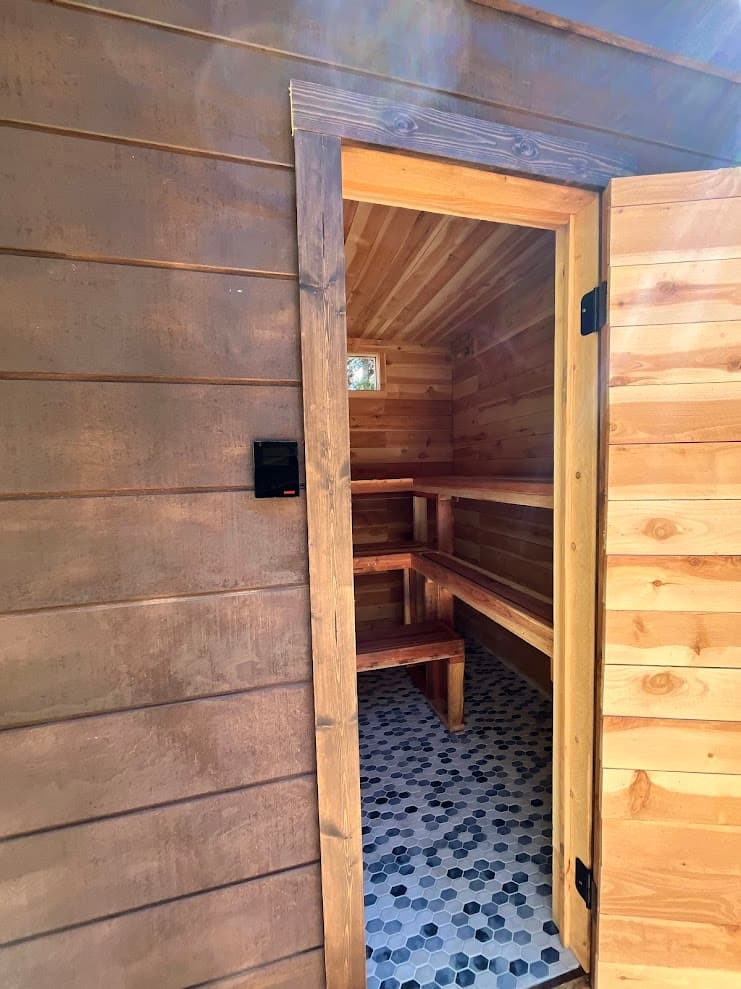
Sauna design spans from strict minimalism to ornate luxury, from traditional Finnish to contemporary glass-and-steel. The right design balances aesthetics, function, and your lifestyle.
This guide showcases major design styles and how to execute them, with practical guidance on layouts, materials, and key design elements.
The original sauna aesthetic: natural wood, simple lines, respect for materials, minimal ornamentation.
Maximum authenticity. Finnish design emphasizes honest materials and function. The simplicity is restful and timeless. Maintenance is straightforward — just keep the wood clean and re-stain every 5-7 years.
Moderate. No expensive finishes or extras. DIY-friendly for those with basic carpentry skills. $8,000-15,000 for a professional build.
Clean lines, contemporary materials, focus on form and function. Think: sleek, unadorned, almost austere.
Appeals to contemporary aesthetic sensibilities. Looks stunning in a modern landscape architecture context. Photographs beautifully. Clean, uncluttered visual experience inside and out.
High to very high. Premium materials (stainless steel, quality glass, precision joinery), modern heaters, architect design. $20,000-40,000+ for a professional build.
Related: Glass door design is central to modern minimalist aesthetics.
Trusted by homeowners across Tahoe and beyond
Warmth and authenticity with a countryside aesthetic. Think: cozy, natural, lived-in.
Creates a retreat atmosphere. Feels like stepping away from modern life. Aesthetic ties naturally into mountain or forest settings. Inherently inviting and warm.
Moderate to high. Natural materials and log construction are not cheap, but the style rewards investment. $12,000-25,000 for a quality rustic build.
Elements borrowed from onsen and traditional Japanese aesthetics: natural materials, simplicity, integration with landscape, water features.
Emphasizes the meditative, spiritual aspect of sauna/bathing. The integration of hot and cold water is central to the experience. Very appealing if you value wellness and mindfulness.
High, especially if you include a plunge pool. The cold water feature is essential to the aesthetic. $15,000-30,000+.
Scandinavian design: functionality, simplicity, light colors, natural materials, timeless elegance.
Timeless. Neither trendy nor dated. Appeals broadly. Focuses on experience and livability rather than pure aesthetics. Scandinavian design ages well.
Moderate to high. Light, quality materials and modern heaters add up. $15,000-30,000 for a professional build.
Designed for high elevations and harsh climates. Think: sturdy, weather-resistant, integrated into alpine landscape.
If you're in a mountainous region (Lake Tahoe, Colorado, etc.), this style looks native to the landscape and performs well in harsh conditions. Aesthetic and practical are aligned.
Moderate to high. Heavy construction and durable materials add cost, but you're not paying for unnecessary luxury — just durability. $12,000-25,000.
Related: Cold climate sauna design details specific to mountain builds.
Contemporary interpretation of a traditional outbuilding. Sauna as a visible, sculptural addition to your property.
Celebrates the sauna rather than hiding it. Works well in contemporary or modern properties. The contrast between sleek exterior and warm interior is engaging.
Moderate. Modern materials are not expensive; the design relies on proportion and simplicity rather than lavish finishes. $12,000-22,000.
Integrating sauna into existing house structure. Transforms a guest room, part of a basement, or adjacent to a bathroom.
Maximum convenience. Use it any weather. Quick access from living space. No outdoor accessibility issues. Ideal if you can't build outdoors or live in an apartment/condo.
Moderate. No expensive outdoor construction, but interior framing and sealing are precise. $6,000-15,000 depending on existing conditions.
Related: Indoor bathroom sauna conversion guide.
High-end spa aesthetic: premium materials, sophisticated finishes, integrated amenities.
You value luxury and are willing to invest. The sauna is a centerpiece of your wellness lifestyle. Premium materials and finishes reward attention and investment.
High to very high. Premium everything: materials, heater, design, finishes. $25,000-50,000+ for an exceptional build.
Sauna only, no changing room. Ideal for small properties or tight budgets. Change before and after in the house.
Size: 4×6 or smaller. Cost: $6,000-12,000.
Separate changing area with benches and hooks. Much more comfortable, especially with guests. Gives a more spa-like feel.
Typical layout: 6×12 total, with sauna 6×6 and changing 6×6. Cost: $12,000-20,000.
Complete bathing facility. Includes outdoor shower for cooling between rounds. Most complete, most expensive.
Typical layout: 8×12 or 8×14, with sauna, changing, and shower areas. Cost: $18,000-30,000.
Integrated with a cold water pool or tub. Central to traditional sauna culture. Requires plumbing and pool construction.
Cost: Sauna $12,000-20,000, plunge pool $4,000-10,000+.
| Style | Interior Material | Exterior Material | Heater Type |
|---|---|---|---|
| Traditional Finnish | Cedar, unfinished | Cedar, natural stain | Wood or basic electric |
| Modern Minimalist | Light ash or birch | Black board & batten, metal | Premium electric (HUUM) |
| Rustic Cabin | Knotty cedar, rough | Logs or heavy timber siding | Wood-burning stove |
| Scandinavian | Light birch | Light cladding, white/gray | Modern electric |
| Luxury Spa | Premium cedar, finished | Mixed materials, sophisticated | Premium brand (HUUM, Tylo) |
Windows or skylights add cost but dramatically improve the experience. Interior lighting alone feels cave-like. Natural light creates connection to surroundings and adds visual interest.
Good ventilation prevents moisture accumulation, mold, and musty smell. It's critical but not fancy. Standard exhaust systems work fine; they just need to be properly sized and ducted.
A well-insulated sauna is quiet (low background noise from heater). Poor insulation leads to high noise and is uncomfortable. Invest in good insulation partly for thermal performance, partly for acoustic quality.
Benches should have backrests or be designed so you can recline comfortably. A hard flat bench gets uncomfortable after 10 minutes. Even simple slanted backs make a huge difference.
12 decisions that determine how well your sauna performs — insulation, bench height, heater sizing, ventilation, and more.
Have questions about your project? Send us a message or schedule a free 15-minute intro call.
Schedule a free 15-minute intro call or send us a message about your project.
We'll learn about your space, goals, and timeline — and recommend the right next step for your project.