How to Prevent Mold in a Sauna — Ventilation, Drying, and Design That Lasts
A sauna gets soaking wet every time you use it — löyly off the stones, sweat, and the moisture you breathe out all end up in the wood. Heat alone doesn't fix that. If the room can't dry out between sessions, you get mold and mildew in the corners, under the benches, and on the ceiling, plus a musty smell that never quite leaves. The good news is that mold in a sauna is almost entirely a design and habit problem, not bad luck. Get the drying right and a sauna stays clean for decades.
Knowing how to prevent mold in a sauna comes down to three things: moving moisture out with proper ventilation, drying the room after each session, and choosing materials and a layout that don't trap water. Most saunas that develop mold fail at the first two.
Why saunas grow mold in the first place
Mold needs moisture, and a sauna produces a lot of it in a short window. During a session the wood absorbs water; after the session, that water has to evaporate and leave the room. If it can't — because there's no ventilation, no drying vent, or the room is sealed up tight the moment you're done — the moisture sits in the wood and the air, and within days you've got the conditions mold loves.
Two things make this worse. First, ambient humidity: in a humid region, the outside air you're bringing in to dry the sauna is already moisture-laden, so passive drying is slow. Second, dead zones — spots where air doesn't circulate, like the underside of fully enclosed benches — where water collects and never dries. Address those and you've solved most of the problem.
Ventilation is the foundation
You cannot dry a sauna you can't move air through. Ventilation is the single biggest factor in keeping a sauna mold-free, and it's also the thing most North American saunas get wrong.
The setup that works for an electric sauna is mechanical downdraft: fresh air enters high on the wall above the heater, and a powered exhaust pulls air out low on the opposite wall, below the foot bench. This moves stale, moisture-heavy air out during use and keeps the room from becoming a sealed moisture box. The common mistake — fresh air entering low near the heater and exhaust in the ceiling — pulls steam out before it does any good and leaves the bather-level air stagnant. Our sauna ventilation guide lays out the correct layout in detail, and the common ventilation mistakes page covers what to avoid.
Even if you can't install a powered fan, a basic passive setup — three small vents — beats the most common situation, which is a sauna with zero ventilation. Many kits ship with no vents at all, which is exactly why they tend to get musty.
Trusted by homeowners across Tahoe and beyond
The drying vent is what actually prevents mold
Here's the piece people skip: a dedicated drying vent. This is a small vent (about 3 inches) placed high on the wall near the ceiling, on the same side as your exhaust. During a session you keep it closed — otherwise it pulls your steam out. After the session, you open it to let the residual heat and moisture escape while the room cools.
That post-session airflow is what carries the moisture out of the wood and out of the room before mold can take hold. A simple sliding cover or flap is all it needs. If you run a mechanical exhaust fan, the equivalent move is to let the fan run for an hour or two after you finish — same idea, actively pulling moisture out while the sauna dries.
In humid climates this isn't optional. If you're in the Southeast, the Gulf Coast, the Pacific Northwest, or anywhere with high ambient humidity, the drying vent and post-session fan run are the difference between a sauna that lasts and one that's mildewed within a year. In a basement or garage sauna in a humid region, it's worth running a dehumidifier in the surrounding space too.
Materials and layout that don't trap water
Design choices either help the room dry or fight it. A few that matter:
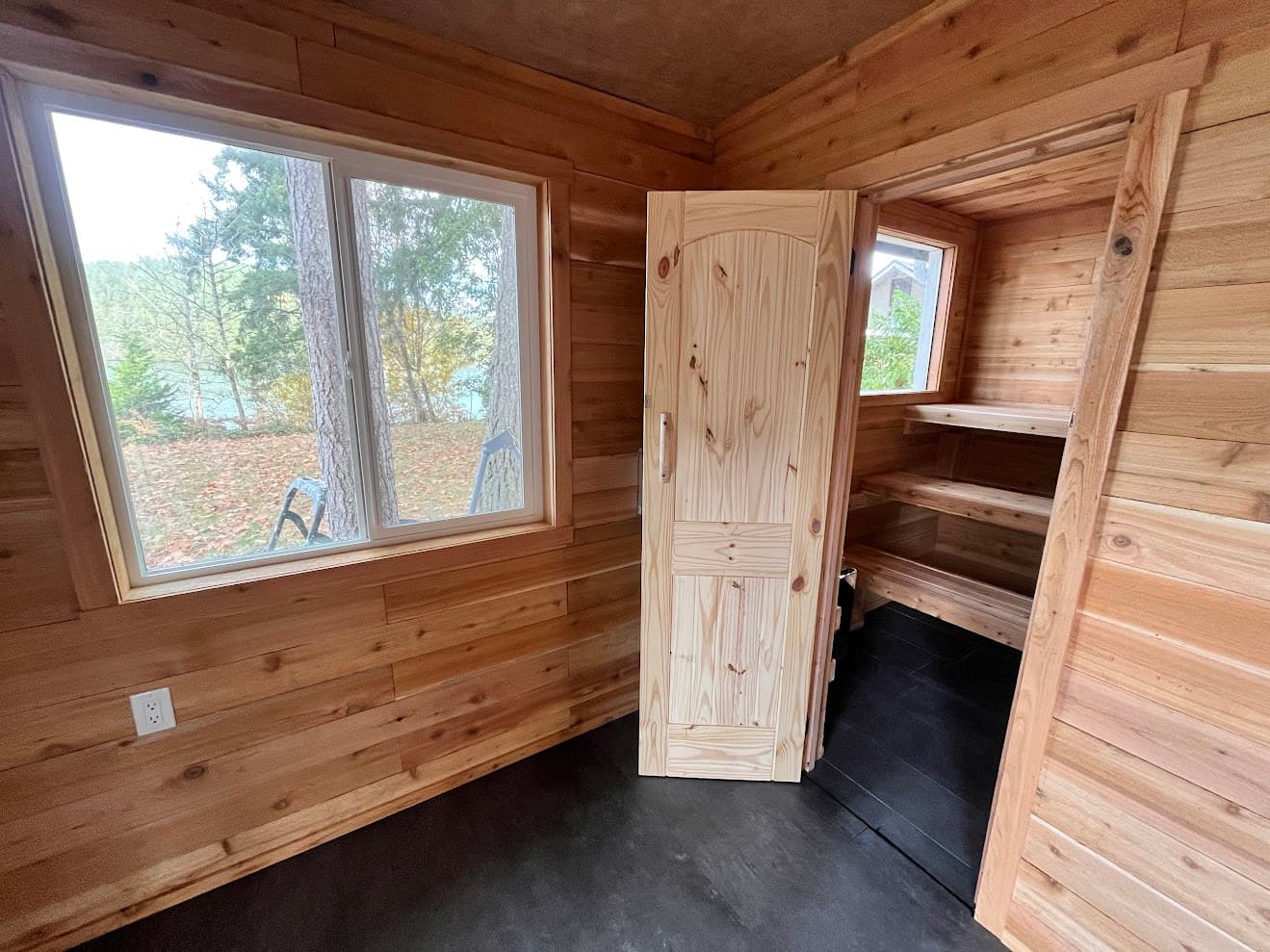
Use cedar. Western red cedar is naturally moisture- and decay-resistant, which is a real functional advantage in a wet environment, not just an aesthetic one. In humid climates especially, cedar's resistance to rot earns its cost. Hemlock and aspen are fine in drier regions; in a high-moisture setting, cedar is the safer call.
Keep the bench fronts open. A lot of saunas fully enclose the vertical face under the benches. Don't. Sweat drips through the bench slats to the floor, and if the space underneath is sealed off, moisture collects where you can't reach it to clean or dry. Use an open bench design — horizontal slats on wall-mounted supports — so the floor below is visible and air circulates underneath. If you want enclosed fronts for looks, make the panels removable.
Slope the floor to drain, or at least make it cleanable. Tile or sealed concrete handles water far better than wood flooring, and a slight slope toward a drain (about 1/4 inch per foot) lets water leave instead of pooling. A drain isn't strictly required, but easy-to-clean, water-shedding flooring is.
Flat ceiling, sealed vapor barrier. An aluminum vapor barrier behind the paneling keeps moisture from migrating into the wall cavity and condensing there — hidden mold is the worst kind. A flat interior ceiling (rather than following the roof slope) also keeps air and moisture moving evenly instead of stagnating in a peak.
If you're planning a build, these are the kinds of decisions worth locking down before construction. Our sauna design checklist covers them, and a remote design package specs the ventilation and drying strategy for your exact climate.
Habits that keep it clean
Design does most of the work, but a few habits finish the job:
Open the drying vent (or run the fan) after every session and let the room dry fully before you close it up. Wipe down the benches and any standing water when you're done — a quick pass with a towel removes the water that would otherwise sit and soak in. Every so often, give the benches and floor a real cleaning with mild soap and water, and let everything dry completely. And if you notice a musty smell developing, treat it as an early warning that your drying isn't keeping up — usually it means the drying vent is staying closed or the room is getting sealed too soon.
A sauna that's designed to dry and gets dried after each use simply doesn't grow mold. The musty, mildewed saunas are almost always the ones with no ventilation, no drying step, and enclosed dead spaces holding water.
Frequently Asked Questions
What's the number one cause of mold in a sauna?
Trapped moisture from inadequate drying. A sauna gets very wet during use, and if the room can't dry out between sessions — no ventilation, no drying vent, sealed up immediately — the moisture stays in the wood and air and feeds mold. Proper ventilation plus a post-session drying step solves the large majority of mold problems.
Do I need a fan, or is passive ventilation enough to prevent mold?
A mechanical exhaust fan is the most reliable option, especially in humid climates, because you can run it after a session to actively pull moisture out. But a passive setup with a proper drying vent — opened after each session — is a major improvement over no ventilation, which is what causes most mold. In dry climates, passive drying often handles it; in humid ones, lean toward mechanical.
Does cedar prevent mold?
Cedar resists moisture and decay better than most woods, which helps, but it's not a substitute for ventilation and drying. Cedar in a sealed, undried sauna will still develop mold. Think of cedar as insurance that pays off when combined with a room that actually dries out — particularly valuable in humid regions.
How do I get rid of a musty smell in my sauna?
A musty smell means moisture is lingering. Clean the benches and floor with mild soap and water, dry everything completely, and then fix the underlying drying problem — open your drying vent after every session or run your exhaust fan post-session. If enclosed bench fronts are trapping water underneath, that's a common hidden source; make those panels removable so you can clean and dry beneath them.
Is mold worse in certain climates?
Yes. High-humidity regions — the Southeast, Gulf Coast, much of the Eastern U.S., and the Pacific Northwest — have a serious, persistent mold risk because the ambient air is moisture-laden and passive drying is slow. In these climates a strong mechanical exhaust and an after-session drying routine are essential. Dry climates like the Southwest have much lower risk because the air helps the sauna dry on its own.
Next steps
Mold is a design problem before it's a cleaning problem. If your sauna keeps getting musty no matter how much you scrub, the ventilation and drying setup is the place to fix it — and that's something we can diagnose and redesign remotely. Take a look at our remote sauna design service, or if you're building, the sauna design checklist will help you get the moisture strategy right from the start.