Sauna Temperature: How Hot Should a Sauna Be (and How to Get There)
The first question most people ask about a sauna is how hot it should be. It's a fair question, but the number on its own is misleading. A traditional sauna at 175°F with a splash of water on the rocks feels completely different from a dry sauna sitting at 195°F, and most people prefer the cooler one. Sauna temperature only makes sense alongside humidity and how the heat actually reaches your body.
Here's the right temperature range for a traditional sauna, why the number matters less than people think, and how to actually get your sauna to feel the way you want.
The standard sauna temperature range
A traditional Finnish-style sauna runs between roughly 150°F and 195°F (about 65°C to 90°C). Most regular users settle somewhere in the 170°F to 185°F band as their everyday comfort zone.
That's measured at head height near the upper bench, which matters — the temperature in a sauna varies enormously top to bottom. The air at the ceiling can be 40 to 50 degrees hotter than the air at the floor. So when someone says their sauna "only reaches 160," the real question is where the thermometer is. A thermometer mounted low on the wall will always read cooler than the air you're actually sitting in on the top bench.
For comparison, an infrared sauna runs much cooler — typically 110°F to 140°F — because it heats your body directly rather than heating the air around you. That's a fundamentally different experience, which is why the temperature numbers don't transfer between the two types. This article is about traditional saunas, where you heat the air and the air heats you.
Why the number matters less than you'd think
Here's the part that surprises people: two saunas at the exact same temperature can feel worlds apart depending on humidity. This is the whole reason a 175°F traditional sauna with steam can feel more intense than a 195°F dry one.
When you pour water on the hot rocks, you create a burst of steam — löyly — that briefly raises the humidity. Humid air transfers heat to your skin far more efficiently than dry air, so that wave of steam feels like a sudden surge of heat even though the air temperature barely moved, or even dropped slightly. That's why experienced sauna users often run a moderate air temperature and control the intensity with water on the rocks, rather than chasing a high number on the thermometer. We get into the mechanics of this in our löyly explained guide — it's the single most important concept for understanding how a sauna actually feels.
So the practical takeaway is this: don't fixate on hitting 195. A sauna at 175 to 180 that you can throw water in will almost always feel better than a bone-dry sauna cranked to its max. The heat you feel is a combination of air temperature and humidity, and the rocks give you a dial for the second one.
Trusted by homeowners across Tahoe and beyond
A reasonable temperature for different uses
Beginners and anyone easing in should start lower — around 150°F to 160°F — and work up as they get used to the heat. There's no benefit to suffering, and a too-hot first session just makes people decide saunas aren't for them.
For general relaxation and everyday use, 170°F to 180°F is a comfortable, sustainable range that most people can sit in for a full session. This is where I run mine most of the time.
For a hotter, more intense session — the kind where you do shorter rounds with cooldowns in between — 185°F to 195°F with periodic water on the rocks is the upper end. Above that you're not really gaining anything; you're just shortening how long you can comfortably stay in. Most published sauna research on cardiovascular benefits used sessions in this general traditional range, not extreme temperatures, so there's no health reason to push past it. Our how to use a sauna guide covers session length and the cooldown rhythm that actually matters more than peak temperature.
How to get your sauna to the right temperature
If your sauna struggles to reach temperature or takes forever to get there, the cause is almost always one of three things: an undersized heater, heat loss, or poor air sealing — not the thermostat.
The heater has to be matched to the room's air volume. An underpowered heater in a too-big room will run constantly and never quite get there, especially in winter. Heater output is sized to cubic footage, with adjustments for glass doors and exterior walls, and getting this right is the foundation of a sauna that heats well. Our sauna heater sizing guide has the kW recommendations by room size.
Heat loss is the next culprit. A sauna without a proper vapor barrier and good insulation leaks heat as fast as the heater makes it, which shows up as slow heat-up times and a heater that never cycles off. An outdoor sauna in a cold climate is especially unforgiving here.
Ventilation is the one people get backwards. A sauna needs fresh air, and good ventilation actually helps the room heat evenly and feel better — it doesn't fight the heater if it's designed right. The mistake is either no ventilation (stuffy, uneven heat) or a poorly placed exhaust that dumps your hot air. The intake-near-the-heater and properly placed exhaust layout in our sauna ventilation guide keeps the room hot and breathable at the same time.
Bench height: the hidden temperature factor
Even with a perfectly sized heater, you'll feel cold if you're sitting in the wrong layer of air. Because heat stratifies so strongly, the height of your upper bench effectively determines what temperature you experience.
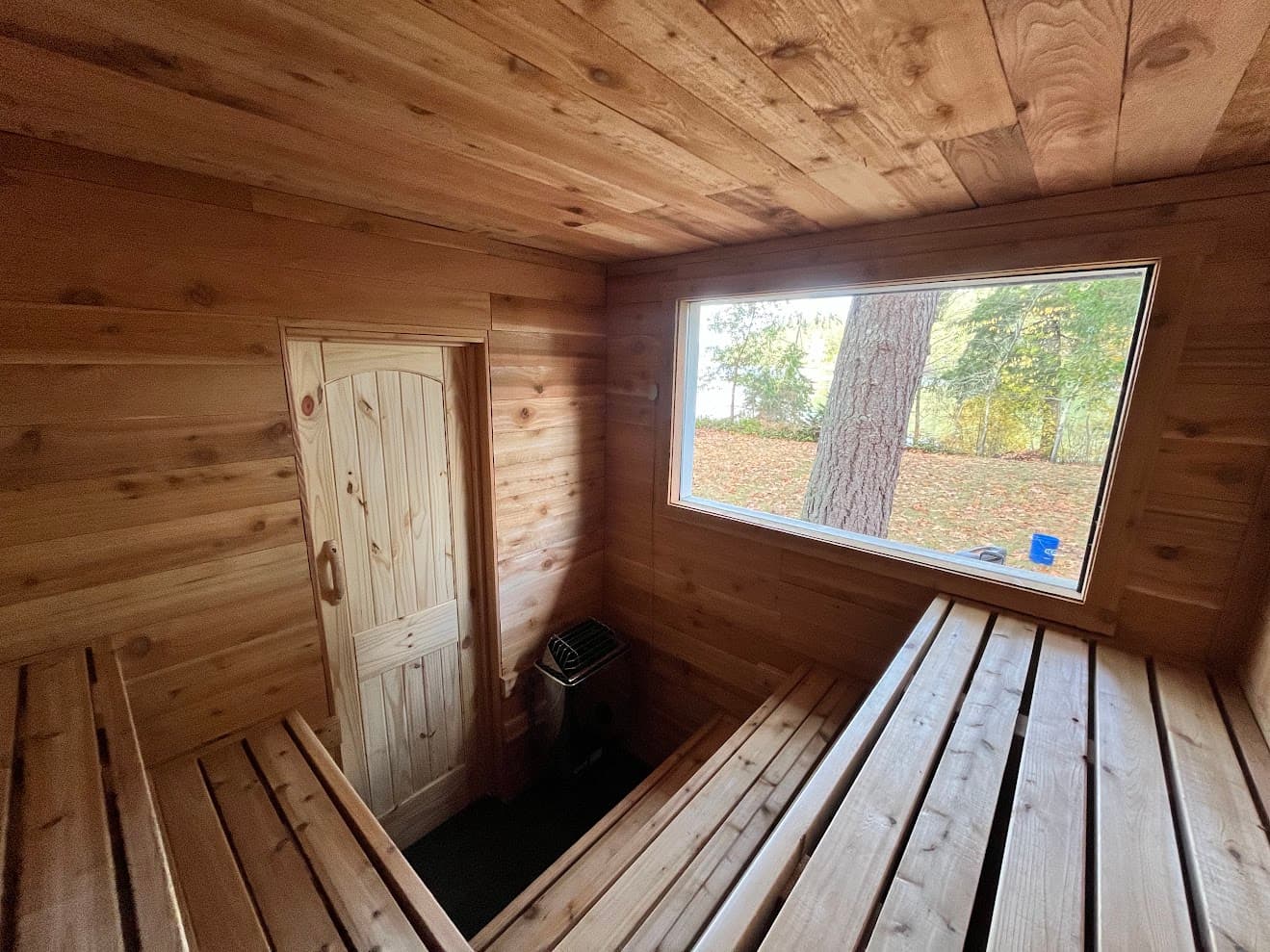
The goal is to sit with your feet at or above the level of the heater's stones, up in the hottest layer of air. A bench that's too low puts you in the cooler middle of the room, and the sauna feels weak no matter what the thermostat says. This is why two saunas with identical heaters and thermostats can feel completely different — one has the bench at the right height and one doesn't. If your sauna feels cooler than the thermometer claims, check where you're sitting relative to the stones before you blame the heater.
How to control temperature during a session
Most electric heaters have a thermostat that holds a set temperature, so the main control is just setting it and giving the room time to fully soak — the walls and benches need to heat up too, which is why a sauna feels better 45 minutes in than at 15 minutes even at the same air temperature.
From there, you control the feel with water on the rocks. A ladle of water raises the humidity and the perceived heat for a minute or two, then settles. Run the air a touch cooler than you think you want and use löyly to bring the intensity up in waves — it's a much nicer experience than sitting in static dry heat at a high number.
Wood-fired saunas are less precise — you're managing a fire rather than a thermostat — but the same principles apply, and many people prefer the softer, more variable heat. We compare the two in our guide to building a sauna if you're still choosing a heat source.
Frequently Asked Questions
How hot should a sauna be?
A traditional sauna runs between 150°F and 195°F, with most people comfortable at 170°F to 185°F measured at head height on the upper bench. Beginners should start around 150°F to 160°F. There's no real benefit to going above 195°F — it just shortens how long you can comfortably stay in.
What's the ideal sauna temperature?
For everyday relaxation, around 175°F to 180°F is a sustainable sweet spot for most people. The exact number matters less than the humidity, though — a slightly cooler sauna with water on the rocks usually feels better than a hotter, bone-dry one because humid air transfers heat to your skin more efficiently.
Why does my sauna feel cooler than the thermometer says?
Usually because of where you're sitting. Heat stratifies, so the air at the ceiling is much hotter than at the floor. If your upper bench is too low — below the level of the heater stones — you're sitting in the cooler layer. A low bench, an undersized heater, or heat loss from poor insulation are the three usual causes.
Is a higher temperature better for health?
No. Most sauna research on cardiovascular and recovery benefits used sessions in the normal traditional range, not extreme heat. Consistency and regular use matter far more than peak temperature. Pushing past the comfortable range mostly just reduces how long you can stay in.
How long does a sauna take to heat up?
A properly sized, well-insulated sauna usually reaches temperature in 30 to 45 minutes for electric, longer for wood-fired. If yours takes much longer or never quite gets there, the heater is likely undersized for the room or the sauna is losing heat through poor insulation or air sealing.
Want a sauna that actually holds the temperature you want? Getting the heater, insulation, ventilation, and bench height right is what makes the difference — and that's the design work. A remote sauna design dials all four to your specific room so the sauna feels right, not just reads right on the thermometer.