Dry Sauna vs Steam Room: Key Differences Explained
The terms "dry sauna" and "steam room" cause enormous confusion in the wellness industry. Many people use them interchangeably, but they're actually fundamentally different products with entirely different construction methods, heating systems, operating temperatures, and experiences. Understanding these differences is essential if you're planning to build or purchase a sauna experience for your home.
Let's Start with Terminology: What's Actually "Dry"?
This is where the confusion begins. What people call a "dry sauna" is actually a traditional Finnish sauna. It's called "dry" in marketing to distinguish it from a steam room, but the term is misleading. A Finnish sauna is not dry—the entire point is to throw water on heated rocks and produce large amounts of steam.
The key difference: a traditional sauna gives you controllable humidity. You throw water on the rocks when you want steam (called löyly). The rest of the time, the air is hot but without steam. This dynamic control is core to the sauna experience.
A steam room, by contrast, maintains constant near-100% humidity that you cannot control. It's always wet. These are fundamentally different experiences and require completely different construction.
What Is a Traditional "Dry" Sauna?
A traditional sauna is a cedar-lined room with a stove and rocks. Here's how it works and why it matters:
Construction and Heating
The interior is lined with wood (typically cedar or aspen) on top of insulation and a vapor barrier. The heat source is an electric or wood-fired stove that heats rocks to extreme temperatures. When you throw water on the rocks, it instantly vaporizes and fills the room with steam—that's löyly.
The ambient air temperature reaches 170-200°F. This high temperature is the primary mechanism of the sauna's physiological effect, not the humidity. You control how much steam you want by how much water you throw.
Historical Context: Why Finland Knows Saunas
Finland has approximately 3.3 million saunas for a population of 5.5 million people. That's roughly one sauna for every 1.7 people. Saunas are so central to Finnish culture that many homes have two: one for daily use and one for guests. The tradition dates back centuries and represents a deep understanding of sauna design and use.
This is why research on sauna health benefits almost exclusively used Finnish saunas as the study standard—they represent the authentic product and usage pattern.
The Spirit of Löyly
In Finnish culture, löyly (pronounced "loi-loo") is not just steam—it's considered the soul or spirit of the sauna. The ritual of throwing water on rocks, creating waves of heat, is a core part of the experience. This cannot be replicated in any other format. It's an active, participatory element that makes a sauna a sauna.
Historical Use: Bathing and Beyond
Historically, saunas were bathing spaces. Families would sweat, then wash with buckets of water, rinse, and sometimes cool off in a nearby lake or snow. Many traditional saunas had floor drains to accommodate this. While modern home saunas typically don't include drains, the sauna's original purpose was a complete bathing and cleansing ritual.
What Is a Steam Room?
A steam room (sometimes called a "wet sauna," though this is technically inaccurate terminology) is a completely different product. It's built as either a standalone tiled enclosure or integrated into a shower space.
Construction Requirements
Steam rooms require specialized construction that traditional saunas do not:
- Tiling: The entire interior must be tiled (typically ceramic or marble) because of the constant moisture exposure.
- Waterproofing: Waterproof membranes on all walls, floor, and ceiling are essential to prevent water damage to structural elements.
- Steam generator: A dedicated boiler system that injects steam through vents, maintaining the humid environment.
- Drainage: Sloped flooring and drainage systems to handle constant water runoff.
- Ventilation: Exhaust fans and venting to manage excessive moisture.
Operating Parameters
Steam rooms operate at much lower temperatures than traditional saunas: approximately 110-120°F. The air feels hot because of the humidity, not because the ambient temperature is extremely high. Humidity is constant at or near 100%—you don't control it.
Experience
Stepping into a steam room feels very different from a sauna. The air is thick and wet. You can barely see across the room due to steam. The experience is one of immersive humidity and gentler heat. There's no ritual of throwing water on rocks, no dynamic control of the environment. You simply sit in the steam.
Key Differences: Temperature, Humidity, and Construction
Here's where the fundamental differences become clear. These are not minor distinctions—they affect everything from how you build the space to how your body responds.
Temperature
Traditional Sauna: 170-200°F ambient temperature. The high heat is the primary stimulus.
Steam Room: 110-120°F ambient temperature. The humidity, not the air temperature, creates the sensation of heat.
Humidity Control
Traditional Sauna: Humidity is controllable. You throw water on rocks to create steam when you want it. Between throws, the air is dry or low-humidity. This dynamic control is essential to the experience and allows you to adjust intensity.
Steam Room: Humidity is constant at or near 100%. You cannot adjust or control it. The environment is always fully saturated.
Interior Materials
Traditional Sauna: Wood interior (cedar, aspen, or other heat-resistant species). Wood insulates well, looks beautiful, ages gracefully, and is manageable given the controlled humidity.
Steam Room: Tile throughout (ceramic, porcelain, or natural stone). Wood would not survive constant 100% humidity and would rot. Tile is essential and adds significant cost.
Heating Method
Traditional Sauna: A stove with rocks. The rocks absorb heat and then release it to the surrounding air. When water hits the rocks, it vaporizes instantly. The stove is the centerpiece.
Steam Room: An electric or gas boiler that heats water and generates steam. Steam is injected into the room through vents controlled by a thermostat. There is no visible heating element.
Vapor Barriers and Insulation
Traditional Sauna: Requires an aluminum foil vapor barrier on the warm side of the insulation to prevent moisture migration into the wall cavity. Standard residential insulation (R-13 walls, R-19 ceiling) is appropriate. Sauna Vapor Barrier | Radiant Barrier Roll
Steam Room: Requires waterproof membranes (typically polyethylene or specialized steam-room membranes) on all surfaces. The barrier must be continuous and sealed to prevent water intrusion. Insulation is secondary to waterproofing.
Health Benefits: What Does the Research Actually Show?
This is crucial: most scientific research on sauna health benefits was conducted on traditional Finnish saunas, not steam rooms. Understanding this distinction changes how you should evaluate health claims.
Traditional Sauna Research: Strong Evidence
The landmark study, published in JAMA Internal Medicine, tracked 2,315 Finnish men over 20 years. The findings are remarkable:
- Cardiovascular mortality: Men using a sauna 4-7 times per week had approximately 50% lower risk of cardiovascular death compared to men who rarely used saunas.
- All-cause mortality: Regular sauna users showed significantly lower mortality across all causes.
- Brain health: Sauna use correlated with improved cognitive function and lower risk of dementia and Alzheimer's disease.
- Heat shock proteins (HSPs): Activated at core body temperatures around 73°C (163°F), which requires sustained high ambient temperatures. Traditional saunas operating at 170-200°F easily achieve this.
- Athletic recovery: The heat stress triggers hormonal and metabolic adaptations that support muscle recovery and growth.
These benefits are tied to the high temperature and the physiological stress it creates. You cannot separate the benefits from the temperature.
Steam Room Research: Limited Evidence
Research specifically on steam rooms is much more limited. While steam rooms may offer some benefits (particularly for respiratory health due to humidity), the depth of scientific backing is not comparable to traditional sauna research.
The lower operating temperature (110-120°F vs 170-200°F) means steam rooms likely do not activate heat shock proteins as effectively. The temperature threshold for HSP activation is around 73°C (163°F)—easier to reach in a sauna, harder in a steam room.
Respiratory Benefits: Where Steam Rooms Excel
One area where steam rooms may have an advantage: the high humidity can benefit respiratory health. If you have asthma, sinusitis, or other respiratory conditions, the moist heat of a steam room can open airways and ease congestion more effectively than dry heat.
However, this benefit is separate from the broader cardiovascular and metabolic benefits documented in traditional sauna research.
Steam Bath Design Essentials (Trumpkin Guidelines)
If you're considering a steam bath (the technical term for a steam room), use Trumpkin's design specifications to ensure a functional, comfortable space:
Key Design Parameters
- Minimum volume: 3 m³ per person (same as sauna). Larger steam baths (like 8×8×8') provide more even experience and better thermal stability.
- Ceiling slope: Minimum 1 in 7 pitch (sloped ceiling). Critical to prevent hot water from dripping on bathers—a major comfort issue.
- Bench heights: Lower bench ~42cm (16.5"), upper bench ~84cm (37"). Benches should be heated (strongly recommended for comfort).
- Separate from shower: Do NOT combine steam room with shower in same space. This creates incompatible routines and reduces experience quality for both uses.
- Ventilation: Mechanical downdraft required. Intake high (ceiling), exhaust low (8" above floor, opposite steam supply) to remove humid air and prevent mold.
- Operating temperature: 40°C ± 10°C (104°F ± 18°F). This narrow range is optimal for comfort and physiology.
Why Steam Baths Are Great Add-Ons
A steam bath is an excellent complement to a premium thermal suite (sauna + cold plunge + rest area). It provides a different thermal experience and works well in the hot-cold-rest cycle of proper thermal design. Never use as a replacement for sauna—they're different experiences with different benefits.
Which Should You Build? The Practical Decision
If you're planning to build a thermal experience in your home, here's how to think about the choice:
Build a Traditional Sauna If:
- You want the most research-backed health benefits.
- You prefer simpler construction (wood, insulation, stove).
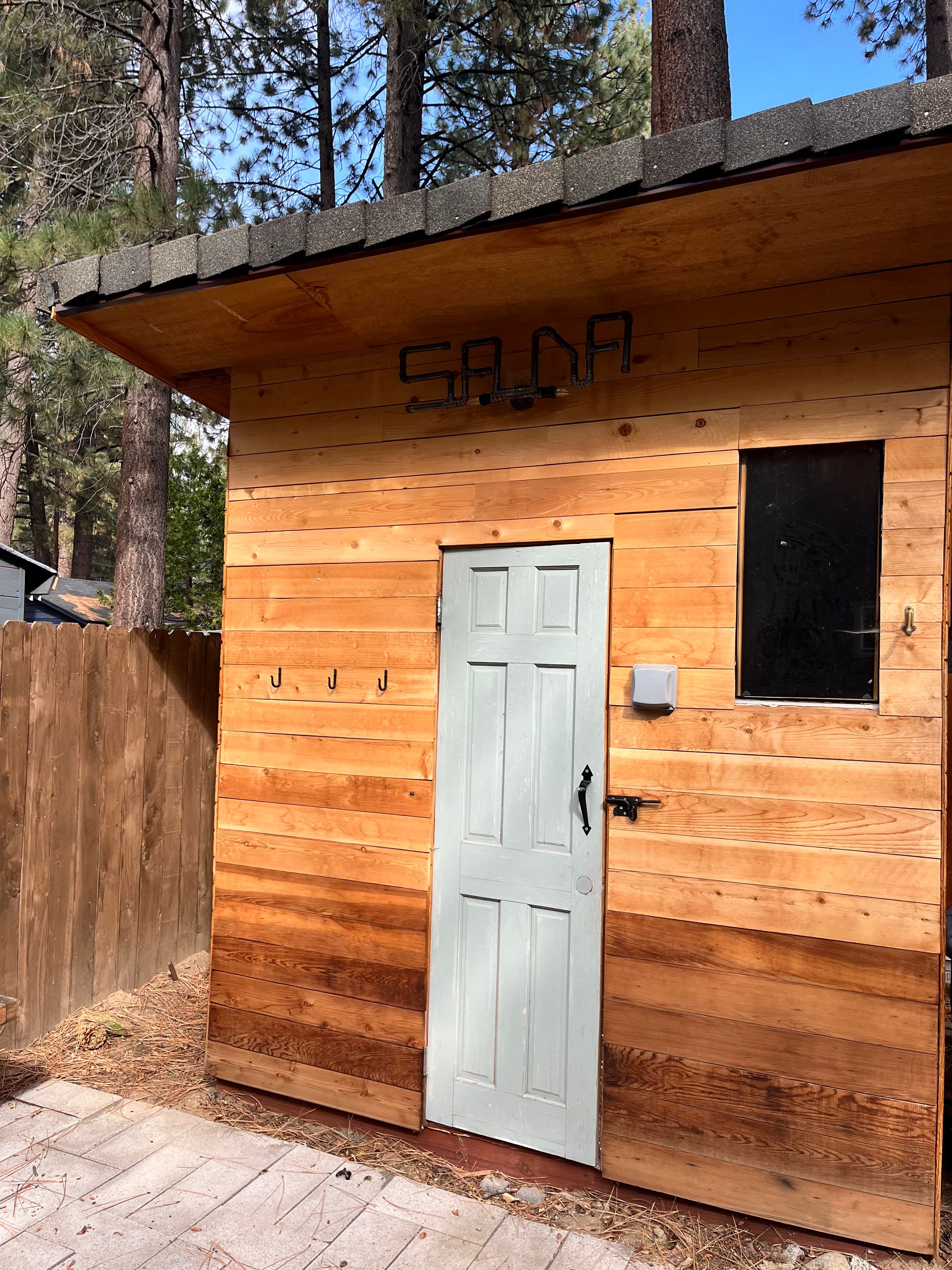
- You want to build outdoors—traditional saunas can be standalone structures.
- You want lower installation and material costs.
- You want the authentic sauna experience with löyly and steam control.
- You want a space that's easier to maintain and repair long-term.
Build a Steam Room If:
- You're integrating it into an existing shower or bathroom and have waterproofing already in place.
- You have respiratory conditions that benefit from high humidity.
- You prefer a more genteel, spa-like atmosphere with lower temperatures.
- You like the aesthetic of tiled spaces (design flexibility).
Reality check: Steam rooms are significantly more complex and expensive to build from scratch. They require specialized tiling, waterproofing, steam generators, and professional installation. Traditional saunas, by contrast, can be a solid DIY project with the right guidance.
Cost Comparison (Rough Estimates)
Traditional Sauna (6x8 outdoor):
- DIY materials: $4,000-8,000
- Professional installation: $8,000-20,000+
- Electrical (dedicated 240V circuit): $1,500-3,000
Steam Room (small bathroom integration):
- Tiling and waterproofing: $5,000-10,000+
- Steam generator and controls: $2,000-5,000+
- Professional installation (required): $5,000-15,000+
- Total: Often $15,000-30,000+ for a modest space
The Terminology Fix: Clearing Up Confusion
When someone asks about a "dry sauna," they usually mean a traditional Finnish sauna. The term "dry" is a marketing distinction to separate it from steam rooms, but it's misleading because you absolutely throw water (and create steam) in a proper sauna use.
When someone says "wet sauna," they're usually referring to a steam room, not a traditional sauna with water being thrown on rocks. This confusion has led to countless misunderstandings.
Clearer terminology:
- Traditional Sauna or Finnish Sauna: Wood-lined room with a stove and rocks. High temperature (170-200°F), controllable humidity via throwing water (löyly). This is what most research supports.
- Steam Room: Tile-lined room with a steam generator. Lower temperature (110-120°F), constant high humidity (near 100%). Fundamentally different product.
When evaluating which to build, first clarify which one you actually want. Many conversations about "sauna vs steam room" suffer because people are talking past each other—one thinking of löyly and high heat, the other thinking of humid tile and generators.
Key Takeaways
- They're different products: A traditional sauna and a steam room are not variations of the same thing. They have different construction, heating, temperatures, humidity, and experiences.
- Research favors traditional saunas: The major health studies (cardiovascular, brain health, longevity) were conducted on traditional Finnish saunas operating at 170-200°F.
- Löyly matters: The ability to throw water on rocks and create controllable steam is central to why saunas work physiologically and culturally. You can't replicate this in a steam room.
- Construction complexity differs vastly: Traditional saunas are simpler and less expensive to build. Steam rooms require professional-grade waterproofing, tiling, and steam systems.
- Choose based on your actual goal: If you want research-backed health benefits and an authentic sauna experience, build a traditional sauna. If you want a spa-like steam experience for respiratory benefits, build a steam room—but know it's a bigger project.
Ready to Design Your Sauna?
If you've decided that a traditional sauna is right for you, we can help you design one for your home. Whether it's an outdoor structure, a basement build, or an indoor space, we'll guide you through every decision: sizing, ventilation, materials, heater selection, and electrical planning.
Design Your Traditional SaunaOr if you want to explore specific topics in more detail, check out our guides on infrared saunas vs traditional saunas, sauna health benefits, sauna ventilation design, and how to build a sauna.