Both infrared and traditional saunas are marketed as wellness products, but they operate on fundamentally different principles. Understanding how each works, their health benefits, cost, and installation requirements will help you make an informed decision about which is right for you.
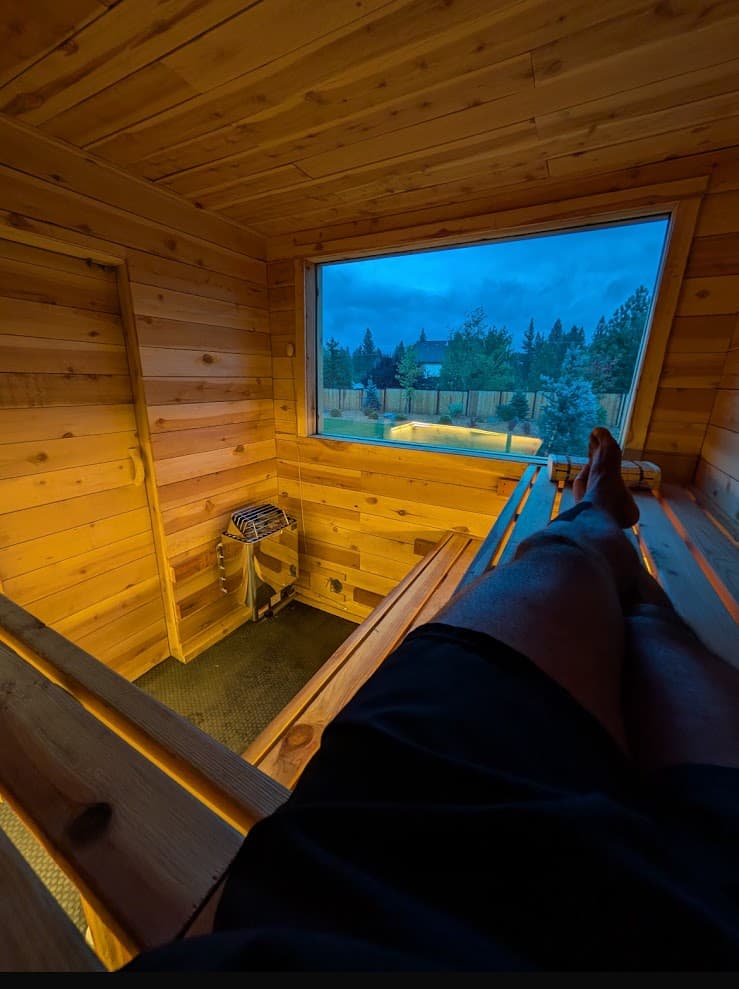
A traditional sauna is a cedar-lined room heated by an electric or wood-fired stove. The stove contains rocks that are heated to extreme temperatures. When water is thrown on the rocks, it creates löyly—the enveloping steam that defines the sauna experience. The air in the room reaches 170-200°F, while the steam provides a gentler, more interactive experience than the ambient temperature would suggest.
This design has been perfected in Finland for centuries and remains the standard for most contemporary sauna construction worldwide.
An infrared sauna uses infrared radiation panels to heat the body directly, bypassing the need to heat the surrounding air. The operating temperature is much lower—typically 120-150°F. Because there are no rocks and no water interaction, infrared saunas cannot produce steam (löyly). They are silent, gentle, and more passive—you sit in front of the panels while they warm you.
Infrared units are often portable or compact, requiring only a standard 120V outlet. They ship easily and can be set up in minutes.
Trusted by homeowners across Tahoe and beyond
Most sauna health research has been conducted on traditional Finnish saunas. The landmark study, published in JAMA Internal Medicine, tracked 2,315 Finnish men over 20 years. This research documented significant health benefits including:
The key point: this research was conducted in traditional saunas, and the high temperatures and steam interaction are core to these documented benefits.
Infrared cabins have a much thinner body of peer-reviewed research. Manufacturers make claims about detoxification, tissue penetration, and metabolic benefits, but scientific backing is limited compared to traditional sauna research.
More critically: core body temperature increase is 9x slower in infrared cabins than traditional saunas. At 120–150°F air temperature, infrared cabins increase core body temperature at only ~1/5 the rate of proper saunas.
Since many sauna health benefits depend on core body temperature rise (heat shock protein activation, cardiovascular conditioning), infrared cabins fundamentally cannot deliver the same physiological stimulus. Heat shock proteins require approximately 73°C (163°F) maintained for 30 minutes — easily achievable in traditional saunas operating at 170–200°F, but much harder in infrared cabins.
Research from Huberman Lab and other sources indicates that wet sauna (traditional with steam) is more effective than dry sauna or infrared for the same session length. The steam enhances heat transfer and creates a more potent stimulus for the body's adaptive responses.
Entering a traditional sauna is a ritual. The heat builds gradually. You control the humidity by throwing water on the rocks, creating moments of intense but enveloping warmth. The interaction between you and the heat is dynamic—you're not passive. The smell of hot cedar, the sound of sizzling water on rocks, the sensory engagement—these are core to what makes a sauna a sauna.
Saunas have social and cultural significance, especially in Nordic countries. They're places where families and friends gather, where conversation slows, and where the experience itself is valued.
An infrared cabin is quiet and gentle. You sit in front of panels that gradually warm you. There's no steam, no ritual of throwing water on rocks, no humidity control, no social space. It's more like sitting in front of a space heater—comfortable, but passive and solitary.
The heat is directional (asymmetrical) — typically warming 3 sides of your body unevenly. Some users report back or joint discomfort from extended sessions. Crucially: there is no löyly, which is the defining feature of an actual sauna.
Many people find infrared cabins relaxing, but it's a fundamentally different product category than a sauna. Calling it a "sauna" is purely marketing language.
The appeal is clear: low upfront cost (~$1,000), no electrical complexity, instant setup, and the ability to place one almost anywhere. If budget is the primary constraint, infrared is a pragmatic choice. It offers warmth and relaxation without the financial and logistical demands of a traditional sauna.
For apartment dwellers, renters, or those with tight budgets and zero construction capability, infrared fills a legitimate gap. It's a heat therapy device, not a sauna.
If you want a sauna, choose traditional. Traditional saunas offer:
If you're ready to invest in a traditional sauna, start with the heater — it's the heart of the build. Select Saunas carries electric heaters from Harvia, HUUM, and other quality brands designed for authentic löyly.
If you want a heat therapy device, infrared cabins are an option. But understand what you're getting: not a sauna, but a radiant heat cabinet. Core body temperature rise is much slower, health benefits are less proven, and the experience is solitary and passive rather than ritualistic and social.
Bottom line: Infrared cabins and traditional saunas are fundamentally different products. Don't let marketing conflate them. If you want the sauna experience—the löyly, the heat, the health benefits, the ritual—choose traditional. The investment pays for itself over time through superior durability and research-backed wellness benefits.
Consult your doctor before using any sauna. While infrared is gentler due to lower air temperature, the body's physiological response to heat still occurs. Medical clearance is essential for anyone with cardiac concerns.
Most research showing health benefits used sauna bathing 4-7 times per week. Even 2-3 times per week can provide benefits. Start slowly and let your body adapt.
Yes. Indoor saunas require proper ventilation, humidity control, and a dedicated electrical circuit. Many homeowners successfully build indoor saunas in basements, spare rooms, or additions.
Yes, when used responsibly. Traditional sauna use is practiced safely across Scandinavia and much of Europe. Stay hydrated, don't overextend session length, and listen to your body.
Most home saunas range from 4x6 to 8x10 feet. A 6x8 sauna comfortably seats 4-6 people. Outdoor saunas in Tahoe typically cost $12,000-18,000 installed, depending on finishes and site conditions.
Want to explore sauna design further? Visit our guides on:
12 decisions that determine how well your sauna performs — insulation, bench height, heater sizing, ventilation, and more.
Have questions about your project? Send us a message or schedule a free 15-minute intro call.
Schedule a free 15-minute intro call or send us a message about your project.
We'll learn about your space, goals, and timeline — and recommend the right next step for your project.