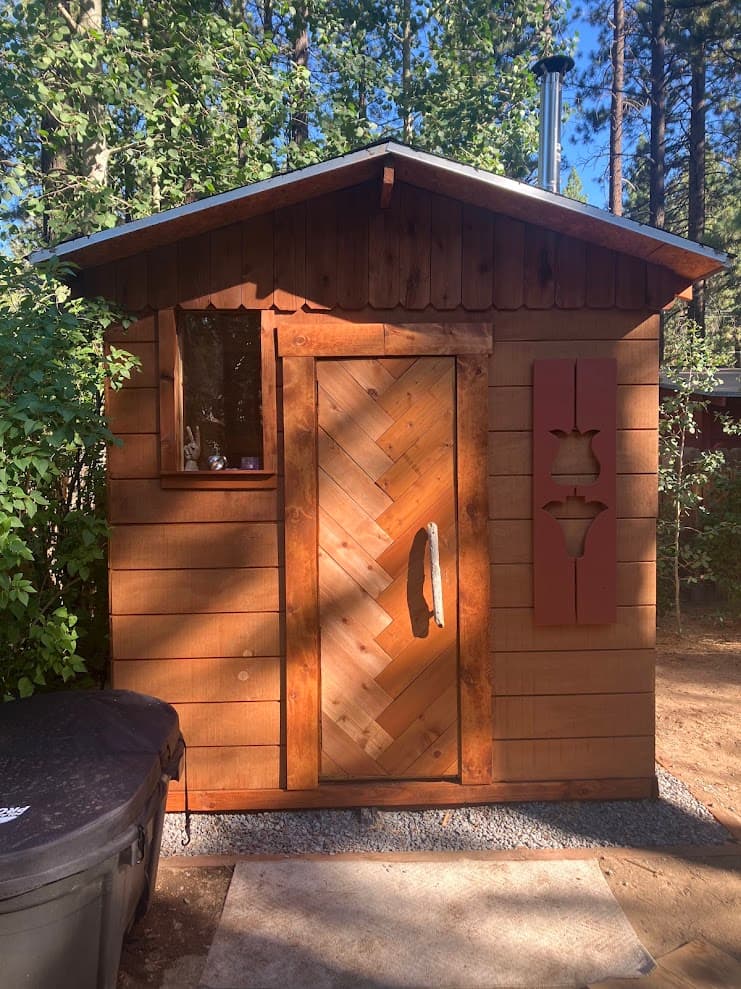
From foundation to first session — the full process for building your own sauna.
By Reid Haefer, Sauna Designer & Builder·
Building your own sauna is achievable for anyone with basic carpentry skills. This is the complete step-by-step process from foundation to first session, with detailed specifications for each phase of construction.
A properly built sauna delivers years of reliable performance, and the DIY approach keeps costs between $4,000–$8,000 in materials while giving you full control over design, size, and finish quality.
Planning Your Sauna Build
Before you start framing, settle three fundamental decisions: location, size, and heater type.
Indoor vs Outdoor: Outdoor saunas give you dedicated space and flexible placement. Indoor saunas require careful moisture management and ventilation. For most DIYers, outdoor is simpler.
Size: Our recommendation is 8x8 feet — that accommodates 4–6 people comfortably and gives you enough vertical space for proper bench heights (40–48 inches below ceiling to the top of the upper bench). This footprint is also manageable for DIY framing. Smaller (6x6) is cheaper but cramped. Larger (10x10) requires more materials and longer heat-up time.
Heater Type:Electric heaters (6–9kW for an 8x8) are reliable, code-compliant, and don't require special venting. Wood-burning adds character but requires chimney design, permitting, and more maintenance. For a first build, electric is recommended.
Budget: An 8x8 DIY sauna runs $4,000–$8,000 in materials. Electrical work (by a licensed electrician) adds $1,000–$2,000. Professional builds run $15,000–$35,000 depending on location and finish.
Heater Sizing: Use 1kW per 45 cubic feet of volume. For an 8x8x8 sauna (512 cubic feet), plan for 11kW. Most residential installations top out at 9kW due to electrical panel limits. Size accordingly or go slightly smaller.
Tools Required for the Build
Minimum: Circular saw, hammer, utility knife, power drill, long level, long T-square, ladder, tape measure, hole saw (3–3.5"). With these alone, you can complete a sauna.
Recommended: Mitre saw, table saw, jigsaw, brad nailer, roof nailer, framing nailer. These tools speed up the build and improve accuracy, especially for roofing and trim.
If you don't own these tools, renting costs $20–$40 per day per tool, totaling $200–$400 for a full build if renting for a week.
Trusted by homeowners across Tahoe and beyond
Step 1: Foundation
A solid foundation keeps moisture out and the structure level. Use floating deck block footings — nine blocks arranged in a 3x3 grid under your framing.
Prepare the site: level ground, 4–6 inches of gravel base, compacted below natural grade.
Set nine blocks (one at each corner, one at center, one at each midpoint) on the gravel.
Level all blocks with a long level and shims. This is critical — poor foundation = uneven walls and doors that don't close.
Install pressure-treated floor joists (2x8 or 2x10, depending on span). Space at 16 inches on center.
Square the foundation: measure diagonals (opposite corner to opposite corner). Both measurements must be identical within 1/4 inch.
Cover with 3/4" OSB subflooring, fastened to joists with 2.5" nails or screws every 8 inches.
Step 2: Framing
Framing is standard stud construction: 2x4 studs 16 inches on center, double top plate, and sheathed with plywood or OSB.
Build wall frames on the OSB subfloor, then tip them up and nail to the rim joists.
Rough window and door openings 1/4 inch larger than the final size (for shims and adjustment).
Install double top plate — this ties walls together and provides a bearing for the roof structure.
Sheath with 1/2" plywood or OSB, nailed every 8 inches around perimeter and every 12 inches in the field.
Step 3: Roof
A shed (single-pitch) roof is simplest for DIY. Regardless of exterior roof pitch, always build a flat interior ceiling — it ensures proper heat distribution and moisture management inside the sauna.
Critical Trumpkin Research: Even if your roof is pitched, the interior ceiling must remain flat. A sloped interior ceiling creates uneven convective heat distribution, disrupts temperature stratification, and reduces löyly (steam) effectiveness. This is one of the most common North American sauna design mistakes — always use a flat ceiling on the warm/interior side, creating an attic or ventilation cavity above it. This is standard Finnish practice.
Install ceiling joists (2x6 or 2x8) at 16" on center. These run perpendicular to the ridge and tie the walls together.
Sheath the ceiling joists with 1/2" OSB — this becomes the roof decking for a flat interior ceiling.
If you're doing a shed roof, install angled rafters ABOVE the flat ceiling joists, from top plate to peak beam. 4:12 pitch (4 inches rise per 12 inches run) is typical. This creates attic space above the flat ceiling.
Cover decking with underlayment, drip edge, and shingles. (Hire a roofer if roofing is unfamiliar.)
The interior ceiling (warm side) stays flat — install this after insulation and vapor barrier. Never slope it to match the roof.
Step 4: Electrical (Licensed Electrician Only)
Electrical work must be done by a licensed electrician and inspected by your local authority.
Run a dedicated 240V circuit from your main panel to the sauna heater location. Most 6–9kW heaters require 40–50A.
Install a 15A or 20A circuit for lighting (standard 12 or 14 AWG wire).
All wiring must be in place before insulation. Do not wrap wiring in vapor barrier.
Use weatherproof disconnect switch outside the sauna if required by local code.
Step 5: Insulation
Insulation keeps heat in and maintains consistent temperature. Fill all wall and ceiling cavities.
Mineral wool: Preferred for sauna. Fire-resistant, moisture-resistant, no offgassing. Batts fit between studs. R-13 to R-21 for walls, R-30+ for ceiling.
Fiberglass batts: Budget option. Lower moisture resistance but works if vapor barrier is properly sealed. Same R-values apply.
Exterior walls in cold climates (like Tahoe/Truckee) should be R-21+ to minimize frost bridging.
Step 6: Vapor Barrier
A vapor barrier prevents warm, moist interior air from reaching insulation where it can condense and cause rot or mold. Trumpkin's research emphasizes that a continuous, well-sealed aluminum barrier on the hot/interior side is essential for sauna durability.
Material: Non-adhesive aluminum foil sheeting (not plastic). Aluminum is superior because it reflects radiant heat and resists moisture penetration. Sauna Vapor Barrier | Radiant Barrier Roll
Placement: On the warm (interior) side of the insulation, against the studs and ceiling joists.
Installation: Staple to studs and ceiling joists. Overlap seams by 6 inches minimum (6 inches minimum—not 3).
Sealing: Seal ALL seams and penetrations with aluminum tape (not cloth or plastic tape, which fail in heat). This is critical. Every gap is a potential moisture leak.
Coverage: Extend vapor barrier continuously from floor to ceiling. No gaps, no shortcuts. This continuous barrier is what prevents the wood from rotting.
Penetrations: For all wire and pipe penetrations, cut a hole slightly larger than needed, insert the wire/pipe, and tape around it with aluminum tape. Seal it thoroughly.
Step 7: Air Gap
Install 1/4–1/2 inch furring strips (thin wood strips) on top of the vapor barrier, running perpendicular to studs.
Secure with brad nails driven through the vapor barrier into the studs. The vapor barrier is not structurally responsible for holding them — the studs are.
The gap behind the interior paneling allows any moisture that does penetrate to dry out.
Step 8: Interior Panels (Walls & Ceiling)
Interior walls and ceiling are finished with wood tongue-and-groove (T&G) panels. Western Red Cedar is the gold standard.
Western Red Cedar: $4–$8 per sq ft. Aromatic, beautiful color, naturally rot-resistant. Ideal.
Hemlock: $3–$6 per sq ft. Lighter color, decent durability, good value.
Aspen: $2.50–$5 per sq ft. Budget option. Less durable but works.
Install horizontally with the male edge (tongue) pointing down. This prevents water from sitting in the grooves.
Nail through the tongue into furring strips with brad nails. This hides fasteners.
Ceiling: Install with same material and orientation. Proper support from ceiling joists.
Step 9: Windows
Windows should be tempered, double-pane glass in a fixed (non-opening) frame. Opening windows leak heat and moisture.
Rough opening 1/4 inch larger than the window frame (for shims).
Install flashing tape around the exterior edges to shed water.
Caulk the outside seams only (no interior caulk — it offgasses in heat). Use exterior paintable silicone caulk.
Interior trim can be cedar to match walls.
Step 10: Floor
Tile on tile board (cement board) is the best sauna floor. Ceramic or porcelain tile resists heat and moisture.
Install 1/2–5/8" cement board over the OSB subfloor with thin-set mortar.
Small "penny" tiles (1–2 inches) don't require a wet saw — you can cut them with a utility knife or snap them by hand.
Use epoxy grout (not standard grout) — it resists moisture and mold better.
If installing a drain: slope the floor 1/4 inch per foot toward the drain. Install drain with a tight-fitting cover to prevent heat loss.
Drainage is optional. Without it, squeegee the floor dry after use.
Step 11: Benches
Benches are the sauna's centerpiece. Proper heights are critical for thermal comfort and the löyly experience. Bench placement determines whether you experience uniform heat or frustrating cold feet.
Trumpkin Research on Bench Positioning: The upper bench must position your feet 10–20cm (4–8 inches) ABOVE the stone tops of the heater. This is where the "löyly cavity" exists—the zone where convective heat has risen and distributed evenly from the heater. Sitting below this zone creates poor stratification, weak steam delivery, and the classic "cold feet" problem. Your feet should be 4–8 inches above the hottest part of the stove.
Bench heights (from floor): Upper bench top at 40–48 inches below ceiling. Lower bench 16–20 inches below the upper bench.
Feet positioning: Upper bench must position your feet 10–20cm (4–8 inches) above the heater's stone tops. This ensures you sit in the convective heat zone, not below it.
Materials: 2x4 or 2x6 boards in redwood or cedar. Avoid pressure-treated or painted wood (they offgas).
Upper bench (8x8 sauna): 24" depth. Five horizontal 2x4s per side, supported by 2x4 legs bolted to wall studs with 3–4 inch lag bolts.
Lower bench: 16" depth. Three horizontal 2x4s per side, same bolted support.
Leave gaps between boards (1/2") for water drainage and air circulation.
Sand smooth and finish with food-grade mineral oil or sauna wax.
Step 12: Heater Installation
Follow the manufacturer's specifications for your chosen heater (electric or wood-burning).
Electric heaters are mounted on a stand or bolted to studs. Ensure adequate clearance from wood (typically 12–18 inches).
Water heaters (for combi units with water heating) must be insulated and drained after use in freeze climates.
The electrical connection is completed by the licensed electrician (Step 4).
Step 13: Door
The sauna door must be solid (to retain heat) and open outward (a safety requirement).
Frame: Build a custom 2x4 frame in the rough opening with a solid wood slab (typically 1.75 inches thick).
Cover the interior side with vapor barrier and cedar paneling to match the walls.
Door latch (not a deadbolt) allows emergency exit from inside.
Door threshold: Install slightly above the floor to reduce drafts.
Step 14: Ventilation
Ventilation controls moisture, CO₂ levels, and air quality. This is one of the most critical design elements for sauna health and comfort. North American saunas frequently fail due to improper ventilation—and Trumpkin's research identifies this as the #1 problem plaguing English-speaking saunas.
Trumpkin's Ventilation Principle: "Steam added to stale air is just that—steam added to stale air. It is not löyly." For electric saunas, proper ventilation requires mechanical downdraft: fresh air entering ABOVE the heater (so it gets heated and distributed evenly) and exhaust BELOW the foot bench (so it removes CO₂-rich air without disrupting steam). This is the only design that truly works.
Fresh air intake (ABOVE heater): 3–3.5 inch diameter. Location: on the heater wall, about 12 inches above the top of the heater and 12 inches to the right of it (beside the heater, not directly over it). This is critical—fresh air gets grabbed by the heater's rising plume and mixed into the hot air, distributing evenly instead of sinking cold across the floor.
Mechanical exhaust (BELOW foot bench): Powered inline duct blower (e.g., Fantech). Flow: ~100–125 CFM for a 4-person sauna (20–25 CFM per person + heater cooling). Install on opposite wall from intake, below the foot bench. The fan pulls the mixed air down through the bench zone where people sit and breathe and takes the stale, CO₂-rich air out at the lowest point.
Drying vent (near ceiling): Same wall as exhaust, 3 inches diameter. Keep closed during sessions; open 1–2 hours after use to remove residual moisture (critical for mold prevention).
Why this works: Reduces stratification (head-to-feet temperature difference) by 4–15°C vs. natural convection alone. CO₂ stays below 700 ppm (healthy), foot bench maintains hygiene temps (55–70°C) to kill bacteria and mold, and steam quality improves dramatically.
Use aluminum flex ducting run to exterior. Seal all penetrations with aluminum tape (not cloth tape). Install backflow damper on intake to prevent air returning indoors.
Validation: Use an Aranet4 air quality monitor to verify CO₂ stays below 700 ppm during sessions. This is the same tool sauna researchers use to validate ventilation designs.
Step 15: Exterior Finish
Protect the structure from weather.
Apply moisture barrier (housewrap) over the OSB sheathing before siding.
Install siding (cedar shingles, T1-11, or metal) to shed water and provide aesthetics.
Trim around windows and door to complete the look.
Stain or seal exterior wood every 2–3 years to maintain protection.
Build Timeline
DIY solo: 80–100 hours spread over 4–8 weeks (depending on weeknight/weekend pace).
DIY with crew: 40–60 hours total (framing and roofing go faster with help).
The Bake & Breathe Method: Post-Build Moisture Management
After the final sauna session each day, close the door while the sauna is still hot. Leave it closed overnight. The next morning, open the door fully — the sauna should be bone dry inside.
This is the key to long-term mold prevention. The heat and sealed space dry out any residual moisture. Leave the door cracked slightly until your next session (or open the drying vent if you're not using it that day).
Over time, this practice keeps the wood in perfect condition and prevents mold or rot, even in humid climates.