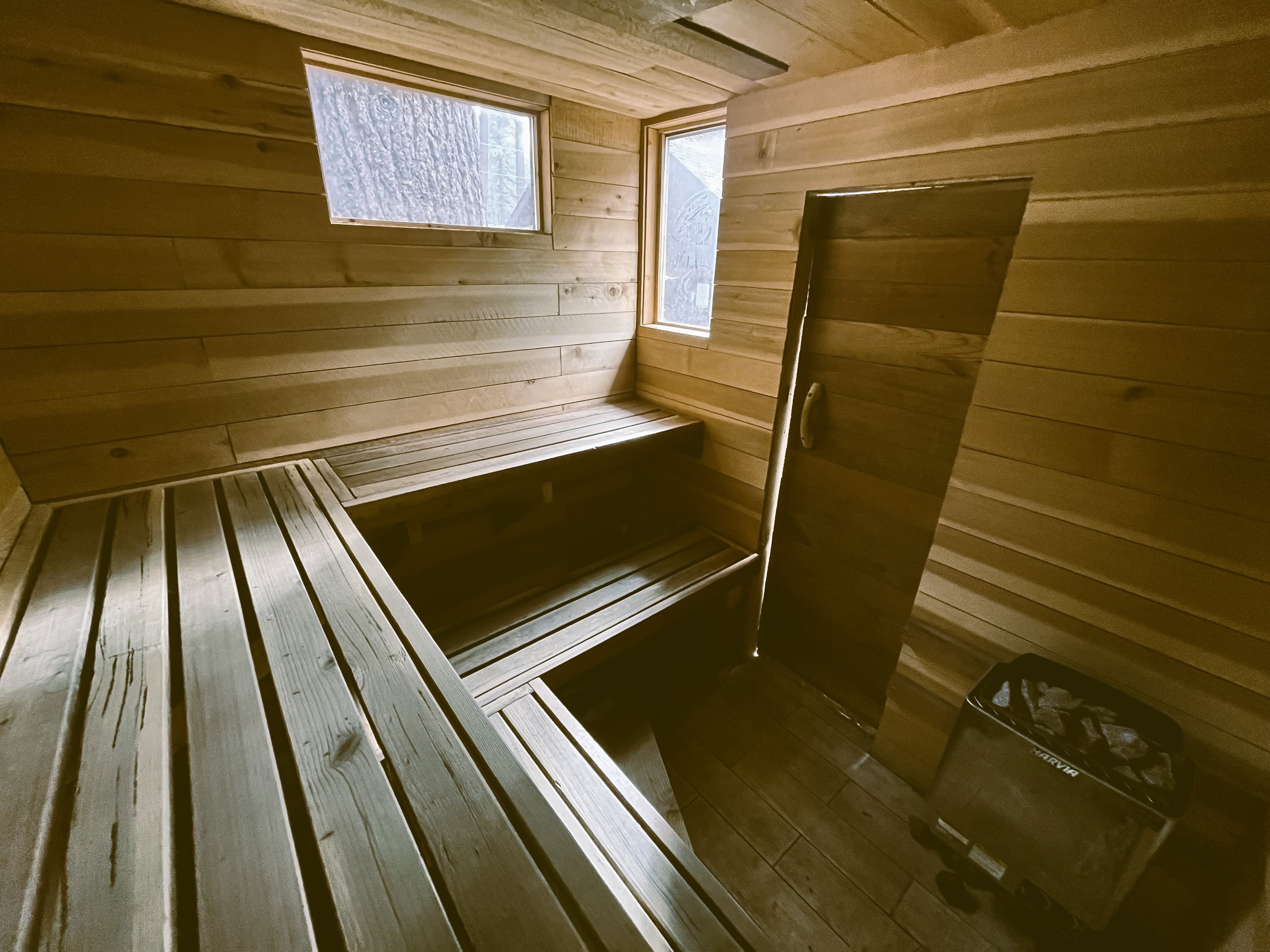
The electricity cost of owning a sauna is one of the first questions new buyers ask. The answer depends on heater size, session length, usage frequency, and your local electricity rate. But the numbers might surprise you — sauna electricity is typically much cheaper than most people expect.
A sauna's electricity consumption is straightforward to calculate:
(Heater Power in kW) × (Hours of use) × (Local electricity rate in $/kWh) = Cost
Example: A 6kW heater × 1 hour of operation × $0.15/kWh = $0.90 per session.
The U.S. average residential electricity rate is roughly $0.12–$0.16/kWh. Some regions (California, Hawaii) are higher ($0.20–$0.30+). Some regions (Louisiana, Idaho) are much lower ($0.08–$0.10).
Residential electric saunas use heaters in the 3.5kW to 12kW range. Here's the breakdown:
If you're shopping for a heater, Select Saunas carries electric heaters across this full range from brands like Harvia and HUUM, with wattage specs listed for each model.
Trusted by homeowners across Tahoe and beyond
Let's assume a typical 6kW heater (standard for a 6×8 sauna) and the U.S. average rate of $0.15/kWh:
That's roughly $15/month for regular sauna use. For comparison, many people spend more on gym memberships or coffee.
A 9kW heater (larger sauna or faster heat-up):
So upgrading from 6kW to 9kW adds roughly $80/year to your electricity bill. Not dramatic, but worth noting.
Some European-style heaters keep rocks hot all day with just 200W of continuous power (trickle heating). This is different from traditional heat-up-then-use heaters.
Continuous calculation: 0.2kW × 24 hours × 365 days × $0.15/kWh = $262/year. This is higher than occasional use, so "always-on" heaters only make sense if you use sauna multiple times daily.
A well-insulated sauna reaches temperature faster and uses less power overall. Key factors:
A poorly insulated sauna (R-5 walls, minimal ceiling insulation) might take 60–90 minutes to reach temperature. A well-insulated sauna reaches 180°F in 30–45 minutes. This directly impacts electricity consumption.
Most of the electricity is consumed during the heat-up phase. Once at target temperature, the heater cycles on/off to maintain temperature (much less power).
For example:
This is why preheat time matters to electricity cost. Faster heat-up means less total energy.
Your local rate dramatically affects annual cost. Using 6kW heater, 4 sessions/week:
Check your current electricity bill for your actual rate (divide total cost by total kWh).
Conservative estimate (6kW, 4 sessions/week, $0.15/kWh): $186/year (~$15/month)
Heavy use (9kW, 6 sessions/week, $0.15/kWh): $400–$450/year (~$35–$40/month)
Minimal use (6kW, 2 sessions/week, $0.15/kWh): $93/year (~$8/month)
Most people find sauna electricity costs are surprisingly low — often less than other recurring hobbies or home amenities.
12 decisions that determine how well your sauna performs — insulation, bench height, heater sizing, ventilation, and more.
Have questions about your project? Send us a message or schedule a free 15-minute intro call.
Schedule a free 15-minute intro call or send us a message about your project.
We'll learn about your space, goals, and timeline — and recommend the right next step for your project.