Garage Sauna: 3 Person
A Finnish-style sauna built as a freestanding, insulated box inside your garage. No outdoor foundation, no weatherproof roof — it sits on your slab and you build everything else like a full sauna. 8kW Harvia WiFi heater, two-tier redwood benches, and a cedar interior.
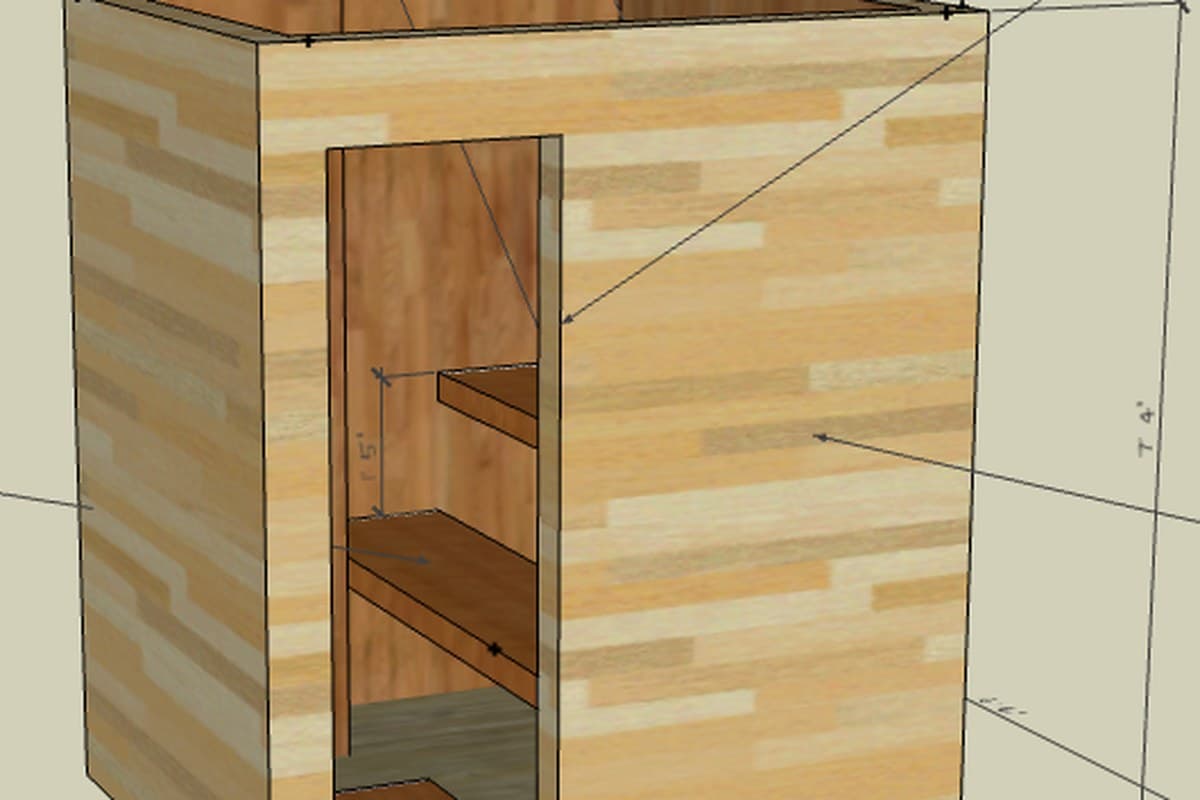
This is a full design package for a garage sauna — a Finnish-style hot room built as a freestanding, framed box inside an existing garage (in the original build, tucked neatly under existing storage shelving). The interior is about 6.5' × 6.5' with an 86" flat ceiling — roughly 304 cubic feet — with a small 25" × 18" corner punch-out to work around an existing post. It uses 2×4 framed walls with fiberglass insulation behind an aluminum foil vapor barrier, and Western Red Cedar tongue-and-groove paneling covers the entire interior — walls, ceiling, and floor. An 8kW Harvia KIP 80 stove with WiFi controls heats the room to 180–200°F in about an hour. The bench layout is a two-tier row of parallel redwood benches plus a step stool — comfortable for three on the top bench, with room to lie down. The plan covers 14 construction phases, from prepping the garage slab to the first fire.
Get the Garage Sauna Plan
Everything you need to build this sauna — or hand to your contractor so they can price it and start building.
Garage Sauna — $49
Your plan will be delivered to your email within 24 hours of purchase.
See It Built
Watch on our YouTube channel — subscribe for more builds →
This plan is based on a real garage sauna we designed and built. Want to see the finished room and the full project story before you buy? Read the garage sauna case study →
Key Specs
Estimated Budget
Materials only: approximately $5,200 based on current pricing — the 8kW Harvia heater and the solid wood door are the big-ticket items. The materials list in the package includes item-level pricing with links to specific products so you can price it out for your own zip code. This does not include electrician labor for the 240V heater circuit or permit fees. Building inside a garage keeps the cost down: there's no foundation, weather barrier, or roofing to pay for. Total with a professional build: roughly $10,000–$12,000 depending on rates.
What's Included in This Plan
Every item you need to build — framing, fiberglass insulation, aluminum foil vapor barrier, cedar paneling, redwood bench lumber, door, the 8kW Harvia heater, lighting, and ventilation. Includes quantities, unit pricing, and a linked Google Sheet you can copy and customize.
Interactive 3D model of the garage build. Rotate, zoom, and inspect the box layout, corner punch-out, bench tiers, and door placement before you cut anything.
Step-by-step build guide covering garage-floor prep, the insulated sleeper floor, wall framing with the corner punch-out, the flat ceiling and plywood roof, plywood siding, electrical rough-in, insulation and vapor barrier, cedar interior, flooring, benches, door, heater, ventilation, and electrical finishes — written for an indoor garage build.
Frequently Asked Questions
Can I really build a sauna in my garage?
Yes. This is a freestanding, fully insulated sauna box built directly on your existing garage slab — roughly 6.5' × 6.5' with a 7.2 ft flat ceiling. Because it's indoors, you skip the outdoor foundation and weatherproof roof and build everything else exactly like a standalone sauna.
How is the plan delivered, and what's included?
It's an instant PDF download after purchase. You get the full materials list with pricing and product links, an interactive 3D SketchUp model, and 14 step-by-step construction phases written specifically for an indoor garage build.
How much will the materials cost to build?
About $5,200 in materials at current pricing, with the 8kW Harvia heater and the solid wood door as the biggest line items. That figure doesn't include electrician labor for the 240V heater circuit or any permit fees.
Do I need a foundation or a special roof?
No. The sauna sits on your existing concrete slab using a low-profile insulated sleeper floor — no footings, gravel, or deck blocks. The top is capped with a basic plywood roof since it never sees weather. Insulation, vapor barrier, cedar interior, benches, heater, and ventilation are all built just like a full standalone sauna.
Get the Garage Sauna Plan
Everything you need to build this sauna — or hand to your contractor so they can price it and start building.
Garage Sauna — $49
Your plan will be delivered to your email within 24 hours of purchase.
Need Something Different?
Different garage, an odd ceiling height, or a tighter space? We design fully custom indoor and garage saunas tailored to your space, climate, and budget.
Learn About Custom Design →