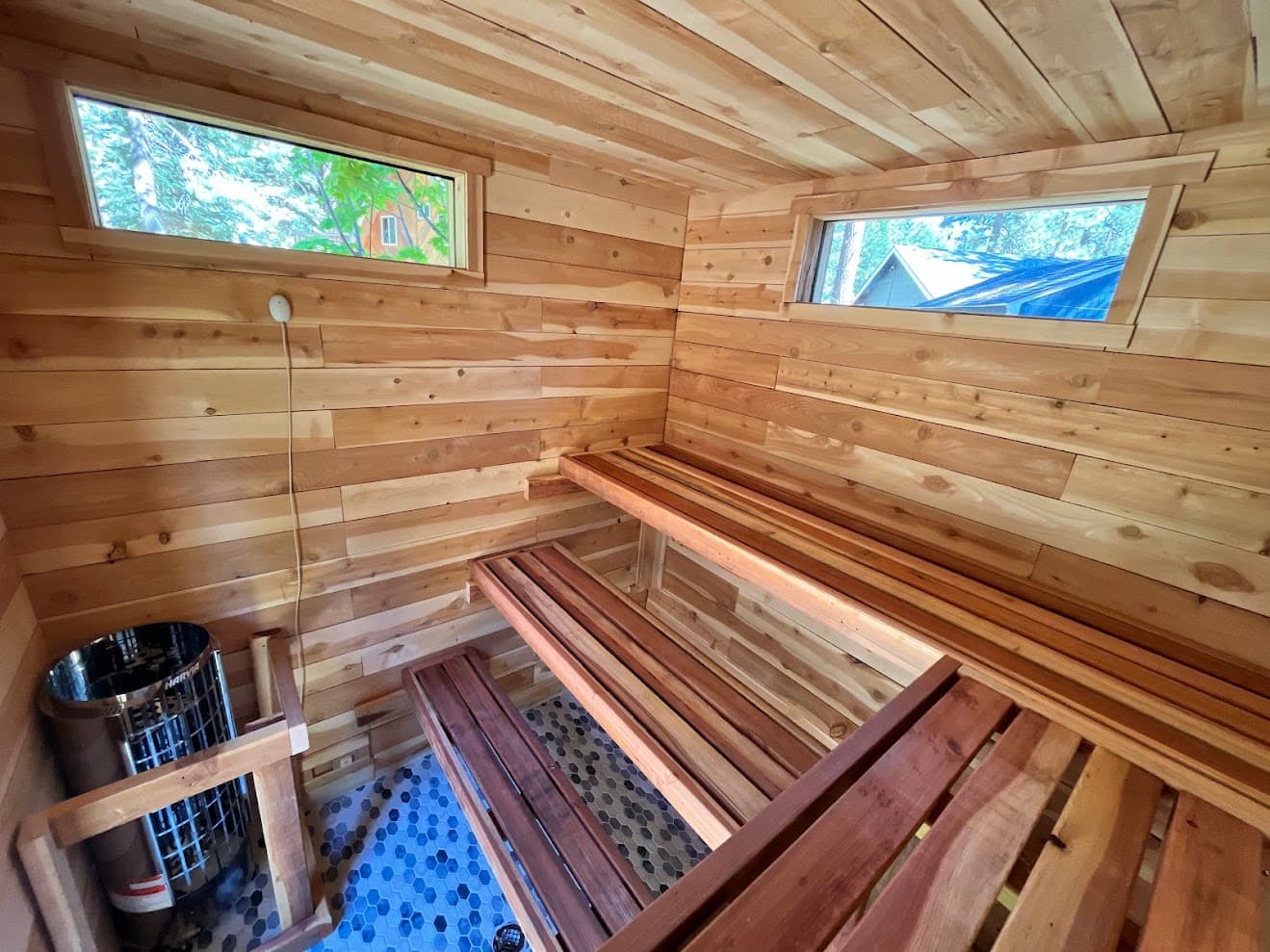
Does a Sauna Add Value to Your Home? An Honest Look at the Numbers
People considering a home sauna almost always ask some version of this: if I spend $10,000 or $15,000 on a sauna, do I get it back when I sell? It's a fair question, and the honest answer is "it depends" — mostly on how the sauna is built, where your home is, and who eventually buys it. A custom, permitted, well-built sauna can add real value and act as a selling feature. A cheap kit bolted into a garage corner can actually be a liability. The difference between those two outcomes is design and build quality.
Let me give you a straight read on whether a sauna adds value to your home, where the money actually comes from, and what makes the difference between an asset and a write-off.
The honest answer on resale value
Appraisers don't have a clean line item for "sauna" the way they do for a bathroom or a finished basement. A sauna usually gets folded into the overall quality and amenity assessment of the home — it contributes to the impression of a higher-end, well-equipped property rather than adding a fixed dollar amount. So you should not expect a dollar-for-dollar return the way you might from, say, a kitchen remodel in some markets.
What a good sauna does is two things. It can nudge the appraised value up modestly as part of a premium amenity package, and — often more importantly — it can make the home more attractive and help it sell faster in the right market. In a region where saunas are desirable (cold-climate areas, wellness-oriented markets, mountain and lake communities, places with Finnish or Scandinavian heritage), a quality sauna is a genuine differentiator. In a market where nobody's looking for one, it's closer to neutral.
So the framing matters. A sauna is rarely a pure financial investment that pays for itself in resale. It's a lifestyle amenity that, if built well, holds value and helps your home stand out — and that you actually get to use every day in the meantime.
Where the value actually comes from
If you're thinking about a sauna partly as a value play, here's where the value genuinely shows up, in rough order of reliability:
Daily use for you. This is the real return for most owners. A home sauna you use several times a week for recovery, sleep, and stress is worth far more in lived value than any resale bump. People who frame the whole decision around resale usually miss that this is where the money pays back. Our is a home sauna worth it page digs into this side of the math.
Rental and short-term-stay appeal. If you have a rental property or an Airbnb, a sauna is one of the amenities that lets you charge more and stand out in listings — particularly in vacation markets. Here the return is measurable: higher nightly rates and better occupancy. We cover this specifically in our sauna for your Airbnb guide.
Resale differentiation in the right market. In sauna-friendly regions, a quality sauna is a feature buyers notice and remember, which can mean a faster sale or an edge over comparable homes. This is real but market-dependent.
Modest appraised-value contribution. A permitted, professionally built sauna adds to the home's overall quality assessment. Don't bank on a specific number, but it's a positive, not a negative — provided it was done right.
Trusted by homeowners across Tahoe and beyond
What makes a sauna an asset vs. a liability
This is the part that actually determines whether a sauna helps or hurts your home value, and it comes down to how it's built.
Permitted and to code. A sauna built without permits — especially the electrical — is a problem at resale. Buyers' inspectors flag unpermitted work, and a 240V heater circuit installed without a permit can scare a buyer or force you to retroactively permit it. A sauna becomes a value-add only when the work is documented and legitimate. That means a licensed electrician on the heater circuit and any required building permits, which typically run $250-1,000 total depending on scope.
Built well, not a deteriorating kit. A cheap kit that's separating at the seams, growing mildew, and showing daylight through the wall boards reads as deferred maintenance — a liability, not an amenity. A custom sauna with proper framing, insulation, vapor barrier, and ventilation holds up for decades and presents as a quality feature. The structural difference is exactly why we generally steer people away from kits; we cover it in the sauna kit vs custom build comparison.
Thoughtfully integrated, not awkwardly wedged in. A sauna that fits the space — a clean garage conversion, a finished basement room, a freestanding structure that suits the yard — adds to the home. One that's crammed into an odd spot, blocks a window, or dominates a small backyard can detract from it. Placement and scale are design decisions, and they affect how a buyer perceives the whole property.
Built so it can dry and won't rot. A sauna with no ventilation that's full of mold is worth less than no sauna at all, because the next owner sees a problem to fix. Proper ventilation and drying is what keeps it presenting as an asset years down the line.
In other words, the same things that make a sauna good to use — quality build, proper ventilation, code-compliant electrical, sensible placement — are exactly what make it hold value. A sauna that's pleasant to use and a sauna that adds value are the same sauna.
What it costs and how to think about the return
A quality traditional sauna starts around $5,000 in materials for a DIY build and runs $8,000-20,000 with a professional build, depending on size and finishes. Kits run $3,000-10,000 but trade away the durability and design quality that make a sauna an asset over time.
If you go in expecting resale to recoup the full cost, you'll probably be disappointed — that's not how amenities like this work. If you go in valuing the daily use, the rental upside if applicable, and the resale differentiation in a sauna-friendly market, the math looks good. And the surest way to protect whatever value it adds is to build it right: permitted, well-insulated, properly ventilated, and designed to fit the space. A small investment in design up front — individual design products start at $99, a full package from $499 — is what keeps the much larger build investment from becoming a liability.
Frequently Asked Questions
Does a sauna increase the appraised value of my home?
Modestly, and indirectly. Appraisers usually fold a sauna into the home's overall quality and amenity assessment rather than assigning it a fixed dollar value. A permitted, well-built sauna contributes to a premium impression; an unpermitted or deteriorating one can count against you. Don't expect a specific number, but a quality build is a net positive.
Will I get my money back when I sell?
Probably not dollar-for-dollar from resale alone — a sauna is a lifestyle amenity, not a guaranteed financial return like some renovations. The real payback comes from daily use, rental income if it's an income property, and faster sales or differentiation in sauna-friendly markets. Frame it as something you'll use and enjoy that also holds value, not as a pure investment.
Does a sauna help sell a house faster?
In the right market, yes. In cold-climate regions, wellness-oriented markets, and vacation or mountain communities, a quality sauna is a feature buyers notice and can help your home stand out. In markets where saunas aren't sought after, it's closer to neutral. Build quality and presentation matter — a clean, well-maintained sauna helps; a musty kit doesn't.
Can a sauna hurt my home value?
It can, if it's unpermitted, poorly built, or moldy. Inspectors flag unpermitted electrical work, and a deteriorating kit reads as deferred maintenance a buyer will want fixed or discounted. The fix is to build it properly the first time — permitted electrical, real insulation and ventilation, and a structure that lasts.
Is a kit or a custom sauna better for resale value?
A custom sauna. Kits can present as a liability over time as the boards separate, the seams leak, and mildew sets in, while a custom build with proper framing, insulation, and ventilation holds up for decades and reads as a genuine quality amenity. If resale value is part of your thinking, the durability of a custom build is what protects it.
Next steps
If you want a sauna that adds to your home rather than detracting from it, the answer is the same as building one you'll love using: design it well, build it to code, and make it fit your space. We design custom saunas remotely for clients anywhere — permitted electrical specs, proper ventilation, and a layout that suits your property. Take a look at our remote sauna design service, or start with the free sauna design checklist.