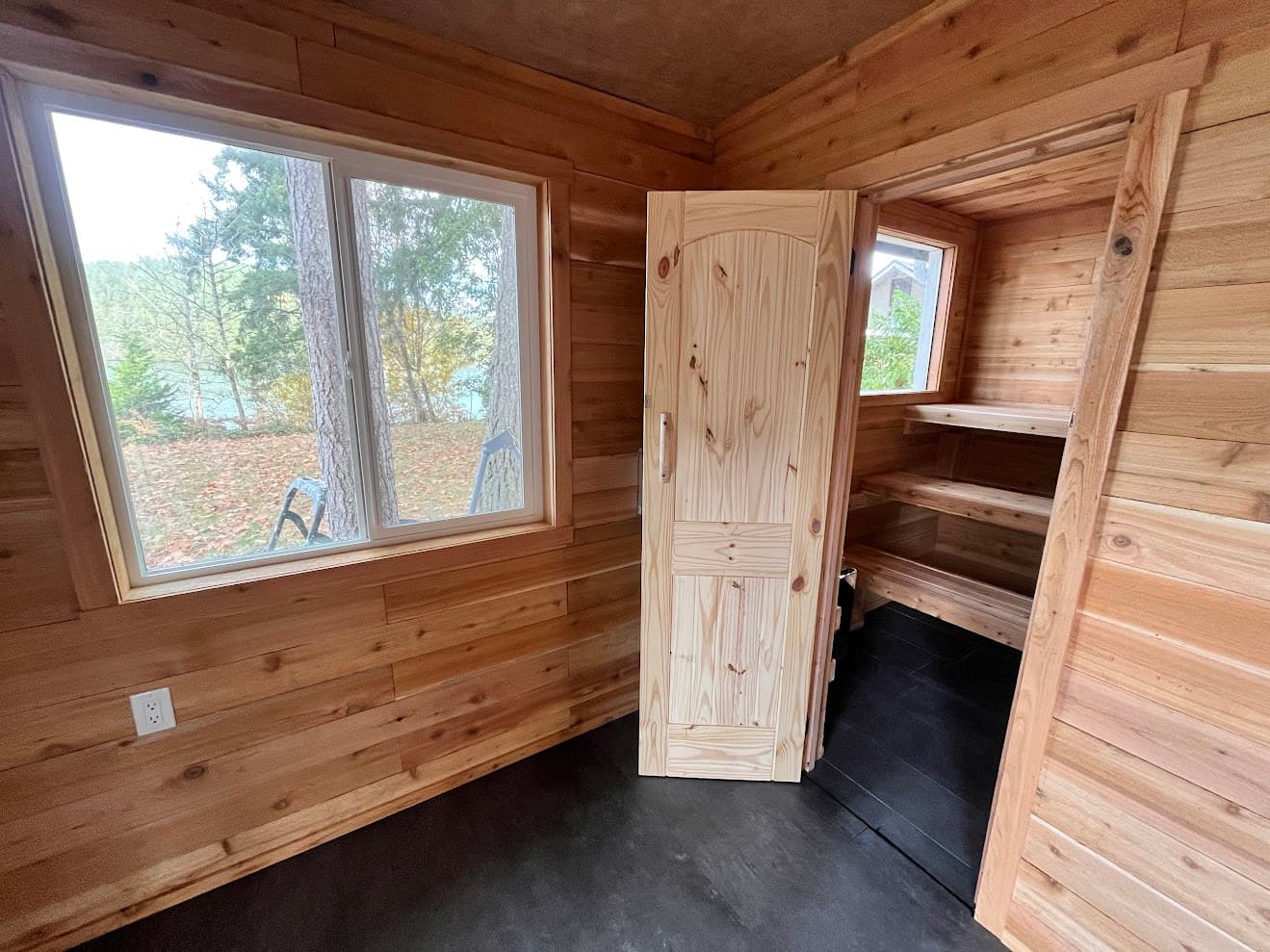
The decision to build a home sauna is a long-term investment question, and like most home wellness investments, the answer isn't purely financial. It's a combination of measurable ROI (cost vs benefit) and intangible value (how much does daily wellness actually matter to you?).
If you use your sauna regularly — 2-3 times per week or more — the financial case is strong. When you layer in the health benefits, the lifestyle convenience, and the property value angle, a home sauna becomes one of the highest-ROI wellness investments you can make.
The health case for sauna use is backed by real research. A landmark study published in JAMA Internal Medicine followed 2,315 Finnish men over 20 years and found that men who used saunas 4-7 times per week had a 50% lower risk of cardiovascular mortality compared to men who never used saunas.
How does this work? Regular sauna exposure triggers several physiological responses:
The real question isn't whether saunas are healthy (the research says yes). The real question is: what's the value of potentially decades of improved health, better sleep, reduced stress, and improved recovery? If you're someone who values your health and wellness, that value is substantial.
Most people who are interested in regular sauna use are already paying for sauna access somewhere — a gym membership, a spa, or a wellness center.
Typical costs for external sauna access:
A DIY home sauna built for $5,000-8,000 pays for itself in 1-2 years for someone who's regularly paying for external sauna access. After that, you get unlimited access for essentially the cost of electricity.
And unlike a gym membership, you actually use it. You're in your home. You don't have to drive, wait for an open slot, or schedule time around facility hours. That convenience factor drives higher usage, which drives better ROI.
Trusted by homeowners across Tahoe and beyond
Wellness amenities are a growing trend in real estate. Home saunas are increasingly recognized as genuine home improvements that add property value — but with important caveats.
What adds value:
What doesn't add value:
Conservative estimate: A well-built, custom sauna might add 50-70% of its build cost to home value. A $15,000 sauna might add $7,500-10,500 of value. A $25,000 sauna could add $12,500-17,500. This varies heavily by market, but the point is: a quality sauna doesn't lose money on resale if built properly.
One question people ask: how expensive is it to actually run a home sauna?
Electric sauna math:
A typical 6kW sauna heater running for 1 hour = 6 kWh of electricity. At the U.S. average of $0.15/kWh, that's $0.90 per 1-hour session.
If you use your sauna 4 times per week:
In a cold climate, electricity costs might be higher ($0.18-0.20/kWh), pushing annual costs to $220-240/year. But even at those rates, it's negligible compared to gym memberships or spa visits.
Wood-fired sauna costs: If you go wood-fired, the operating cost is essentially free (assuming you have wood or can source it locally). Maintenance is slightly higher, but ongoing costs are minimal.
Beyond health metrics and cost analysis, there's the lifestyle piece. And honestly, this is where the real value sits.
People who build saunas and use them regularly almost universally say it was one of the best investments they've made. But the key word is "use regularly." A sauna sitting unused is no investment at all.
Be honest with yourself about likelihood of use. A sauna is not worth building if:
Strip away all the ROI calculations and home value arguments. The real determinant of whether a home sauna is "worth it" is whether you'll actually use it regularly.
People who build saunas and use them 2-4 times per week for years consistently report:
The key is building one that's actually enjoyable to use. A sauna with poor design, bad bench height, inadequate heat, or weak löyly (the steam/humidity experience) won't get used regularly. You'll think, "Why am I going to use my home sauna when the spa down the road is more pleasant?"
Build it right — proper bench design, correct heater sizing, good ventilation, quality materials — and you'll use it. Build it cheap and it sits idle.
For people who value health, wellness, and daily self-care, a home sauna is a sound investment on multiple levels:
The question isn't "Is a home sauna worth it?" The question is: "Will I actually use this regularly?" If the answer is yes, it's almost certainly worth it. If the answer is maybe or probably not, skip it.
An electric sauna costs roughly $0.90 per 1-hour session in electricity (at $0.15/kWh). If you use it 4 times per week, that's about $187/year. In cold climates with higher electricity costs, expect $220-240/year. Wood-fired saunas have minimal operating costs.
A well-built, professional sauna can add 50-70% of its build cost to property value. A custom sauna built as a permanent structure adds real value, especially in mountain and cold climate markets. Cheap prefab kits or infrared units don't add meaningful value.
The research shows benefits at 4-7 sessions per week. But even 2-3 times per week provides measurable health benefits — better sleep, stress reduction, and improved cardiovascular function. Consistency matters more than intensity.
Yes. A $6,000 home sauna pays for itself in 1-2 years compared to gym memberships ($50-100/month) or spa visits. After that, your sauna costs essentially nothing to operate (just electricity).
Usage frequency. A sauna that's used 2-4 times per week pays for itself. A sauna that's used occasionally doesn't. The most important factor in ROI is whether you'll actually use it regularly.
12 decisions that determine how well your sauna performs — insulation, bench height, heater sizing, ventilation, and more.
Have questions about your project? Send us a message or schedule a free 15-minute intro call.
Schedule a free 15-minute intro call or send us a message about your project.
We'll learn about your space, goals, and timeline — and recommend the right next step for your project.