How Long Does It Take to Build a Sauna? A Realistic Timeline
How long does it take to build a sauna? The construction itself is faster than most people expect — a competent crew can frame and finish a small sauna in a week or two. What stretches the timeline is everything around the build: design, permits, ordering the heater and wood, and the foundation curing. Plan for the whole sequence, not just the swinging-hammers part, and you won't be caught off guard.
For most custom outdoor saunas, a realistic door-to-first-session timeline is 6 to 12 weeks. Here's where that time actually goes.
The short answer by build type
The timeline depends heavily on how you're building. A prefab kit you assemble yourself is the fastest path — a couple of weekends once it arrives, plus a few weeks of shipping lead time. A garage or spare-room conversion is usually faster than an outdoor build because the structure and foundation already exist. A custom outdoor sauna from scratch is the longest because you're adding foundation, weatherproofing, and often permits.
Roughly:
A kit assembled by the homeowner: 1 to 3 weeks of actual work spread over a few weekends, after a 2 to 6 week shipping window.
An indoor conversion (garage, basement, bathroom): 2 to 4 weeks of build time once materials are on hand.
A custom outdoor sauna: 6 to 12 weeks from design to first session, with the build itself being only 2 to 4 weeks of that.
The reason the custom number is so much bigger isn't the construction — it's the stages that happen before and around it. Let me walk through them.
Stage 1: Design (1 to 3 weeks)
Every good sauna starts with a plan, and this is the stage people skip at their peril. Design is where you lock in the size, the bench layout, the heater spec, the ventilation, and the wall assembly. Getting these right on paper is far cheaper than discovering problems mid-build.
A solid design takes one to three weeks depending on how many revisions you go through and how complex the project is. That's not the designer being slow — it's the back-and-forth of dialing in dimensions, matching the heater to the room, and making sure the plan accounts for your specific site and climate. Our guide on what a real sauna design plan includes shows what should come out of this stage.
The good news is design happens in parallel with other things. While the plan is being finalized, you can be lining up a contractor and ordering long-lead items. Design time is rarely the bottleneck if you start it early.
Trusted by homeowners across Tahoe and beyond
Stage 2: Permits (0 to 6+ weeks)
This is the wildcard. Permit timelines vary enormously by jurisdiction, and they're the single most common reason a sauna build runs long.
A small outbuilding under a certain size is often exempt from permitting altogether, which means zero permit time. But the moment you need a building permit — for size, for the electrical, or because of local rules — you're at the mercy of your municipality's review queue. That can be a couple of weeks in a fast, small town or a couple of months in a busy or strict jurisdiction. Some areas with environmental overlays or HOAs add their own review on top.
The electrical permit for the heater hookup is the one that catches people even on otherwise-exempt structures. An electric sauna heater needs a dedicated high-amperage circuit, and that wiring usually requires a permit and inspection regardless of whether the structure itself does.
The practical move is to find out your local requirements before you do anything else, because permits run in parallel with design but can blow past it. Our sauna permit requirements guide covers what to check.
Stage 3: Sourcing materials and the heater (2 to 6 weeks)
You can't build until the materials show up, and a few items have real lead times. The heater is the big one — popular electric and wood-fired heaters can be in stock and ship in days, or be back-ordered for weeks depending on the model and time of year. Order it as soon as the design locks the spec.
Sauna-grade wood is the other lead-time item. Clear, kiln-dried western red cedar or hemlock isn't always sitting in stock at the local lumberyard in the right dimensions, and sourcing it can take a couple of weeks. The wood you choose affects both cost and availability — we compare the options in cedar vs. hemlock for sauna interiors.
This stage overlaps with permits and the foundation, so it doesn't always add to the total. But if you wait until the build starts to order the heater, you can stall the whole project waiting for one box to arrive.
Stage 4: Foundation (1 to 2 weeks, including curing)
An outdoor sauna needs a foundation, and this stage has a built-in delay you can't rush: concrete needs time to cure. If you're pouring a slab or footings, plan for the pour plus several days to a week of curing before you build on it.
A gravel pad or pier foundation skips the curing wait and can be done in a day or two, which is part of why some builds choose them. The right foundation depends on your soil, climate, and the size of the sauna — our outdoor sauna foundation guide walks through concrete versus piers versus gravel and when each makes sense. Indoor conversions skip this stage entirely, which is a big reason they're faster.
Stage 5: The actual build (1 to 3 weeks)
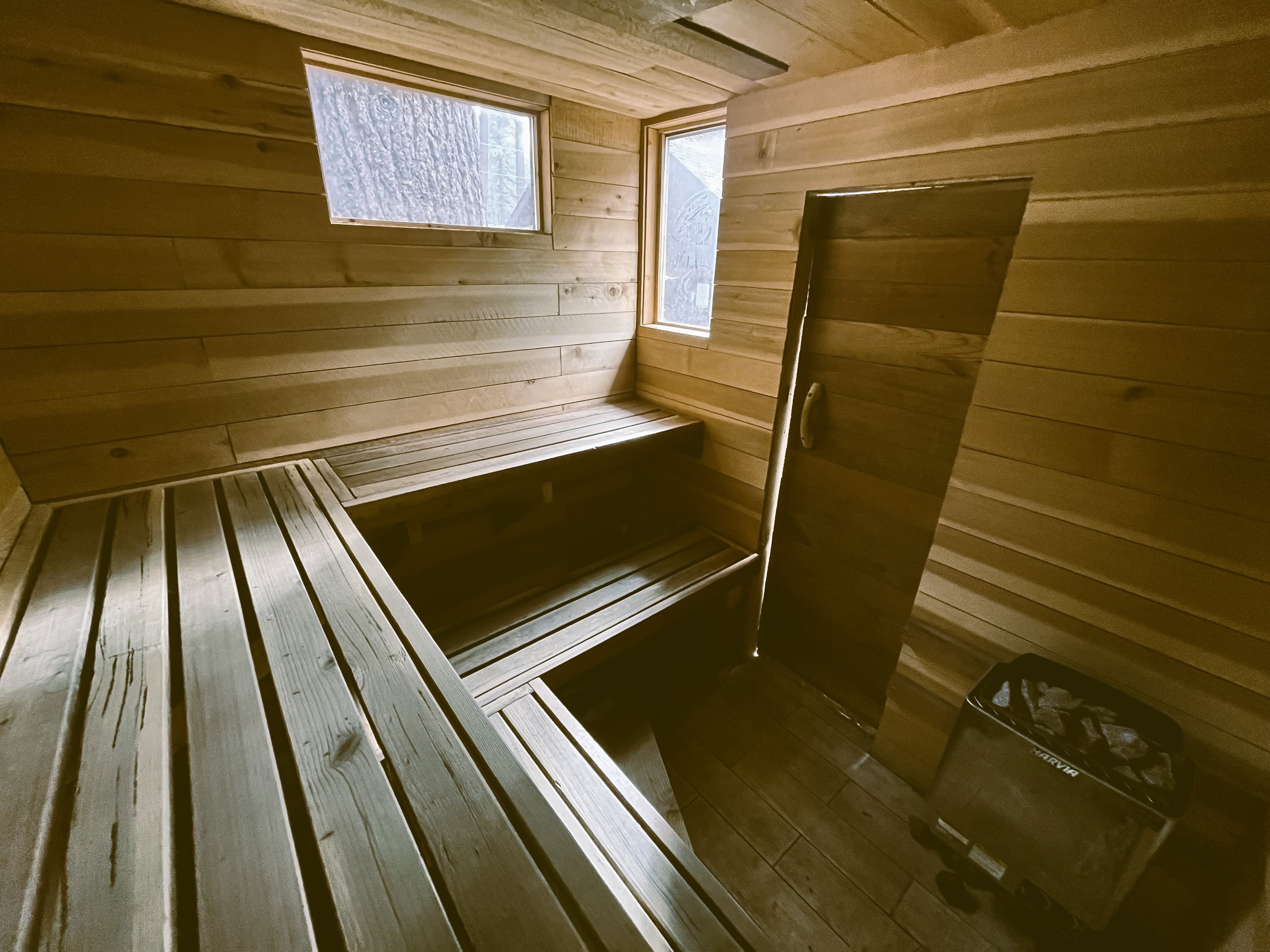
This is the part everyone pictures, and it's genuinely quick for a structure this small. Framing, insulation, the vapor barrier, interior paneling, benches, the door, and trim go up fast for an experienced crew.
For a typical custom outdoor sauna, a contractor will spend roughly one to three weeks on the structure and finish work. A simple indoor conversion can be even faster — sometimes under a week — because the shell already exists and you're really just insulating, adding the vapor barrier, paneling, and building benches.
The finish details take longer than the framing. Tight, clean cedar work, properly built benches at the right height, and good door fit are what separate a sauna that feels great from one that feels like a closet, and that craftsmanship is worth a few extra days. Our how to build a sauna guide covers the construction sequence in detail.
Stage 6: Electrical and final hookup (a few days)
The heater hookup is usually the last step, and it's quick once the structure is done — a licensed electrician runs the dedicated circuit, connects the heater and controls, and the work passes inspection. Schedule the electrician in advance, though, because waiting on an available licensed electrician can add a week even when the job itself is a day.
After hookup, you do a first burn-in to cure the heater and let any manufacturing residue cook off, and then you're in.
How to keep the timeline tight
The single biggest lever is doing things in parallel instead of in sequence. Start the design and the permit research at the same time. Order the heater and wood the moment the design locks the specs. Line up your contractor and electrician early so you're not waiting on availability when you're ready to build.
The second lever is a complete, detailed design up front. Most mid-build delays come from decisions that weren't made on paper — a bench height that's wrong, a heater that doesn't fit the ventilation, a vapor barrier detail nobody specified. A contractor working from a complete plan doesn't have to stop and wait for answers. That's a big part of why a good design pays for itself, as we cover in how to hire a sauna designer.
Frequently Asked Questions
How long does it take to build a sauna from start to finish?
For a custom outdoor sauna, plan on 6 to 12 weeks from design to first session. The construction itself is only 2 to 4 weeks of that — the rest is design, permits, ordering the heater and wood, and foundation curing. A kit or an indoor conversion can be much faster, sometimes just a few weekends.
How long does the actual construction take?
The build phase for a small custom sauna is typically 1 to 3 weeks of work for an experienced crew. An indoor conversion can be under a week because the structure and foundation already exist. Framing goes fast; the cedar finish work and bench building are what take the most time.
What part of building a sauna takes the longest?
Usually permits and material lead times, not the construction. Permit review can range from zero (for exempt structures) to a couple of months in strict jurisdictions, and heaters or sauna-grade wood can be back-ordered. Concrete foundation curing also adds a built-in wait you can't rush.
Can I speed up a sauna build?
Yes — run stages in parallel. Start design and permit research together, order the heater and wood as soon as the design is final, and schedule your contractor and electrician in advance. A complete design up front prevents the mid-build delays that come from unmade decisions.
How long does a DIY sauna kit take to build?
Once it arrives, most prefab kits go together over one to three weekends for a couple of reasonably handy people. The longer part is often shipping, which can run 2 to 6 weeks, plus arranging the electrical hookup with a licensed electrician.
Trying to map out your own timeline? A remote sauna design gets you a complete, build-ready plan up front — which is the best way to keep permits, ordering, and construction moving in parallel instead of stalling on decisions. Tell me what you're planning and I'll help you figure out the realistic timeline.