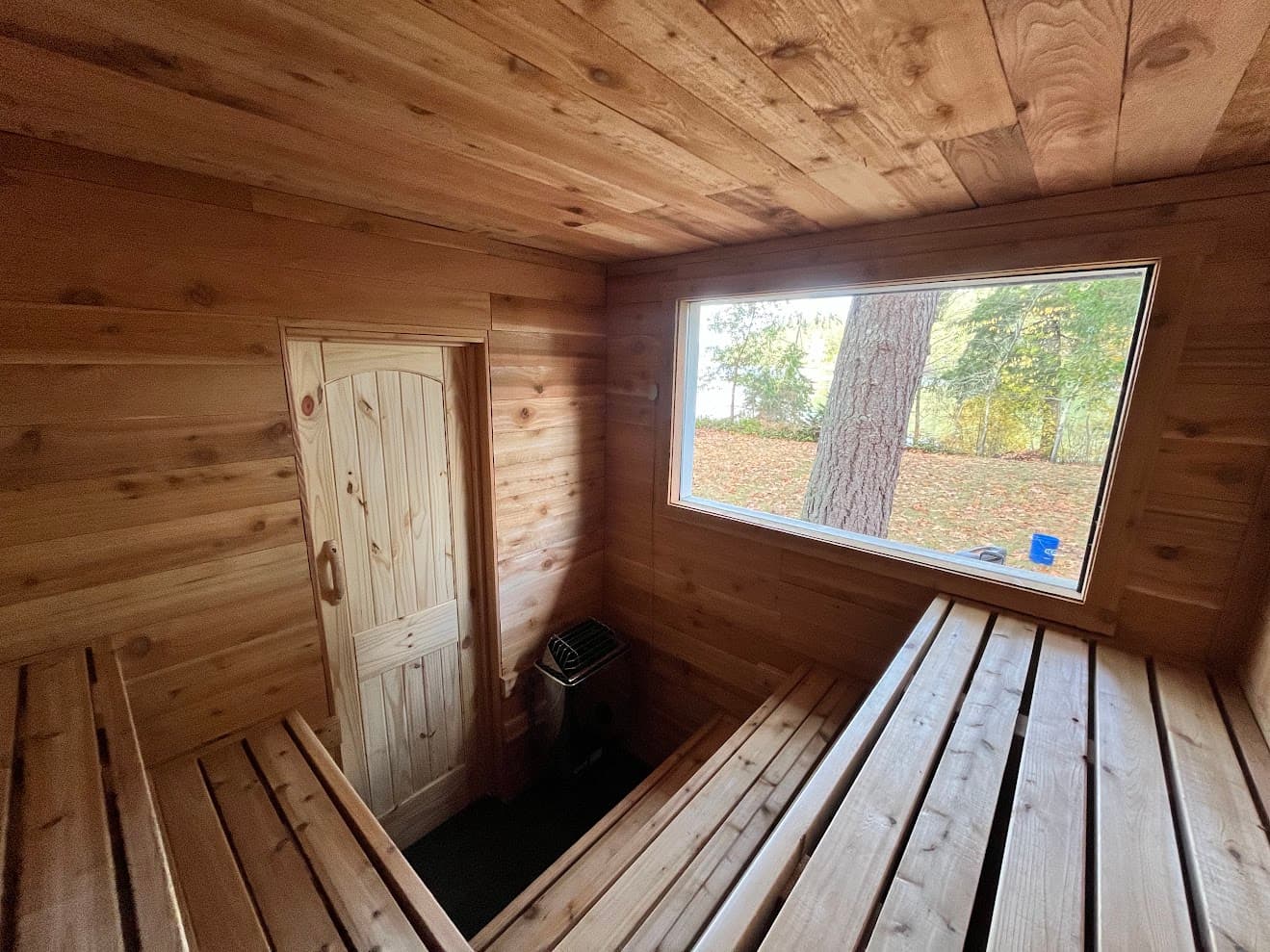
Why Is My Sauna Not Getting Hot Enough? The Real Causes and Fixes
A traditional sauna should run 170-200°F, and a well-built one reaches 160-200°F within about an hour. If yours tops out at 140 or 150 and never quite gets there — or it gets there but feels weak and drops the moment you open the door — something in the design is off. A sauna not getting hot enough is almost always a heat-balance problem: either you're not putting enough heat in, or you're losing it faster than the heater can replace it.
The frustrating part is that the symptom is the same no matter the cause, so people often blame the heater and buy a bigger one when the real issue is insulation or a vent that's too big. Below are the actual causes, in roughly the order worth checking, and how to tell which one you've got.
Start with the heater: is it sized for the room?
The most common reason a sauna won't reach temperature is an undersized heater. The baseline rule is 1 kW of heater output per 45 cubic feet of well-insulated space. Measure your room — length times width times height — and check it against the heater.
Here's roughly where that lands:
- 4x4x7 (about 112 cubic feet): 2-4 kW
- 5x6x7 (about 210 cubic feet): 4-6 kW
- 6x8x7 (about 336 cubic feet): 6-8 kW
- 8x10x7 (about 560 cubic feet): 9-12 kW
If your heater is below the range for your room volume, that's your answer. And you have to adjust the number up — meaning you need more kW — for anything that bleeds heat: outdoor or exterior walls, glass doors and windows, concrete or masonry walls, insulation below R-11, and cold climates. A 6 kW heater that's fine for a tight indoor 6x8 can be undersized for the same room built outdoors in a cold climate with a glass door. Our sauna heater sizing guide walks through the adjustments in detail.
One sneaky version of this: wiring. If a 240V heater is connected to a 208V commercial circuit (common in some buildings), it loses roughly 25% of its output. A "9 kW" heater suddenly behaves like a 6.75 kW unit. If your sauna is in a commercial space and runs cool, have an electrician confirm the voltage.
Insulation: the most common hidden cause
If the heater is sized right and the room still won't hold heat, look at insulation. This is the cause people miss most, because you can't see it once the walls are finished.
A sauna needs real insulation and a real vapor barrier — not just wood paneling on studs. Recommended values are R-13 to R-21 in the walls, R-30 to R-38 in the ceiling (heat rises, so the ceiling matters most), and an aluminum foil vapor barrier on the warm interior side with all seams taped. Without that, the heat you generate walks right out through the walls and roof faster than the heater can keep up.
This is exactly why kit saunas struggle. A typical barrel or cabin kit is just tongue-and-groove 1x4 boards — that's the wall and the "insulation" in one. There's no framing cavity, no batt insulation, no vapor barrier. Kits heat up, but they can't hold temperature efficiently, and in a cold climate they may never reach 180°F. If you've got a kit that runs cool, the structure itself is the limitation, and there's no easy retrofit. We cover why custom builds outperform kits in our sauna kit vs custom build comparison.
A well-insulated room is the difference between heating up in 30-45 minutes and holding 190°F, versus crawling to 150°F over 90 minutes and sagging every time the door opens.
Trusted by homeowners across Tahoe and beyond
Ventilation: too much airflow steals heat
Ventilation is necessary — a sauna with no fresh air gets stale and high in CO₂ — but a sauna can also lose heat through vents that are oversized, badly placed, or stuck open. If your sauna heats slowly or won't climb past a certain point, check whether you're dumping conditioned air out a vent.
The intake and exhaust vents should be sized appropriately (typically 3 to 4 inches) and have adjustable covers so you can throttle airflow. If a vent is wide open and pulling hot air straight out, the heater is effectively heating the outdoors. Vents also need to be on opposing walls with the right geometry; a poorly designed setup can short-circuit airflow and waste heat without even improving air quality. Our sauna ventilation guide covers the correct mechanical downdraft layout — fresh air above the heater, exhaust below the foot bench.
The balance you're after: enough ventilation to keep the air fresh and the steam alive, not so much that the room can't hold temperature. Adjustable vent covers are what let you tune this.
Glass and doors: where heat escapes fastest
Glass loses far more heat than an insulated wood wall — even double-pane insulated glass. If you've got a full glass door or a big glass wall, that's a major drain. A floor-to-ceiling glass front looks great but can keep a sauna from ever reaching temperature in a cold climate, and it makes the room sag fast every time someone walks in.
The door is also the single biggest heat-loss event in normal use. Every time it opens, hot air pours out. A 24-inch wide door loses much less than a standard 32-36 inch door, which is why we spec narrow doors even though they feel small at first. If your sauna has a wide door or a full-glass door and you're doing several rounds with people coming and going, the room may simply never get a chance to recover.
You don't have to rip out glass to improve things, but it helps to know glass is the cause. Running the heater longer before your session and minimizing door openings will get you closer to temperature.
Heat-up time: are you giving it long enough?
Sometimes the sauna is fine and the expectation is off. An electric heater needs 30-60 minutes to bring a room to temperature, depending on size and insulation. A wood stove needs 1-2 hours — you plan those sessions in advance. If you're climbing in after 20 minutes and finding it lukewarm, that's normal; give it more time.
A genuinely well-built sauna reaching only 150°F after a full hour is a design problem. A sauna at 150°F after 20 minutes and still climbing is just one that hasn't finished heating. Let it run a full cycle before you diagnose anything.
The "hot but feels weak" version of the problem
Worth separating out: some saunas hit a real 190°F on the thermometer but still feel weak, with cold feet and air that goes stale after a couple of rounds. That's not a heat-output problem — it's a stratification and ventilation problem.
If your benches are too low relative to the heater, your feet sit below the löyly cavity and stay cool while your head bakes. And if fresh air enters low and exhaust sits in the ceiling — the typical North American mistake — steam gets pulled out before it reaches you and CO₂ builds up around the bathers. The thermometer reads hot; the experience is poor. Fixing this means raising the benches and correcting the vent layout, not buying a bigger heater. If this sounds like your sauna, it's worth a remote design review before you spend money on the wrong fix.
Frequently Asked Questions
How hot should a sauna actually get?
A traditional sauna runs 170-200°F. A well-designed, well-insulated sauna reaches 160-200°F within about an hour and holds it without the heater running constantly. If yours can't get past 150-160°F after a full heat-up cycle, something in the heater sizing, insulation, or ventilation is off.
Should I just buy a bigger heater?
Not until you've ruled out insulation and air loss. An oversized heater can partly compensate for a leaky room, but it wastes energy and treats the symptom instead of the cause. If the room is poorly insulated or losing heat through glass and open vents, a bigger heater will run hard and still underperform. Diagnose first.
Why does my sauna lose heat the second I open the door?
Because opening the door is the biggest heat-loss event in a session, and a wide or full-glass door makes it worse. A narrow 24-inch insulated door loses far less than a standard 32-36 inch door. Minimize door openings, and if you're building, spec a small solid door — the trade-off in convenience is worth the heat retention.
Can a kit sauna be fixed if it won't get hot?
Usually not easily. Most kits lack insulation and a vapor barrier because the wood boards are the entire wall, so heat escapes through the structure itself. There's no cavity to add insulation to without rebuilding the walls. You can improve heat-up by running the heater longer and limiting door use, but the structure is the ceiling on performance.
How long should I run the heater before getting in?
Electric heaters need 30-60 minutes; wood stoves need 1-2 hours. Larger rooms and outdoor or poorly insulated saunas take longer. If you're checking at 20 minutes and finding it cool, that's expected — let it complete a full heating cycle before judging.
Next steps
If you've worked through heater sizing, insulation, ventilation, and glass and your sauna still won't reach temperature, the problem is usually baked into the original design — and the fix is changing the design, not the heater. We can review your existing sauna remotely and tell you exactly what's holding back the heat. Take a look at our remote sauna design service, or if you're still planning a build, start with the sauna design checklist so you get the heat balance right the first time.