Sauna Window Placement: Where to Put Windows Without Wrecking the Heat
A window is the fastest way to make a sauna feel like a place you want to be instead of a hot wooden box. It's also the fastest way to bleed heat out of the room if you get it wrong. Sauna window placement is one of those decisions where the aesthetic goal and the thermal goal pull in opposite directions, and most people don't think about it until the glass is already in the wall. So let's think about it first.
The short version: windows are worth it for light and views, but glass loses far more heat than an insulated wall, so you want the least glass that gets you the experience you're after — placed and glazed correctly. Here's how we approach it on the saunas we design.
Why Glass Is the Weak Point in the Wall
A well-insulated sauna wall might hit R-21 or better. Even a good double-pane insulated window is a fraction of that. Glass is simply the weakest thermal point in the room, and every square foot of it is a square foot that's leaking heat while your heater works to replace it.
That doesn't mean no windows. It means being honest about the trade-off. A well-designed, insulated sauna should reach 160 to 200°F within an hour. Add a wall of glass and you're asking the heater to fight harder, run longer, and cost more to do the same job. The insulation you put in the rest of the walls is doing real work, and glass is the hole you're punching in it — so punch the smallest hole that gets you what you want.
The practical rule we use: include windows for views and natural light, but limit glass to what's actually needed. A large, well-placed window is great. A full glass wall is usually not worth the trade-off.
Standard Window Sizing and Placement
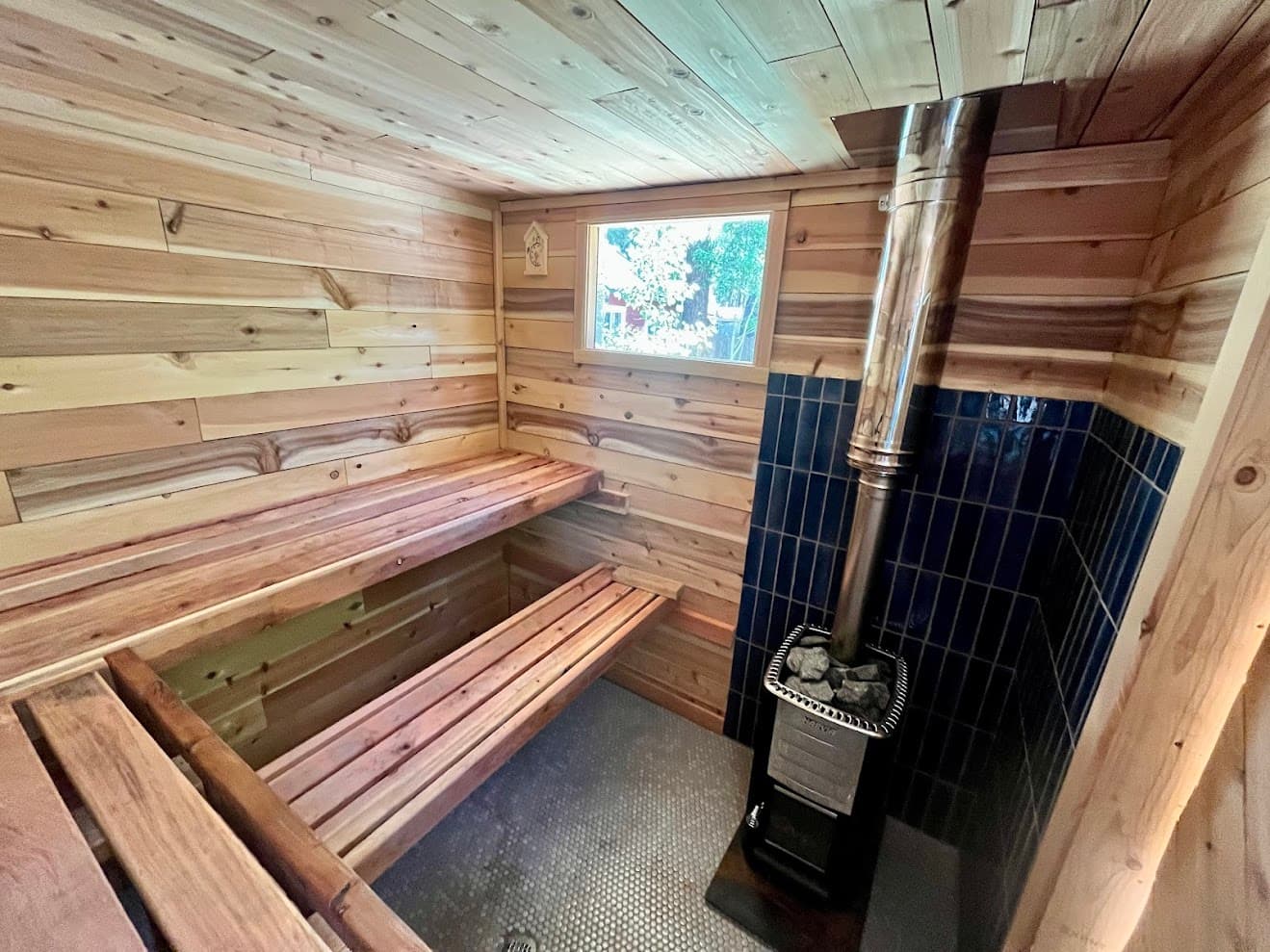
For most saunas, our default is two small windows, roughly 16 x 30 inches, placed high on two different walls. That gives you natural light from two directions, keeps the glass area modest, and puts the windows up where they won't dump heat directly onto seated bathers or interfere with bench placement.
A few placement rules that matter:
- Keep windows away from the heater. Glass near the stove takes direct radiant heat, which is hard on the seal and the glass, and it's a spot where you don't want a cold surface anyway. Put windows on walls that aren't right next to the heater. This is part of the same spatial planning you do for heater placement — the two decisions are related.
- Place high for privacy and heat. High windows let light in without giving neighbors a full view of the room, and they sit in the hotter upper zone where a cold glass surface is less noticeable against your body.
- Mind the bench layout. Windows should work with your bench geometry, not fight it. A window right where someone's head or back goes against the wall is a cold spot they'll feel.
Rough opening should be cut about 1/4 inch larger than the actual window size to give you room to shim and seal.
Trusted by homeowners across Tahoe and beyond
When a Big Window or Glass Wall Is Worth It
Sometimes the whole point of the sauna is the view — a lake, a mountain, a treeline. If you've got something worth looking at, a larger window earns its keep, and we'll design around it. But even then, there are limits worth respecting.
- You rarely need floor-to-ceiling glass. Half to two-thirds of the wall height in glass is usually enough to capture a view from a seated bench. Going full-height mostly adds heat loss without adding much you'll actually see while sitting down.
- Full glass doors and walls are a kit habit worth breaking. Kits love full glass because it looks dramatic in a listing photo, but it noticeably hurts energy efficiency and, over time, glass doors on cheaply built structures develop alignment problems as the structure shifts. If you want glass, build the structure to carry it properly. Our comparison of a glass door vs. a wood door gets into that trade-off in more detail.
- Orient the glass at the view, not the weather. If you're going big on glass, aim it at what you want to see and away from prevailing wind and afternoon sun that'll bake the room.
The honest framing for clients: a great window is one of the best upgrades you can make to a sauna. A great big window is a real cost in heat and running expense. Decide how much view you actually need from a seated position, then glaze for that.
Glass Type: Tempered, Double-Pane, and Fixed
Three specs do most of the work here.
Tempered glass is required, not optional. Any glass in a sauna needs to be tempered safety glass. Standard glass can shatter dangerously under thermal stress and impact, and code will require tempered in this application anyway.
Double-pane for insulation. Single-pane glass loses heat fast and sweats. Double-pane insulated glass cuts the heat loss meaningfully and reduces condensation. It costs more up front and it's worth it — this is the one place where the cheaper option directly makes your sauna worse to run.
Fixed, non-opening windows. Operable windows are almost never the right call. A fixed window seals cleanly, has no gaps to leak heat, and is easier to weatherproof. You handle air exchange through your dedicated ventilation, not by cracking a window — that's what a proper ventilation system is for.
Sealing and the Snow Problem
How you seal a window matters as much as where you put it.
Seal the frame with high-temperature silicone from the outside only. Do not run sealant on the interior side — at sauna temperatures, many sealants offgas, and you don't want that in the air you're breathing. Install flashing tape around the window edges during framing so water that gets past the exterior trim has somewhere to go besides your wall cavity.
If you're in snow country — which describes a lot of the mountain builds we do — big glass has an extra downside. Snow piling against a large window or glass wall adds heat loss and creates a real risk of glass breakage from the load and thermal shock. A full floor-to-ceiling glass wall in a snowy environment is a durability and maintenance headache. In those climates especially, keep the glass modest and placed where snow won't drift against it. The same weatherproofing discipline that goes into a solid outdoor foundation applies to how the glass meets the structure — water and snow are patient, and they find every gap.
Frequently Asked Questions
What size should sauna windows be?
For most saunas, two windows around 16 x 30 inches placed high on two walls is a good default — enough light and view without much heat loss. If you have a specific view worth capturing, you can go larger, but half to two-thirds of the wall height in glass is usually plenty from a seated position. There's rarely a good reason for floor-to-ceiling glass.
Do sauna windows need tempered glass?
Yes. Any glass in a sauna must be tempered safety glass — it's both a safety requirement and a code requirement in this application. Standard glass can shatter under the thermal stress of repeated heating and cooling. Double-pane tempered glass is the standard for both safety and insulation.
Where should you place a window in a sauna?
High on the wall, away from the heater, and positioned so it doesn't land right where a bather's head or back rests against the wall. High placement gives you privacy and light while keeping the cold glass surface out of the most-used seating zone. Coordinate window placement with your bench and heater layout so they all work together.
Do windows make a sauna less efficient?
Yes, some. Glass loses far more heat than an insulated wall, so more window area means a harder-working heater and higher running cost. Double-pane tempered glass and modest window sizing keep the penalty small. The trade-off is usually worth it for the light and view — just don't over-glaze.
Can you have a sauna with a full glass wall?
You can, and for a spectacular view it can be worth it, but understand the cost: significant heat loss, higher running expense, and in snowy climates a real durability and breakage risk. If you want a big view, half to two-thirds glass on the view wall captures most of it with far less downside than full floor-to-ceiling glass.
Getting the Balance Right
Windows are where a sauna stops being purely functional and starts being a place. The goal is to get the light and the view you want while keeping the glass area — and the heat loss — in check. Tempered, double-pane, fixed, placed high and away from the heater, sized to the view you'll actually use from a bench. Get those right and you get the best of both.
Every site is different, and window placement is one of the decisions that's easiest to lock in early and expensive to change later. If you're working through where your windows should go — or whether that view wall is worth the trade-off — that's the kind of thing we sort out in remote sauna design. Run through our sauna design checklist first, and we can plan the glass around your site and your benches, not the other way around.