Sauna Glass Door vs Wood Door — Which One Should You Actually Build?
The door is one of the last things most people think about when they're planning a sauna, and it's one of the first things they get wrong. The sauna glass door vs wood door question usually gets decided on looks alone — a full glass door looks clean and modern, so people pick it and move on. But the door has more effect on how your sauna actually performs than almost any other single part, because it's the biggest heat loss event in a normal session.
Here's the short version of what we tell clients: a solid wood door is the better performer, a glass door is the better view, and there's a middle path that gets you most of both. The right answer depends on where the sauna sits, what your climate is, and how much you care about energy efficiency versus how the room feels when you walk up to it.
Why the door matters more than you think
Every time the door opens, hot air rushes out and cold air comes in. In a real session with two to four people coming and going — cooling off outside, hitting the cold plunge, using the restroom — that door opens a lot. The single biggest heat loss event in sauna use isn't the walls or the ceiling. It's the door opening and closing.
That's why door size matters as much as door material. A 24-inch-wide door meaningfully reduces heat loss compared to a standard 32- to 36-inch door. People often think a 24-inch door feels too small, and it does take a second to get used to. A bigger person just has to be mindful of their head on the way in. But the trade-off is real: less air volume swaps out every time you open it, so the room recovers faster and holds its löyly better.
The material question sits on top of the size question. Once you've decided how big the opening is, you're choosing what fills it — and that choice is mostly about heat loss through the door itself while it's closed.
The case for a solid wood door
A solid wood slab door in a custom frame is what we recommend for most builds. The reasons are practical, not aesthetic.
Wood insulates. A solid wood door with a proper frame loses far less heat than glass while the sauna is running. That means the heater cycles less, the room holds temperature more evenly, and your operating cost stays lower over the life of the sauna. It's the same logic as insulating the walls well — you don't want a weak spot in the envelope, and a glass door is a weak spot.
Wood also lets you control off-gassing. Pre-hung doors, including a lot of the glass units that ship with kits, often contain paints, glues, and finishes that off-gas when they get hot. In a small, sealed, 180-to-200°F room, that matters for air quality. A solid wood slab built with sauna-safe materials avoids that problem.
The downsides are honest ones. A solid wood door gives you no view out and no light in — the room feels more enclosed. And wood can move with heat cycling if it's not built and hung well, so the build quality of the frame matters. Done right, a wood door in a custom frame holds up for years. Done cheaply, any door will bind or warp.
A few build details we always spec: the door opens outward, it uses a magnetic latch instead of a mechanical one so it never traps anyone, and the interior face is covered with the same cedar as the walls so it reads as part of the room. Expect a door to run somewhere in the $300 to $800 range depending on whether it's solid wood or glass and how custom the frame is.
Trusted by homeowners across Tahoe and beyond
The case for a glass door
A glass door is about the experience of the space, not the thermal performance. There are real reasons to want one.
Light and openness. A glass door makes a small room feel less like a closet. If the sauna is indoors in a finished basement or a home gym, a glass door borrows light from the surrounding space and keeps the room from feeling claustrophobic. If it's outdoors facing a view, a glass door lets you actually see the view while you sit.
Safety and comfort for some users. Being able to see out — and having people see in — makes some people more comfortable, especially anyone new to sauna or using it with kids around. That's a legitimate reason, not a small one.
The cost is heat loss. Glass is a significant source of heat loss, and this surprises people: even double-pane insulated glass loses far more heat than a well-insulated wood wall of the same size. A full glass door reduces energy efficiency noticeably. The room will still get hot — the heater just works harder and the space is a little less stable through the session.
Glass also has to be tempered for safety, and in a snowy climate it comes with extra baggage. Snow building up against a glass door or wall adds heat loss and creates a real risk of the glass cracking under thermal stress. If you're building in a cold, snowy place, a large glass door or glass wall is a durability and maintenance concern, not just an energy one.
There's one more thing worth knowing: the full glass doors common in kits frequently develop alignment issues over time. As the structure shifts and the door heats and cools, the hinges and seal can go out of true, and then you've got a door that doesn't close cleanly — which defeats the whole point.
The middle path: a window, not a glass wall
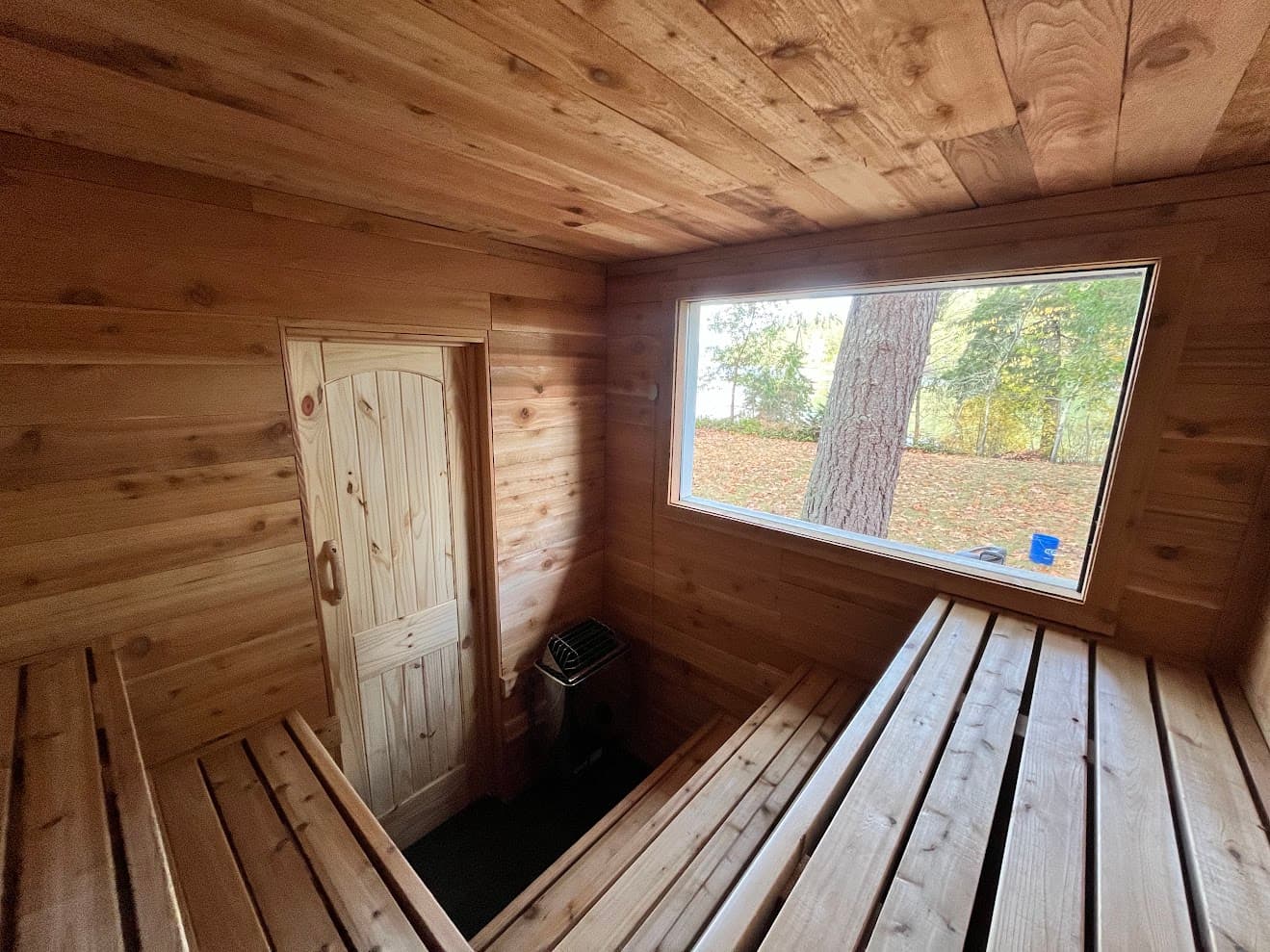
Most of the time, the real answer to sauna glass door vs wood door isn't either extreme. It's a solid wood door plus a well-placed window.
You don't need a full floor-to-ceiling glass wall or a full glass door to get light and a view. Half to two-thirds of a wall in glass is usually plenty to capture a view, and a good window gives you natural light without turning the whole door into a thermal hole. You keep the insulating, low-off-gas wood door where the heat loss matters most, and you put a controlled amount of glass exactly where the view is.
This is what we usually land on with clients who want the sauna to feel open but don't want to pay for it in heating cost every session. A large, well-placed window is great. A full glass wall is usually not worth the trade-off. If the view is genuinely the whole point of the build — a sauna positioned to look out over a lake, say — then a bigger glass wall can be worth it, as long as you go in knowing it costs efficiency and, in snow country, adds maintenance.
How to decide for your build
Start with where the sauna is. An outdoor sauna in a cold or snowy climate leans hard toward a solid wood door with a modest window — you want the insulation and you want to avoid snow-on-glass problems. An indoor sauna in a conditioned space can carry a glass door more easily, because the air coming in when you open it isn't freezing and there's no snow load.
Then weigh how much you run it. If this is a daily-use sauna and you care about running cost, the wood door pays you back a little every session. If it's an occasional, this-is-also-a-showpiece sauna, the glass door's look might matter more than the efficiency.
Finally, be honest about the view. If there's a real view, put glass where the view is — a window or a partial glass wall — and keep the door solid. If there's no view, there's very little reason to take the heat-loss hit of a glass door at all.
None of this exists in isolation. The door works with the insulation, the ventilation, and the heater sizing to determine how the room actually feels. If you're weighing door options as part of a full build, this is exactly the kind of trade-off we work through in a remote sauna design — matching the door to the climate, the use, and the rest of the envelope so nothing fights the heater.
Frequently Asked Questions
Does a glass sauna door really lose that much heat?
Yes. Even insulated double-pane glass loses far more heat than a well-insulated wood wall or a solid wood door of the same size. The sauna will still reach temperature, but the heater cycles more and the room is less stable, which shows up as higher operating cost over time and a slightly less consistent löyly.
Is a full glass door ever worth it?
When the view or the sense of openness is the actual goal — and the sauna is indoors or in a mild climate — a glass door can be worth the efficiency hit. In a snowy climate, we'd steer you toward a solid wood door with a window instead, because snow against glass adds both heat loss and a real risk of cracking.
What size should a sauna door be?
Smaller than you'd expect. A 24-inch-wide door reduces heat loss noticeably compared to a standard 32- to 36-inch door, because less hot air swaps out each time it opens. It feels tight at first, but the performance gain is worth it. The door should always open outward and use a magnetic latch.
Can I use a regular interior door for a sauna?
No. Standard pre-hung doors often contain paints, glues, and finishes that off-gas at sauna temperatures, and they're not built to handle the heat and humidity cycling. Use a solid wood slab door built with sauna-safe materials in a custom frame, or a tempered-glass door made for saunas.
What's the best door for a cold-climate outdoor sauna?
A solid wood door with a small, well-placed tempered-glass window if you want some light or a view. It insulates well, avoids the snow-on-glass problems that come with large glass panels, and keeps the room stable through repeated door openings on a cold day.
Next steps
The door is a small part of the budget and a big part of how the sauna performs, so it's worth getting right up front instead of defaulting to whatever a kit ships with. If you're planning a build and want to think through the door, the glass, and how they fit the rest of the design, take a look at our sauna design checklist or reach out about a design consultation — we'll help you match the door to your climate and how you actually plan to use the room.