Both Finland and Sweden have centuries-old sauna traditions, yet they differ in important ways. Finland's sauna culture is more intense and ritualistic, with a profound connection to national identity. Sweden's sauna culture (bastu) is gentler and more social, though equally rooted in tradition.
Understanding these two approaches helps you choose the sauna style that resonates with you. This isn't about which is "better" — they're both excellent. It's about understanding the philosophies and practices that define each tradition.
Finland is the sauna capital of the world. The numbers are staggering: 3.3 million saunas for a population of 5.5 million people. That's roughly one sauna per household, sometimes more. Saunas are woven into Finnish identity in a way that's hard to overstate.
Temperature and löyly: Finnish saunas are hot — typically 80–100°C (176–212°F). The defining practice is löyly: throwing water on hot rocks to create steam bursts. This creates dramatic humidity spikes and an intense thermal experience. Finns control löyly carefully, tossing water in measured amounts to create the perfect balance of heat and moisture.
The ritual: A traditional Finnish sauna session follows a pattern: enter and acclimate to the heat; move to the upper bench for maximum temperature; throw löyly; cool down; repeat. Many sessions end with a plunge into a lake or cold shower. The experience is meditative and intense — not casual or rushed.
History: The Finnish sauna tradition reaches back 2000+ years. Smoke saunas (savusauna) — the oldest form — are still used today in rural areas. These operate without chimneys; smoke fills the space, then exits through a door or small vent. Modern Finnish saunas evolved from these smoke sauna roots, maintaining the intensity but adding ventilation.
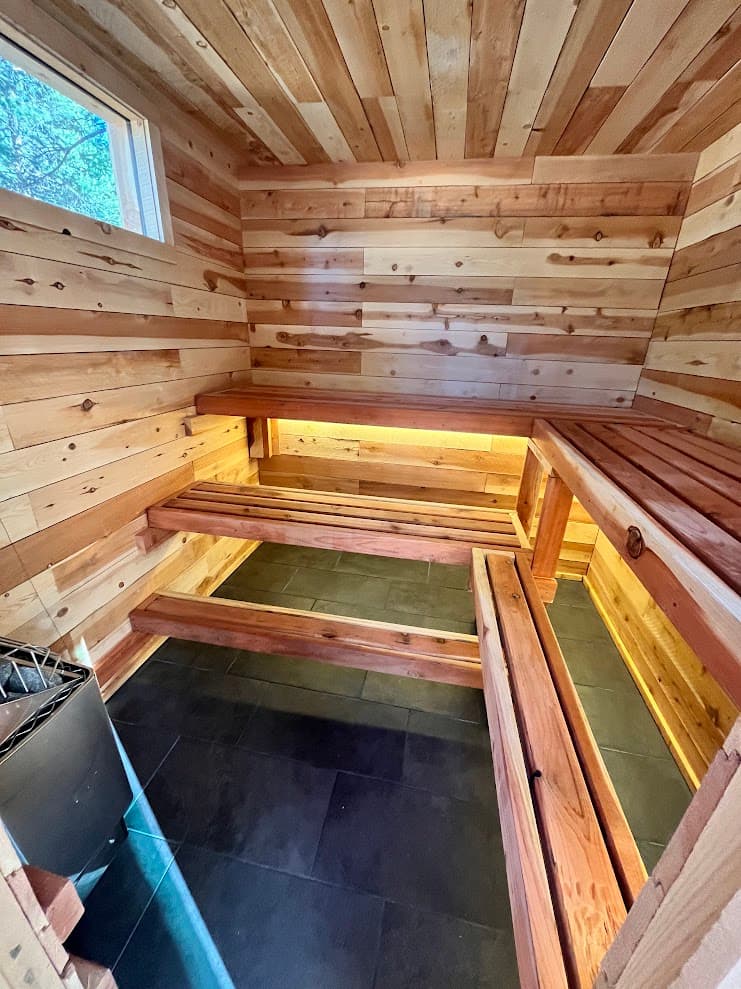
Construction: Traditional Finnish saunas are simple: insulated wooden structures with an electric or wood-fired heater, rocks on top, and benches at rising heights. The focus is on thermal efficiency and the integrity of the löyly ritual.
Swedish saunas, called "bastu," represent a slightly different philosophy. While equally rooted in Nordic tradition, the Swedish approach tends to be more social and less intense.
Temperature: Swedish saunas are typically 70–80°C (158–176°F) — slightly cooler than Finnish saunas. This allows for longer, more social sessions without the extreme thermal stress.
Löyly and humidity: Swedes use löyly as well, but often with less intensity than Finns. The emphasis is more on comfort and the social experience. Humidity is controlled to create a pleasant warmth rather than the dramatic steam bursts of Finnish saunas.
Social focus: The Swedish sauna experience emphasizes relaxation, conversation, and time with friends or family. Sessions are often followed by socializing outside the sauna rather than intense cooling rituals. The sauna is a gathering place as much as a heat therapy space.
Construction: Swedish saunas are similar in structure to Finnish saunas — insulated wooden rooms with heaters and benches — but often with slightly different design choices. Some emphasize larger social spaces; others include integrated relaxation areas.
Trusted by homeowners across Tahoe and beyond
Despite the differences, Finnish and Swedish saunas share critical commonalities:
The oldest Finnish sauna form — the smoke sauna — deserves mention. In a smoke sauna, there is no chimney. A wood-fired heater warms rocks, and smoke fills the sauna chamber. After a time, the fire is allowed to die, and the smoke is vented out by opening the door. Then the sauna reaches its hottest temperature, and the session begins.
Smoke saunas create the most intense, primal sauna experience. The heat is dense and even. Löyly is spectacular. But they require time, planning, and traditional know-how. Many rural Finnish people still maintain smoke saunas, and the experience is revered.
For most new sauna builders, a traditional electric or wood-fired sauna is more practical. But understanding the smoke sauna heritage gives context to the Finnish sauna philosophy.
Choose the Finnish approach if:
Choose the Swedish approach if:
Most traditional saunas — whether you lean Finnish or Swedish — share the same core design. You can build a versatile sauna that adapts to either philosophy depending on how you use it. Keep the temperature flexible (adjustable heater), control löyly by your throw intensity, and let the space serve your needs.
A sauna that can reach 95°C (Finnish style) can be used at 75°C (Swedish style) just as easily. The beauty of owning your own sauna is the freedom to choose your experience every session. If you're looking for a heater that handles both styles well, Select Saunas carries heaters from Harvia, HUUM, and other Nordic brands designed for authentic löyly.
Decades of research from Finland and Sweden show that regular sauna use delivers consistent health benefits: improved cardiovascular function, better circulation, stress reduction, improved sleep, and immune system support. Whether you practice Finnish or Swedish style, you'll benefit from consistent sauna use.
The key is regular, long-term practice. Sauna benefits compound over months and years of consistent use. The Finnish emphasis on the hot-cold-rest cycle amplifies these benefits: the alternation between heat and cold creates a "vascular pump" that enhances circulation and metabolic adaptation beyond sauna heat alone. Adding cold plunge (or cold water exposure) after sauna sessions significantly accelerates recovery and improves health markers.
Both traditions understand the importance of consistency. In Finland and Sweden, sauna use (1–2x per week minimum) continues for entire lifespans because the experience is genuinely enjoyable and culturally integrated — not a chore to endure.
12 decisions that determine how well your sauna performs — insulation, bench height, heater sizing, ventilation, and more.
Have questions about your project? Send us a message or schedule a free 15-minute intro call.
Schedule a free 15-minute intro call or send us a message about your project.
We'll learn about your space, goals, and timeline — and recommend the right next step for your project.