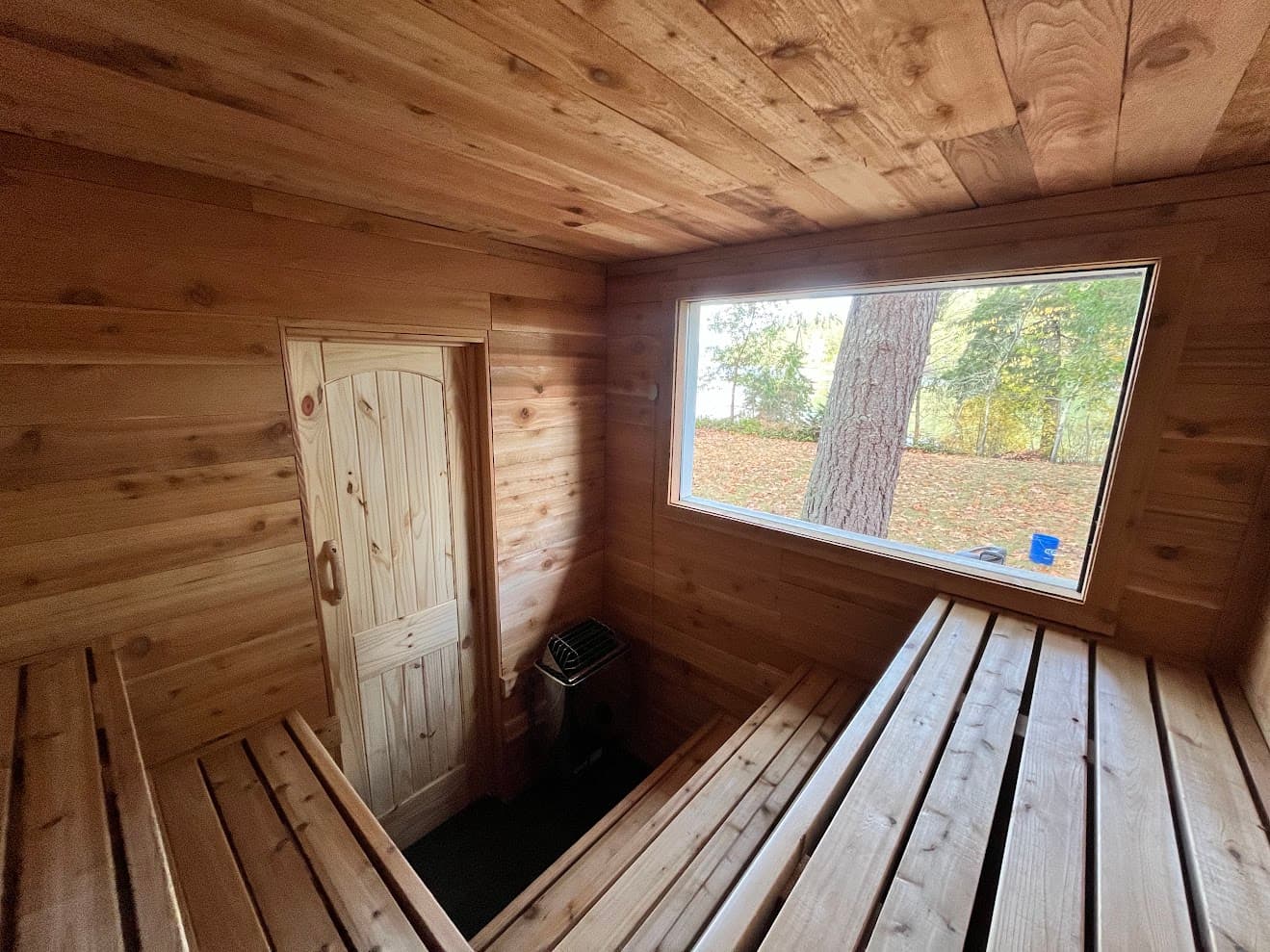
A sauna is a specialized build. It requires understanding of ventilation, vapor barriers, bench heights, insulation, and heater integration. Not every general contractor understands saunas. Here's what to look for:
The most important criterion: Has this builder completed multiple saunas before? A general contractor who builds decks, additions, and garages is not necessarily qualified to build saunas. Sauna construction has specific details (vapor barriers, three-hole ventilation, bench orientation) that differ from standard framing.
Ask to see photos of saunas they've built. Look for quality craftsmanship — clean cedar finishes, proper door framing, professional electrical work, and evidence of attention to detail. A portfolio shows they've completed projects successfully.
During a consultation, a good builder should naturally discuss:
Ask for 3-5 references from previous sauna projects. Call them. Ask about quality, timeliness, budget adherence, and whether they'd hire the builder again. Online reviews on Google, Yelp, or Angie's List also provide insight.
A professional builder should provide a detailed written estimate that breaks down materials, labor, permits, and timeline. They should answer your questions clearly and be responsive to your calls and emails.
Steer clear of builders who exhibit these warning signs:
If a builder says "we don't need a vapor barrier" or can't explain why it's important, they're inexperienced with saunas. Vapor barriers prevent moisture from penetrating the wall assembly and causing rot. This is non-negotiable.
Benches should be 18-24 inches off the floor. If a builder proposes benches directly on the floor or at odd heights, they don't understand ergonomics or sauna design standards.
A sauna must have ventilation — an intake low on one wall and exhaust high on the opposite wall. Without proper ventilation, moisture accumulates and wood rots. Any builder who doesn't discuss ventilation in detail is unprepared.
Sauna interiors require kiln-dried cedar, aspen, or hemlock — wood resistant to moisture and heat. If a builder suggests "regular framing lumber" or untreated pine, they're cutting corners. Cedar costs more but lasts decades.
"I don't have references" or "references are all tied up" is a red flag. Established builders have past clients happy to vouch for them.
A professional provides detailed, written estimates. If a builder gives you a ballpark figure over the phone and resists creating a formal estimate, they're unprofessional.
A good builder will ask about your ceiling height and then explain how it affects bench design. Lower ceilings (6.5-7 feet) require different bench arrangements than standard 8-foot ceilings. This conversation shows they understand sauna ergonomics.
The standard sauna ventilation system has three holes: one intake near the floor (below the heater), one intake higher on the same wall, and one exhaust near the ceiling on the opposite wall. A builder who describes this system confidently knows saunas.
Aluminum is the gold standard for sauna vapor barriers. Plastic sheeting is cheaper but less durable. A builder who specifies aluminum and explains its benefits (durability, moisture resistance, ease of sealing) is quality-focused.
They'll discuss cedar grades, explain why kiln-dried is important, and potentially show you samples. This shows they care about materials quality.
"I've built 12 saunas" or "saunas are a specialty of ours" is a green flag. Experience shows competence.
A professional builder has liability insurance and can provide a certificate on request. This protects you if something goes wrong.
Trusted by homeowners across Tahoe and beyond
You want to hear a significant number (5+). If they say "I've only done one or two," they may lack experience.
Listen for discussion of three-hole ventilation, intake/exhaust design, and how they'll prevent condensation and ice buildup. Vague answers are concerning.
You should hear specific R-values (R-21 for walls, R-30 for ceiling in cold climates) and aluminum vapor barrier. They should explain why these choices are important.
Listen for discussion of ceiling height, bather comfort, and standard heights (18-24 inches). They should explain how your specific space influences bench design.
They should offer photos, references, or site visits to previous work. Seeing completed saunas builds confidence.
A professional outlines the schedule (typically 3-6 weeks for standard builds) and payment terms (usually 1/3 deposit, 1/3 mid-project, 1/3 completion).
They should handle or coordinate permits. They should discuss local building codes and how the design complies.
A quality builder offers a warranty (typically 1-2 years on labor). This shows confidence in their work.
Cost: $4,000-8,000 materials (you provide labor).
Timeline: 80-100 hours of work spread over 4-12 weeks (weekends/evenings).
Pros:
Cons:
Cost: $8,000-20,000+ installed (materials + labor).
Timeline: 3-6 weeks of continuous work.
Pros:
Cons:
A compromise approach: hire a sauna designer to create complete plans (cost: $1,500-3,000). You then build with those detailed specifications. This eliminates design uncertainty and reduces DIY mistake risk while keeping labor costs low.
12 decisions that determine how well your sauna performs — insulation, bench height, heater sizing, ventilation, and more.
Have questions about your project? Send us a message or schedule a free 15-minute intro call.
Schedule a free 15-minute intro call or send us a message about your project.
We'll learn about your space, goals, and timeline — and recommend the right next step for your project.