The Southeast is hot, humid, and full of people who love wellness. Sauna culture is growing across the region — from Atlanta to Miami to Charleston. But building a sauna in the Southeast isn't the same as building one in Minnesota or Colorado.
The defining challenge is moisture. Average relative humidity in coastal Southeast cities runs 70–80% year-round. That moisture doesn't just affect how the sauna feels — it determines whether your sauna lasts 20 years or develops mold in 2.
Every design decision for a Southeast sauna filters through one question: how do we manage moisture before, during, and after each session?
Humidity Is the Central Problem: This isn't a footnote — it's the entire design thesis. Southeastern air carries massive amounts of moisture. When you heat a sauna to 170–190°F and then shut it off, that hot, moist interior meets ambient humidity on the way down. Without aggressive drying, you get condensation in walls, under benches, and behind paneling. That's where mold starts.
High Ambient Temperatures: Summer highs regularly hit 90–100°F across the region. This means your sauna heats up faster (good) and needs less insulation (also good). But it also means the temperature differential between sauna interior and exterior is smaller, which affects airflow dynamics.
Heavy Rainfall: The Southeast gets 45–65+ inches of rain annually. Outdoor saunas face constant water exposure. Drainage, roof overhang, and site grading matter more here than in dry climates.
Termites and Pests: Subterranean termites are aggressive across the Southeast. Any wood structure needs termite prevention — treated lumber for framing, physical barriers, and regular inspection.
Mild Winters: Frost line depths are shallow (6–18 inches in most areas, 0 in southern Florida). Foundation requirements are simpler than cold climates. Freeze-thaw isn't a major concern south of Tennessee.
This is where Southeast sauna design diverges from everything else. Every sauna needs ventilation for fresh air exchange — that's universal. But in the Southeast, post-session drying ventilation is just as important as the ventilation you use while the sauna is running.
During Sessions — Mechanical Downdraft: Intake vent on the heater wall, about 12 inches above the top of the heater and 12 inches to the right of it. Mechanical exhaust below the foot bench on the opposite wall. The heater's rising plume grabs the fresh air and mixes it into the hot air, and the fan pulls that air down through the bench zone and out at the lowest point. This is the recommended approach for all climates.
After Sessions — Drying Ventilation (Non-Negotiable): When you're done using the sauna, you need to actively dry the interior. In dry climates, opening a vent and the door handles most of it. In the Southeast, ambient air is already saturated — opening the door brings in more moisture, not less.
The solution: a dedicated drying vent with a mechanical exhaust fan. After your session, run the fan for 30–60 minutes to push moist air out. Some builders install a timer switch so it runs automatically. This is not optional in humid climates. Skip it and you'll be replacing paneling in a few years.
Enclosed Spaces Need More: If you're building in a garage, basement, or enclosed room, consider a small dehumidifier in the surrounding space. The sauna itself vents moisture into the room around it — if that room is also humid, the moisture has nowhere to go.
Good news: the Southeast doesn't need the extreme insulation that cold climates demand. You're not fighting -20°F outside temperatures.
Walls: Standard R-13 fiberglass or mineral wool batts are sufficient for most Southeast builds. The ambient temperature is warm enough that heat retention isn't the main concern — moisture management is.
Ceiling: R-21 to R-30 ceiling insulation. Heat rises, so the ceiling always needs more than the walls. Even in warm climates, you want to retain heat at the ceiling level where you sit.
Vapor Barrier: Critical in humid climates. Install a continuous vapor barrier (aluminum foil or foil-faced insulation) on the warm side of the wall. This prevents interior sauna moisture from entering the wall cavity. Seal all seams with foil tape. Any gap is a condensation point. Sauna Vapor Barrier | Radiant Barrier Roll
Heat-Up Time: Southeast saunas reach operating temperature faster than cold-climate saunas because the starting ambient temperature is higher. A 6 kW heater in a 4x6 sauna might reach 170°F in 25–30 minutes when it's 80°F outside, compared to 45–60 minutes in 10°F weather.
Trusted by homeowners across Tahoe and beyond
Wood — Cedar Is King: Western Red Cedar is the top choice for Southeast saunas. It's naturally resistant to moisture, decay, and insects. Cedar contains oils that inhibit mold and fungal growth — exactly what you need in a humid environment. Hemlock and aspen work but don't have cedar's natural moisture resistance.
Framing: Use pressure-treated lumber for any framing that contacts the ground or exterior. Standard SPF framing is fine for interior wall framing above the sill plate, but treat the bottom plate.
Termite Prevention: Borate-treated lumber for framing. Physical termite barriers (metal flashing between foundation and framing). Keep wood at least 6 inches above grade. Annual termite inspections are standard practice in the Southeast — include your sauna in the scope.
Hardware: Stainless steel only. The combination of heat, moisture, and humidity will corrode regular steel and galvanized hardware faster than in any other climate. Don't cut corners here.
Flooring: Tile or sealed concrete with a drain. Wood floors in a Southeast sauna are risky — they hold moisture and are hard to dry. If you want the look of wood, use cedar duckboards that can be removed and dried.
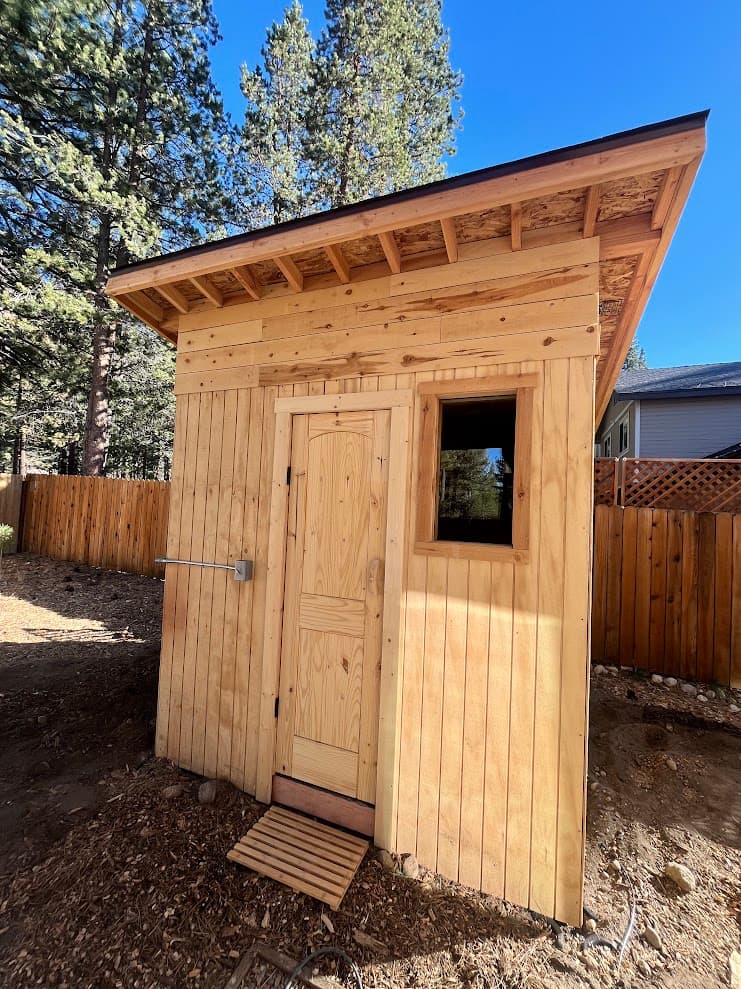
Outdoor Saunas: Popular across the Southeast, but they face constant rain and humidity exposure. Key requirements:
Indoor Saunas (Garage, Basement, Spare Room): Common in the Southeast, especially in Florida where outdoor land is often limited or HOA-restricted. The main risk is moisture trapping.
Basement conversions are less common in the Southeast than the Northeast because many Southeast homes are built on slabs or crawl spaces. Garage conversions are more typical.
Budget Build (4x6, standard specs): $8,000–$15,000. Standard insulation, mechanical exhaust fan, cedar interior, basic electric heater.
Mid-Range (5x7 or 5x8 with outdoor setup): $15,000–$30,000. Quality cedar, dedicated drying system, proper drainage, changing area, upgraded heater.
Premium (6x8+ custom build): $30,000–$55,000+. Premium materials, integrated shower/cold plunge, advanced ventilation with humidity controls, landscaping.
Southeast labor costs are generally moderate compared to coastal metro areas. Humidity-specific features (drying fan, dehumidifier, enhanced drainage) add $500–$2,000 to baseline costs. Termite treatment and prevention add another $300–$800.
Timeline: 3–4 months from design to completion. Permitting is typically 2–4 weeks. Southeast builds can often proceed year-round since weather rarely halts construction for extended periods.
Tahoe Sauna Company designs saunas for humid climates across the Southeast. We understand:
We provide remote sauna design for clients throughout the Southeast — build-ready plans engineered for your climate, delivered to you or your contractor.
No Drying Ventilation: The single most common mistake. People install session ventilation and skip post-session drying. In humid climates, this guarantees mold.
Relying on Passive Drying: Opening the door after a session works in Colorado. It doesn't work in Georgia. You need mechanical exhaust.
Skipping Vapor Barrier Details: A vapor barrier with gaps is almost worse than none — moisture enters through the gaps and gets trapped. Seal every seam.
Ignoring Termite Prevention: Termites are everywhere in the Southeast. Untreated wood framing is an invitation.
Wood Floors Without Drainage: Standing water on wood in a humid climate is a fast track to rot. Use tile or removable duckboards.
Over-Insulating: R-30 walls aren't necessary when it's 85°F outside. You'll spend more for marginal benefit. Put the budget into ventilation instead.
12 decisions that determine how well your sauna performs — insulation, bench height, heater sizing, ventilation, and more.
Have questions about your project? Send us a message or schedule a free 15-minute intro call.
Schedule a free 15-minute intro call or send us a message about your project.
We'll learn about your space, goals, and timeline — and recommend the right next step for your project.