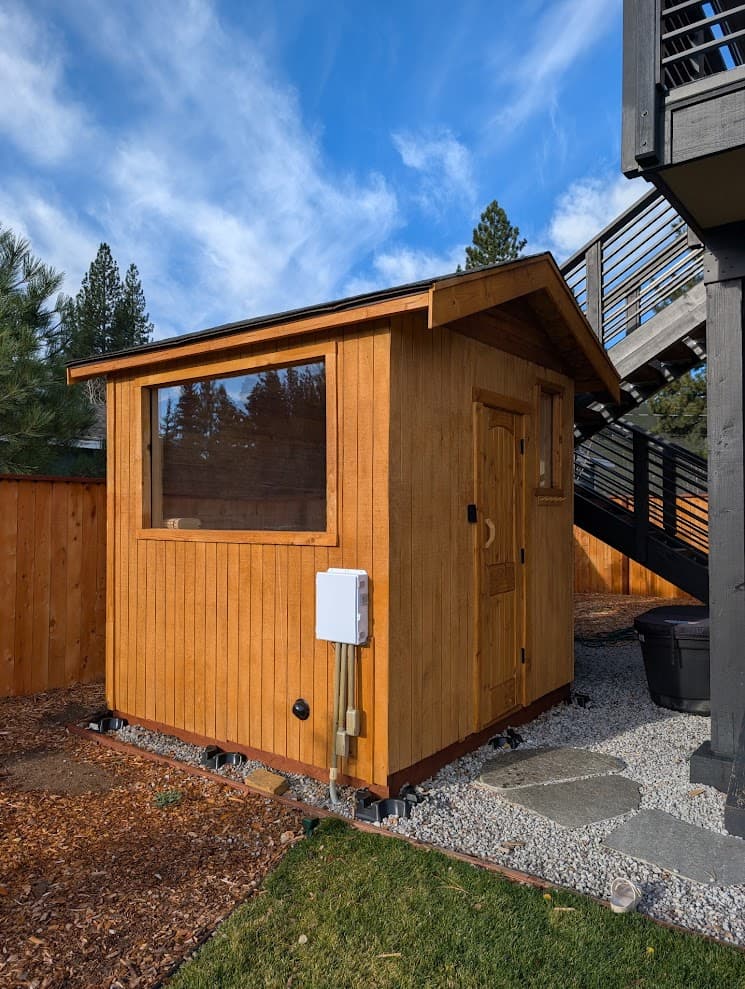
Texas is one of the fastest-growing sauna markets in the U.S. Large lots, backyard-centric lifestyles, and a booming wellness culture mean more Texans are adding saunas than ever. Houston, Austin, Dallas, San Antonio, and the Hill Country are leading the charge.
The question people always ask: "Does it even get cold enough for a sauna in Texas?" Yes. Winter nights in Dallas and Austin regularly drop into the 30s and 40s. But more importantly, saunas aren't about outside temperature. The therapeutic benefit — heat stress, circulation, recovery, relaxation — works whether it's 35°F or 95°F outside.
The real design challenge in Texas isn't cold. It's humidity. Most of the state sits in a humid subtropical climate, and if you don't design for moisture management, you'll have mold problems within a year or two.
Texas spans multiple climate zones, and they require different design approaches.
East Texas & Gulf Coast (Houston, Beaumont, Galveston): High humidity year-round. Average relative humidity above 75%. This is the hardest environment for sauna moisture management. Aggressive mechanical ventilation is non-negotiable. Every design decision should prioritize drying.
Central Texas (Austin, San Antonio, Waco): Humid but slightly less extreme than the coast. Still needs strong ventilation and moisture-resistant materials. Summer humidity regularly exceeds 70%.
North Texas (Dallas, Fort Worth): Hot summers, moderate humidity. Winters are drier and occasionally cold (ice storms aren't unheard of). Standard ventilation with a drying vent works well here.
West Texas (El Paso, Lubbock, Midland): Dry and arid. Humidity is low year-round. This is the easiest Texas climate for sauna building — simpler ventilation works, and moisture management is straightforward. Similar to building in the desert Southwest.
For most of Texas, mold prevention is the single biggest design challenge. Here's what matters.
Mechanical Ventilation: Passive vents aren't enough in humid climates. You need a powered exhaust fan that runs during and after each sauna session. The goal is to pull moisture out of the sauna quickly so surfaces dry completely.
Drying Vent: A dedicated drying vent (separate from the session vent) should stay open or run automatically after each use. In Houston or Austin, leave it running for 30-60 minutes post-session. This is the single most important feature for preventing mold in a Texas sauna.
Air Gap Behind Paneling: An air gap between the wall paneling and vapor barrier allows air circulation behind the wood. This prevents moisture from getting trapped and breeding mold. Use furring strips to create a 3/4" gap.
Vapor Barrier Placement: The vapor barrier goes on the warm side of the insulation — between insulation and interior paneling. This keeps steam out of the wall cavity. Get this wrong and you'll have hidden rot.
Floor Drainage: Sloped floors with a center drain eliminate standing water. In humid climates, any pooled water becomes a mold source fast.
Trusted by homeowners across Tahoe and beyond
Good news: insulation requirements are lighter in Texas than in cold climates. Ambient temperatures are warm, so heat-up time is fast and energy costs are lower.
Walls: R-13 is standard and works well for most Texas sauna builds. The sauna heats up quickly because you're starting from 70-80°F ambient, not 20°F.
Ceiling: R-21 to R-30. Heat rises, and the ceiling is where most energy escapes. Don't skimp here even though ambient temps are warm — you still want efficient heat retention at 170-190°F.
Floor: Minimal insulation needed for outdoor saunas on a concrete slab. If the sauna is on a raised deck or pier foundation, insulate the floor to R-13.
Outdoor saunas are the most popular configuration in Texas. Large backyards, outdoor living culture, and pool-adjacent placement make outdoor builds a natural fit. But Texas sun and heat create specific design considerations.
Shade Planning: Avoid placing your sauna where it catches full afternoon sun in summer. West-facing walls absorb the most heat. Orient the sauna so the long walls face north and south, or place it under existing trees. A sauna baking in 105°F direct sun takes longer to cool down between sessions.
Covered Porch or Deck Integration: This is one of the most popular Texas configurations. A covered porch attached to the sauna provides shade, a cooling-off area, and protection from rain. Many clients integrate the sauna into an existing patio or pool house structure.
Pool House Adjacency: Sauna next to the pool is a classic Texas setup. Cold plunge straight into the pool after a session. Keep the sauna at least 5-6 feet from the pool edge for safety and drainage separation.
UV-Resistant Exterior: Texas sun is brutal on exterior finishes. Use a UV-resistant exterior stain or leave cedar to weather naturally (it turns silver-gray). Reapply stain every 2-3 years if you want to maintain the original color.
Indoor conversions are increasingly popular in Texas, especially in newer homes with large garages, spare rooms, or pool houses.
Garage Conversion: A corner of a 3-car garage is one of the easiest conversion spots. Electrical access is usually nearby, and garage ventilation helps with moisture management. Frame a 4x6 or 5x7 room within the garage.
Spare Room or Closet: Walk-in closets and unused bedrooms work if you can run a 240V circuit and install proper ventilation to the exterior. The key is getting the exhaust vent outside — don't vent into an attic or interior space.
Pool House: Pool houses often have plumbing, electrical, and ventilation already roughed in. They're ideal for sauna conversions and keep the sauna close to the pool for contrast therapy.
Cedar Is King: Western Red Cedar is the top choice for Texas saunas. It's naturally resistant to moisture, rot, and insects — all critical in a humid, warm climate where termites are a real concern. Cedar also handles heat well and smells great.
Termite-Resistant Construction: Termites are active across most of Texas. Raise the sauna structure off the ground (pier or concrete slab — no wood-to-soil contact). Use termite shields at the foundation. Cedar's natural oils provide some resistance, but physical barriers matter more.
Hardware: Stainless steel fasteners and hinges. Humidity and heat accelerate corrosion on regular steel. This isn't optional in Texas.
Exterior Finish: UV-resistant stain or natural weathering. Avoid dark exterior colors — they absorb more heat in the Texas sun. Lighter stains or natural cedar gray reflect more solar energy.
Permitting varies significantly across Texas jurisdictions. Here's the general picture.
Outdoor Structures: Most Texas cities require a building permit for any detached structure over 120 sq ft. Smaller saunas (under 120 sq ft) may be exempt in some jurisdictions, but always check. Houston famously has no zoning, but still has building codes and permit requirements.
Electrical: A 240V circuit for an electric heater requires an electrical permit and licensed electrician in all Texas jurisdictions. This is the permit you'll most commonly need.
HOA Restrictions: Many Texas subdivisions have HOAs with rules about detached structures, setbacks, and exterior finishes. Check your HOA covenants before designing. Some HOAs require architectural review board approval.
Timeline: Expect 2-4 weeks for residential permits in most Texas cities. Houston and unincorporated areas are often faster. Austin can be slower due to permitting backlog.
Budget Build (4x6, standard specs): $8,000-$15,000. Standard insulation, mechanical ventilation, cedar interior, basic finishes. Lower cost than cold-climate builds because insulation requirements are lighter.
Mid-Range (5x8 or Outdoor with Porch): $15,000-$30,000. Quality cedar, covered porch/cooling area, integrated ventilation system, changing room option, landscape integration.
Premium (6x8+ Custom with Pool Integration): $30,000-$60,000+. Premium materials, custom design, pool house integration, outdoor shower, cold plunge, covered deck, lighting package.
Texas labor costs are moderate compared to coastal markets. Material costs are standard. The main cost driver is complexity — a standalone 4x6 is straightforward; a pool house integration with covered porch is a bigger project.
Timeline: 3-4 months from design to completion. Faster than cold-climate builds because there's no frost line concern and insulation is simpler.
Tahoe Sauna Company works with Texas homeowners and builders across the state. We understand:
We provide remote sauna design for clients throughout Texas — build-ready plans engineered for your climate zone, delivered to you or your contractor.
Skipping Mechanical Ventilation: Passive vents alone won't dry a sauna in Houston or Austin. You need powered exhaust. This is the #1 mistake in humid-climate sauna builds.
No Drying Vent: If the sauna doesn't dry completely between sessions, mold follows. A dedicated drying vent or fan timer is essential for most of Texas.
Wood-to-Soil Contact: Direct wood-to-ground contact invites termites. Always raise the structure on piers or a concrete slab with termite shields.
Full Sun Placement: A sauna baking in direct afternoon sun overheats the exterior and makes cooling between sessions harder. Plan for shade or orient to avoid western exposure.
Ignoring HOA Rules: Getting halfway through a build and discovering your HOA prohibits detached structures is expensive. Check covenants first.
12 decisions that determine how well your sauna performs — insulation, bench height, heater sizing, ventilation, and more.
Have questions about your project? Send us a message or schedule a free 15-minute intro call.
Schedule a free 15-minute intro call or send us a message about your project.
We'll learn about your space, goals, and timeline — and recommend the right next step for your project.