The Best Sauna Fan for Fresh Air (and How to Set It Up)
The difference between a sauna that feels crisp and alive and one that feels stuffy and hard to sit in usually isn't the heat — it's the air. As you and the heater use up oxygen and you breathe out CO₂, a poorly ventilated room gets stale fast, and that heavy, can't-quite-catch-your-breath feeling is what drives most people out early. A mechanical fan fixes it, and it's one of the highest-impact upgrades you can make to a sauna.
Here's why a fan matters, which one we use, and how to set it up.
Passive vents help — a fan guarantees it
Most saunas are built with passive ventilation: a low intake vent near the heater and a high exhaust vent on the opposite wall, letting fresh air convect through. Done right, passive ventilation works, and it's the foundation every sauna should have.
But passive airflow is at the mercy of physics — it depends on temperature differences, wind, and how the room happens to be sealed. On a still day, or in a tightly built indoor room, it can move very little air. A mechanical fan takes that variable out. It pulls a steady, known volume of fresh air through the room every minute, no matter the conditions, so the breathing zone stays fresh and the CO₂ never builds up. This is exactly why the air quality in a sauna is worth taking seriously — it's the single biggest driver of how a session actually feels.
Why we use the AC Infinity Cloudline
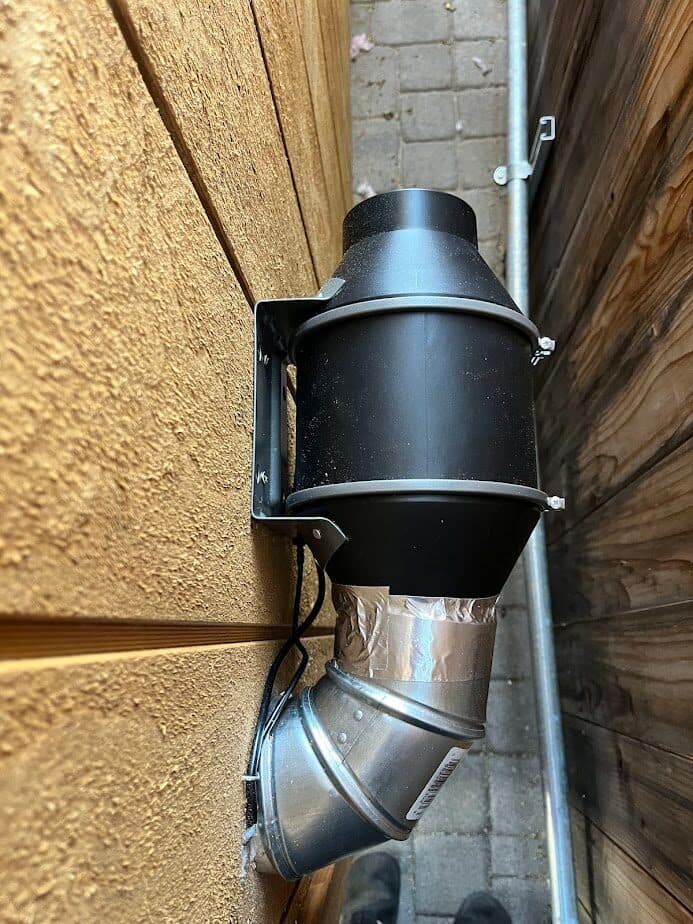
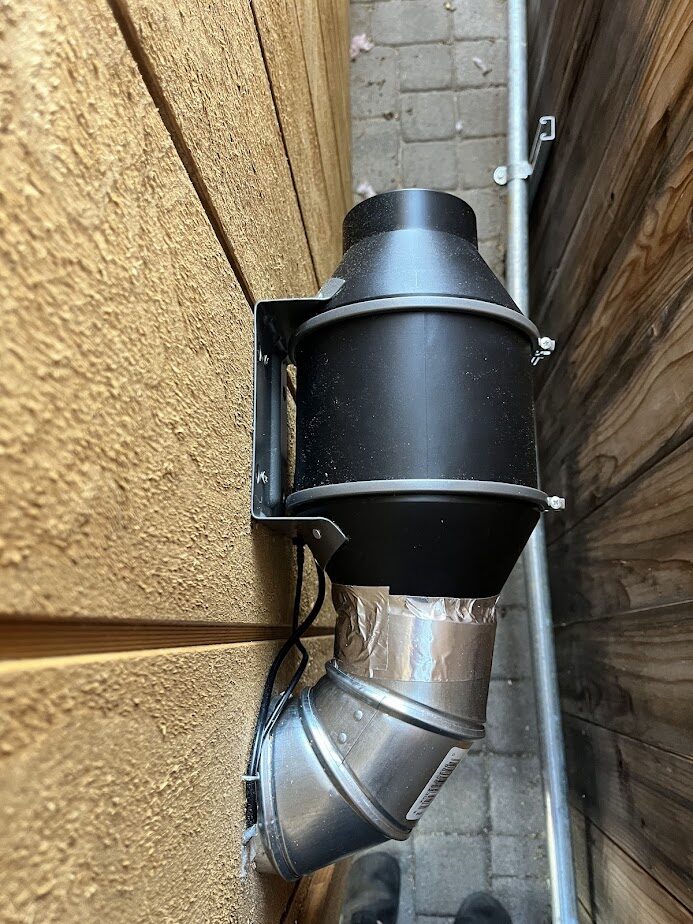
The fan we reach for is the AC Infinity Cloudline — an inline duct fan that mounts in the exhaust run, outside the hot zone. A few reasons it's become the standard:
It moves real, adjustable air. The Cloudline runs on a 1–10 speed dial, so you're not stuck with a single on/off blast — you can tune exactly how much air it pulls. It's quiet and well-built, it mounts inline in the ducting so the motor never sees sauna heat directly, and the sizing lineup (4", 6", 8") covers everything from a small indoor room to a large outdoor build.
Trusted by homeowners across Tahoe and beyond
What speed to run it at
Here's the practical part most people get wrong: they crank it. On the Cloudline's 1–10 dial, the higher settings move a lot of air but they also get loud, and depending on how your ducting is run, the top of the range can be noisy enough to distract from the quiet a sauna is supposed to have.
In our experience the sweet spot is levels 3–4. That's enough to noticeably raise oxygen and keep CO₂ down — you can feel the room stay fresher through a long session — without the fan turning into background noise. Start around 3, nudge it up if the air still feels heavy, and back it down if it's louder than you'd like. Every install is a little different, so let your own ears and lungs set the final number.
Run the fan during your session, when air quality actually matters. There's no need to run it after you're done or fuss with a shutdown routine — the fresh air while you're in there is the whole point.
Setting one up
A Cloudline lives inline in your exhaust duct, ideally pulling air from the high exhaust vent on the wall opposite (and above) the heater, and pushing it outside. The intake stays passive — a lower vent near the heater that lets makeup air in as the fan pulls stale air out. That low-in, high-out path sweeps fresh air right through the breathing zone.
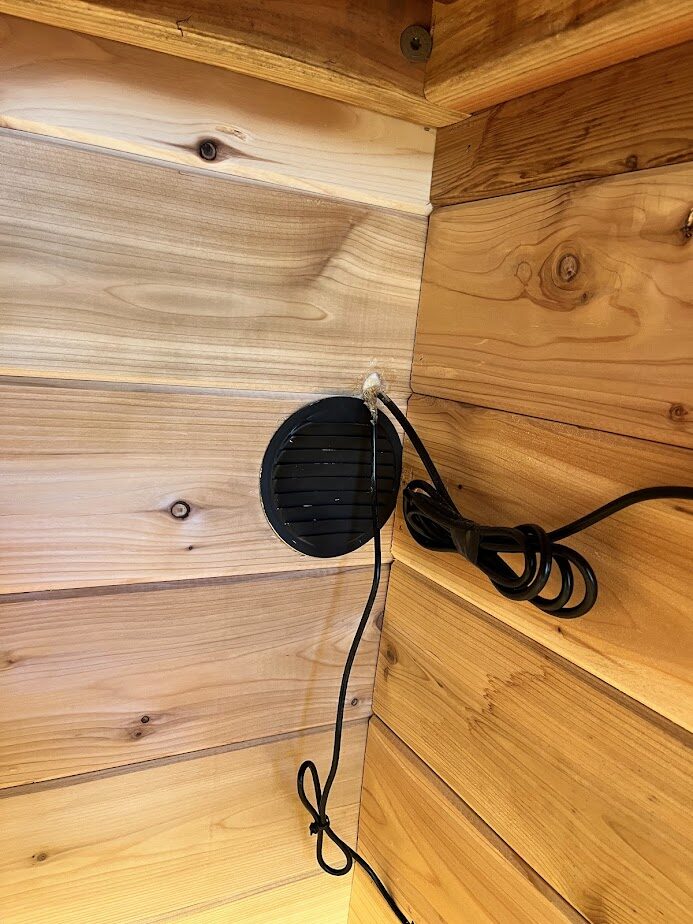
If you're building from scratch or retrofitting, our sauna ventilation kit is built around this exact setup, and the ventilation diagram shows the airflow path in detail. The fan itself mounts in minutes; the ductwork is the part worth doing carefully.
Frequently Asked Questions
What is the best fan for a sauna?
An inline duct fan mounted in the exhaust run, outside the hot zone — the AC Infinity Cloudline is the one we use, because it's quiet, well-built, sized for saunas (4"/6"/8"), and has a 1–10 speed dial so you can tune the airflow. Keep the motor inline in the ducting, not sitting inside the hot room.
What speed should I run my sauna fan at?
On an AC Infinity Cloudline's 1–10 dial, levels 3–4 are the sweet spot for most installs — enough to keep oxygen up and CO₂ down without the fan getting loud. Higher settings move more air but get noisy, so start at 3 and adjust to your room.
Do I need a fan if my sauna already has vents?
You don't strictly need one, but a fan makes ventilation reliable instead of weather-dependent. Passive vents move air only when temperature differences and conditions cooperate; a mechanical fan guarantees a steady volume of fresh air every minute, which is why stuffy, tightly built, or indoor saunas benefit the most.
Should I run the sauna fan during or after my session?
During. Fresh air matters while you're in the room breathing — that's when a fan keeps oxygen up and CO₂ down. There's no need to run it afterward or follow a shutdown routine.
Next steps
Air quality is the most underrated part of how a sauna feels, and a good fan is the easiest fix. For the full owner's picture — rocks, heat-up, the temperature sensor, oils, and keeping the wood and floor fresh — grab our free Sauna Owner's Guide. If you're ready to build the ventilation in properly, start with our ventilation kit and how to add ventilation to a sauna.