Electric Sauna Heater Not Heating Up? How to Replace a Burned-Out Element
If your electric sauna heater not heating up the way it used to — it runs, the control panel lights up, maybe the top stones get a little warm, but the room crawls to 130°F and stalls — the most likely cause isn't your insulation or your wiring. It's a burned-out heating element.
This is one of the few sauna problems that has a clean, definite fix. An element either works or it doesn't, and replacing one is a job most people can do themselves in under an hour with basic tools. Below is how these heaters actually work, how to confirm an element is the problem, and how to swap it out.
Why an electric sauna heater has multiple elements
An electric sauna heater doesn't heat with one big coil. It uses several resistive heating elements — usually three, sometimes more on larger units — mounted vertically inside the heater body, packed around by the sauna stones. Each element is a sealed metal tube (think of a heavy-duty version of the element in an electric oven) that glows hot when current runs through it. Together they add up to the heater's rated output: a 6 kW heater might be three 2 kW elements, a 9 kW heater three 3 kW elements, and so on.
The stones sit directly against these elements. That's what stores and radiates the heat, and it's also what makes the elements work hard — they go through constant heat cycling, and the stones themselves shift and settle over years of use, stressing the metal.
Elements don't last forever. Most are rated for a few thousand hours, and a home sauna used several times a week will eventually burn one out — typically after three to six years, sometimes sooner if two elements were allowed to touch each other or the heater ran dry with the elements exposed and overheated. When one element fails, you lose a third (or more) of your heat output. The heater still turns on and the remaining elements still glow, which is exactly why people get confused: it looks like it's working, it just can't reach temperature anymore.
How to tell a burned-out element is the problem
Before you buy a replacement, confirm the diagnosis. A few signs point clearly at a dead element rather than a design issue:
The heater used to reach 180-190°F and now tops out 40-50 degrees short, even after a full heat-up cycle. Nothing about the room changed — same insulation, same door, same vents — so a sudden drop in performance points at the heater itself, not the build. And if you look inside while it's running (stones removed, power on, done carefully), one or two elements glow orange while another stays dark. A dark element is a dead element.
The reliable way to confirm it is with a multimeter. Turn the power off at the breaker, pull the stones, and disconnect the wires from each element. Set the meter to resistance (ohms). A good element reads a specific low resistance — often somewhere in the 15-60 ohm range depending on wattage. A burned-out element reads infinite resistance (open circuit, "OL" on the display). That open reading is your confirmation.
If all three elements test fine and the heater still won't heat, then the problem is somewhere else — undersized heater, heat loss, or wiring voltage — and our guide on a sauna not getting hot enough walks through those causes.
Trusted by homeowners across Tahoe and beyond
Warranty first, then the ~$200 replacement
Once you know which element failed, identify the exact replacement from the manufacturer before buying anything. Elements are model-specific: wattage, length, terminal style, and mounting all have to match. Find the model number on the heater's data plate (usually on the side or bottom) and either look up the parts diagram or call the manufacturer directly with your model and the element's specs.
This matters for two reasons. First, warranty. Many sauna heaters — Harvia, HUUM, Finnleo, and others — carry multi-year warranties, and a prematurely failed element is often covered. It's worth a phone call before you spend a dime; they may ship you a replacement free. Second, fit. Ordering the wrong element is the most common mistake here, and a mismatched one either won't mount or won't deliver the right output.
If you're out of warranty, a single replacement element typically runs around $150-250 depending on the brand and wattage. That's a lot cheaper than a whole new heater, which is why it's almost always worth replacing the element rather than replacing the unit — assuming the heater body and controls are otherwise in good shape.
How to replace a sauna heater element, step by step
This is a straightforward job, but it's electrical work on a 240V appliance. If you're not comfortable working around wiring, have an electrician do it — the physical swap is simple, but the connections have to be right and tight.
1. Kill the power. Turn the heater off, then shut off the breaker feeding it. Don't just rely on the control panel — open the actual breaker and confirm the circuit is dead before you touch anything.
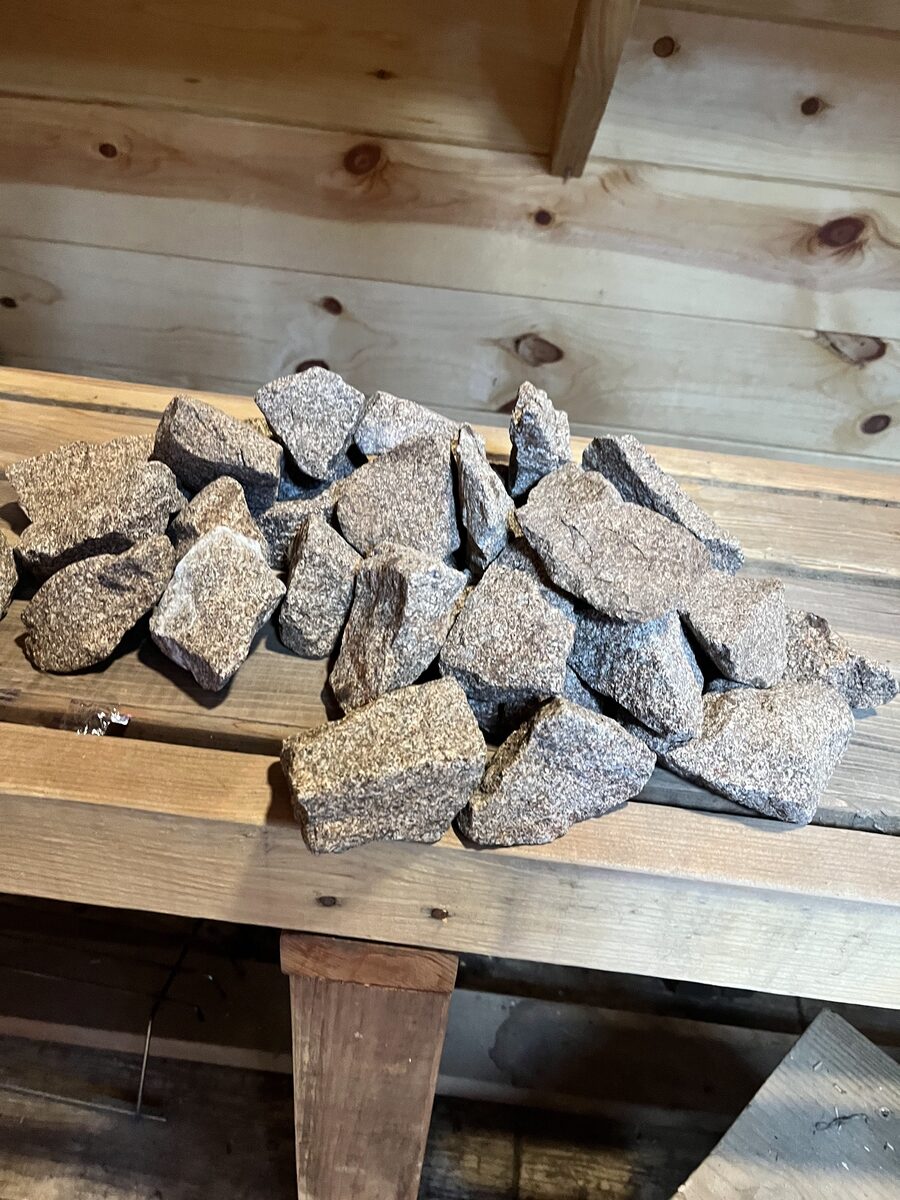
2. Remove the stones. Take all the sauna stones out of the heater so you can see and reach the elements. This is a good moment to inspect the stones too — if they're crumbling or caked in fine debris, replace them while you're in here (our guide to sauna heater stones covers what to use).
3. Detach the heater from the wall. Most traditional heaters hang on a wall bracket. Free the heater body from its bracket so you can tip it out and reach the base, where the elements are anchored.
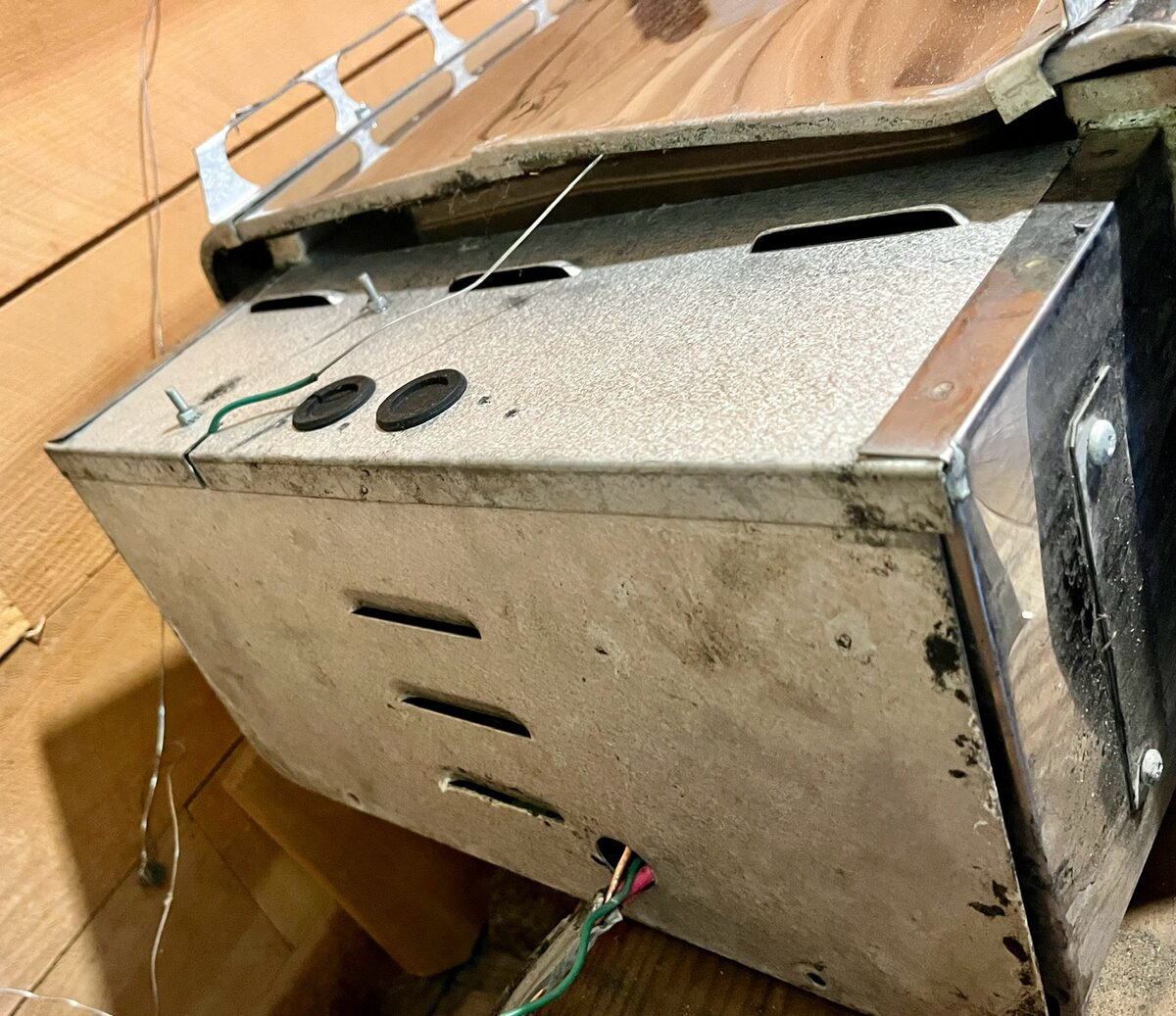
4. Remove the bottom cover. Take off the bottom plate of the heater to expose the element mounts, the terminal studs, and the wiring. Layouts vary by brand, so check your model's diagram if yours looks different.
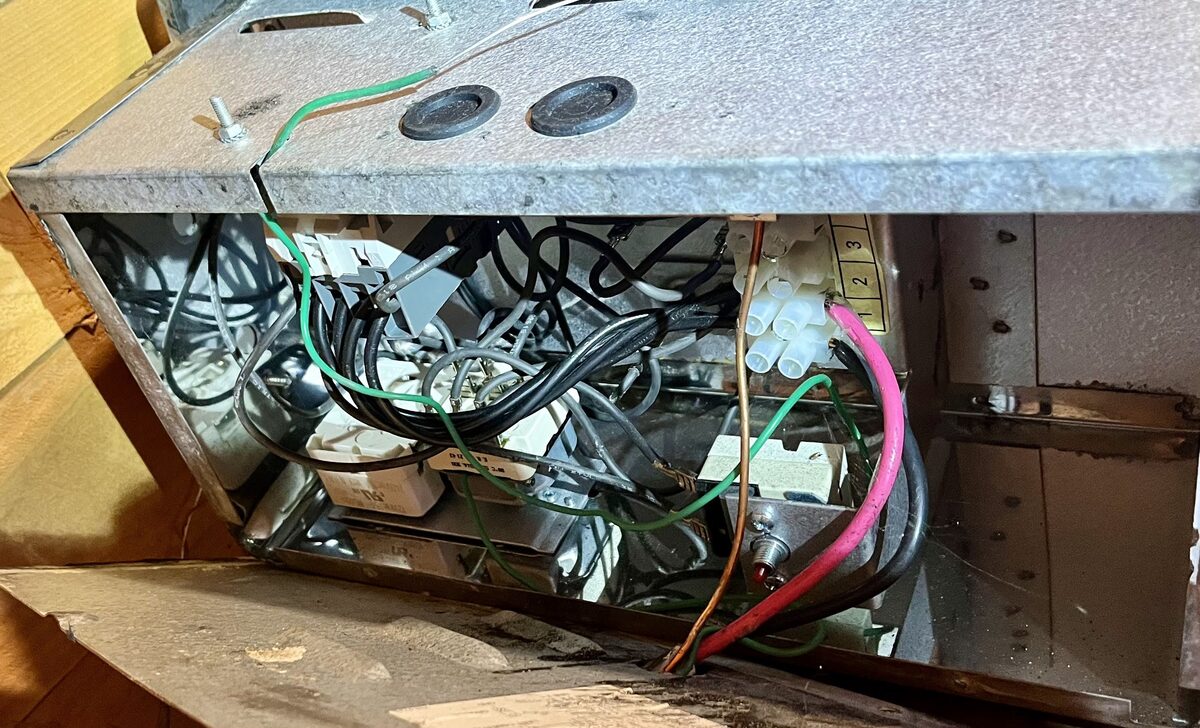
5. Unscrew the element from the bottom. Note (or photograph) how the wires land on the terminal studs, then disconnect them. Undo the nuts holding the element's mounting bracket to the base.
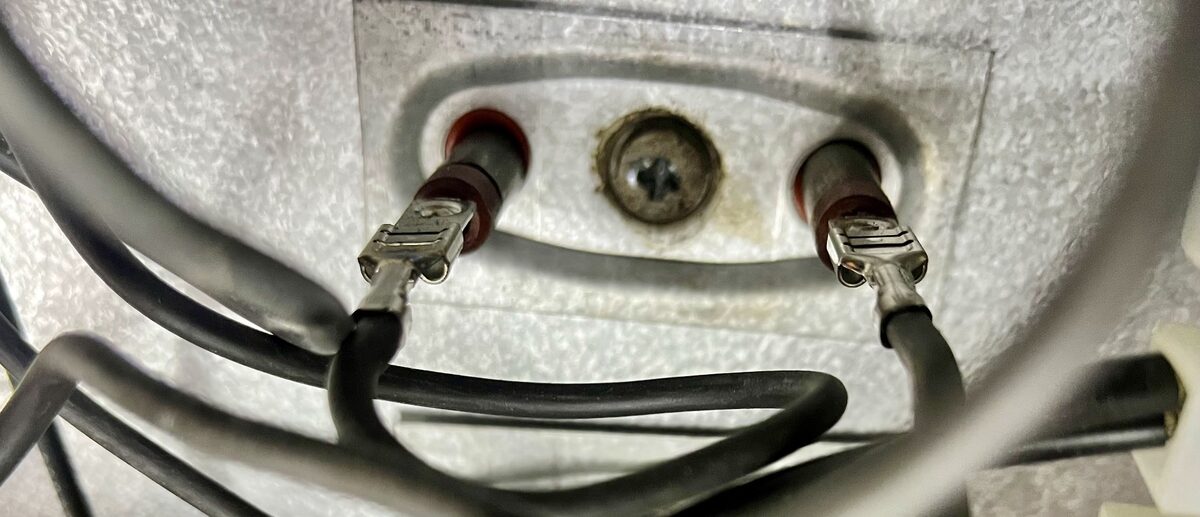
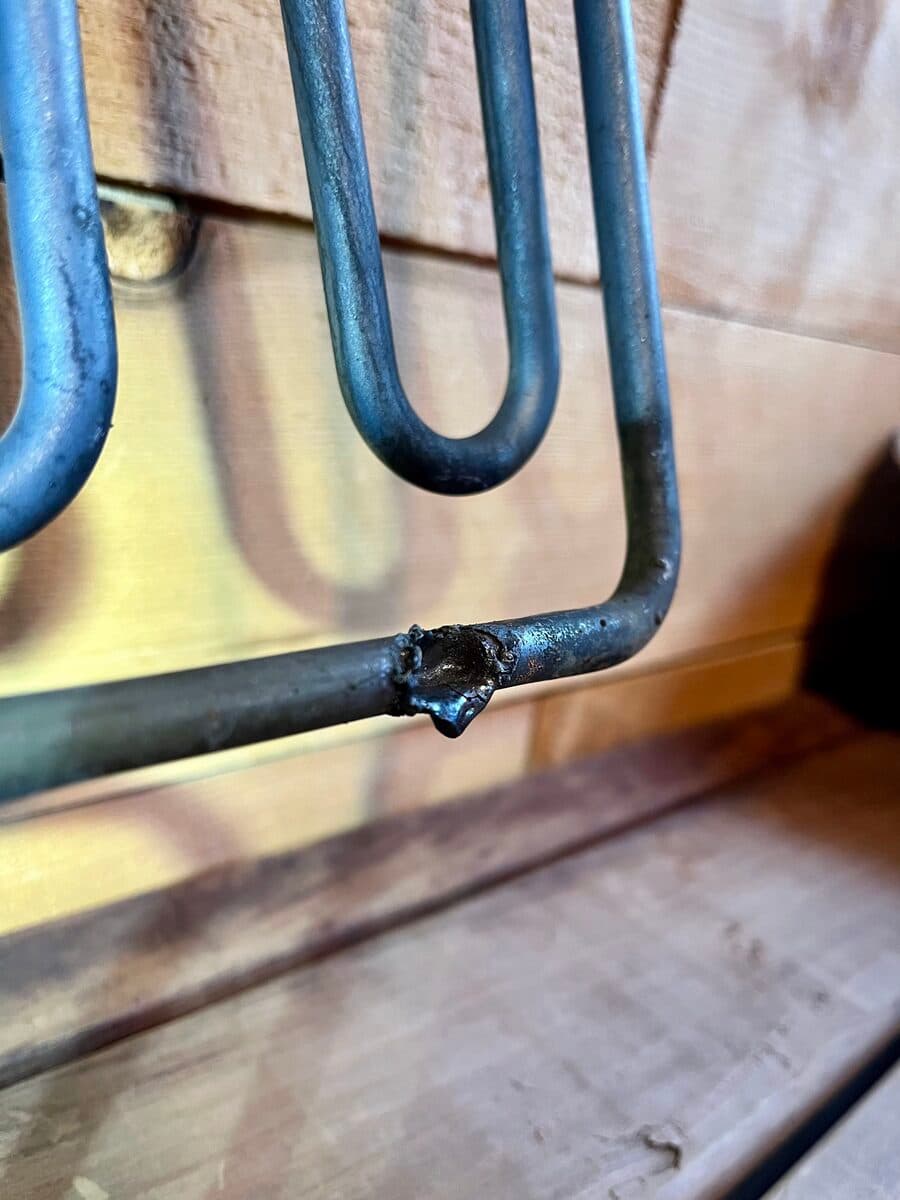
6. Remove the broken element. With the bracket and wires free, lift the old element out. You can usually spot the burn or rupture point that killed it — the split in the metal sheath is exactly where the circuit opened up.
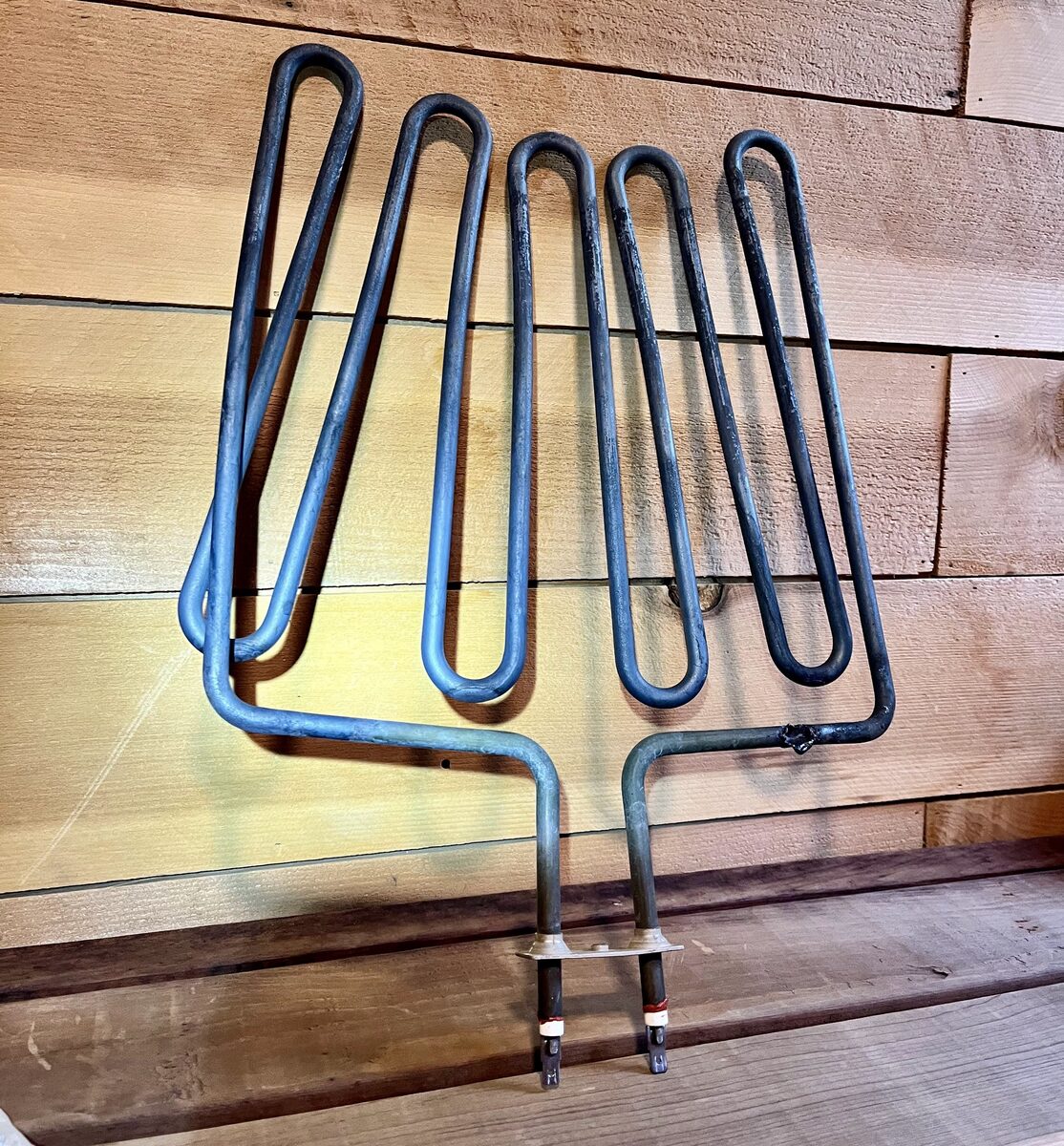
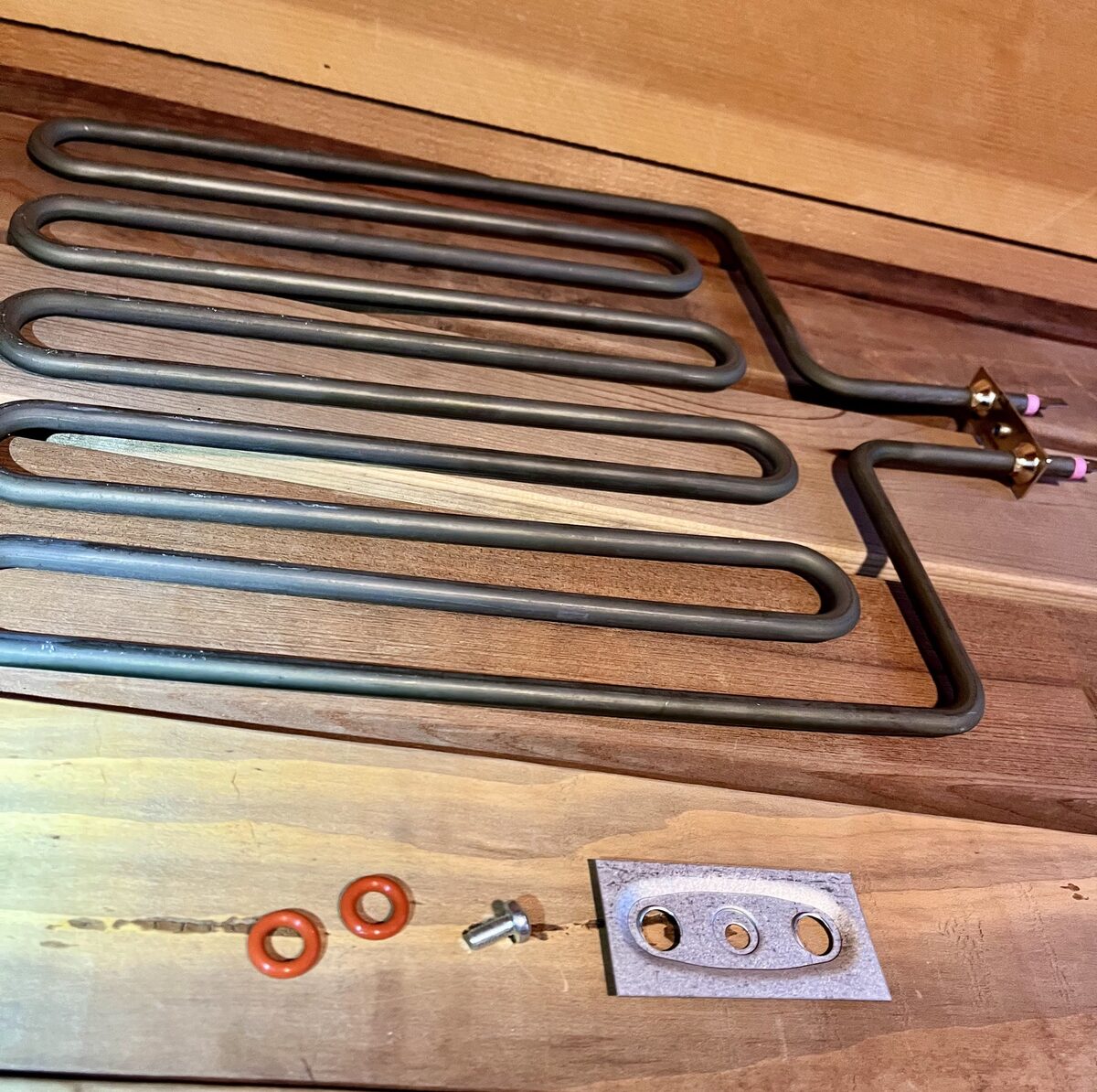
7. Install the replacement element. Set the new element into the same position, seat its seal grommets, bolt the mounting bracket back down, and reconnect the wires to the terminal studs exactly as they were. Make every connection tight — a loose terminal will arc and fail again.
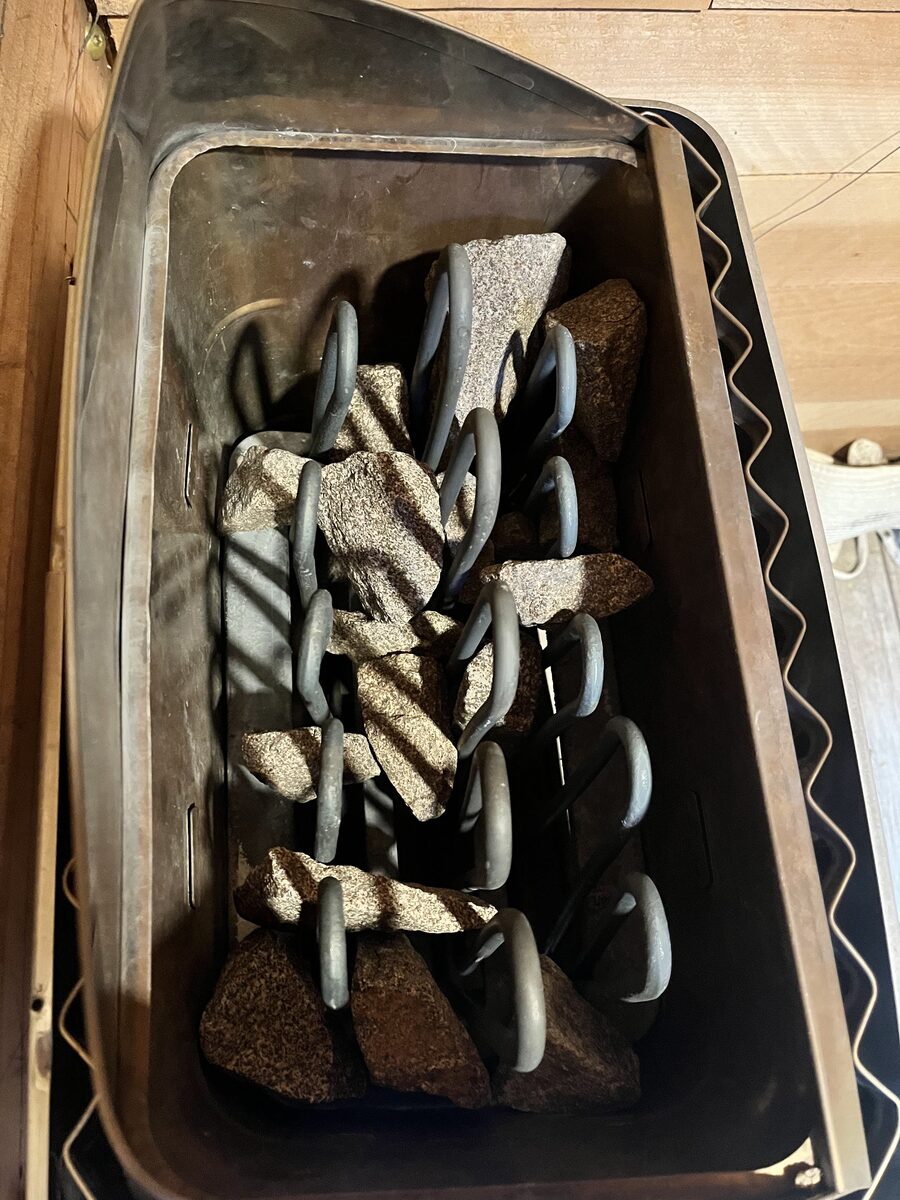
8. Reassemble, load the stones, and test. Put the bottom cover back on, rehang the heater on its wall bracket, and restack the stones snugly into the spaces between the elements — the rocks should hold the elements apart so no two elements ever touch each other, which is what actually burns them out. Make sure the elements end up fully covered, not exposed. (Our full guide to stacking sauna rocks the right way walks through it.) Turn the breaker back on and run it. Within a few minutes all the elements should glow evenly and the room should climb back to a full 180-190°F.
Frequently Asked Questions
How do I know if it's the element or something else?
The clearest tell is a sudden drop in performance with no change to the room, plus one element staying dark while the others glow. Confirm it with a multimeter: a working element shows low resistance in ohms, a dead one reads infinite (open). If every element tests good, the problem is elsewhere — heater sizing, heat loss, or voltage.
Can I replace just one element or do I need all of them?
You only need to replace the one that failed. The others are fine. That said, if your heater is older and has been through years of use, some people replace all elements at once so they're on the same clock — but it's not required, and replacing just the dead one is perfectly fine.
How much does a sauna heater element cost?
A single replacement element usually runs about $150-250 depending on brand and wattage. If your heater is still under warranty, the manufacturer may cover it for free — always check before buying, since many sauna heaters carry multi-year warranties.
Why did my sauna heater element burn out?
Normal wear is the main reason — elements are rated for a few thousand hours and eventually fail. The fastest way to shorten that life is to let two elements touch each other, since the contact point runs hotter than the rest and burns out early — which is why the rocks should be stacked to keep the elements separated and fully covered. Running a heater with too few stones, so the elements sit exposed, does the same thing. Stacking the rocks correctly is the best prevention.
Is it safe to replace a sauna heater element myself?
The physical swap is simple, but it involves 240V wiring, so treat it seriously. Always shut off the breaker first and confirm the circuit is dead. If you're comfortable making tight, correct electrical connections, it's a DIY job. If you're not, have an electrician handle the wiring — the same skill set as a sauna heater installation, and a quick job for them.
Next steps
A burned-out element is one of the easier sauna problems to fix, and it saves you from replacing a perfectly good heater. Once it's running again, our free Sauna Owner's Guide covers keeping it that way — loading the rocks, caring for the elements, and the rest of day-to-day ownership. If you've replaced the element and the heater still won't reach temperature, the issue is in the build — insulation, ventilation, glass, or heater sizing — so take a look at why a sauna won't get hot enough, or if you'd rather have us review your setup directly, our remote sauna design service can diagnose it from photos and specs.