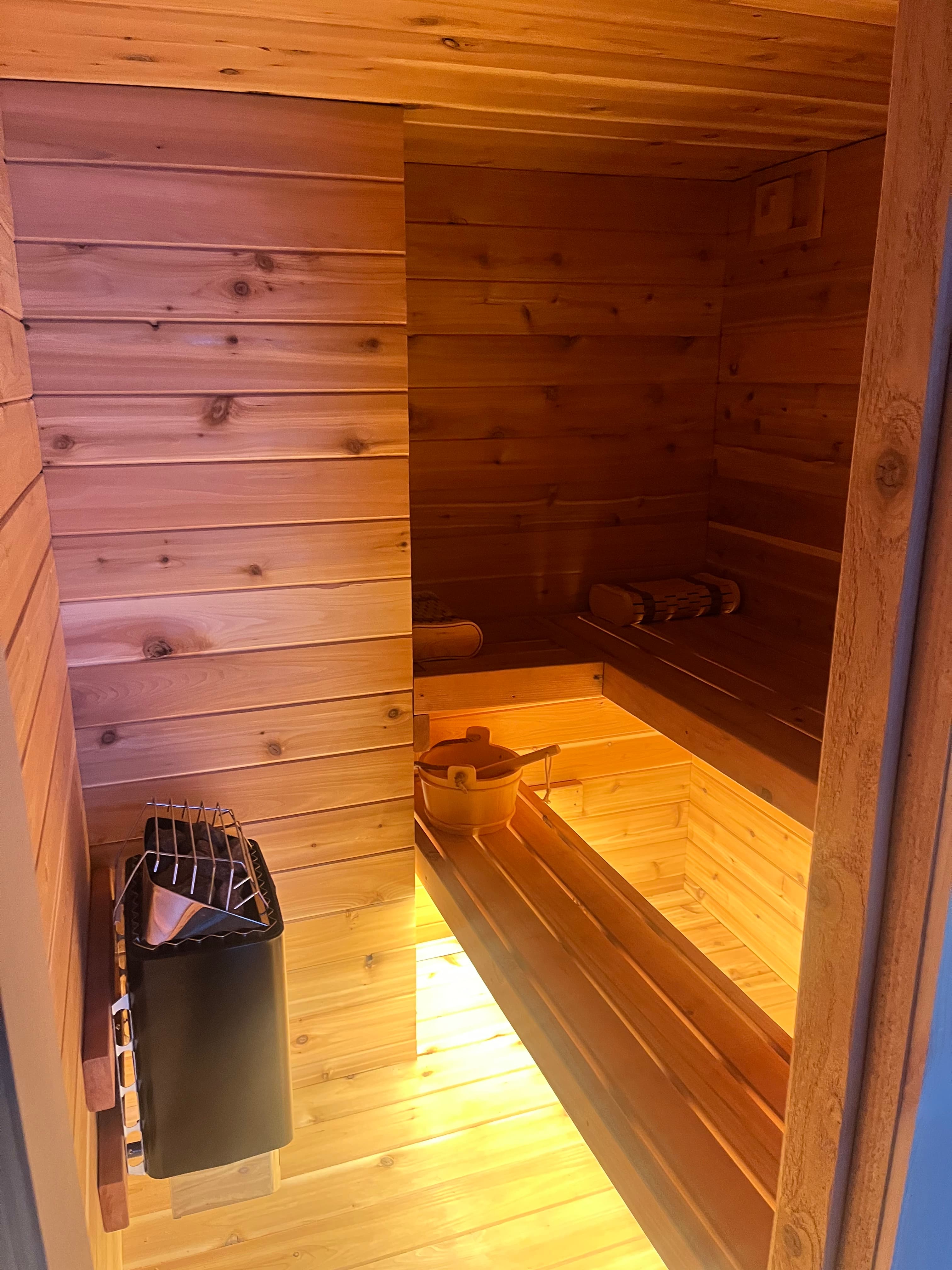
Building a Sauna in the Midwest — Cold Winters, Finnish Heritage, and What to Plan For
The Midwest has the highest concentration of sauna interest in the entire country. Minnesota, Wisconsin, and Michigan consistently rank among the top states for sauna-related searches, and it's not hard to see why. The Finnish and Scandinavian immigration patterns of the late 1800s and early 1900s brought sauna culture to the Upper Midwest, and it never left. Drive through northern Minnesota or Michigan's Upper Peninsula and you'll find saunas in backyards, lake cabins, and hunting camps that have been in use for generations.
Building a new sauna in the Midwest comes with specific challenges that other regions don't deal with — extreme cold, deep frost lines, heavy snow loads, and a building season that's shorter than you'd like. But the upside is that you're building in an area where people actually understand what a sauna is, contractors are more likely to have seen one before, and the climate makes a sauna feel like a necessity rather than a luxury.
Here's what to plan for if you're building in Minnesota, Wisconsin, Michigan, Illinois, Ohio, Indiana, or anywhere else in the Midwest.
Climate Considerations: What -20F Does to a Sauna
The Midwest's defining feature is extreme temperature swings. You might see 95F in July and -25F in January. That 120-degree range affects every material choice, every structural decision, and every system in the sauna.
Insulation requirements
In moderate climates, sauna insulation is about heat retention — keeping the 180F interior temperature from bleeding out too fast. In the Midwest, it's also about preventing the exterior wall cavities from reaching temperatures where moisture condenses and freezes inside the wall assembly.
For Midwest saunas, you want R-19 minimum in the walls (standard 2x6 framing with fiberglass or mineral wool batts) and R-30 or better in the ceiling. Some builders go with 2x8 wall framing for R-26+ in the walls, which is overkill for most climates but makes sense when the outdoor temperature is -20F and you're trying to maintain 180F inside.
The vapor barrier goes on the warm side (interior) of the insulation — this is critical in cold climates because the temperature differential drives moisture outward through the wall. Without a proper vapor barrier, moisture from the sauna interior migrates into the insulation, hits the cold exterior sheathing, and condenses. In a Midwest winter, that condensation freezes inside the wall. Come spring, it melts and you've got wet insulation and potentially rotting framing.
Use 6-mil polyethylene or aluminum foil-faced kraft paper as the vapor barrier, lapped and sealed at all seams. Aluminum foil is preferred by many sauna builders because it also reflects radiant heat back into the room, acting as a supplemental insulation layer.
Exterior materials
Anything on the outside of a Midwest sauna needs to handle freeze-thaw cycling, UV exposure, heavy snow contact, and ice. Cedar siding holds up well but needs to be detailed properly — keep the bottom edge of siding at least 6-8 inches above grade to prevent snow banking against it and wicking moisture upward.
Metal siding or roofing is increasingly popular for Midwest saunas because it sheds snow cleanly, doesn't absorb water, and handles freeze-thaw without damage. A standing seam metal roof with a steep pitch (8/12 or greater) lets heavy snow slide off rather than accumulating.
Board-and-batten siding with a rain screen gap (3/4-inch air space behind the siding) gives the best long-term performance in Midwest conditions. The air gap lets moisture dry out and prevents ice from forming directly against the sheathing.
Heater performance in extreme cold
When it's -20F outside and your sauna has to heat from ambient temperature (say 10-15F inside an unheated sauna) to 180F, you're asking the heater to generate a 165-170 degree temperature rise. That takes time and energy.
For Midwest outdoor saunas, size the heater up one increment from what the room volume alone would suggest. An 8x8 sauna with 7.5-foot ceilings is 480 cubic feet, which normally calls for a 6-8 kW heater. In the Midwest, go with an 8 kW minimum, and a 9 kW heater won't be overkill. The extra capacity means the heater can reach temperature in 30-45 minutes even in the dead of winter, rather than struggling for 60-90 minutes.
Wood-burning stoves are still common in Midwest saunas, especially at lakeside cabins. A wood-fired stove doesn't care about the ambient temperature — it generates heat based on fuel input. A well-designed wood stove can heat a cold sauna to 180F in 45-60 minutes regardless of outside conditions.
Foundation: Getting Below the Frost Line
The frost line in the Midwest ranges from 36 inches in central Illinois and Ohio to 60+ inches in northern Minnesota and Wisconsin. This is the single biggest site work consideration for an outdoor sauna.
Any permanent outdoor sauna foundation needs to extend below the frost line. Your options are helical piers (screwed into the ground below frost depth), a concrete slab on deep footings, or a frost-protected shallow foundation with insulation wings.
Helical piers are the most common choice for Midwest saunas because they go below frost without massive excavation. Four to six piers driven 5-6 feet deep will support any residential sauna. The sauna sits on a floor frame above grade, which also provides airflow underneath that helps with moisture management.
A concrete slab works but requires either a thickened edge extending to frost depth (expensive at 48-60 inches) or a frost-protected shallow foundation with 2-4 inches of rigid foam insulation extending horizontally around the perimeter. The insulation keeps the ground under the slab warm enough to prevent heaving.
For a detailed comparison of foundation options including costs, see our outdoor sauna foundation guide.
If you're putting the sauna on an existing concrete slab — like a garage floor or patio — verify that the slab is in good condition and that any cracks are structural, not just surface. An existing slab that's been through 20 Minnesota winters and is still flat and intact will work fine.
Trusted by homeowners across Tahoe and beyond
Garage Sauna Conversions: The Midwest Specialty
Garage saunas are more common in the Midwest than almost anywhere else. It makes sense: most Midwest homes have attached or detached garages, the garage is already a heated (or semi-heated) structure with concrete floors and electrical service, and building a sauna inside an existing structure eliminates the foundation and weatherproofing challenges of an outdoor build.
What makes garage conversions work
The typical garage sauna occupies one corner of a two or three-car garage, framed as a room-within-a-room. Common sizes are 6x8 or 8x8 feet — big enough for two to four people without eating too much garage space.
The advantages of a garage conversion: you already have a concrete floor (slab foundation — done), you're inside an existing structure so weatherproofing is simpler, electrical service is often already in the garage or nearby, and you can use the remaining garage space as a changing area or cool-down space.
Key challenges to plan for
Moisture management. This is the biggest issue with garage saunas. The sauna generates significant moisture — every session puts 1-2 liters of sweat and loyly steam into the air. That moisture needs to go outside, not into your garage. The ventilation exhaust must vent to the exterior, not into the garage space. And the sauna walls need a full vapor barrier assembly, just like an outdoor sauna.
Ceiling height. Most garages have 8-9 foot ceilings. That's workable for a sauna, but bench heights need careful planning. With an 8-foot ceiling, the upper bench should be around 36-38 inches off the floor, giving you about 42-44 inches of sitting clearance above the bench. That's tight but functional. With a 9-foot ceiling, you have more room — upper bench at 40-42 inches with 48+ inches of clearance.
If you have a garage with trusses and a lower ceiling section at the walls (say 7 feet at the plate line, sloping up to 9-10 feet at the center), position the sauna under the higher section. A 7-foot ceiling is too low for a properly designed sauna.
Electrical. A garage sauna needs a dedicated 240V circuit from the main panel. Most garages already have 120V circuits but not 240V. Running a new 240V circuit from the house panel to the garage is standard electrical work — your electrician will size the wire based on the heater requirements (typically 8 AWG for an 8 kW heater on a 40-amp circuit) and the distance from the panel.
Fire separation. If the garage is attached to the house, building codes typically require a fire-rated separation between the garage and living space (usually 5/8-inch Type X drywall). Adding a sauna in the garage doesn't change this requirement, but make sure the sauna construction doesn't compromise the existing fire separation. The sauna itself should have its own fire-rated wall assembly where it meets the garage-to-house wall.
Cost advantage
A garage sauna conversion is typically 30-50% less expensive than a standalone outdoor build. You're eliminating the foundation ($1,500-3,000), the exterior shell and roofing ($3,000-6,000), and much of the site work. A well-built garage sauna in the Midwest typically costs $8,000-15,000 for a 6x8 to 8x8 room — heater, interior finishing, insulation, ventilation, and electrical.
Ventilation in Extreme Cold
Sauna ventilation in the Midwest has a tension that warmer climates don't: you need fresh air circulation for comfort and safety, but every cubic foot of -20F air you pull in has to be heated to 180F. That's a lot of energy.
The solution isn't to skip ventilation (that creates a stale, suffocating experience and can be a safety concern with wood-burning stoves). The solution is to design ventilation that moves air efficiently without dumping heat.
Intake placement
The fresh air intake should be near the heater, typically 6-12 inches off the floor on the same wall as the heater or immediately behind it. This placement means incoming cold air hits the heater first and gets heated before it reaches the bathers. In a Midwest winter, this matters more than in a mild climate — you don't want a stream of -20F air blowing across the lower bench.
Some Midwest builders pipe the intake air from inside the house or garage rather than from outside. This provides pre-warmed intake air (60-70F instead of -20F) and makes a noticeable difference in heater performance and comfort. If your sauna is a garage conversion, pulling intake air from the garage is a practical option.
Exhaust strategy
The exhaust vent should be on the opposite wall from the intake, positioned at mid-wall height (about 3-4 feet off the floor) for use during sessions. A separate high vent near the ceiling is useful for post-session drying — open it after your last session to flush hot, humid air and help the sauna dry out.
In extreme cold, the exhaust vent opening should have an insulated cover or a tight-sealing damper. An open exhaust vent in -20F weather will create a strong chimney effect that constantly pulls cold air through the sauna, making it impossible to heat properly. Close the exhaust between sessions and during the initial heat-up, then open it once the sauna reaches temperature.
Snow Load and Roof Design
If you're building an outdoor sauna anywhere in the Midwest north of I-80, snow load is a real structural concern. Northern Minnesota, the UP of Michigan, and parts of Wisconsin get 60-100+ inches of snow annually. Even southern Wisconsin and northern Illinois can see significant snow events.
Roof pitch
A steep roof pitch (8/12 or greater) lets snow slide off rather than accumulating. This is the simplest and most effective approach. Flat or low-slope roofs on saunas in heavy snow areas are a bad idea — you'll be up there shoveling after every storm, and if you don't, the accumulated weight can stress the structure.
A shed-style single-slope roof at 4/12 to 6/12 is the most common for small freestanding saunas. It's simple to frame and sheds snow to one side, which you can plan for in the sauna placement. Orient the slope so snow slides away from the door and any walkways.
Structural requirements
Check your local ground snow load requirements. In Minneapolis, the ground snow load is about 50 PSF. In Duluth, it's 60-70 PSF. In parts of the UP, it can exceed 80 PSF. Your sauna's roof structure needs to handle these loads plus the weight of the roofing material itself.
For a small sauna (under 10 feet wide), 2x6 rafters at 16 inches on center will handle most Midwest snow loads. For wider spans or heavier snow areas, go with 2x8 rafters or add a ridge beam to reduce the span. Your local building code will specify the requirements — or if you're working from professional design plans, the snow load calculation should be included.
Finding a Builder in the Midwest
The Midwest actually has better odds of finding a contractor who knows saunas than most of the country. The Finnish heritage in Minnesota and Michigan means sauna building is a known trade, not a weird specialty project. Still, "knows saunas" varies widely.
What to look for
A builder who has completed at least 2-3 sauna projects can work from a good set of plans without much guidance. Ask for photos and references. The key things to evaluate: are the bench heights right (upper bench at heater-top level)? Is there real ventilation (not just a gap under the door)? Does the interior wood look properly finished (no visible nail heads, tight joints, smooth surfaces)?
If you can't find a sauna-specific builder, a good finish carpenter or general contractor can build a sauna from detailed plans. The framing, insulation, and exterior work are standard construction. The sauna-specific parts — bench layout, heater installation, ventilation design — are where the plans need to be detailed enough that the builder doesn't have to guess.
That's where our remote design service comes in. We design saunas for clients across the Midwest and ship complete plan sets that any competent contractor can build from. You get the sauna expertise in the design, and your local builder handles the construction. We've worked with clients in Minnesota, Wisconsin, and Michigan who had good local contractors but needed the sauna-specific design plans to make sure everything was done right.
Regional resources
The Finnish American Heritage Center in Hancock, Michigan is worth knowing about. The Finnish sauna tradition in the UP is still alive, and there are builders and sauna enthusiasts in the area who carry real generational knowledge. If you're building a traditional wood-fired lake sauna in the UP, talking to someone in that community can be invaluable.
Minnesota has the largest Finnish-American population in the U.S., concentrated in the Iron Range (Hibbing, Virginia, Ely) and Duluth area. Sauna culture there is strong enough that local hardware stores stock sauna supplies and building materials.
Climate-Specific Design Tips
A few Midwest-specific design decisions that make a real difference:
Double-wall the door. A single-pane glass door loses a lot of heat when it's -20F outside. Either use a double-pane insulated glass door or a solid wood door with insulation. The door is the biggest thermal weak point in any sauna, and it matters twice as much in extreme cold.
Pre-heat strategy. In the dead of winter, consider a low-power heat maintenance approach between sessions — leaving the heater on a low setting (or using a small space heater) to keep the interior above freezing. Starting from 40F instead of -10F cuts your heat-up time significantly and reduces the thermal shock on the wood and heater.
Protect your water supply. If your sauna has running water (a hose bib for the bucket, a shower, or a floor drain), those pipes need to be fully winterized or heat-traced. A frozen pipe in a sauna is a common Midwest problem. Either drain the lines before each freeze or install self-regulating heat trace cable on any exposed pipe runs.
Changing room or mudroom. A small changing room or enclosed entry between the sauna and the outdoors makes a huge difference in winter comfort. Walking from 180F directly into -20F air is part of the Finnish tradition (and many people love it), but having a sheltered space to cool down, dry off, and dress is practical. Even a 4x6-foot enclosed entry with hooks and a bench transforms the winter sauna experience.
Frequently Asked Questions
How much does it cost to build a sauna in the Midwest?
Costs vary by build type. A garage conversion typically runs $8,000-15,000 for a 6x8 to 8x8-foot sauna. A standalone outdoor sauna with a proper foundation runs $15,000-30,000 depending on size, materials, and heater type. Kit saunas start around $4,000-8,000 plus installation and electrical. The deep frost line in the Midwest adds $500-2,000 to foundation costs compared to warmer climates.
Can I use my sauna year-round in Minnesota winters?
Absolutely — that's when saunas are at their best. A properly insulated and heated sauna will reach full temperature in 30-45 minutes even in -20F weather, as long as the heater is properly sized for the room. The contrast between the hot sauna and the cold outdoor air is the core of the Finnish sauna experience that made the tradition so popular in Minnesota in the first place.
Do I need a permit for an outdoor sauna in the Midwest?
Requirements vary by municipality. In most areas, freestanding structures under 120 square feet are exempt from building permits, but the electrical work (240V circuit) almost always requires a permit and inspection. Some cities and HOAs have additional requirements for setbacks, height limits, or aesthetic standards. Call your local building department before you start — it's a five-minute phone call that can prevent significant headaches.
Is a wood-burning or electric heater better for Midwest saunas?
Both work well. Electric heaters are easier to install, have precise temperature control, and work well in garage conversions and urban/suburban settings. Wood-burning stoves are the traditional choice for lake cabins and rural properties — they don't require a 240V circuit, they generate intense heat that handles extreme cold well, and many Midwest sauna users prefer the ritual of building a fire. The choice usually comes down to location and personal preference.
How do I prevent my outdoor sauna from frost heaving?
Get the foundation below the frost line. In most of the Midwest, that means helical piers driven 4-6 feet deep, a concrete slab on footings extending below frost depth, or a frost-protected shallow foundation with perimeter insulation. A gravel pad alone is not sufficient in areas with frost lines deeper than 12 inches — the sauna will shift unevenly over freeze-thaw cycles.