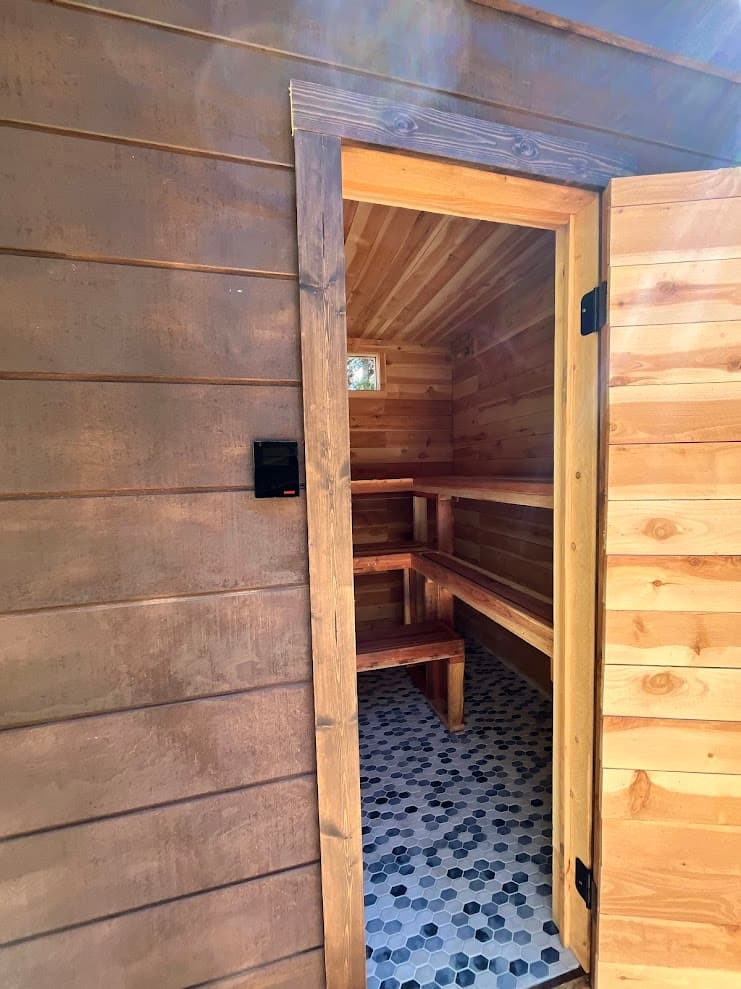
Outdoor Saunas: The Gold Standard
An outdoor sauna is a freestanding building on your property — the gold standard for the sauna experience. You get the full ritual: step outside to cool off between rounds, enjoy the contrast between heat and fresh air, and experience a sauna designed exactly as it should be. Outdoor saunas also offer design freedom, the option for wood-burning, and they become a beautiful landscape feature.
Total cost ranges from $4,000 DIY to $50,000+ for premium custom builds. Most quality outdoor saunas fall between $8,000–$20,000 installed. For a build-ready plan and accurate budget, see our custom sauna design service.
DIY Outdoor Sauna: Materials Breakdown
Building an outdoor sauna yourself is the most cost-effective path. The materials are straightforward, and most of what you need comes from standard suppliers. Here's a typical materials breakdown for an 8×8 shed-style sauna:
Foundation (Deck Blocks, Gravel, Joists, OSB)
- Floating deck foundation (9 concrete blocks, gravel, joists, OSB subfloor): $300–$800
- This is the most common and easiest foundation for DIY. It's adjustable if settling occurs and requires no concrete work.
Framing (2×4 Studs, Top Plate, Sheathing)
- Wall framing lumber (8×8 walls, studs, plates, nails): $200–$500
- Standard 2×4 construction, no specialty framing required.
Roof (Rafters, OSB, Shingles, Fascia)
- Roof framing and sheathing: $200–$400
- Roofing materials (asphalt shingles, trim, flashing): $200–$600
- Total roof: $400–$1,000
- A pitched roof (4:12 minimum) sheds snow in winter and looks clean. Avoid flat roofs in snowy climates.
Insulation and Vapor Barrier
- Rigid foam insulation (R-13 to R-21 walls, R-30 ceiling): $150–$400
- Essential for maintaining temperature and keeping heat from escaping. Thicker insulation is better in cold climates.
Interior Cedar Paneling
- Interior cedar walls (1×4 or 1×6 kiln-dried cedar): $500–$2,500
- This is the most variable cost. Premium clear cedar is expensive; standard lumber-yard cedar is affordable. Expect $0.80–$2.00 per board foot.
Benches (Cedar or Redwood)
- L-shaped 3-level benches (2×4 and 2×6 cedar/redwood): $200–$600
- Standard sauna bench design: lower bench for seating, upper bench for lying down.
Door and Windows
- Sauna door (commercial or cedar-frame DIY): $300–$800
- Optional windows (small portals, 1–2): $200–$600 each
Heater System
- Electric heater (8 kW Harvia, HUUM, or EOS), rocks, and controls: $1,000–$3,000
Electrical Materials and Installation
- Electrical materials (wire, breaker, circuit, outlets, lighting): ~$150
- Licensed electrician for 240V circuit installation: $500–$2,000
Exterior Siding (Optional)
- Cedar shake, hardboard, or painted siding: $300–$1,000
- Protects the framing from weather. Cedar looks premium; hardboard is affordable.
Total DIY Materials: $4,000–$8,000
Our reference build: An 8×8 outdoor shed-style sauna with cedar interior, 3-level benches, 8kW electric heater, tile floor, and single-pitch roof costs approximately $5,000–$6,000 in materials. This assumes you're doing the framing, insulation, interior finish, and bench work yourself. You hire a licensed electrician for the 240V circuit only.
Professional Outdoor Sauna Builds
Standard Professional Build (8×8)
- Installed cost: $8,000–$20,000
- Includes: Foundation, framing, roofing, insulation, interior finish, heater, electrical
- Timeline: 40–60 hours of labor over 3–6 weeks
- Best for: Homeowners without construction experience or who value professional guarantee
Premium/Custom Outdoor Sauna
- Installed cost: $20,000–$50,000+
- Includes: Custom design, premium materials (high-grade cedar, hardwood floors), covered entry, cold plunge pool integration, site-specific engineering
- Timeline: 100+ hours of specialized labor
- Best for: High-end aesthetic, site challenges, or integrated amenities
Build Timeline and Labor
- DIY labor: 80–100 hours over 4–8 weeks (weekends)
- Professional crew labor: 40–60 hours spread over 3–6 weeks (full days)
- Professionals work faster due to experience and focused effort. DIY takes longer because you're learning as you go.
Trusted by homeowners across Tahoe and beyond
Cold Climate Additions and Upgrades
If you're building in a cold climate like Lake Tahoe or Truckee, expect to add cost for winter-specific design. Cold, snow, and elevation create demands that flat-land sauna guides miss.
Extra Insulation
- Standard insulation: R-13 walls, R-21 ceiling
- Cold climate upgrade: R-21 walls, R-30 ceiling (or higher)
- Cost difference: +$100–$300
Snow Load Roof Design
- Standard pitch: 3:12 minimum
- Cold climate pitch: 4:12 or steeper (sheds snow naturally)
- Engineered rafters for snow load: +$200–$500
Foundation Depth
- Frost-prone soil (Tahoe, mountain regions): Foundations must go 24–36 inches below ground
- Cost impact: Floating deck blocks with deep footings = +$200–$400
Heater Sizing for Outdoor Cold
- Standard 8×8 sauna: 8 kW heater
- Cold climate outdoor: 9.6 kW or larger (add 20% capacity)
- Cost impact: +$300–$500 for upgraded heater
Total cold climate upgrade cost: +10–20% ($400–$1,600 for an average DIY build). This is worth every penny to ensure your sauna performs reliably in winter.
Foundation Options for Outdoor Saunas
Floating Deck with Adjustable Footings (Recommended for DIY)
- Materials: 9 concrete piers, 4–6 inches of gravel, pressure-treated joists, OSB subfloor
- Cost: $800–$1,500
- Advantages: Easy to level, adjustable if settling occurs, no digging required beyond gravel, quick install
- Best for: DIY builders, relatively flat terrain
Concrete Pad Foundation
- Materials: Concrete pour (4–6 inches thick), rebar
- Cost: $1,000–$2,500 depending on size and concrete prices
- Advantages: Permanent, requires no future adjustment, very durable
- Disadvantages: Expensive, requires excavation and concrete work
- Best for: Permanent installations, wet climates, professional builds
Concrete Piers (Cold Climate Standard)
- Materials: Sonotubes, concrete, frost-line depth posts
- Cost: $1,200–$2,000
- Advantages: Built below frost line, prevents heaving in freeze-thaw cycles
- Disadvantages: Requires holes 24–36 inches deep, more excavation work
- Best for: Mountain regions with frost lines
Our recommendation: Use floating deck footings for DIY in temperate climates. In cold regions like Tahoe, use concrete piers below the frost line to prevent winter heaving.
Permitting and Building Codes
Most jurisdictions require permits for outdoor sauna structures and electrical work. Budgeting for this is important.
Typical Permit Costs
- Building permit (new structure): $100–$500
- Electrical permit: $50–$200
- Plan review fee: $100–$300
- Total permitting: $250–$1,000
Why Permitting Matters
- Ensures your sauna meets local building code (especially roof snow load and electrical safety)
- Protects you legally if an accident occurs
- Required by insurance in case of claim
- Makes future property sales easier
Don't skip permitting. It protects you and ensures your sauna is built safely to code.
Where to Source Outdoor Sauna Materials
Structural Materials (Framing, Joists, OSB, Shingles)
- Home Depot or Lowe's: All framing lumber, insulation, roofing materials, fasteners. Convenient, consistent pricing.
- Local lumberyards: Better quality control, potential bulk discounts, personal service.
Cedar and Premium Wood
- Local specialty lumberyards: Higher-grade kiln-dried cedar for interior paneling. Often cheaper than big-box stores for large orders.
- Online suppliers: Sometimes competitive for premium cedar, but shipping costs are significant.
Sauna Heaters, Rocks, and Specialized Components
- Amazon or direct from manufacturer: Harvia, HUUM, EOS heaters. Check shipping times and warranty.
- Sauna kit suppliers: Sometimes bundle heater with complete kit.
Electrical Materials
- Electrical supply stores: Wire, breakers, disconnects. Better pricing and expertise than Home Depot.
- Always use a licensed electrician for installation.
Cost Comparison: DIY vs Professional
| Approach | Cost | Timeline | Best For |
|---|
| DIY (8×8) | $4,000–$8,000 | 4–8 weeks (weekends) | Budget-conscious, hands-on |
| Professional standard (8×8) | $8,000–$20,000 | 3–6 weeks | Want guarantees, limited time |
| Premium custom | $20,000–$50,000+ | 2–3 months | High-end, integrated amenities |
Frequently Asked Questions
What's the most expensive part of an outdoor sauna build?
Cedar interior paneling and the heater are the biggest individual costs. Cedar can run $500–$2,500, and a quality heater is $1,000–$3,000. After that, labor (for professional builds) is the largest expense.
Can you build an outdoor sauna on a tight budget?
Yes. A basic 6×6 DIY sauna can be built for $3,000–$4,000 in materials. Skip premium cedar (use standard lumber-yard grade), choose a mid-range heater ($1,500–$2,000), and do the labor yourself. It won't be fancy, but it'll work.
How much does it cost to add a cold plunge to the sauna?
A simple wooden or acrylic plunge tub is $1,500–$3,000. Integrated into the sauna structure adds design complexity. Budget an extra $2,000–$5,000 if you want plumbing integration.
Do I need building permits for an outdoor sauna?
Most jurisdictions require permits for structures over a certain size (usually 100–200 sq ft) and for electrical work. Check with your local building department. Permits cost $250–$1,000 but ensure code compliance and protect you legally.
How much harder is building in a snowy climate?
Snowy climates require stronger roofs, deeper foundations, and better insulation. Budget 10–20% more ($400–$1,600). The design work and material upgrades are worth it for reliable winter performance.
What heater should I use for outdoor in winter?
Use a heater 20% larger than the calculator suggests. For an 8×8 outdoor sauna in a cold climate, use 9.6 kW instead of 8 kW. This ensures reliable performance in sub-zero temperatures and high elevation.