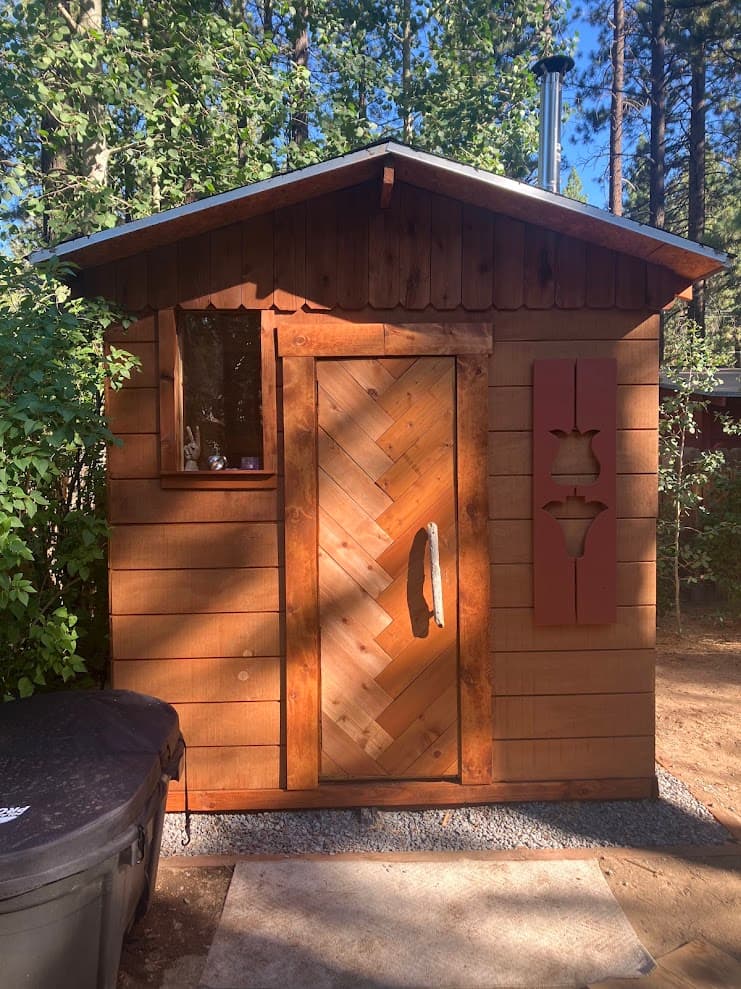
Framing is the structural skeleton of your sauna. Done right, it will last decades. It is also where many DIY builders make costly mistakes. This guide covers proper framing techniques, spacing, and structural details that ensure a solid, long-lasting sauna.
Ensure your foundation is level and square. Check diagonal measurements — opposite corners should be equal. Mark out the wall locations using chalk lines. Install anchor bolts in concrete before framing begins (one every 4 feet minimum).
Snap chalk lines on the foundation where walls will sit. Cut bottom plates to length. Mark stud locations at 16-inch intervals on the bottom plate. Use a tape measure and mark with a pencil on both sides of each stud position to avoid confusion during assembly.
For a sauna with 8-foot interior ceiling height, wall studs should be cut to 93-3/4 inches (accounting for top plate, bottom plate, and standard floor-to-ceiling height). Cut all studs first so they are ready to assemble.
Lay the bottom plate on sawhorses and position studs upright. Nail studs to the bottom plate with 3.5-inch nails (two per stud, driven through the plate into the stud end grain). Add the top plate and nail studs to it similarly. This creates a wall section that can be lifted and stood upright.
Lift assembled walls into place. Plumb the walls (ensure they are vertical) using a level. Brace them temporarily with diagonal 2x4s nailed to the studs and floor. Bolt the bottom plate to anchor bolts.
After all walls are plumb and nailed together at corners, install a second top plate. This ties all walls together and provides bearing surface for roof rafters.
Trusted by homeowners across Tahoe and beyond
Openings require headers (horizontal members) to carry the load. For a sauna, it is straightforward:
Rough opening size: Take the frame width and height and add 1/4 inch to each dimension. This allows installation clearance.
Header type: For openings under 4 feet, a single 2x6 header is adequate. For larger openings, use a 2x8 or doubled 2x6.
Installation: Cut king studs (full height) on each side of the opening. Install jack studs (shortened) that support the header. The header sits on the jack studs. Cripple studs above the header maintain 16-inch spacing.
Door example: For a standard 36-inch wide door with 80-inch height, rough opening is 37 inches wide by 82 inches tall. A single 2x6 header is sufficient.
Remember: studs must be longer than interior height. For 8-foot interior ceiling, cut studs to 93-3/4 inches (accounting for plate thickness).
After framing is complete and braced, install sheathing (exterior covering). For outdoor saunas, this is critical for weatherproofing.
Materials: 1/2-inch plywood or OSB (oriented strand board). Plywood is more durable; OSB is cheaper.
Installation: Nail sheathing to studs every 12 inches around perimeter and 16 inches in field. Stagger joints so they do not align with stud lines.
For interior saunas (inside a house): Sheathing may not be necessary if you are attaching cedar directly to studs. Check local building code.
Interior sauna (inside a house): Framing may attach to existing house framing or sit on a dedicated foundation within the house. Coordinate with house structure to avoid conflicts with electrical, plumbing, or HVAC.
Freestanding outdoor sauna: Framing sits entirely on its own foundation. Ensure foundation is square, level, and sized appropriately. All four walls frame independently.
12 decisions that determine how well your sauna performs — insulation, bench height, heater sizing, ventilation, and more.
Have questions about your project? Send us a message or schedule a free 15-minute intro call.
Schedule a free 15-minute intro call or send us a message about your project.
We'll learn about your space, goals, and timeline — and recommend the right next step for your project.