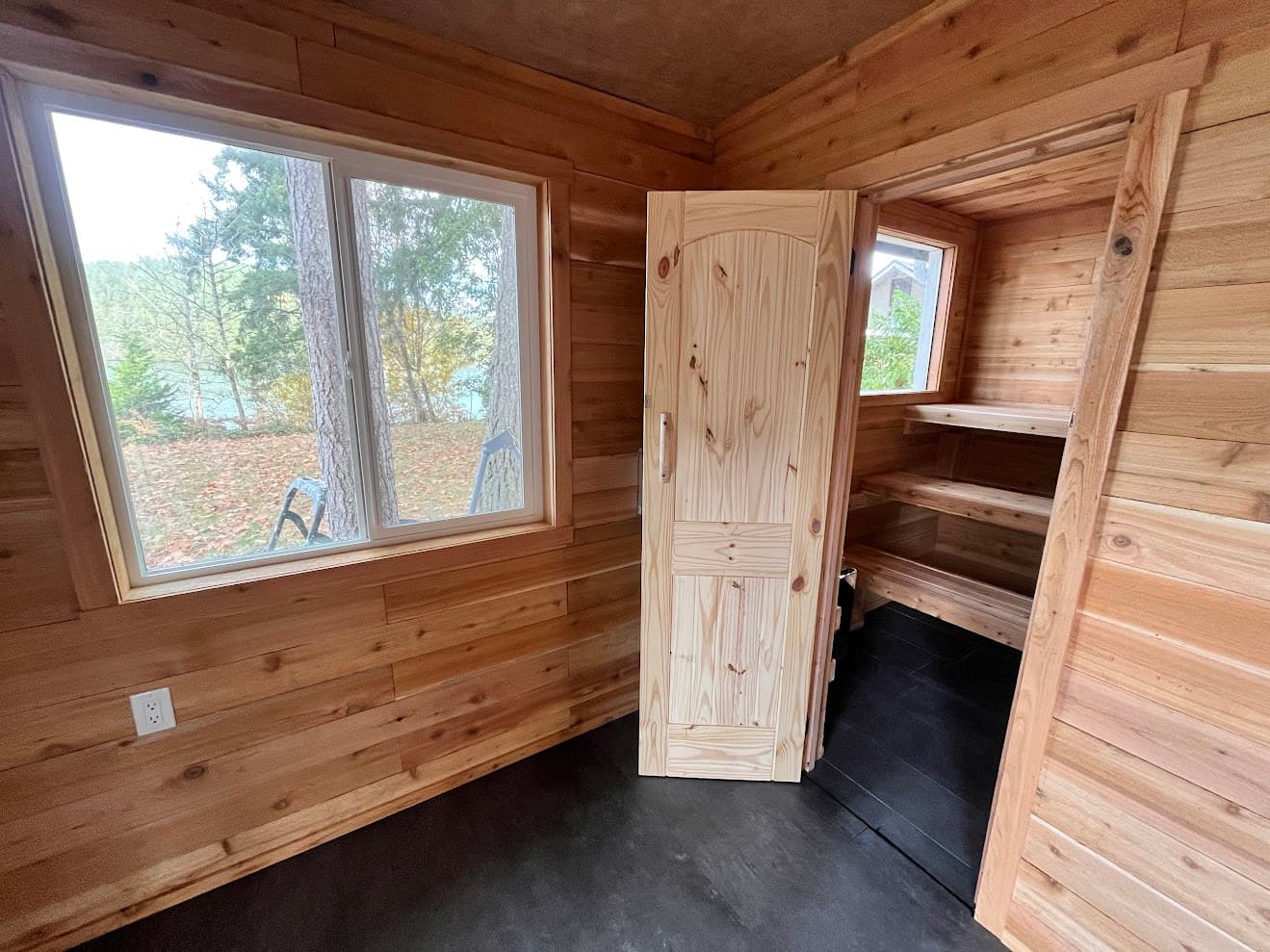
The term "dry sauna" is misleading. A traditional sauna isn't dry at all — it's designed around steam and humidity. What most people call a "dry sauna" is actually a traditional sauna that operates at high temperatures with the ability to throw water on hot rocks to create löyly (the therapeutic steam).
Infrared saunas are a completely different product. They don't heat air or rocks. Instead, they use infrared lamps or panels that emit electromagnetic radiation to directly warm your skin and penetrate tissue. The result is two entirely different experiences, at different temperatures, with different costs and different health claims.
This guide cuts through the marketing and explains what you're actually getting with each option.
A traditional sauna heats air to 170–200°F (76–93°C), with humidity controlled by the user. You can throw water on the hot rocks (called the löyly ritual) to create steam bursts, or you can keep the air dry. The sauna experience is built around this flexibility and the thermal intensity of hot air.
The core components are simple:
The name "dry sauna" comes from cultures that emphasize keeping the air dry and controlling humidity tightly. But traditional saunas in Finland, Sweden, and other Nordic countries are not dry — they're designed to make löyly (steam), which is central to the sauna ritual.
Infrared cabins use far-infrared (FIR) emitters — typically ceramic or carbon lamps that emit electromagnetic radiation. The marketing claims these wavelengths "penetrate tissue" and warm your body from the inside out. The reality is more complex.
Key characteristics of infrared cabins:
Critical distinction: Infrared cabins are NOT saunas. They're far-infrared therapy cabins. Calling them "saunas" is purely American marketing strategy to borrow sauna's reputation and legitimacy.
Trusted by homeowners across Tahoe and beyond
This is the biggest functional difference:
Many people who expect sauna-level heat from an infrared cabin are disappointed. It's a different thermal experience entirely. If you're seeking that intense, ritualistic sauna heat, infrared won't deliver it.
That said, some people prefer the milder heat of infrared, especially if they're heat-sensitive or have cardiovascular concerns. But it's not a sauna experience in any traditional sense.
Infrared cabins are often marketed as a "budget option," but the comparison is misleading:
The infrared option is cheaper upfront, but you're not comparing the same product. A $1,000 infrared cabinet is a portable heat appliance. A $5,000 sauna build is a constructed room that delivers a complete sauna experience.
If your budget is truly limited, infrared might make sense as a trial. But if you have any ability to save a bit more, the sauna build delivers exponentially more value and longevity.
This is where the marketing-reality gap becomes stark:
Traditional saunas: Decades of rigorous research from Nordic countries shows cardiovascular benefits, improved circulation, immune function support, and muscle recovery benefits. The evidence is robust, especially from long-term sauna use in Finland.
Infrared cabins: Marketing claims focus on detoxification, deep tissue penetration, and metabolic benefits. But the research is newer and more limited. Most importantly: core body temperature increase is 9x slower in infrared cabins than traditional saunas.
Since many sauna health benefits depend on core body temperature rise (activation of heat shock proteins, cardiovascular conditioning), infrared cabins struggle to deliver the same physiological changes. Infrared domes increase core temperature at only ~1/5 the rate of proper saunas.
Claims like "infrared detoxifies heavy metals" are not well-supported by peer review. Some users report back or joint pain from extended sitting in the confined booth.
Bottom line: If health benefits are your goal, traditional saunas have the evidence. Infrared cabins may feel pleasant, but don't expect them to deliver the same physiological benefits.
One of the most important distinctions is something infrared saunas completely lack: löyly.
Löyly is the ritualistic throwing of water on hot rocks, creating a burst of steam and humidity. It's a core part of Nordic sauna culture and tradition. The burst of steam hits your skin, opens pores, and creates a distinctive thermal and sensory experience that's central to why people love traditional saunas.
Infrared saunas have no rocks, no water, and no possibility of löyly. This is lost on many people who've never experienced a traditional sauna. But if you've thrown löyly and felt that intense burst of heat and steam, you know it's something special. Infrared can't replicate it.
Choose infrared if:
Choose traditional sauna if:
This is the core issue: infrared cabins are not saunas and should never be called saunas. They're fundamentally different products that happen to both involve heat.
A sauna by definition is a convective heat environment with löyly (steam) capability, high thermal mass (rocks), and proper air circulation. Infrared has none of these:
Calling infrared a "sauna" is pure marketing — borrowing sauna's reputation to legitimize a different product. If you want the sauna experience, infrared won't deliver it.
If you're considering a sauna, decide first: Do you want the traditional sauna experience (intense heat, löyly, long thermal sessions), or are you looking for gentler heat therapy? If it's the former, build or buy a traditional sauna. If it's the latter, infrared might be appealing, but understand you're not getting a sauna.
For most people interested in sauna culture, health benefits, and the ritualistic experience, a traditional sauna is the right choice. The investment is worth it, and you'll use it for decades.
12 decisions that determine how well your sauna performs — insulation, bench height, heater sizing, ventilation, and more.
Have questions about your project? Send us a message or schedule a free 15-minute intro call.
Schedule a free 15-minute intro call or send us a message about your project.
We'll learn about your space, goals, and timeline — and recommend the right next step for your project.