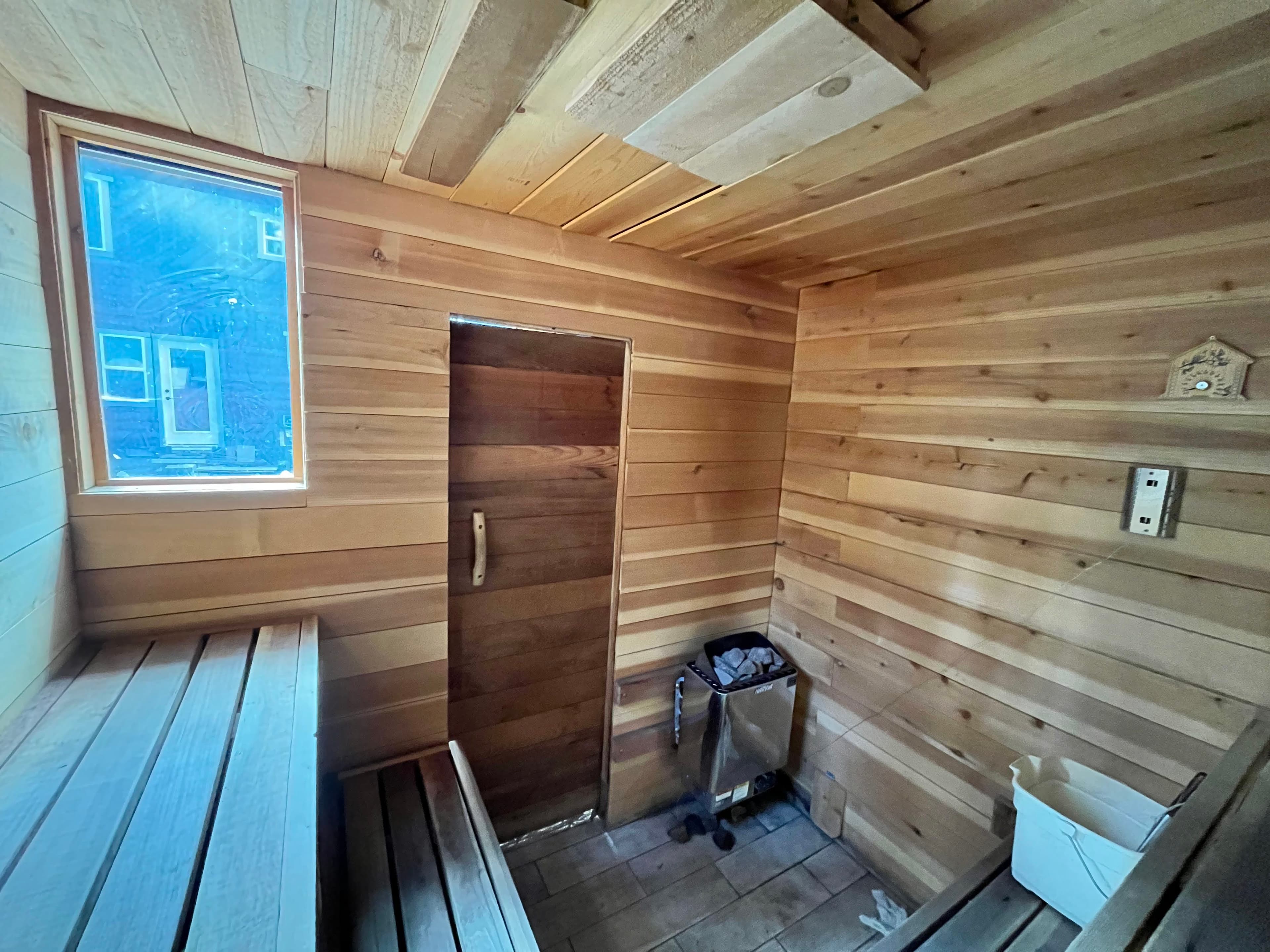
Western red cedar is the most popular sauna wood in North America. Naturally moisture-resistant, aromatic, and beautiful, it's the ideal choice for most residential saunas. This guide covers cedar selection, sourcing, grades, and proper installation techniques.
Naturally decay-resistant: Contains thujaplicin, a natural antimicrobial compound that resists rot, insects, and fungus without added chemicals.
Aromatic: Pleasant, distinctive smell that enhances the sauna experience. Never off-gases toxic fumes.
Low thermal conductivity: Doesn't get as hot to the touch as other woods, making it comfortable for benches and walls.
Beautiful appearance: Warm, reddish-brown color. Weathers gracefully.
Workability: Easy to cut, nail, and finish. DIY-friendly.
Availability: Widely available in North America, usually affordable.
All grades are suitable for saunas. Choice depends on budget and aesthetic preference. Knotty cedar is perfectly functional and looks great.
Typical sizes: T&G (tongue-and-groove) 1x4 or 1x6 boards are standard for sauna paneling.
Thickness: "1x" lumber is actually 3/4 inch thick (nominal size). This is adequate for sauna walls. Thicker boards (5/4) are available but unnecessary for interior use.
Moisture content: Critical. Cedar must be kiln-dried to 8-12% moisture content. Higher moisture content will warp, shrink unevenly, and create gaps.
Tongue-and-groove vs. square edge: T&G boards lock together and hide fasteners -- preferred for appearance. Square edge boards are cheaper and simpler to install but require more finishing work.
Trusted by homeowners across Tahoe and beyond
Convenient, widely available, consistent pricing. Typically Select or Knotty grades. Quality is reliable but may have occasional defects. Prices: $5-8/sq ft.
Higher quality, better pricing, access to specialty profiles. May require ordering in advance. If available locally, often better value than big box stores. Prices: $4-7/sq ft (depending on grade and mill).
Wide variety, competitive pricing. Requires shipping heavy lumber (significant cost factor). Best for small orders if shipping is included. Prices vary widely.
Tip: Buy slightly more than you calculate (5-10% extra) for waste, mistakes, and replacements later.
Boards are installed horizontally, starting at the bottom and working upward. This is the standard method. The boards run perpendicular to vertical furring strips on the walls. Male edge down is preferred (the tongue points downward) so water doesn't collect in the groove if moisture somehow appears.
Use stainless steel or galvanized nails (never regular steel -- will rust). 2.5-inch finish nails are typical. Nail through the tongue of T&G boards (the fastener is hidden by the groove of the next board). For square-edge boards, nail every 16 inches into furring strips.
Cedar naturally shrinks and expands with humidity changes. Allow 1/16" to 1/8" spacing between boards during installation to account for seasonal movement. Don't force boards together. This flexibility prevents cracking and warping.
Cedar can be left unfinished (will gray over time) or sealed/stained. For interior saunas, many builders leave it natural. For exterior-facing wood, a water-resistant stain every 3-5 years extends cedar life.
Formula: Wall area (in sq ft) divided by usable coverage per board equals boards needed.
Example: For a 6x8 sauna with 8-foot interior height:
Get a quote from your supplier using linear feet or board count. They'll calculate the exact amount needed.
Hemlock: Cheaper than cedar, but not as decay-resistant. Requires more finishing.
Spruce: Light in color, less aromatic. Less durable than cedar.
Thermally modified wood: More expensive but superior durability and stability. See our thermally modified wood guide for details.
For most residential saunas, western red cedar is the best balance of cost, durability, and aesthetics.
12 decisions that determine how well your sauna performs — insulation, bench height, heater sizing, ventilation, and more.
Have questions about your project? Send us a message or schedule a free 15-minute intro call.
Schedule a free 15-minute intro call or send us a message about your project.
We'll learn about your space, goals, and timeline — and recommend the right next step for your project.