Sauna Ventilation: Why It Matters and How to Get It Right
Sauna ventilation is the most overlooked system in a sauna and one of the most important. Get it right and the air stays fresh, the heat spreads evenly, and you can comfortably stay in longer. Get it wrong and the room feels stuffy and heavy, your head goes foggy, and moisture slowly damages the structure. Most people obsess over the heater and the wood and never think about airflow — which is exactly why so many saunas feel worse than they should.
This is an overview of how sauna ventilation actually works, why air quality matters more than people realize, the difference between natural and mechanical ventilation, and how to tell if your sauna needs more. For the technical placement details, we'll point you to the deeper guides along the way.
Why sauna ventilation matters
A sauna is a small, sealed, hot room, and inside it a heater and a few people are steadily using up the air. Without fresh air moving through, oxygen drops and carbon dioxide climbs within about 15–20 minutes of use. That rising CO2 is the real source of the heavy, foggy-headed, "I need to get out" feeling most people blame on the heat. It's not the temperature — it's the air.
Good ventilation fixes three problems at once. It keeps air quality high by constantly swapping stale, CO2-heavy air for fresh air. It evens out heat distribution, pulling warmth down from the ceiling toward the benches instead of letting it stack up top while your feet stay cold. And it protects the structure, because moving air keeps moisture from sitting in the room and wall cavities where it grows mold and rots wood over time. That last point is why ventilation is central to preventing mold in a sauna.
The rule of thumb is to exchange the room's entire air volume six to eight times per hour during use. Our guide to sauna air changes per hour breaks down the CFM math if you want to size it precisely.
How good ventilation works: the airflow loop
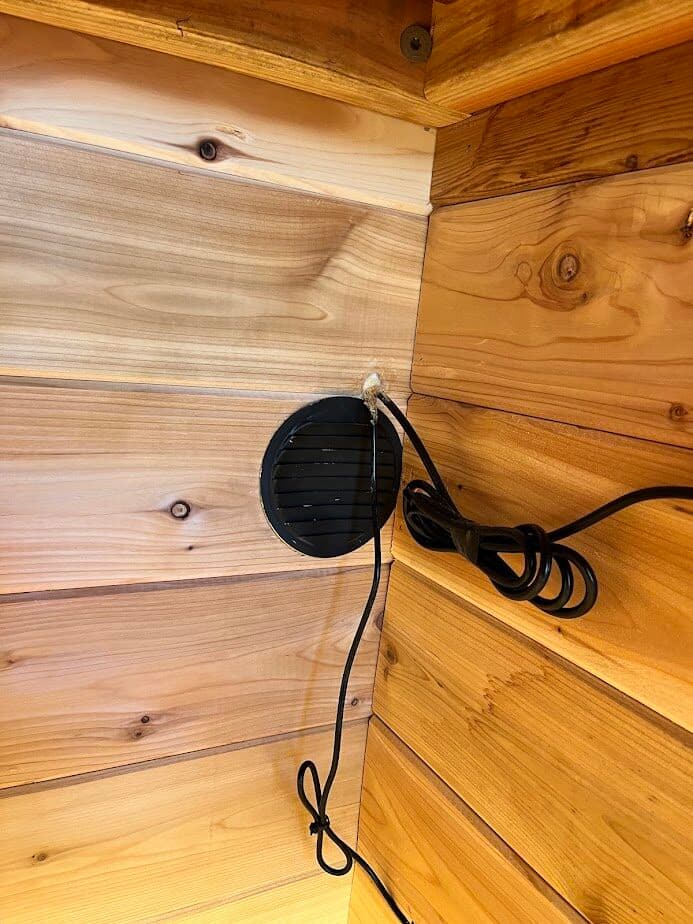
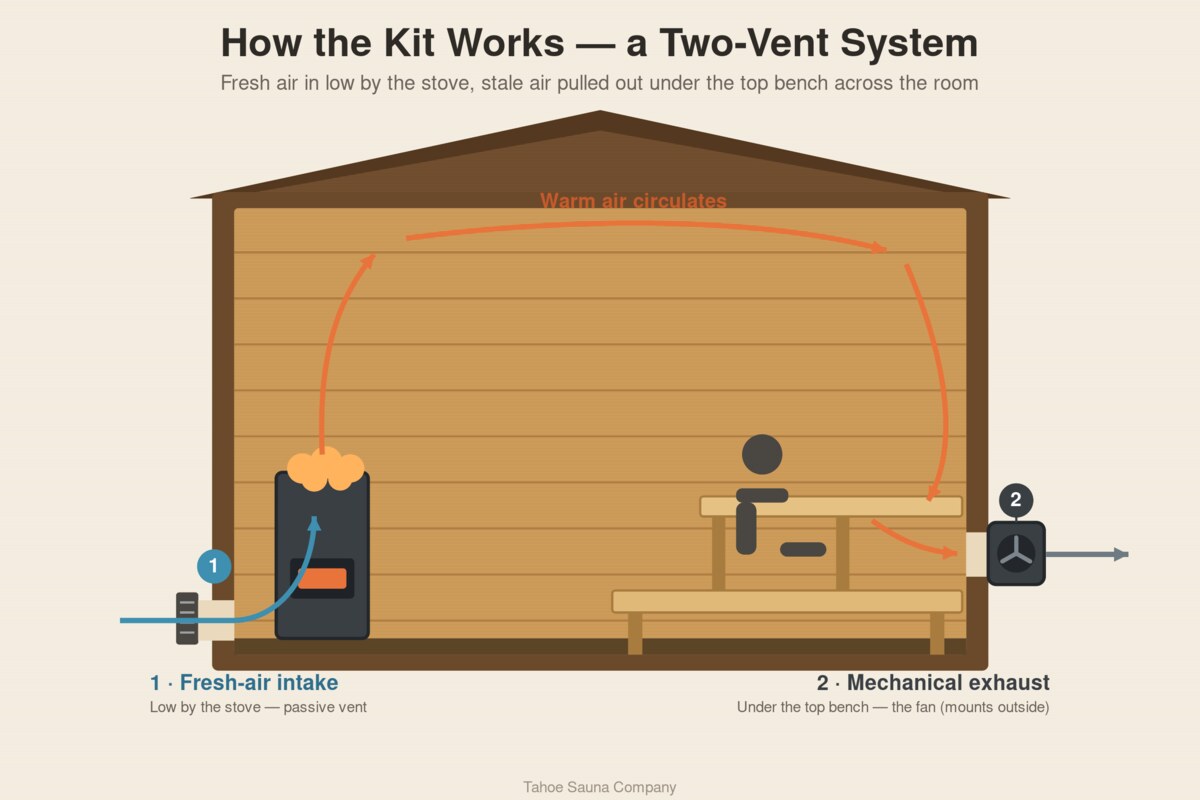
The concept is simple once you picture it. With a fan-driven exhaust — the setup we recommend — fresh air should enter on the heater wall just above the stove, about 12 inches above the top of the stove and 12 inches to the side of it. The heater's rising convection plume grabs that air and mixes it into the hot air, so it's warmed and spread through the room instead of sinking cold across the floor. The fan then pulls that mixed air down through the bench zone where people actually sit and breathe, and out through an exhaust below the foot bench on the opposite wall.
That diagonal path is the whole point. Fresh air in above the heater, used air pulled down across the benches and out low on the far wall, in a continuous loop that refreshes the air you're breathing and takes the CO2-heavy air out at the lowest point, rather than venting the hottest air off the ceiling. (A purely passive setup with no fan works differently — there the intake goes low beside the heater and the exhaust higher up, because you're relying on convection alone.) The exact vent positions, sizes, and how they change with your heater location are covered in detail in our sauna ventilation design guide — placement is what makes or breaks the whole system.
Trusted by homeowners across Tahoe and beyond
Natural vs. mechanical ventilation
There are two ways to move that air, and the difference matters more than most people expect.
Natural (passive) ventilation relies on the temperature difference between inside and outside, plus wind, to move air through the vents on its own. It's simple and silent and needs no power. The catch is that it's unreliable — on a still day, or when inside and outside temperatures are close, a passive setup barely moves any air at all. Plenty of saunas technically have vents and still feel stuffy for exactly this reason.
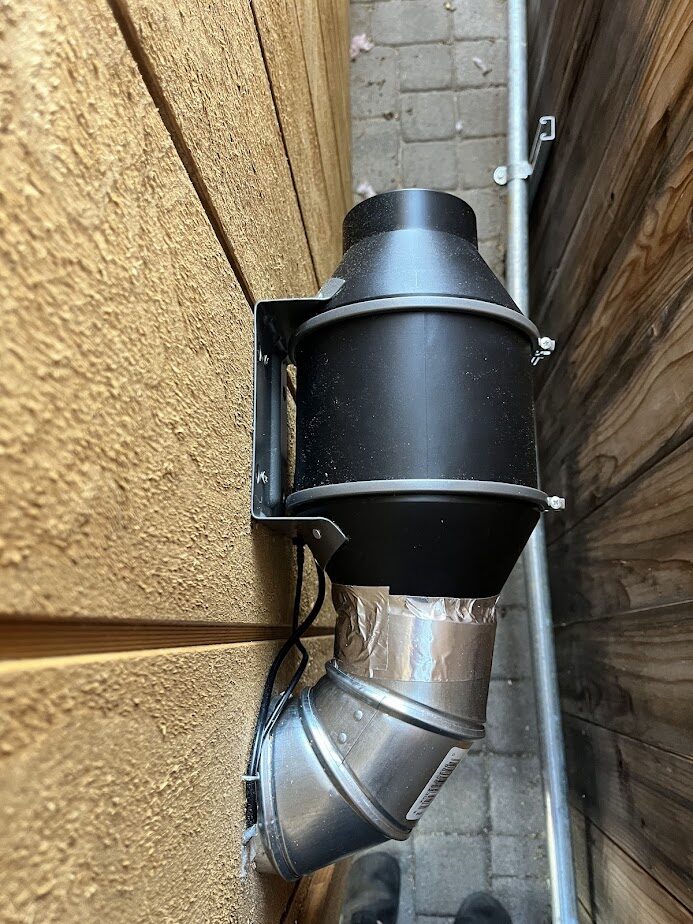
Mechanical ventilation adds a small fan to actively pull air through. Because it doesn't depend on the weather, it moves a consistent volume of air every session and lets you dial airflow up or down. It's the more reliable choice, especially for indoor saunas, tightly built rooms, or anyone who's felt their sauna go stale mid-session. We make the full case in mechanical vs. natural sauna ventilation, but the short version: a fan gives you control that passive vents can't.
Signs your sauna needs better ventilation
You don't need instruments to diagnose this — the room tells you. Watch for a heavy, stuffy feeling that sets in after the second or third round; getting foggy-headed or having to leave sooner than the heat alone would explain; air that smells stale or used-up; and strong stratification, where your head bakes while your feet stay cool. Musty smells, or any sign of mold or persistent damp on the wood, point at the same root cause. Most of these get blamed on the heater or the design when the actual fix is airflow. Our roundup of common ventilation mistakes covers the specific errors that cause them.
Your options for better airflow
If your ventilation is falling short, you have a few paths. You can improve a passive setup by correcting vent placement and adding adjustable covers so you can tune the airflow — helpful, but still weather-dependent. You can add a mechanical fan, which is the most reliable upgrade and works on a sauna you already own. Or, if you're building from scratch, you design the ventilation in from the start so it's right the first time.
For most people with an existing sauna, adding a fan is the highest-impact move. Our Sauna Ventilation Kit is a complete intake-and-exhaust system, pre-assembled and sized for a sauna, that installs in about an hour with a drill — and our step-by-step walkthrough on how to add ventilation to a sauna covers the install. If you're still in the design phase, we build ventilation into every custom sauna design alongside the heater and benches.
Frequently Asked Questions
Why does my sauna feel stuffy even though it has vents?
Almost always because the vents are passive and aren't moving enough air. Passive ventilation depends on temperature difference and wind, so on a still day it barely exchanges any air even though the openings exist. Poor placement makes it worse — vents that are too close together or positioned wrong short-circuit the airflow. Adding a fan, or correcting placement, is the fix.
Is CO2 really a problem in a home sauna?
Yes. In a small sealed room, a heater and a few people breathing will noticeably raise CO2 within 15–20 minutes. Rising CO2 is what makes you feel heavy and foggy-headed and cuts your session short — people usually blame the heat, but it's the air. Exchanging the room's air six to eight times an hour keeps CO2 in check.
Do I need mechanical ventilation, or is passive enough?
Passive can be enough in a well-placed outdoor setup with good temperature difference and some wind. But it's unreliable, and indoor or tightly built saunas especially tend to go stale with passive vents alone. If your sauna feels stuffy despite having vents, a small mechanical fan is the dependable fix because it doesn't rely on the weather.
Can I add ventilation to an existing sauna?
Yes. A retrofit takes two 4-inch holes — one for a passive intake, one for a mechanical exhaust fan — and about an hour of work. It doesn't matter whether your sauna is a barrel, a prefab kit, a cabin, or custom. See how to add ventilation to a sauna for the full walkthrough.
Next steps
Ventilation is the difference between a sauna you tolerate for one round and one you happily sit in for three. If yours feels stuffy or uneven, the fix is usually airflow, not a bigger heater. The easiest upgrade for a sauna you already own is our Sauna Ventilation Kit, and the install guide walks you through it. Building from scratch? We'll get the airflow right from the start as part of a custom design.