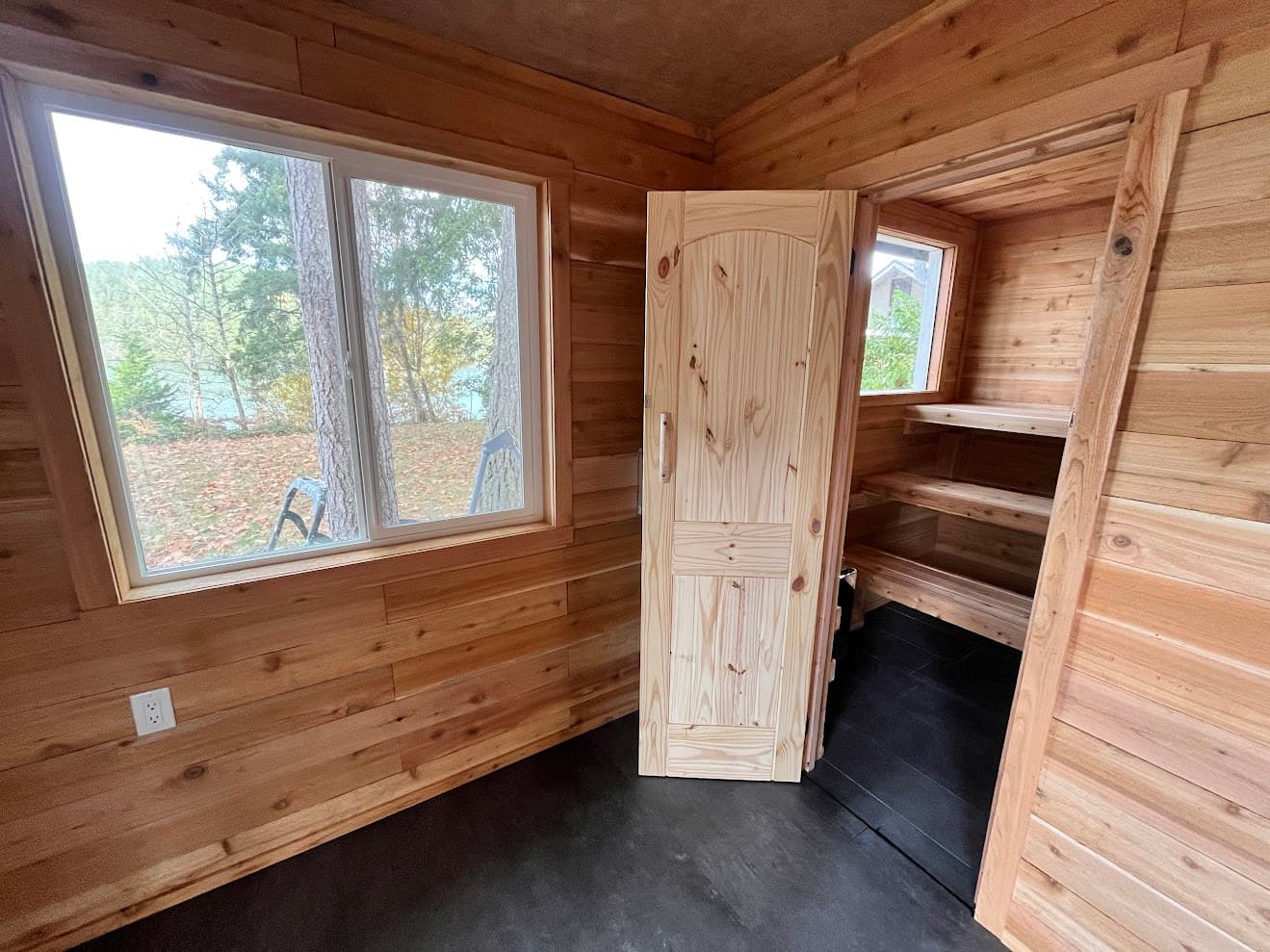
The Midwest isn't just a sauna market. It's where American sauna culture started. Finnish immigrants settled Minnesota's Iron Range and Michigan's Upper Peninsula in the late 1800s, and they brought sauna with them. Many families in these areas have been building and using saunas for generations.
That heritage matters. It means there's real knowledge in Midwest communities — people who understand what a sauna should feel like, how it should be built, and why shortcuts don't work. It also means demand is strong and growing, especially as wellness culture catches up to what Finnish-Americans have known for a century.
But the Midwest also presents one of the hardest climate combinations for sauna building: extreme cold plus high humidity (especially near the Great Lakes). Getting the insulation, vapor barrier, and ventilation right isn't optional here. It's the difference between a sauna that lasts 30 years and one that rots from the inside out.
Extreme Cold: Minneapolis averages 16°F in January. Duluth and the UP regularly hit -20°F or colder. Chicago, Milwaukee, and Detroit aren't much warmer. Your sauna needs to heat up fast and hold heat efficiently in these conditions — that's an insulation and heater sizing problem.
High Humidity Near the Great Lakes: This is the critical variable. Lake Superior, Lake Michigan, and Lake Huron create a humid microclimate that extends inland. Cold air plus high humidity is the worst combination for moisture management in a sauna. Condensation forms in walls, and if your vapor barrier has gaps, moisture gets trapped in insulation and causes rot.
Freeze-Thaw Cycles: The Midwest sees constant freeze-thaw throughout winter and spring. Water expands when it freezes, cracking concrete and stressing joints. Your foundation and drainage need to handle this.
Variable Conditions: Western Iowa and inland Illinois are drier than lakefront Michigan. Design requirements vary significantly across the region. A sauna in Duluth needs different ventilation than one in Des Moines.
Garage conversions are extremely popular in the Midwest — and for good reason. Most Midwest homes have attached or detached garages with enough space for a 4x6 or 5x7 sauna room. The structure already exists. You're not building from scratch.
But a garage sauna isn't just framing and paneling. Here's what you need to get right:
Ceiling Height: Standard garage ceilings are 8-9 feet. That's actually too tall for a sauna — heat rises, and you want it concentrated at bench level. Either lower the ceiling to 7 feet or build a raised platform for the upper bench. Most people lower the ceiling.
Insulation: Garage walls are often uninsulated or minimally insulated. You'll need to add R-21+ in the walls and R-30+ in the ceiling. If you're building a room within the garage, frame 2x6 walls for thicker insulation.
Vapor Barrier: This is where garage conversions fail most often. You need a continuous vapor barrier on the warm side (inside) of the insulation — aluminum foil vapor barrier or 6-mil poly, sealed at every seam and penetration. One gap and moisture migrates into the wall cavity. Sauna Vapor Barrier | Radiant Barrier Roll
Electrical: A sauna heater needs a dedicated 240V circuit. Most garages don't have one. You'll need a licensed electrician to run a new circuit from your panel. A typical 6 kW heater draws 25 amps; an 8 kW heater draws 33 amps. Plan for the right wire gauge and breaker size.
Ventilation: The sauna room needs fresh air intake and exhaust. In a garage conversion, you can vent through an exterior wall. Mechanical downdraft is recommended: intake about 12 inches above the top of the stove and 12 inches to the right of it on the heater wall, exhaust below the foot bench on the opposite wall.
Drainage: Garages typically have concrete floors with a slight slope toward the door. If your sauna floor will get wet (from löyly or rinsing), ensure the slope moves water away from the sauna walls. A floor drain is ideal but not always feasible in a conversion.
Trusted by homeowners across Tahoe and beyond
Midwest winters demand serious insulation. Here are the minimums:
Heater sizing follows the 1 kW per 45 cubic feet rule, but in Midwest cold you should size up. A 4x6x7 sauna (168 cubic feet) technically needs 3.7 kW — but in a -20°F climate with any heat loss, go with a 6 kW heater minimum. You want the sauna to reach 180°F in 30-40 minutes even on the coldest days.
Undersized heaters are the most common mistake in cold-climate saunas. The heater runs constantly, never quite reaches temperature, and burns out faster. Spend the extra money on the right size.
Ventilation serves two purposes: fresh air during use and drying after use. Both matter, but in the humid Midwest, post-session drying is critical.
During Use: Mechanical downdraft ventilation works best. Fresh air intake near the top of the heater (about 12 inches above the stove and 12 inches to the right of it) brings in air that gets grabbed by the heater's rising plume and mixed into the hot air instead of sinking cold across the floor. The fan-driven exhaust below the foot bench on the opposite wall then pulls that mixed air down through the bench zone where you sit and breathe, and takes the stale, CO2-heavy air out at the lowest point without dumping heat.
After Use: Near the Great Lakes, ambient humidity can be 70-80% in summer. Your sauna won't dry passively in those conditions. You need active post-session ventilation — either a dedicated exhaust fan on a timer or opening the door and running a fan for 30-60 minutes after each session. The goal is to get all interior surfaces dry within a few hours.
Inland Midwest: Western Minnesota, Iowa, and inland Illinois are significantly drier. Passive ventilation (leaving the door cracked after use) may be adequate for drying in these areas, but mechanical ventilation during use is still recommended for air quality.
Interior Wood: Western Red Cedar is the standard for good reason — naturally rot-resistant, aromatic, and handles moisture well. Hemlock and aspen are budget alternatives that perform well in dry saunas. For the Midwest, cedar's rot resistance is especially valuable given the humidity.
Exterior (Outdoor Builds): Freeze-thaw is hard on exterior finishes. Use kiln-dried lumber and apply a quality exterior stain or finish. Metal roofing (standing seam) handles snow and ice better than shingles. Avoid flat roofs — they collect snow and ice.
Hardware: Stainless steel fasteners only. Regular steel rusts in the heat and humidity cycle. Galvanized is a compromise but stainless is worth the cost.
Foundation: Frost line in the Midwest ranges from 3.5 feet (southern Illinois, Indiana) to 5+ feet (northern Minnesota). Footings must be below the frost line or you'll get heave. Concrete slab with proper gravel base and perimeter drainage is the standard approach.
Minnesota: The epicenter of American sauna culture. The Iron Range, Duluth, and the Boundary Waters region have multi-generational sauna traditions. Minneapolis-St. Paul has a growing urban sauna scene. If you're building a sauna in Minnesota, you're surrounded by people who get it.
Michigan: The Upper Peninsula has strong Finnish roots and active sauna culture. Lower Michigan and metro Detroit are growing markets. Lakefront properties are popular locations for outdoor saunas.
Wisconsin: Growing sauna interest, especially in the northern part of the state and around Madison. The outdoor recreation culture aligns well with sauna use.
Illinois, Ohio, Indiana, Iowa: These states have less established sauna culture but rapidly growing interest. Chicago has an active wellness community. Columbus, Indianapolis, and Des Moines are emerging markets. Garage conversions are the most common entry point in these areas.
Garage Conversion (4x6, cold-climate specs):$8,000–$15,000. Includes framing, insulation, vapor barrier, cedar paneling, heater, electrical, and ventilation. The structure already exists, which saves significantly.
Standalone Outdoor Build (5x7 or 6x8):$15,000–$30,000. Full structure with cold-climate insulation, foundation below frost line, and quality finishes.
Premium Custom Build: $30,000–$60,000+. Larger footprint, changing room, integrated cold plunge, premium materials, advanced ventilation system.
Midwest labor costs are moderate — lower than coastal markets but higher than rural South. Cold-climate specs add 15-20% to baseline costs. Garage conversions offer the best value because the shell already exists.
Timeline: Garage conversion: 3-6 weeks. Standalone build: 3-5 months including permitting and foundation work. Winter ground freeze can delay foundation pours, so plan accordingly.
Tahoe Sauna Company provides remote sauna design for Midwest clients. We understand the specific challenges:
We provide remote sauna design for clients throughout the Midwest — build-ready plans engineered for your climate, delivered to you or your contractor.
Skipping the Vapor Barrier: This is the number one failure in Midwest saunas. Moisture migrates into wall cavities, condenses on cold surfaces, and rots the structure from inside. Continuous vapor barrier on the warm side, sealed at every seam.
Undersized Heater: A 4 kW heater won't cut it in a Minnesota winter. Size for 1 kW per 45 cubic feet, then go one size up for cold climates.
No Post-Session Drying Plan: Especially near the Great Lakes. If your sauna stays wet after use, mold and rot follow. Build in a drying protocol — exhaust fan on a timer, door propped open, air circulation.
Garage Conversions Without Proper Ceiling: An 8-foot ceiling wastes heat. Lower it to 7 feet or raise the bench platform. The hottest air should be at your head level on the upper bench.
Wrong Fasteners: Regular steel screws and nails rust in sauna conditions. Stainless steel only. This is a small cost that prevents big problems.
12 decisions that determine how well your sauna performs — insulation, bench height, heater sizing, ventilation, and more.
Have questions about your project? Send us a message or schedule a free 15-minute intro call.
Schedule a free 15-minute intro call or send us a message about your project.
We'll learn about your space, goals, and timeline — and recommend the right next step for your project.