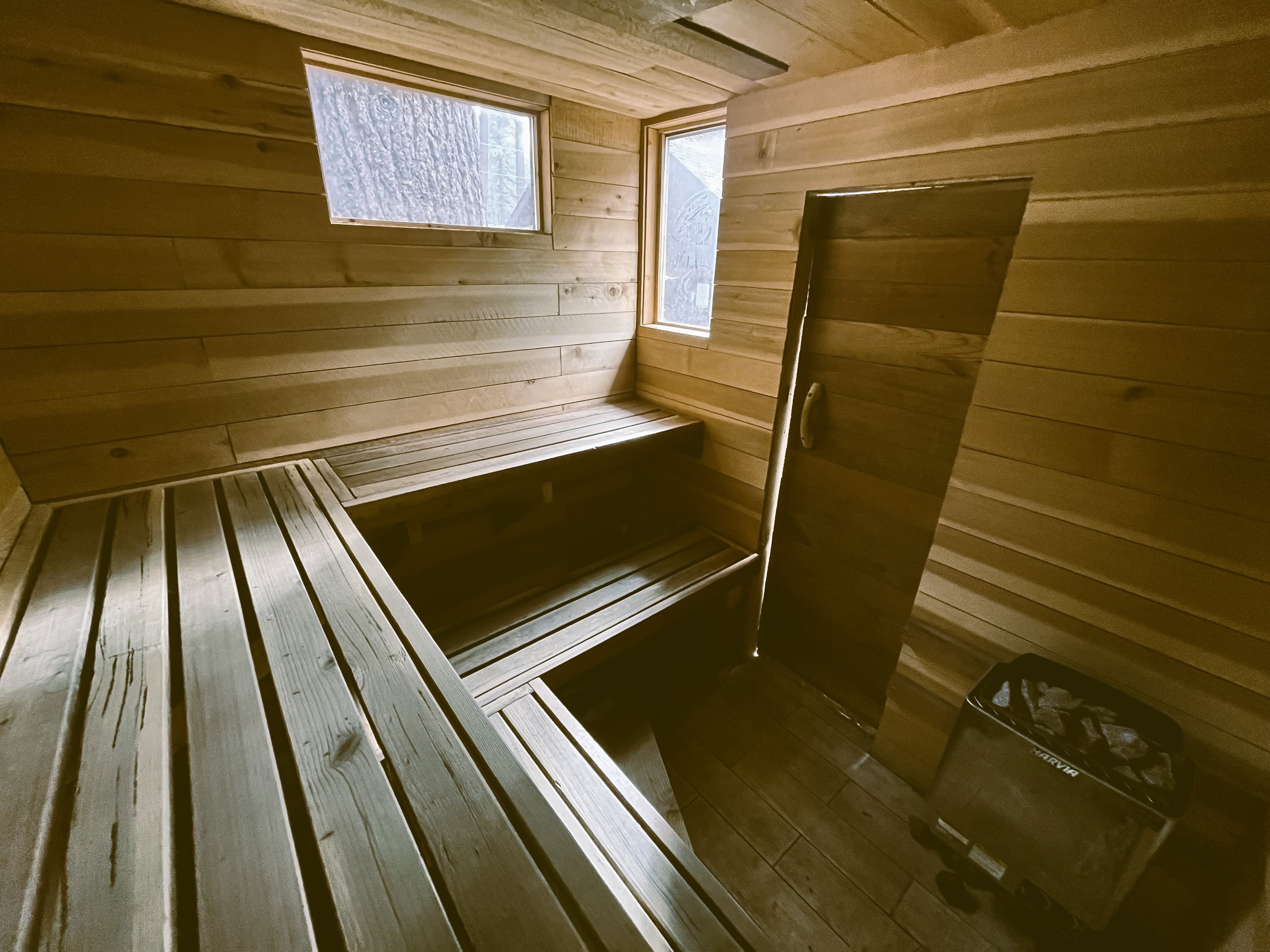
The Northeast has a natural affinity for saunas. Long, cold winters make heat therapy genuinely appealing — not just a luxury, but a practical comfort. Scandinavian heritage runs deep in parts of New England. And the region's dense housing stock means basement conversions are the most popular sauna format by far.
But Northeast climate presents a dual challenge: you need serious insulation for cold winters AND good ventilation for moderate humidity. The region isn't as humid as the Southeast, but coastal New England, the Mid-Atlantic, and anywhere near the Great Lakes carries enough moisture that mold prevention still matters.
Add freeze-thaw cycles, historic property constraints, and tight urban lots, and you've got a set of design problems that require regional knowledge to solve well.
Cold Winters: Boston averages 28°F in January. New York City averages 33°F. Burlington, Vermont drops to 18°F. Northern Maine and the Adirondacks hit well below 0°F. Any outdoor sauna needs to be built for these temperatures — half-measures on insulation will cost you in energy bills and heat-up time.
Moderate-to-High Humidity: The Northeast isn't as humid as the Gulf Coast, but summer humidity is real. Boston, Philadelphia, and New York regularly hit 70%+ relative humidity in July and August. Coastal areas are worse. This means mold prevention still matters — especially in basement conversions where ambient moisture is already elevated.
Freeze-Thaw Cycles: This is the Northeast's signature structural challenge. Water seeps into materials, freezes, expands, thaws, and repeats dozens of times per winter. It cracks concrete, splits wood, and destroys anything not designed for it. Frost line depth ranges from 3 feet in New Jersey to 5+ feet in northern New England.
Heavy Snowfall: Parts of the Northeast receive significant snow — Buffalo averages 95 inches, Burlington 74 inches. Roof design and snow load matter for outdoor builds.
Dense Urban/Suburban Lots: Many Northeast properties are small. Setback requirements, lot coverage limits, and neighbor proximity constrain outdoor builds. That's one reason basement conversions are so popular.
This is the most common sauna format in the Northeast. Nearly every home in the region has a basement, and converting a corner of it into a sauna is efficient, protected from weather, and avoids zoning complications. But it comes with its own set of requirements.
Ceiling Height: You need a minimum of 7 feet from finished floor to ceiling for a comfortable sauna. Many older Northeast basements have 7-foot or even 6.5-foot ceilings. Measure before you plan — ductwork, pipes, and beams can reduce usable height further. If your ceiling is under 7 feet, you can still build, but bench height and overall layout get tighter.
Moisture Management: Basements are already the dampest part of the house. Adding a sauna introduces more moisture. You need a continuous vapor barrier on the sauna walls, an exhaust vent to the outside (not into the basement), and ideally a dehumidifier in the surrounding basement space. Don't vent the sauna into the basement — that just moves the moisture problem.
Electrical: Most basement saunas use electric heaters (4.5–8 kW). A 240V dedicated circuit is required for anything over 4.5 kW. Run this from the main panel through a disconnect switch. Licensed electrician, no exceptions — this is code everywhere in the Northeast.
Drainage: Install the sauna near an existing floor drain if possible. If not, you'll need to add one or slope the floor to drain toward a sump area. Water will get on the floor — plan for it.
Vapor Barrier Is Critical: In a basement conversion, the vapor barrier does double duty: it keeps sauna moisture out of the wall cavity AND prevents basement moisture from entering the sauna. Use foil-faced insulation or a separate aluminum vapor barrier on the warm side, sealed at all seams with foil tape. Sauna Vapor Barrier | Radiant Barrier Roll
The Northeast needs real insulation. You're fighting genuine cold for 4–5 months of the year.
Outdoor Builds — Walls: R-21 minimum, R-30 preferred. Use mineral wool or fiberglass batts in 2x6 framing. Mineral wool has better moisture resistance, which matters in the Northeast's moderate humidity.
Outdoor Builds — Ceiling: R-30 minimum, R-38 preferred. Heat rises, and in a 10°F winter, the ceiling is where you lose the most energy.
Basement Builds — Walls: R-13 to R-19 is typically sufficient since the basement is already partially conditioned and protected from wind. The earth around the basement provides natural insulation.
Basement Builds — Ceiling: R-21 to R-30. You want to keep sauna heat from radiating into the floor above (it'll make the room upstairs uncomfortably warm).
Vapor Barrier: Non-negotiable in both outdoor and basement builds. Continuous foil barrier on the warm side of the insulation. Every seam sealed. This prevents condensation in the wall cavity, which causes rot and mold.
Trusted by homeowners across Tahoe and beyond
During Sessions — Mechanical Downdraft: Same as every climate. Passive intake vent on the heater wall, about 12 inches above the top of the stove and 12 inches to the right of it, so incoming air gets pulled into the heater's rising plume and warmed. Mechanical exhaust below the foot bench on the opposite wall, pulling that air down through the bench zone and out low. This circulates fresh air and manages CO2.
Post-Session Drying: The Northeast sits between the dry Mountain West and the saturated Southeast. You don't need the aggressive drying systems the Southeast requires, but you can't rely on passive drying alone either — especially in summer or in a basement.
A mechanical exhaust fan on a timer is strongly recommended. Run it 20–30 minutes after each session. In a basement, this is essential since there's no natural airflow to dry the space. For outdoor builds, opening the door plus running the exhaust fan is usually sufficient.
Winter Ventilation: Cold, dry winter air actually helps with drying — the air entering the sauna through the vent is low-humidity and absorbs moisture well. Summer is when drying is harder, and that's when the mechanical exhaust earns its keep.
Frost Line Depth: This varies significantly across the Northeast. New Jersey: 3 feet. Connecticut: 3.5 feet. Massachusetts: 4 feet. Vermont and Maine: 4–5+ feet. Foundation footings must extend below the frost line or they'll heave. Local building codes will specify the exact depth.
Foundation Options: Concrete footings below frost line with a gravel base is standard for outdoor saunas. Helical piles are an alternative that avoids excavation — they screw into the ground below the frost line. Floating slabs are NOT recommended in freeze-thaw climates.
Drainage: Gravel base under and around the foundation. French drains or perimeter drainage to move water away from the structure. Standing water near a sauna foundation in freeze-thaw country will crack the concrete within a few winters.
Material Durability: Everything exposed to the exterior must handle freeze-thaw: stainless steel hardware (not galvanized), kiln-dried wood (8–12% moisture content), and metal roofing that sheds snow and ice.
Wood: Western Red Cedar, hemlock, and aspen all perform well. Cedar offers the best moisture resistance, which matters in Northeast humidity. Hemlock is more affordable and looks great. Aspen is hypoallergenic and light-colored. All three handle freeze-thaw well when properly kiln-dried.
Framing: Standard SPF (spruce-pine-fir) 2x6 for outdoor builds (to accommodate R-21+ insulation). 2x4 is fine for basement builds. Pressure-treated sill plate for any ground contact.
Hardware: Stainless steel. Freeze-thaw cycles accelerate corrosion on regular steel. This applies to screws, hinges, brackets — everything.
Roofing (Outdoor): Standing seam metal is ideal — sheds snow and ice, handles freeze-thaw, lasts decades. Asphalt shingles work but have a shorter lifespan in harsh winters.
The Northeast has more historic districts, landmark buildings, and preservation requirements than almost any other region. If your property is in a historic district or has landmark status, an outdoor sauna build will face extra scrutiny.
Zoning and Setbacks: Historic districts often have stricter setback requirements and limits on accessory structures. Check with your local planning department before designing.
Appearance: Some historic commissions require that new structures match the architectural character of the neighborhood. This might mean specific siding, roofing, or color requirements. A modern-looking sauna might need design adjustments to pass review.
Workaround: Basement conversions avoid most historic review since they don't alter the exterior. This is another reason basement saunas are so popular in the Northeast — especially in cities like Boston, Philadelphia, and the brownstone neighborhoods of Brooklyn.
Budget Build (4x6 basement conversion): $8,000–$15,000. Standard insulation, electric heater, cedar paneling, exhaust fan, basic finishes.
Mid-Range (5x7 outdoor or upgraded basement): $15,000–$30,000. R-21+ insulation, proper foundation below frost line, quality cedar, changing area, drying ventilation system.
Premium (6x8+ custom outdoor build): $30,000–$60,000+. Premium materials, cold plunge integration, snow load engineering, advanced ventilation, integrated deck or patio.
Northeast labor costs are moderate to high — higher in the NYC metro, Boston, and coastal Connecticut. Cold climate specs (deeper foundation, heavier insulation, snow load roof) add 15–20% to baseline costs compared to milder regions.
Timeline: 3–5 months from design to completion. Basement conversions are faster (8–12 weeks of actual build time). Outdoor builds take longer due to foundation work and potential weather delays in winter. Permitting runs 2–6 weeks depending on municipality.
Tahoe Sauna Company designs saunas for Northeast climates. We understand:
We provide remote sauna design for clients throughout the Northeast — build-ready plans engineered for your climate, delivered to you or your contractor.
Undersized Insulation: Using R-13 walls on an outdoor build in Vermont. You'll spend more on heating than you saved on insulation within the first year.
Shallow Foundation: Footings above the frost line will heave. Every winter. Eventually the structure shifts and cracks. This is an expensive fix.
Venting Into the Basement: The sauna exhaust must go outside, not into the surrounding basement. Venting into the basement just moves moisture from one space to another and creates mold conditions.
Ignoring Humidity in Summer: People think of the Northeast as cold, but July and August are humid. Without drying ventilation, a sauna used regularly in summer will develop mold by fall.
Not Checking Ceiling Height: Discovering your basement is 6.5 feet after you've bought materials is an expensive surprise. Measure first, including obstructions.
Skipping Permits: Northeast municipalities take electrical and building permits seriously. An unpermitted sauna can cause problems at resale and may not be insured.
12 decisions that determine how well your sauna performs — insulation, bench height, heater sizing, ventilation, and more.
Have questions about your project? Send us a message or schedule a free 15-minute intro call.
Schedule a free 15-minute intro call or send us a message about your project.
We'll learn about your space, goals, and timeline — and recommend the right next step for your project.