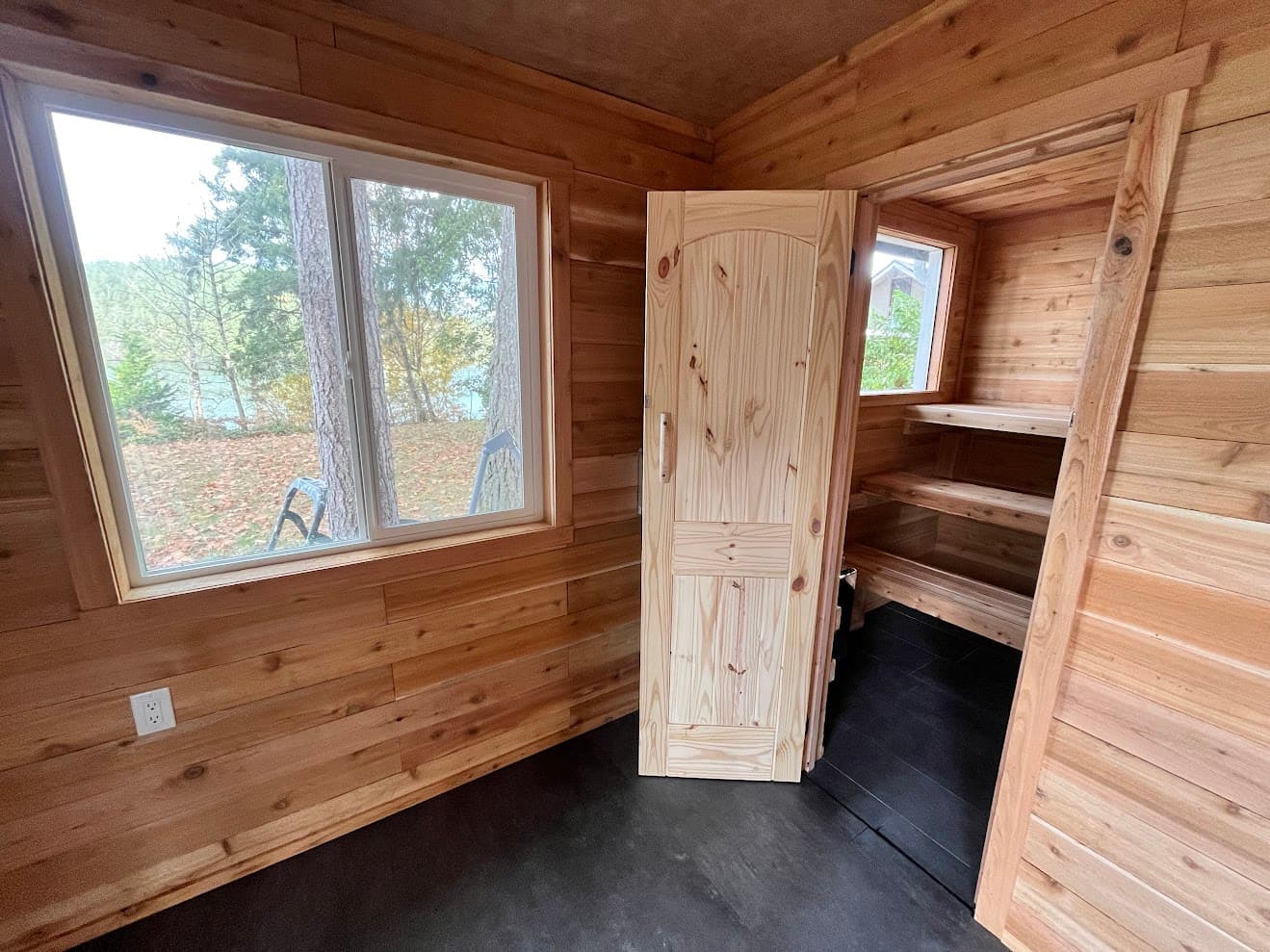
You sit down, your face is roasting, and your feet feel like they're in a different room. That isn't your thermometer lying or your heater being too small. It's heat stratification, and every sauna has some. The question is how much, and whether your vents and benches are making it worse.
Here's what causes it, how to tell if yours is bad, and what actually helps, in an existing sauna and in one you're still designing.
Hot air rises and stacks in layers. The ceiling keeps getting hotter while the floor stays roughly where it started. Sauna researcher Trumpkin puts it simply: the floor will be about the same temperature no matter how hot the ceiling is and no matter how powerful the heater.
Sitting on a bench, there are about 5 feet between your toes and the top of your head. In a poorly set up sauna, that's enough height for a temperature difference of 50°F or more.
Put one thermometer at head height on the top bench and one at foot level, run a normal session, and compare them after the room is fully heated. The Finnish target is feet no more than about 15-20% cooler than your head:
Past about a 20% gap, most people start to notice cold feet. Past about 27%, almost everyone does.
You can't easily raise the ceiling of a sauna you already own, but you can change how air moves through it. Downdraft ventilation flips the stock layout:
How much does it help? Trumpkin switched his own sauna to mechanical downdraft and his head-to-toe difference went from about 27°C (49°F) to under 20°C (36°F). That's a real, noticeable change. It's not a cure. In his words, proper ventilation can help but not overcome stratification.
Our Sauna Ventilation Kit sets up exactly this layout on a sauna you already have. It's a complete intake and exhaust system with a quiet 4-inch inline fan that mounts outside the sauna, ducting, interior vent covers, a hole saw, and a written guide showing where both vents go for your room. It arrives mostly assembled. Drill two holes, mount it, plug it in. Most installs take about an hour. If you have an existing low vent under the heater, close it off once the new intake is in.
Trusted by homeowners across Tahoe and beyond
This is free and it works right away. Use a raised foot rest or duckboard, sit on the highest bench, or pull your feet up onto the bench. A few inches of height puts your feet in noticeably warmer air.
The best time to beat stratification is before the walls go up. The rule is to get your whole body, feet included, up out of the cold layer near the floor:
If you're planning a sauna and want this done right on paper first, that's what our sauna design service is for.
The curved ceiling collects heat and the low bench puts your feet on the floor, so barrels have one of the biggest head-to-feet gaps of any shape. If that's your sauna, see barrel sauna cold feet for the barrel-specific version of these fixes.
Downdraft with a powered exhaust is the standard approach for electric heaters. A wood stove pulls its own combustion air from the room, and a fan can fight its draft. If you burn wood, get in touch before adding a fan.
Heat stratification. Hot air rises and stacks in layers, so the ceiling gets hotter and hotter while the floor stays about the same temperature. Low benches put your feet in that cool layer, and the common vent layout (fresh air in low under the heater, exhaust up high) makes it worse by running cold air across the floor.
Finnish practice aims for foot level to be no more than about 15-20% cooler than head level. If your head is at 180°F, your feet should be around 145-150°F or warmer. Most people start to notice cold feet once the gap passes about 20%.
No. A bigger heater makes the ceiling hotter but the floor stays about the same, so it usually makes the head-to-feet gap bigger, not smaller.
Yes, if it pulls air out low. A downdraft layout, with fresh air in above the heater and a fan pulling exhaust out below the bench on the opposite wall, drags hot air from the ceiling down past your legs and feet. In Trumpkin's testing, switching to mechanical downdraft cut his head-to-toe difference from about 27°C (49°F) to under 20°C (36°F). It reduces stratification. It doesn't eliminate it.
Intake on the heater wall, about 12 inches above the top of the heater and 12 inches to the side. Exhaust on the opposite wall, below the foot bench, on a fan. Avoid an exhaust high on the wall or above the foot bench, which pulls cooler air up around your feet.
Get your feet off the floor. The top bench should sit about 44-48 inches below the ceiling, and the foot bench should be at least 4 inches above the top of the heater stones. Raising benches (and the ceiling with them) by 16 inches puts your feet about 23°F warmer.
12 decisions that determine how well your sauna performs — insulation, bench height, heater sizing, ventilation, and more.
Have questions about your project? Send us a message or schedule a free 15-minute intro call.
Schedule a free 15-minute intro call or send us a message about your project.
We'll learn about your space, goals, and timeline — and recommend the right next step for your project.