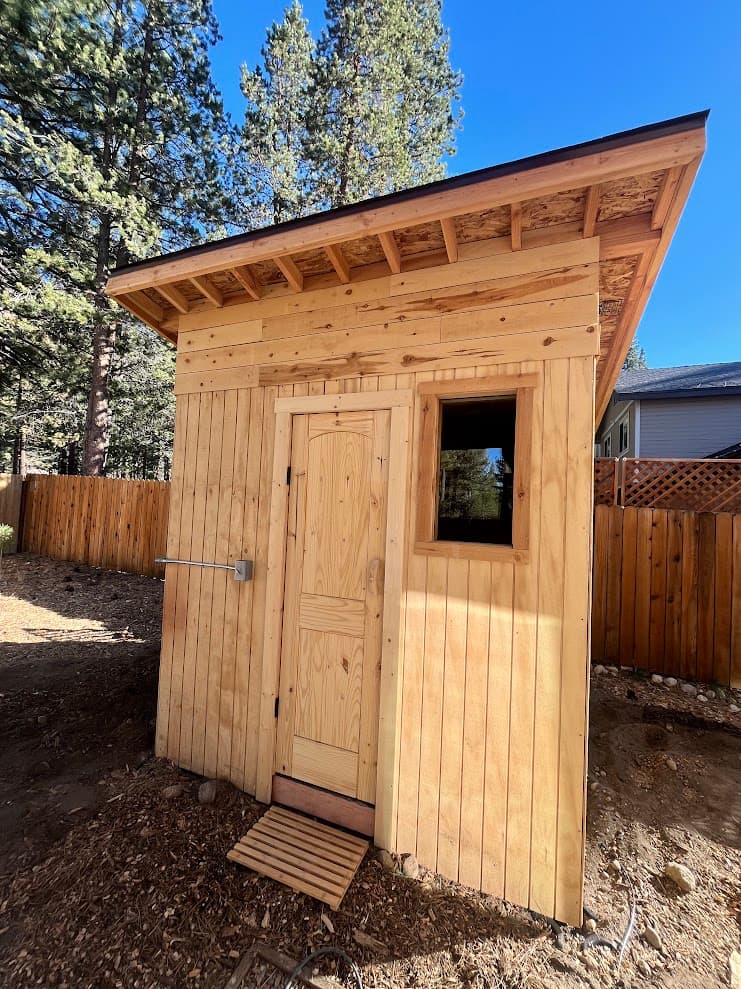
Sauna Shower: How to Plan the Rinse Between Rounds (Indoor, Outdoor, or None)
The sauna shower is the part of the build almost everyone forgets until the sauna is done. People spend weeks on the heater, the wood, and the bench layout, then realize on the first night that they're standing in the yard, covered in sweat, with nowhere to rinse off before round two.
It's worth planning up front because the shower decision touches plumbing, drainage, the foundation, and in cold climates, freeze protection. All of that is cheap to design in and expensive to add later. Here's how we think about it.
Why a Sauna Shower Matters More Than People Expect
In Finland, a sauna session isn't one long sit. It's a cycle: hot, cool down, rinse, rest, repeat. Usually three or four rounds. The rinse is part of every round, not an afterthought at the end.
A shower does three jobs in that cycle.
Before the first round, a quick rinse with soap gets rid of lotion, sunscreen, deodorant, and the day's grime. You sweat more freely, and that stuff doesn't end up soaked into your bench boards. Unfinished sauna wood absorbs whatever touches it, so a pre-rinse is one of the easiest ways to keep benches from going gray and blotchy. There's more on this in our sauna etiquette guide.
Between rounds, the shower rinses sweat off so you're not sitting in cold, clammy sweat while you cool down. This is the part people don't appreciate until they've done it both ways. Going from 180°F straight outside with a film of sweat on you in 30°F weather is miserable. Rinse first and it's pleasant.
As the cold phase, a cold shower is the simplest substitute for a cold plunge. It's not the same experience as full immersion, but it gets you most of the contrast for a fraction of the cost and effort. If you're weighing the two, our breakdown of sauna and cold plunge benefits covers what each actually does.
Do You Actually Need a Shower for Your Sauna?
No. Plenty of great saunas have no plumbing at all, including thousands of lakeside cabins in Finland. A sauna needs heat, stones, good ventilation, and a bucket. It doesn't need running water.
The no-plumbing options work fine for a lot of people:
- A bucket rinse. Fill a bucket with cool water, pour it over yourself outside the sauna. Old-school and effective.
- A garden hose. Crude, but a hose on a hook next to the door gets the job done in summer.
- A lake, river, or snowbank. If you have one of these, you have the best cold phase there is.
The trade-off is convenience. If you're going to use the sauna three or four times a week, and especially if you're using it in winter, a real shower close to the door changes how often you actually go out there. We've seen clients skip sessions simply because the walk to the house bathroom in January wasn't worth it.
So the real question isn't "do I need one." It's "how far is my nearest rinse, and will that distance stop me from using the sauna."
Trusted by homeowners across Tahoe and beyond
Sauna Shower Options: Where It Can Go
There are four realistic setups. Which one fits depends mostly on whether your sauna is indoors or out, and whether you're adding a changing room.
1. Use an existing bathroom nearby
For indoor saunas in a basement, garage, or bathroom, this is the default and often the right call. If an existing shower is within 15 or 20 feet of the sauna door, you probably don't need another one.
This is why bathroom saunas have become so popular. The shower is already there. If you're remodeling anyway, we covered how to plan that in our post on adding a sauna to a bathroom.
2. An outdoor shower next to the sauna
For backyard saunas, this is the most common setup we design. An open-air shower on the side of the sauna building, or on a small deck next to the door, with a privacy screen. It's affordable, it doesn't add much to the building footprint, and an outdoor shower after a hot round is honestly one of the best parts of the whole experience in summer.
The catch is winter. More on that below.
3. A shower inside a changing room or sauna house
If you're building a larger sauna with a changing room, putting the shower in that anteroom is the premium option. You exit the hot room, rinse, and cool down without going outside. In cold climates this is the setup that gets used year-round.
It's also the most expensive, because now the anteroom is a wet room. That means tile or another waterproof surface, a proper drain, a vapor-managed wall assembly, and its own ventilation to deal with the moisture.
4. A sauna-shower combo unit
You'll see prefab "sauna shower combo" units online, usually a small cabin with a steam function and a shower head in the same enclosure. These are really steam showers, not saunas. They don't get anywhere near traditional sauna temperatures, and they don't give you löyly off hot stones.
If what you want is a steam shower, they're fine. If you want a real sauna, they're a different product.
Why the Shower Never Goes Inside the Hot Room
We get asked this a lot: can I just put a shower head in the corner of the sauna?
We don't recommend it. The main reasons:
The wood. Sauna interiors are unfinished softwood designed to handle heat and intermittent moisture from löyly, then dry out completely between sessions. A shower soaks the lower walls and floor far more than löyly ever does, and the wood never fully dries. That's how you get mold, rot, and gray staining behind the benches. Our guide on how to prevent mold in a sauna goes deeper on the drying cycle.
The heater. Electric sauna heaters are rated for the humidity of throwing water on stones, not for being sprayed directly. Water hitting the control box or wiring is a real safety problem.
The layout. A shower needs floor area and a drain right where you'd normally want benches and foot room. In a 6x8 sauna there's no space to spare.
The right move is to keep the hot room dry and put the rinse right outside the door, whether that's an outdoor shower or a wet anteroom.
Designing an Outdoor Sauna Shower
Most of our backyard projects end up here, so it's worth getting into the details. There are four things to plan: water supply, hot water, drainage, and freezing.
Water supply
The simplest version runs off a hose bib on the house with a hose to a shower fixture. That works for a cold-only summer shower and costs very little.
For something more permanent, you'll run a supply line from the house. PEX is the typical choice. If you're in a cold climate, that line needs to be buried below the frost line or it will freeze. In the Tahoe area that's often 24 inches or deeper depending on where you are, and in parts of the Midwest and Northeast it can be 42 inches or more. Your local building department will know the number.
If you're already trenching for the sauna's electrical feed, it's often worth running the water line in the same trench (with proper separation per your local code). This is one of the easiest ways to save money on an outdoor shower, and it's why we like to plan the shower before the outdoor sauna foundation and utilities go in.
Hot water or cold only
Lots of people are surprised to hear that a cold-only shower is completely usable for a sauna. You're coming out of a 170–190°F room. Even 55°F water feels good. In summer, cold only is often what you want anyway.
If you want warm water too, the options are:
- Mixing valve fed from the house's hot water line. Best experience, but hot water sitting in a long buried line will be cold by the time it arrives unless the run is short.
- A small electric tankless or point-of-use heater at the sauna. Keep in mind this adds electrical load. A sauna heater already needs a dedicated 240V circuit, and a tankless water heater can need a large circuit of its own. Check your panel capacity before committing. Our sauna electrical requirements page covers the basics.
- A propane outdoor water heater. Common for cabins and off-grid setups.
Drainage
Where the water goes matters more than people think. A shower can put 10 to 20 gallons on the ground every session, and you don't want that pooling against your sauna foundation.
For a cold rinse off a hose, a bed of gravel with a slight slope away from the building is usually enough. For a real plumbed shower, the typical options are a gravel dry well, a French drain that carries water away from the structure, or tying into a sewer or septic line. Rules on outdoor shower greywater vary a lot by county, so check before you build. Some places are relaxed about it and some require a connection to sewer.
Whatever you choose, keep the water at least a few feet away from the sauna's footings. We usually put the shower on the downhill side of the building.
Freeze protection
If you live somewhere it freezes, this is the part that makes or breaks an outdoor sauna shower.
Your options, from simplest to most involved:
- Seasonal shutoff. Use the outdoor shower from spring to fall, shut it off and drain it before the first freeze, and rinse with a bucket or head to the house in winter. Cheap and reliable.
- Frost-free fixtures. Frost-free valves keep the shutoff point inside a heated space or below the frost line, so water drains out of the exposed pipe after each use.
- A drain-down setup. Supply lines pitched back to a drain valve so you can empty everything after each use in winter.
The one thing we don't recommend is assuming you'll remember to drain it every time. You won't, and a split pipe in a wall is an expensive fix. We cover the rest of the pre-freeze list in how to winterize an outdoor sauna.
Designing an Indoor Sauna Shower or Wet Anteroom
If the shower is going inside a changing room or sauna house, the priorities shift to waterproofing and moisture control.
Flooring. Non-slip tile or sealed concrete. Wood doesn't belong in the wet zone. If budget allows, radiant floor heat makes a big difference in a cold climate.
Drain. We prefer a linear drain along the wall over a center drain. You get a single-plane slope instead of a compound slope, which is easier to build correctly and gives you a flatter, safer floor to walk on barefoot. If you're weighing whether the hot room itself needs a drain, that's a separate question we covered in do you need a sauna floor drain.
Layout. An open shower along one wall is the simplest and cheapest layout. For a semi-private shower, a cubicle about 36 by 55 inches with one open side is a good balance. If you're designing for groups, figure one open shower head per two people, spaced roughly 30 to 40 inches apart so people aren't spraying each other.
Ventilation. The anteroom needs its own exhaust, separate from the sauna's ventilation. A bath fan on a timer that runs for 30 to 60 minutes after use is usually enough for a residential setup.
Flow. The path should go hot room, shower, rest area, without forcing anyone outside in winter. If you have to cross a cold deck in the middle of that cycle, the room will get used less from November to March.
What a Sauna Shower Costs
Rough ranges from what we see on projects. Your numbers will depend on your region, how far you are from existing plumbing, and how much you DIY.
- Hose-fed cold-only outdoor shower: a few hundred dollars for a fixture, a post or wall mount, and gravel.
- Plumbed outdoor shower with hot and cold, a dry well, and a privacy screen: often $2,000 to $6,000, with trenching distance being the biggest variable.
- Tiled shower inside a changing room or sauna house: typically $6,000 to $15,000 or more on top of the sauna itself, depending on finishes, drain type, and whether you add radiant heat.
Plumbing work usually requires a permit, even when a small sauna structure doesn't. It's worth asking early. Our sauna permit requirements guide covers the common questions.
Frequently Asked Questions
Should you shower before or after a sauna?
Both. A quick rinse with soap before the first round keeps oils and lotions out of the wood and helps you sweat freely. Rinse again between rounds to get sweat off before you cool down, and take a full shower at the end.
Is a cold shower after the sauna as good as a cold plunge?
It's not the same, but it's close enough for most people. A cold plunge gives full-body immersion and a stronger shock. A cold shower gets you a lot of the contrast for much less cost and upkeep, and it's easier to add to an existing setup.
Can you put a shower inside a sauna?
We don't recommend it. The constant water soaks the unfinished wood, which leads to mold and rot, and electric heaters aren't rated to be sprayed. Keep the hot room dry and put the shower right outside the door.
How far from the sauna should the shower be?
As close as practical. Within 10 to 15 feet of the sauna door is ideal. Past 20 or 30 feet, especially if you have to walk outside in winter, it starts to affect how often you actually use the sauna.
Does an outdoor sauna shower need hot water?
No. Cold-only is completely usable because you're coming out of a very hot room. Hot water is a nice upgrade for winter use or for rinsing off at the end of a session, but it adds cost and electrical or gas load.
Plan the Shower With the Sauna, Not After It
The shower is a small line item that affects a lot of other decisions: where the sauna sits on the lot, which side the door faces, where the trench runs, and how the foundation handles water. It's much easier to sort out on paper than after the building is up.
If you want help working through it, we design saunas for clients all over the country through our remote sauna design service, including water, drainage, and changing room layouts. If you're planning it yourself, the sauna design checklist is a good place to start.