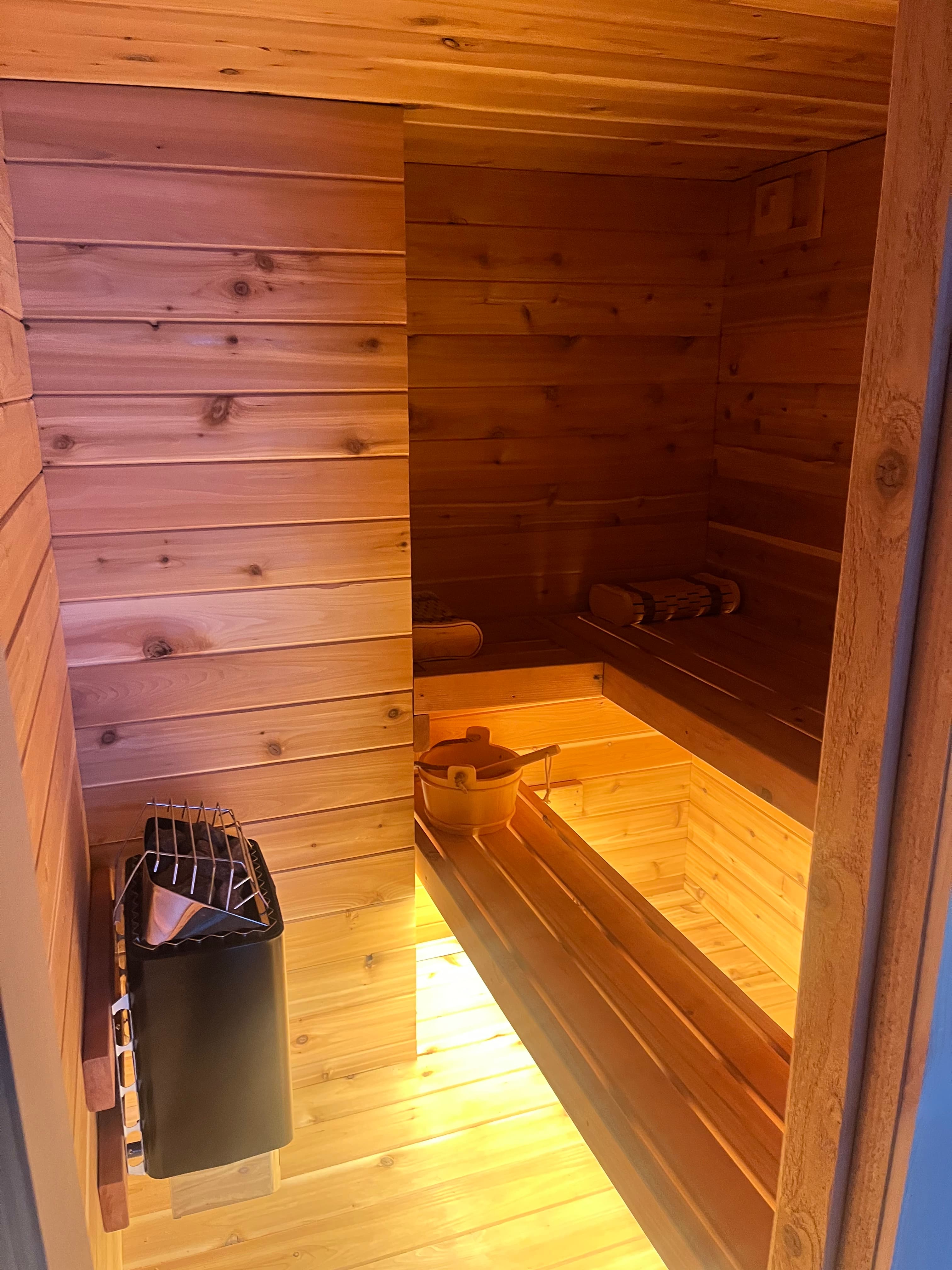
Building a Sauna in the Southwest — Desert Heat, Sun, and Materials That Last
Most sauna advice is written for cold climates — Minnesota, Finland, the snowy mountains. If you're building a sauna in the Southwest, a lot of that advice doesn't apply, and some of it works against you. Arizona, New Mexico, southern Nevada, and the desert parts of California have the opposite problem from a Finnish winter: blazing sun, extreme summer heat, intense UV, dust, and soils that move. The good news is that a sauna built right for the desert is just as good as one built anywhere — you just have to design for the conditions you actually have.
Here's what changes when you build a sauna in the Southwest, and how to get it right.
The desert flips the usual insulation logic
In a cold climate, the whole insulation strategy is about keeping heat in — thick walls, R-21 or better, because every bit of heat loss costs you fuel and comfort. In the Southwest, you still want good insulation, but the reason shifts. Your enemy isn't the cold outside; it's the heat. In summer, an uninsulated outdoor sauna sitting in full sun can be brutally hot before you ever turn the heater on, and the structure soaks up solar gain all day.
You still want solid wall insulation — R-13 to R-21 is plenty for most desert builds, and you don't need the heavy R-21-plus assemblies a Minnesota winter demands. What matters more in the desert is the vapor barrier and ceiling insulation done correctly, plus controlling solar gain on the exterior so the sauna isn't already cooking before use. Our sauna insulation guide covers the assembly; the desert tweak is that you can run lighter walls but should never skip the foil vapor barrier behind the cedar.
If you've read our guide to building a sauna in cold climates, think of the Southwest as the mirror image: same principles, opposite priority. Cold climates fight heat loss; the desert fights heat gain and sun damage.
Sun and UV are the real long-term enemy
The thing that destroys outdoor structures in the desert isn't temperature — it's ultraviolet light. The Southwest gets some of the highest UV exposure in the country, and it chews through cheap finishes, fades wood, and cracks anything brittle. A sauna that would last 20 years in Oregon can look weathered in five if you ignore this.
Wood selection matters here. Western red cedar handles sun and heat well and resists rot and insects, which is why it's a desert favorite for the exterior. For the interior, cedar, hemlock, or aspen all work — that choice is about feel and heat, not climate, and we break it down in our post on cedar vs. hemlock for sauna interiors. Thermally modified wood is also worth a look for desert exteriors; the heat treatment makes it more dimensionally stable and rot-resistant, which helps in a climate that swings from 110-degree afternoons to cool nights.
Whatever wood you choose for the outside, plan on a UV-protective exterior finish and a maintenance schedule. In the desert, exterior finish is not a one-time thing — expect to re-coat the sun-facing sides every couple of years. Orienting the sauna so the door and most-used side face away from the harshest afternoon sun also extends its life and keeps the entry from becoming an oven. We get into siting in our outdoor sauna placement guide.
Trusted by homeowners across Tahoe and beyond
Ventilation does double duty in a hot climate
Ventilation is the most under-appreciated part of any sauna, and in the desert it earns its keep twice. During a session, you need proper intake-and-exhaust airflow so the sauna breathes and doesn't go stale — that's true everywhere. But in the Southwest, ventilation also helps the sauna shed heat and dry out fast between uses, which matters when the structure is already absorbing solar heat all day.
The basic layout doesn't change: a low intake near the heater and an exhaust positioned to pull air through the room. What the desert adds is the value of being able to flush the space after a session and during the off-hours so it's not holding heat. A closable exhaust vent or a simple operable window lets you dump heat in the evening. Our sauna ventilation guide walks through intake and exhaust placement in detail — follow it, and add the ability to vent aggressively when you're not using the sauna.
Dust is the other desert factor. Fine blowing dust gets into everything, so intake vents should be positioned and screened to limit how much grit blows in, and you'll clean screens more often than someone in a wetter climate would.
Foundations and soil: don't assume
Desert soil is not one thing, and it can cause real problems if you assume it behaves like ordinary dirt. Large parts of the Southwest have expansive clay soils that swell and shrink with moisture, caliche layers (a rock-hard calcium carbonate crust) that are tough to dig through, and sandy soils that shift. Any of these can crack a slab or heave a foundation if the sauna isn't sitting on the right base.
For most outdoor desert saunas, a properly prepared foundation — a slab, piers, or a well-built gravel pad depending on your soil — is essential, and the right choice depends on what's actually under your feet. This is exactly the kind of decision that benefits from local soil knowledge, and it's worth getting right before you build anything on top of it. Our guide on outdoor sauna foundations lays out the options; in the Southwest, the soil test that tells you whether you've got expansive clay or caliche is what determines which one you use.
Electric vs. wood-fired in the desert
Both work, but the desert nudges the decision. Wood-fired saunas are wonderful, but in fire-prone parts of the Southwest, an outdoor wood-burning stove with a chimney can run into fire restrictions, defensible-space rules, and seasonal burn bans. If you're in a high fire-risk area, check local rules before committing to wood. Electric heaters sidestep that entirely and are often the simpler choice for a desert backyard, especially in suburban Phoenix, Tucson, Albuquerque, or Las Vegas. We compare the two in electric vs. wood-burning sauna heaters.
If you go electric, the heater still needs a dedicated high-amperage circuit, and you'll want a licensed electrician for that connection. The desert doesn't change the electrical requirements — it just makes electric the path of least resistance for a lot of fire-conscious homeowners.
Cost considerations in the Southwest
A sauna in the Southwest costs about what it does elsewhere — the structure, heater, wood, and electrical are similar line items. Where the desert adds cost is foundation prep on difficult soils (caliche is slow and expensive to excavate) and a more durable exterior finish to fight UV. Where it can save you money is insulation: you don't need the heaviest cold-climate wall assemblies. Our breakdown of outdoor sauna costs gives the general ranges, and how much a home sauna costs covers indoor builds.
Getting a desert-appropriate design without a local sauna specialist
Here's the practical hurdle: there are very few sauna specialists in the Southwest. Most of the country has no dedicated sauna designer, and the desert is no exception. You don't need one locally, though. With remote sauna design, we design the sauna to your space, your soil, your sun exposure, and your local code, and hand you a plan set your local contractor can build from. The desert-specific decisions — exterior wood and finish, foundation type for your soil, ventilation that sheds heat, heater type given fire rules — all get baked into the plan. The contractor just builds it. We explain that handoff in our guide to sauna design for contractors.
Frequently Asked Questions
Does a sauna even make sense in a hot desert climate?
Yes. A sauna heats to 175–195°F, far above any desert afternoon, so the outdoor temperature doesn't change the experience inside. What the desert affects is the design — sun protection, materials, ventilation for shedding heat, and foundation choice — not whether a sauna is worth having. The contrast of a hot sauna followed by a cool plunge is just as good in Arizona as in Finland.
What wood holds up best for a sauna in the Southwest?
Western red cedar is the go-to for desert exteriors because it resists heat, rot, and insects and handles UV reasonably well. Thermally modified wood is another strong exterior option for dimensional stability in big temperature swings. For the interior, cedar, hemlock, and aspen all work — that's a comfort choice, not a climate one. Plan on a UV-protective exterior finish and regular re-coating.
Can I build a wood-fired sauna in Arizona or New Mexico?
Often yes, but check local fire rules first. Many high fire-risk areas in the Southwest have burn bans, defensible-space requirements, or restrictions on outdoor wood-burning appliances. If you're in such an area, an electric heater avoids the issue entirely. Where wood-fired is allowed, it works fine — just plan the chimney and clearances to code.
What's the biggest desert-specific design mistake?
Ignoring the soil and the sun. Expansive clay and caliche can crack a foundation that wasn't designed for them, and intense UV destroys cheap exterior finishes fast. Getting a soil-appropriate foundation and a durable, re-coatable exterior finish are the two things that most affect how long a desert sauna lasts.
Do I need a local sauna builder in the Southwest?
No. Dedicated sauna builders are rare across the region. A remote sauna design gives you a desert-appropriate plan — accounting for sun, soil, ventilation, and fire rules — that any competent local contractor can build from. The design carries the sauna-specific expertise; the contractor supplies the local construction labor.
Building in the desert? Start with a remote sauna design consultation — we'll design for your sun exposure, soil, and local code, and hand you plans a Southwest contractor can build from.