How to Convince Your Spouse to Build a Sauna (Answer the Real Objections)
If you're searching for how to convince your spouse to build a sauna, here's the short version: don't try to convince anyone. Find out what they're actually worried about, and answer that.
In my experience, a partner's hesitation is almost never "I hate saunas." It's a handful of practical worries that don't get said out loud. Where does it go? Will it wreck the house? What does it really cost? How long will we live in a construction zone? Every one of those is a fair question, and every one has a real answer.
Here's how to walk through them honestly.
Worry 1: Where Is This Thing Going, and What Are We Giving Up?
Most homes don't have a spare 10x10 room waiting to become a wellness space. So a partner imagines the worst placements: the bright corner of the family room replaced by a wooden box, an office that gets smaller, a finished basement chopped up.
The question underneath is: does this improve how we use the house, or does it make one important room worse?
Trading a barely used storage nook for something you use several times a week feels very different from losing a decent guest room. Good sauna locations are the same places you'd pick for a small bathroom or gym corner:
- A corner or alcove in the bathroom that currently holds a laundry basket
- A dead-space corner of the garage or basement that's just storing boxes
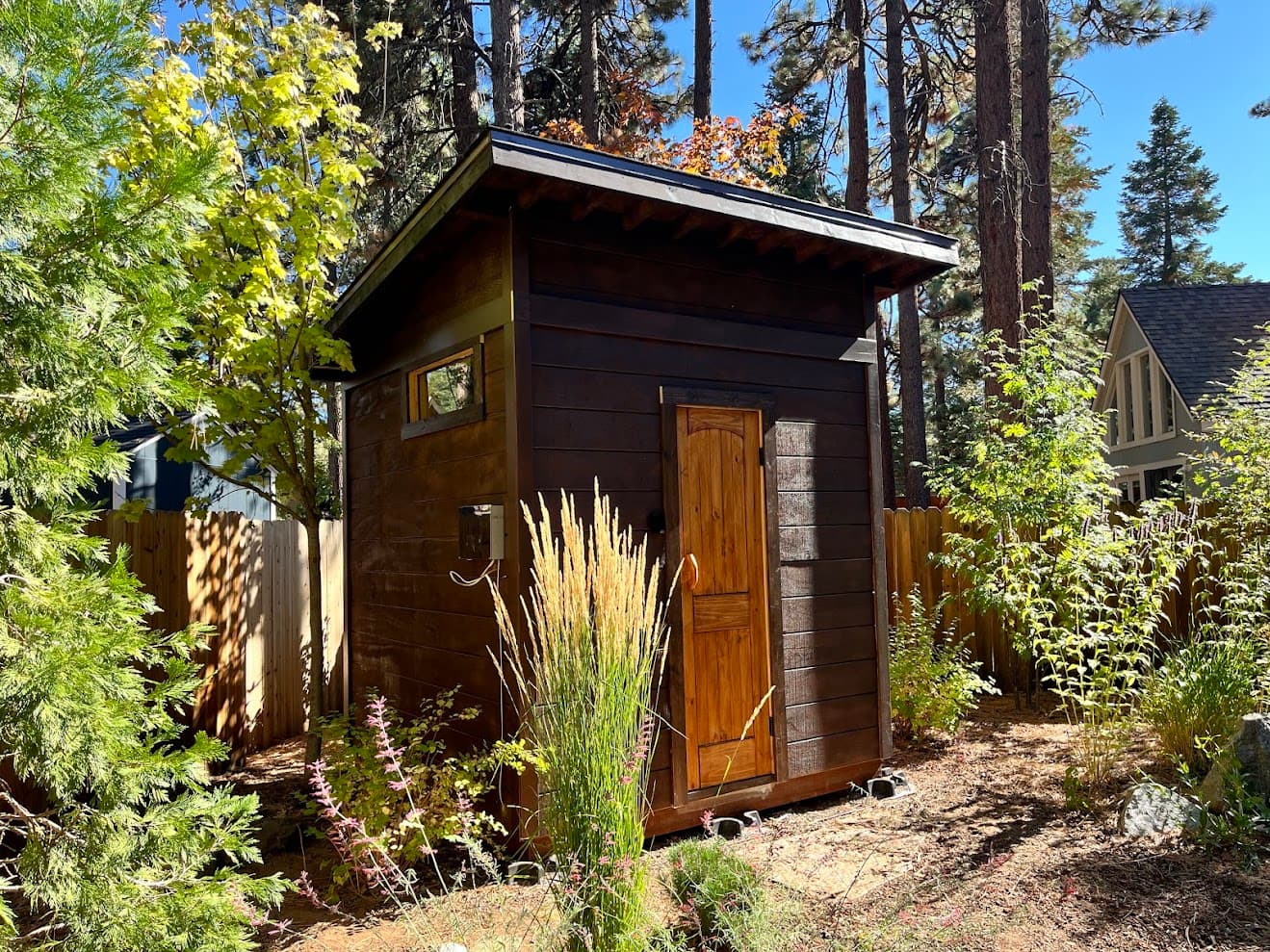
- A small standalone building in the yard that doesn't touch any living space
Size matters more than people expect. A 4x6 sauna fits 1-2 people, a 6x6 to 6x8 fits 3-4, and an 8x8 is where we land for most families. A smaller footprint is a much easier conversation. If space is the sticking point, look at our closet sauna guide or our post on how to measure your space for a sauna before you have the talk. Bring numbers, not a vague idea.
Worry 2: Will It Rot the House, Start a Fire, or Grow Mold?
Heat, moisture, and wood sounds like a bad combination. Done wrong, it is. A sauna someone nailed together with no thought for moisture can quietly damage the structure around it for years.
Done right, a sauna is closer to a small, over-engineered bathroom. It has:
- A waterproof floor. Built like a shower pan, sloped slightly toward a drain so water doesn't sit in a corner. We cover it in how to waterproof a sauna floor.
- Insulation and a continuous vapor barrier behind the interior wood, usually aluminum foil with taped seams, so hot, moist air doesn't reach the studs and condense inside the wall.
- Real ventilation. Fresh air in near the heater, used air out on the opposite wall, so the room dries out after each session instead of staying damp. Our post on preventing mold in a sauna explains why this is the part that matters most.
On the electrical side, a heater sounds scary until you compare it to what's already in your house. Most 6-9 kW sauna heaters need a dedicated 240V circuit at 40-50 amps, which is the same kind of circuit your dryer or oven runs on. It needs a licensed electrician and usually a permit, and the heater should be a listed unit rated for the job. Not a mystery box from an online marketplace. Details are in our sauna electrical requirements page.
For a wood-burning stove, the worries shift to sparks and chimneys. A proper installation uses the same fire-rated clearances, shielding, and flue you'd use for any wood stove. It's a code issue, not a mystery.
The honest answer is: yes, it can go wrong, and here's the specific list of things that prevent it. That's a much better answer than "it'll be fine."
Trusted by homeowners across Tahoe and beyond
Worry 3: What Does It Really Cost?
This is the worry that matters most to the budget, and it's the one people dodge. Don't. Bring an all-in number.
A decent traditional sauna is a multi-thousand-dollar project once everything is counted: the structure or kit, interior cladding, benches, heater, stones, electrical, floor prep, and the small stuff like vents, lights, and controls. Rough ranges for materials:
- A small, simple, mostly DIY build: under about $5,000
- A solid, complete home sauna: about $5,000-15,000, which is where most good home saunas land
- A full building project with glass, a changing room, and outside labor: $15,000 and up, sometimes much more
If you hire a builder, plan on $8,000-20,000 for a typical home sauna. Our detailed numbers are in how much it costs to build a sauna, and if you want a feel for how size affects price, see sauna cost per square foot.
Your spouse is doing two kinds of math at once. The hard math: what does this do to our budget this year? And the soft math: what's the cost per use over time? If you use it three nights a week for ten years, the number looks reasonable. If you use it six times and ignore it, you'll be reminded of it every time the credit card bill shows up.
So be honest about the second part. Ask yourself how often you'd really use it. Our post on whether a home sauna is worth it is a fair look at that question, including the case against. And if resale is on the table, does a sauna add home value covers what to expect.
Worry 4: What Will the Build Do to Our Lives?
Even people who love the finished product dread the process. Plastic sheeting that never quite seals, dust on everything, tools migrating across every flat surface, and a timeline that slips.
A few things reduce this a lot:
- Build outside, or in the garage. A standalone sauna keeps the mess out of the house entirely. Even pre-assembling wall panels on the ground keeps work out of living areas.
- Plan the sequence. Most of the disruption comes from decisions made mid-build. A real plan with a materials list up front cuts down on mid-project trips and surprises.
- Know the timeline. A small DIY sauna is often a few weekends. A bigger or contracted build takes longer. Our post on how long it takes to build a sauna gives realistic ranges.
- Pick the season. If you're doing exterior work, the best time of year to build a sauna isn't always the one you'd guess.
If your spouse is worried about now being the wrong time, take that seriously. "Not this year" isn't a no.
Worry 5: What's It Like to Live With?
The last cluster is about daily life: noise, smell, upkeep, and whether it fits the rhythm of the week once the novelty wears off.
A modern electric heater is about as dramatic as a toaster. You hear a small relay click, a soft hum from the elements, and the sizzle of water on stones. It's not a jet engine.
A wood stove inside a properly built sauna looks like any other wood stove: a metal box and a pipe. Outside, you smell wood smoke while it's running and nothing once it's out.
Upkeep is lighter than people think. Leave the door open to dry the room after a session, wipe benches now and then, and keep an eye on the vents. Our guide on how to clean a sauna is a short routine.
And the fair question is whether you'll actually use it. People who get value from a sauna tend to weave it into the week the way others treat an evening walk or a standing Sunday brunch. People who don't, don't. A good test before you build: do you already go to a gym sauna or spa regularly? If so, you probably will.
How to Have the Conversation
A few things that help:
- Ask before you pitch. "What would worry you about this?" gets you the real list faster than a presentation.
- Bring specifics. A location, a footprint, an all-in number, and a timeline beat "I want a sauna."
- Offer a smaller version. If a full outdoor build is too much, a 4x6 or a converted closet may be a yes.
- Make it a shared decision. If it's a sauna for both of you, design it for both of you. Wider benches for lying down, a layout that works for two, lighting you both like.
- Be willing to hear no. Sometimes the answer is "not now," and that's fine. It's a lot cheaper to wait than to build something one of you resents.
Frequently Asked Questions
How do I convince my spouse to build a sauna?
Ask what they're worried about first. The common concerns are space, mold and safety, total cost, build disruption, and daily upkeep. Answer each with specifics: a location, a footprint, an all-in budget, and a plan for ventilation and waterproofing.
Is a home sauna a good investment?
It depends on how often you'd use it. Cost per use drops fast if you sauna several times a week. If it sits unused, it's a poor investment. See our home sauna worth-it guide for a longer look.
What's the cheapest way to add a home sauna?
A small indoor build in a garage corner, basement nook, or closet, with a plain heater and a short electrical run. Under $5,000 is possible if you do most of the work yourself.
Can a sauna damage my house?
A poorly built one can, through moisture getting into the walls and floor. A sauna with a proper vapor barrier, a waterproof floor, and real ventilation is not a risk to the structure.
Where is the best place to put a sauna?
Somewhere that doesn't take away a room you actively use. A standalone outdoor building avoids the question entirely. Indoors, look for dead space such as a garage corner, a basement nook, or an oversized closet.
Next Steps
If you've got the conversation going and want something concrete to put on the table, start with our sauna design checklist. When you're ready for drawings, a materials list, and a layout for your actual space, our remote sauna design service gives the two of you something real to look at instead of a guess.