Traditional Sauna: What Makes a Sauna Traditional and How to Build One at Home
"Traditional sauna" gets used for almost anything with wood walls and a heater. Shop around for a home sauna and you'll see the phrase on infrared cabins, barrels, steam boxes, and real Finnish rooms, often on the same page. They aren't the same thing, and the differences matter a lot once you're sitting inside one.
This post covers what a traditional sauna actually is, the handful of design details that separate a good one from a hot wooden box, and what it takes to build one at home.
What is a traditional sauna?
A traditional sauna is a wood-lined room heated by a stove full of rocks, where you throw water on the hot stones to create bursts of steam. That steam is called löyly, and it's the defining feature. No rocks and no water on rocks means it isn't a traditional sauna, whatever the label says.
The stove can be electric or wood-burning. Either one counts. What makes it traditional is how the heat works:
- Convective heat. The stove heats the air and the rocks. The hot air circulates around the room and heats your body from the outside in.
- Low base humidity. The room sits around 5% relative humidity most of the time, then spikes for a minute or two each time you throw water.
- Real temperatures. Roughly 176-221°F (80-105°C) at head and shoulder height.
- Dry-humid-dry cycles. Throw a ladle, feel the wave of heat, let it settle, repeat every few minutes.
That rhythm is what people in Finland have been doing for centuries, and it's the experience most of the sauna health research is based on. If you want the longer background, our post on what a sauna is covers the basics and the main types.
Traditional sauna vs. infrared
This is where most of the confusion comes from. An infrared cabin uses panels that emit infrared light to warm your skin directly. The air stays relatively cool, usually 120-150°F, and there are no rocks and no steam.
Infrared cabins can make you sweat, and plenty of people like them. But they're a different thermal experience. You don't get löyly, you don't get the convective wrap of hot air, and you don't get the same intensity. Calling an infrared cabin a "sauna" is mostly a marketing decision.
Here's the practical comparison:
| Traditional sauna | Infrared cabin | |
|---|---|---|
| Heat source | Stove with rocks (electric or wood) | Infrared emitter panels |
| Air temperature | 176-221°F | 120-150°F |
| Steam / löyly | Yes | No |
| Warm-up time | 30-60 min electric, 1-2 hrs wood | A few minutes |
| Feel | Intense, enveloping, social | Gentle, dry, solitary |
Infrared wins on warm-up time and on how easy it is to install. Traditional wins on everything that makes sauna feel like sauna. We go deeper on this in our infrared vs traditional sauna comparison.
Trusted by homeowners across Tahoe and beyond
The five things that make a traditional sauna good
Plenty of rooms technically qualify as traditional saunas and still feel bad. Cold feet, harsh steam, stuffy air after the second round. Almost every one of those problems traces back to one of these five design details.
1. Enough rock mass
The rocks aren't decoration. They store heat, turn the heater's output into even convective heat, and flash water into steam. More rock mass gives you softer, rounder löyly and a temperature that doesn't swing around.
A typical wall-mounted electric heater holds somewhere around 20-40 pounds of stones, and only the upper stones really do the work. Heaters with a deeper rock cavity, or wood stoves with large stone baskets, produce noticeably better steam. You want at least 14 inches of stone depth above the elements so water turns to steam before it reaches the heater casing.
Use real sauna stones: peridotite, olivine diabase, gabbro, or another proper volcanic stone. Never river rock, granite, or landscape stone. Those can crack, smell for years, or contain things you don't want to breathe. Our sauna heater stones guide covers types and sizes.
2. Benches high enough to put your feet in the heat
This is the single biggest difference between a traditional sauna that works and one that doesn't. Heat rises, so the air near the ceiling is much hotter than the air near the floor. If you sit low, your head cooks while your feet stay cold.
The goal is to get your feet at or above the top of the stones. In practice, the upper bench should sit 40-48 inches below the ceiling, with the foot bench 16-20 inches below that. The sauna bench height guide walks through the math.
3. A real ceiling height
Higher benches need a taller room. We design most saunas with a 7.5-8 foot interior ceiling. That gives you room to raise the benches into the hot zone without your head hitting the ceiling. You can go to 7 feet in a conversion where you're stuck with an existing structure, and it'll still be good, but you'll notice more of a gap between head and foot temperature. There's more detail in our post on sauna ceiling height.
4. Ventilation that actually moves air
A traditional sauna isn't sealed. It needs fresh air coming in and stale air going out, or it gets stuffy and heavy after a round or two. With an electric heater, the standard approach is fresh air entering near the heater and exhaust low on the opposite wall, ideally pulled by a fan mounted outside the room. A wood stove pulls its own combustion air, which changes the layout a bit.
Get this right and the room feels fresh through four rounds. Get it wrong and people leave early without knowing why. Our sauna ventilation guide has diagrams.
5. Proper wood and insulation
The interior is softwood tongue-and-groove: western red cedar, hemlock, spruce, or thermally modified wood. It's unfinished on the inside. No varnish, no stain, no sealant on surfaces that get hot.
Behind that wood is the part you don't see: insulation and a foil vapor barrier, with a small air gap between the foil and the paneling. That assembly keeps the heat in, keeps moisture out of the walls, and is a big reason a well-built traditional sauna heats up in 30-45 minutes instead of 90.
Electric or wood-burning?
Both are traditional. Pick based on where the sauna goes and how you'll use it.
Electric is the default for most home saunas. It's precise, it can run on a timer or Wi-Fi control, and it doesn't need a chimney. Most residential heaters in the 6-9 kW range need a dedicated 240V, 40-50 amp circuit, which means an electrician and sometimes a panel upgrade. Heat-up is 30-60 minutes depending on size and insulation.
Wood-burning gives you a denser, more dynamic heat and a ritual that a lot of people love. It needs a chimney, non-combustible clearances around the stove, and usually a building permit. Plan on 1-2 hours to heat up. It's a great fit for a freestanding outdoor sauna on a rural or mountain property, and a poor fit for a garage or basement.
We compare the two in detail in our wood-fired vs electric sauna heater post.
How to build a traditional sauna at home
Most of the traditional saunas we design fall into one of three categories.
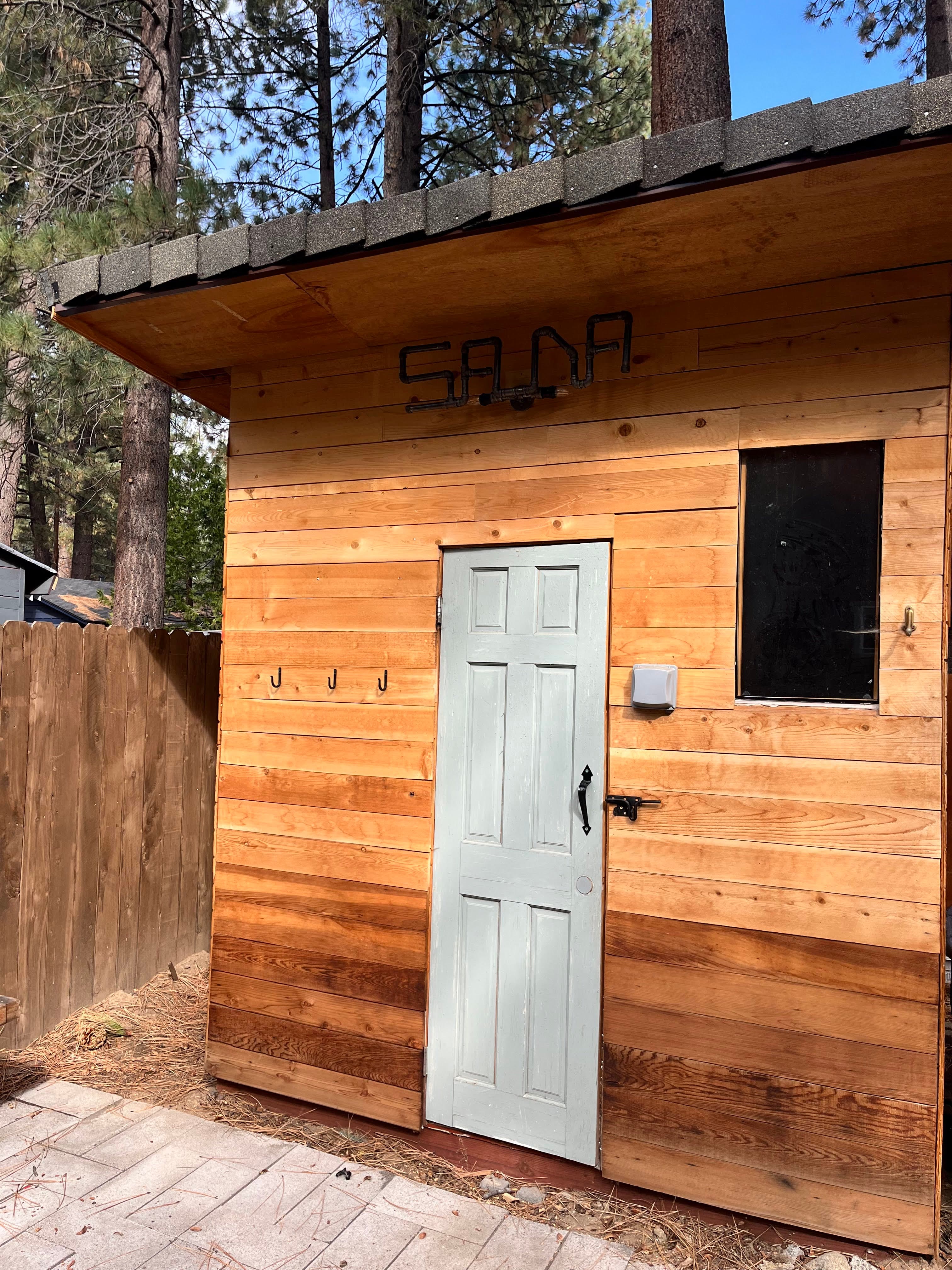
Outdoor freestanding. A small building in the backyard, usually 6x8 to 8x10, often with a changing room. This is the classic setup and the most flexible. Expect a pitched roof and an exterior peak around 10 feet once you account for an 8-foot interior ceiling.
Indoor conversion. A basement corner, a garage bay, a big closet, or a bathroom. Cheaper because the structure already exists, but you're working within existing ceiling height and wall framing. Confirm you can get at least 7 feet of interior ceiling before you commit.
Kit with upgrades. Some kits are fine starting points if you fix the weak spots: raise the benches, add proper ventilation, and choose a heater with more rock mass. Many kits ship with benches that are too low and a heater that's barely big enough.
Sizing is straightforward. Plan on about 1 kW of heater per 45 cubic feet of room in a well-insulated build, then adjust up for glass, outdoor exposure, or a cold climate. An 8x8 room with an 8-foot ceiling is 512 cubic feet, which points to roughly a 9-12 kW heater depending on the details. For the full sequence from site to first session, start with our how to build a sauna guide.
What a traditional sauna costs
Ballpark numbers for a traditional home sauna:
- Room conversion (closet, basement, bathroom): $2,500-$8,000
- Custom-built indoor sauna: $5,000-$18,000
- Custom-built outdoor sauna: $8,000-$25,000+
- Electrical: usually $1,000-$2,000 for a new 240V circuit, more for a long run to an outdoor building or a panel upgrade
Wood-burning saunas skip the heavy electrical work but add the stove ($1,500-$3,500) and a Class A chimney kit ($600-$1,500 plus roof penetration labor). The biggest swing factors are size, site access, and how much of the work you do yourself. Our cost to build a sauna breakdown itemizes every line, and the custom sauna design cost post covers the design side.
Common mistakes that make a traditional sauna feel wrong
We see the same handful of problems over and over:
- Benches too low. The most common one, and the hardest to fix after the fact. It's what causes cold feet in a sauna.
- Undersized heater with a small rock load. The room struggles to get hot and the steam feels sharp instead of soft.
- No real ventilation. One vent, or two vents in the wrong places. Air goes stale fast.
- Finished interior wood. Varnish and sealants off-gas and get sticky when they heat up.
- Glass everywhere. A full glass front looks great and loses a lot of heat. Fine if you size the heater for it. A problem if you don't.
None of these are expensive to get right on paper. All of them are expensive to fix after the walls are closed up.
Frequently Asked Questions
What is the difference between a traditional sauna and an infrared sauna?
A traditional sauna uses a stove with rocks to heat the air to roughly 176-221°F, and you throw water on the rocks to make steam. An infrared cabin uses emitter panels to warm your skin directly while the air stays around 120-150°F, with no rocks and no steam. They feel very different, and most of the sauna research is based on the traditional kind.
Is a traditional sauna wet or dry?
Both, in cycles. The base humidity is low, around 5%, so most of the time it's a dry heat. When you throw water on the rocks, humidity spikes for a minute or two, then the room dries back out. That dry-humid-dry rhythm is what makes a traditional sauna what it is.
What temperature is a traditional sauna?
Typically 176-221°F (80-105°C) measured at head and shoulder height. Most people settle somewhere in the 175-195°F range at home. The exact number matters less than having your whole body, feet included, in the hot zone.
Can you build a traditional sauna indoors?
Yes. Basements, garages, and bathrooms all work with an electric heater. You'll need a dedicated 240V circuit, proper ventilation, insulation with a foil vapor barrier, and enough ceiling height (ideally 7.5-8 feet, at least 7) to raise the benches into the heat.
Does a traditional sauna need plumbing?
No. You need a bucket of water for the rocks, not a water line. A floor drain or a shower nearby is nice to have, but thousands of traditional saunas in Finland have neither.
Next steps
If you're planning a traditional sauna, the decisions that matter most are made before anything gets built: ceiling height, bench layout, heater size and rock mass, and where the vents go. Our free sauna design checklist walks through each one.
If you'd rather have someone draw it up for you, we do remote sauna design for clients anywhere in the U.S. You get plans your builder can work from, with the benches, heater, and ventilation laid out correctly from the start.