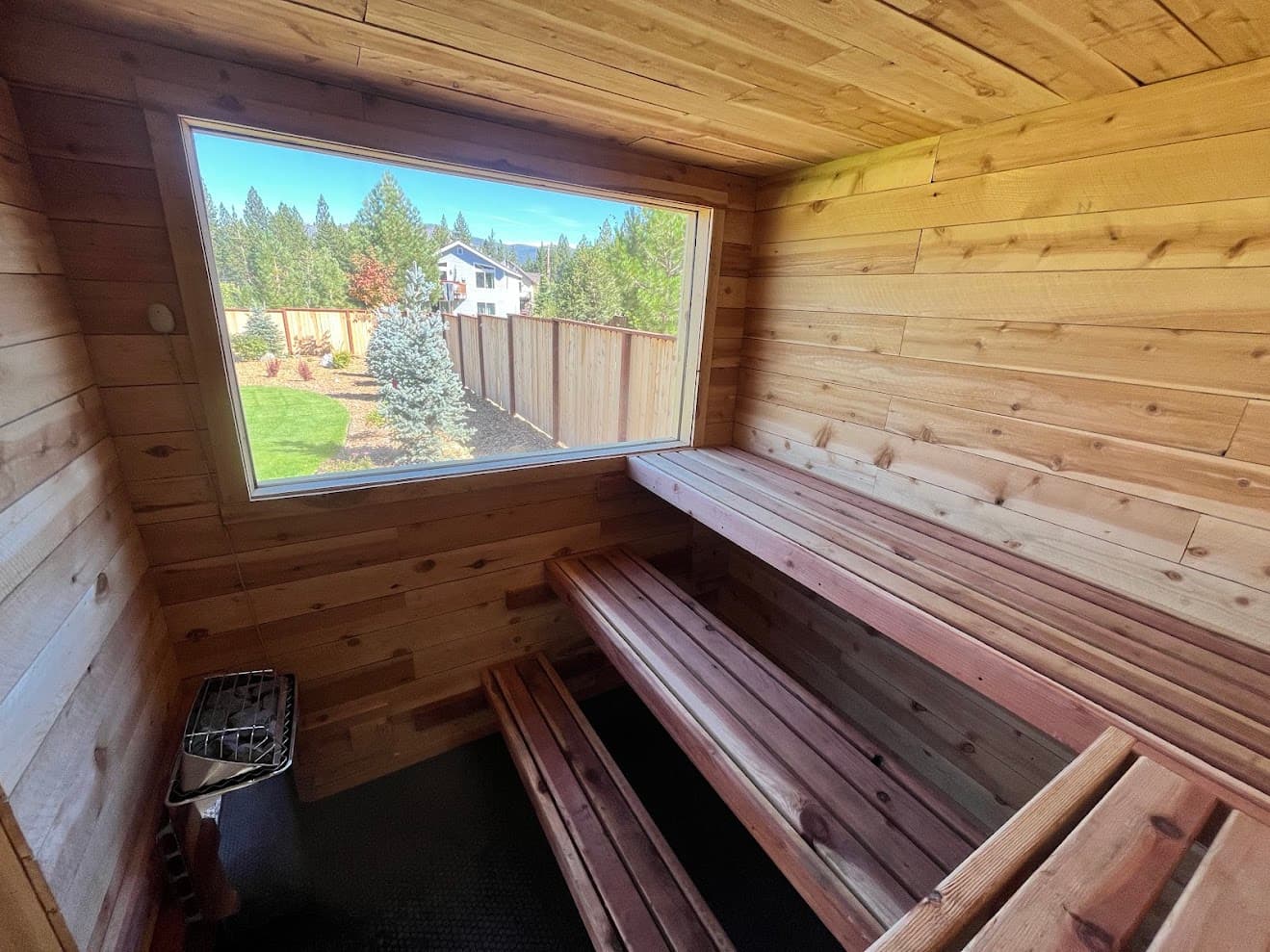
Whether you're building a backyard sauna, converting a shed, or framing a sauna room in your basement, the shopping list looks about the same. Below is every material, grouped in the order you'll need it, with a short note on what each one does and where we buy it. Lumber links go to Home Depot; sauna-specific items like foil vapor barrier, vent covers, stones, and lighting are usually easier to get on Amazon.
This list covers materials, not exact quantities — those depend on your size, layout, and roof. If you want a line-item estimate, run your dimensions through our free sauna materials calculator. Our sauna plans include exact quantities and a full shopping list for each size.
Most backyard saunas sit on a simple pier foundation: deck blocks under pressure-treated floor joists, then a standard 2x4 stud frame. Pressure-treated lumber belongs only in the foundation, never inside the hot room.
How much to buy: Studs at 16" on center, plus doubled top plates, headers, and blocking. A typical 8x8 outdoor sauna uses roughly 60–70 2x4s once you count everything.
| Material | What it's for | Where to buy |
|---|---|---|
| 2x4x8 studs | Wall framing and blocking | Home Depot ↗ |
| 2x4x10 studs | Plates, rafters on small roofs, and long runs | Home Depot ↗ |
| 2x6x8 pressure-treated lumber | Floor joists and rim (ground contact rated) | Home Depot ↗ |
| Concrete deck blocks | Pier foundation for a small sauna on level, compacted ground | Home Depot ↗ |
| Simpson LUS26 joist hangers | Hang the 2x6 joists off the rim | Home Depot ↗ |
| 7/16" OSB sheathing | Subfloor, wall sheathing, and roof deck | Home Depot ↗ |
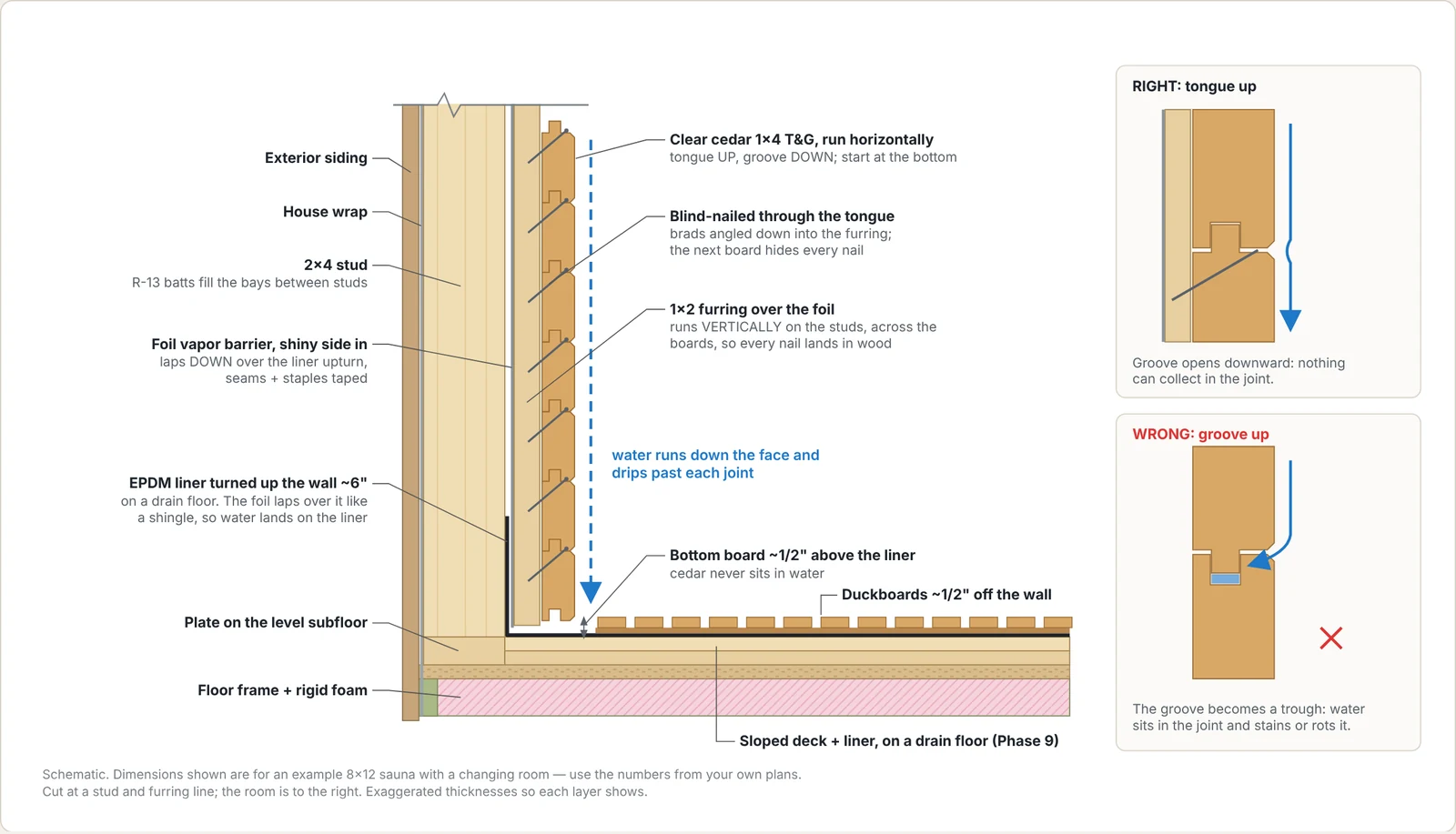
The foil layer is the most important part of a sauna wall. It goes on the warm (inside) face of the insulation with every seam sealed with foil tape, then a 3/4" air gap before the paneling.
How much to buy: Total wall + ceiling area, plus about 10% for overlaps. Seal every seam and penetration with foil tape (not duct tape).
| Material | What it's for | Where to buy |
|---|---|---|
| R-13 fiberglass insulation | Walls and ceiling (use R-19+ in the ceiling in cold climates if your framing allows) | Home Depot ↗ |
| Aluminum foil vapor barrier wrap | Our go-to sauna foil — goes on walls, ceiling, and under a cedar floor | Amazon ↗ |
| Aluminum foil tape | Seal every foil seam, staple hole, and penetration | Amazon ↗ |
| 1x2 furring strips | Creates the air gap between foil and paneling | Home Depot ↗ |
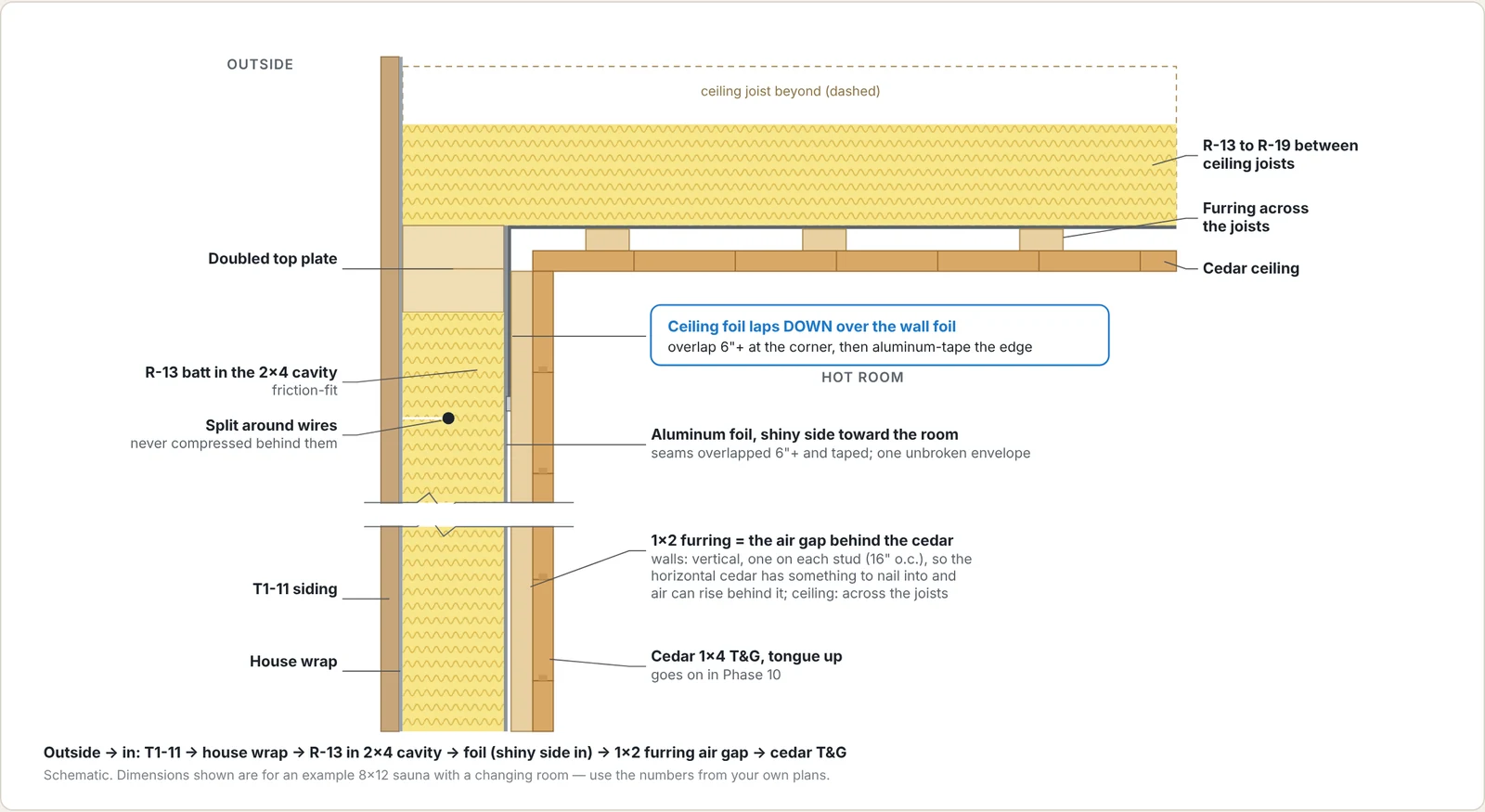
Use unfinished softwood inside the hot room: western red cedar is the classic choice, and it's what we link here. Benches should be a clear, low-resin wood that stays cool to the touch.
How much to buy: Paneling: wall + ceiling square footage plus 10–15% waste. 1x6 T&G covers about 5.4" per board after the tongue, so a 12' board covers ~5.4 sq ft.
| Material | What it's for | Where to buy |
|---|---|---|
| Cedar tongue & groove 1x6x12 | Wall and ceiling paneling (also works as a dry floor) | Home Depot ↗ |
| 2x4x8 redwood | Bench slats and supports — smooth, stable, and comfortable when hot | Home Depot ↗ |
| 18-gauge brad nails (2") | Blind-nail paneling through the tongue | Home Depot ↗ |
| Sauna backrest | Optional — a ready-made angled backrest for the upper bench | Amazon ↗ |
Size the heater to the room volume (and add for glass, log walls, or uninsulated surfaces) — see our heater sizing guide before you buy. Electric heaters need a dedicated circuit installed by a licensed electrician.
| Material | What it's for | Where to buy |
|---|---|---|
| Harvia KIP 80 with Xenio WiFi controls | What we spec for most 6x8 to 8x8 rooms; the non-WiFi version costs less | SteamSaunaBath ↗ |
| Sauna heater stones | Most heaters ship without stones — check your heater's required weight | Amazon ↗ |
Not sure what size? Read the sauna heater sizing guide or compare models in best electric sauna heaters.
Good air is what separates a great sauna from a stuffy one. Use 4" venting throughout. With a mechanical exhaust fan, put the fresh-air intake near or above the top of the stove (we like about 12" above and 12" to the side) and the exhaust low, below the foot bench.
| Material | What it's for | Where to buy |
|---|---|---|
| Interior adjustable wood vent covers | Slide-open vent panels inside the sauna | Amazon ↗ |
| 4" exterior wall vent caps | Outside wall, over each vent opening | Amazon ↗ |
| 4" flexible ducting | Runs inside the wall from each vent to its exterior cap | Amazon ↗ |
| AC Infinity CLOUDLINE S4 inline fan | Optional mechanical exhaust with a speed controller — the S4 is plenty for a home sauna | Amazon ↗ |
| 4" duct clamps | Clamp the duct to the fan | Amazon ↗ |
Full layout details are in the sauna ventilation guide, or skip the parts list with our sauna ventilation kit.
Keep light low and warm, and use fixtures rated for sauna heat. Low-voltage LED strip mounted under the benches or behind a backrest is the easiest way to get it right.
A sauna door should open outward, have no lock, and use a wooden handle that stays cool. A solid-core wood slab is the budget option; tempered glass sauna doors are the upgrade.
| Material | What it's for | Where to buy |
|---|---|---|
| 24" x 80" solid-core pine door slab | Budget-friendly wood sauna door | Home Depot ↗ |
| Door hinges (3-pack) | Matte black radius hinges | Home Depot ↗ |
| Wooden sauna door handle | Stays cool to the touch | Amazon ↗ |
| Door latch | Simple roller/magnetic latch — no locks on sauna doors | Amazon ↗ |
For an outdoor sauna, treat the shell like any small shed: housewrap, siding, flashing, and a properly underlaid roof.
| Material | What it's for | Where to buy |
|---|---|---|
| Woven housewrap | Over the wall sheathing, under the siding | Home Depot ↗ |
| T1-11 plywood siding | Fast, affordable exterior siding | Home Depot ↗ |
| Window/door flashing tape | Around every opening | Amazon ↗ |
| Roof underlayment | Under the shingles | Home Depot ↗ |
| Architectural shingles | GAF Timberline | Home Depot ↗ |
| Drip edge | Roof edges | Home Depot ↗ |
| Exterior sealant | Windows, trim, and siding joints (outside only) | Home Depot ↗ |
Use galvanized or stainless fasteners anywhere moisture can reach.
| Material | What it's for | Where to buy |
|---|---|---|
| 3" construction screws | General framing and benches | Home Depot ↗ |
| 3" galvanized framing nails | For a framing nailer | Home Depot ↗ |
Trusted by homeowners across Tahoe and beyond
The floor is the decision people most often get wrong. Choose one of these before you buy subfloor materials — options 2 and 3 need a sloped deck and a drain built in from the start. More detail in our sauna floor options guide.
The simplest floor: foil vapor barrier over the OSB subfloor, cedar T&G on top. No drain. Best when you won't be splashing much water around.
| Material | What it's for | Where to buy |
|---|---|---|
| Aluminum foil vapor barrier | Over the subfloor | Amazon ↗ |
| Cedar T&G 1x6 | Finished floor | Home Depot ↗ |
A shimmed, sloped plywood deck falling about 1" toward a shower drain, then backer board and tile. Durable and easy to clean.
| Material | What it's for | Where to buy |
|---|---|---|
| Oatey 2" PVC shower drain base | Set near the door wall; run the line to daylight, a dry well, or a plumbing tie-in per local code | Home Depot ↗ |
| Snap-in drain strainer | Snaps in after the floor is finished | Amazon ↗ |
| Drywall shims (bundle) | Stacked on the joists to build the slope | Home Depot ↗ |
| Plywood for the sloped deck | Screwed over the shim stacks | Home Depot ↗ |
| HardieBacker cement board | Over the sloped plywood, seams taped and waterproofed | Home Depot ↗ |
| Thin-set mortar | Polymer-modified | Home Depot ↗ |
| Unsanded grout | For small mosaic tile | Home Depot ↗ |
| Porcelain mosaic tile | Any non-slip porcelain works | Home Depot ↗ |
Our favorite wet floor: the same sloped deck and drain, covered with a one-piece EPDM liner turned up the walls, with lift-out cedar duckboards on top. Warm underfoot and fully waterproof.
| Material | What it's for | Where to buy |
|---|---|---|
| EPDM floor liner (45 mil, 10x10) | One piece, turned ~12" up every wall and clamped into the drain | Amazon ↗ |
| EPDM butyl seam tape | Sticks the liner down at the perimeter and around the drain | Amazon ↗ |
| Stainless T50 staples | Top edge of the liner turn-up only | Home Depot ↗ |
| Clear silicone | Bedding bead on the drain flange, under the liner | Home Depot ↗ |
| 1x4 cedar boards | Duckboard slats and cleats | Home Depot ↗ |
| Drain, strainer, shims, plywood | Same as Option 2 above | See above |
The small stuff that makes a sauna usable on day one. More options in our sauna accessories guide.
A framed sauna needs framing lumber and a foundation, insulation, an aluminum foil vapor barrier with foil tape, furring strips for an air gap, softwood tongue-and-groove paneling (usually cedar), bench lumber, a sauna heater and stones, intake and exhaust vents, sauna-rated lighting, a door that opens outward, and a floor system. Outdoor saunas also need siding, housewrap, and roofing.
Western red cedar is the most common choice for paneling because it's stable, aromatic, and resists moisture. Benches should be a smooth, low-resin wood that stays cool to the touch, such as redwood, cedar, aspen, or thermally modified wood. Never use pressure-treated, stained, or sealed wood inside the hot room.
Yes. A sauna needs an aluminum foil vapor barrier on the warm side of the insulation, with every seam sealed with foil tape. Without it, steam from löyly drives moisture into the wall cavity, where it condenses and causes rot and mold.
For a DIY 8x8 outdoor sauna, materials typically run about $6,000–$7,000 including a mid-range electric heater with WiFi controls; the heater alone is often $1,000–$2,000. Cedar paneling is usually the biggest lumber cost. Prices vary a lot by region and by how much you upgrade the door, windows, and floor.
Most of them. Framing lumber, OSB, insulation, cedar tongue and groove, siding, roofing, and fasteners are all at Home Depot. Sauna-specific items — foil vapor barrier, heater stones, vent covers, sauna lighting, and accessories — are easier to find on Amazon or from sauna suppliers.
12 decisions that determine how well your sauna performs — insulation, bench height, heater sizing, ventilation, and more.
Have questions about your project? Send us a message or schedule a free 15-minute intro call.
Schedule a free 15-minute intro call or send us a message about your project.
We'll learn about your space, goals, and timeline — and recommend the right next step for your project.